



Unveiling the Tensor Robocar: The Dawn of Personal Level 4 Autonomy in 2027
As we stand in 2025, the narrative around self-driving cars has largely been dominated by the vision of autonomous ride-hailing fleets – the robotaxis ferrying passengers across a growing number of cities. While services from pioneers like Waymo and the burgeoning presence of Tesla’s Robotaxi experimentations have pushed the boundaries of what’s possible, a new, even more audacious chapter is about to unfold. Imagine not just hailing an autonomous vehicle, but owning a fully Level 4 self-driving car, a personal mobility companion designed from the ground up to liberate you from the driving chore. This is the promise of the Tensor Robocar, a groundbreaking initiative poised to redefine personal transportation, with deliveries slated to begin in the U.S. by early 2027.
For those of us who have spent the last decade immersed in the intricacies of autonomous driving technology and the evolving landscape of intelligent mobility solutions, Tensor’s pivot is nothing short of revolutionary. This isn’t a retrofit or an incremental upgrade; it’s a complete reimagining of the personal vehicle as an intelligent transportation system.
From Robotaxis to Personal Pioneers: Tensor’s Audacious Evolution
Tensor’s journey is itself a testament to the dynamic nature of the autonomous vehicle industry. Originating in Silicon Valley in 2016 as AutoX, the company cut its teeth on developing robust autonomous commercial vehicles and operating large-scale robotaxi fleets. Their early years saw intensive testing in California and China, culminating in a significant operational footprint during the COVID pandemic, with over 1,000 autonomous taxis providing public rides across five Chinese cities. This hands-on experience in diverse, complex urban environments forged a deep understanding of the real-world challenges and capabilities required for true autonomy.
However, the winds of strategic direction, coupled with the ever-tightening regulatory framework around data privacy, particularly concerning cross-border operations, prompted a significant re-evaluation. In a bold move, the company completely divested from its Chinese operations, rebranded as Tensor, and returned to its roots in San Jose, California. This wasn’t merely a geographic shift; it was a fundamental recalibration of its mission. Instead of focusing on B2B fleet operations, Tensor set its sights on the pinnacle of consumer autonomous vehicles: designing and delivering a private Level 4 self-driving car directly to individual owners. This strategic pivot signals a maturing market, moving beyond shared services to embrace the aspirational desire for personal ownership of cutting-edge technology. For industry experts, this represents a high-stakes gamble, but one with potentially immense returns, carving out a niche in the burgeoning self-driving car market.
Engineering the Future: The Robocar’s Ground-Up Autonomy Architecture
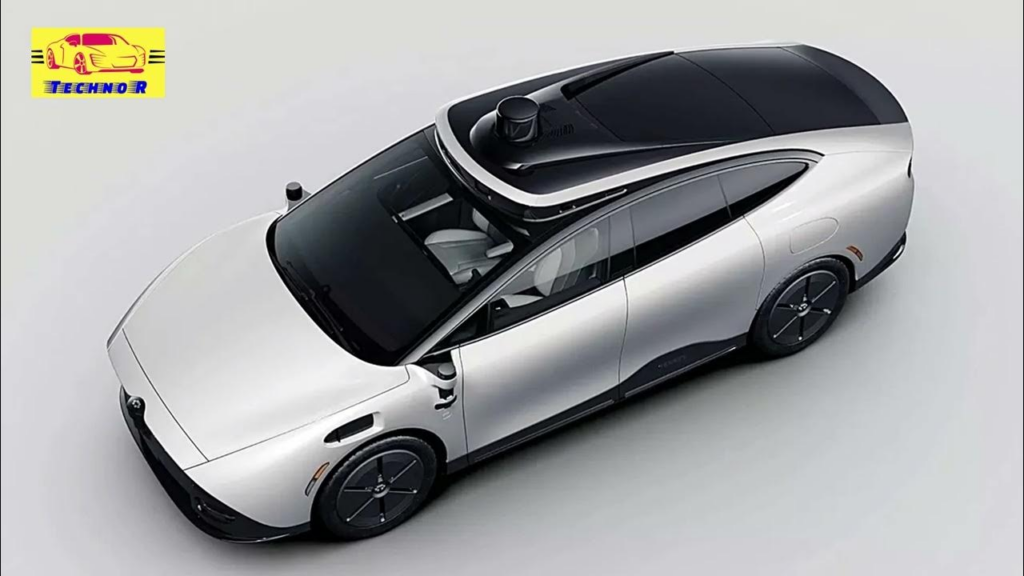
At its core, the Tensor Robocar isn’t just an electric vehicle with self-driving features tacked on; it’s an electric vehicle innovation built from the chassis up with autonomy as its fundamental purpose. This holistic design philosophy is critical for achieving true Level 4 capability, distinguishing it sharply from current production vehicles that offer advanced driver-assistance systems (ADAS) but still require human supervision. Development, which began in earnest in 2020, leveraged the invaluable insights gained from years of robotaxi operations.
Let’s delve into the technological backbone of this impressive machine:
The EV Foundation: The Robocar is built on a robust electric platform featuring a substantial 112-kWh battery, engineered to deliver an estimated 250 miles of range. While specific performance metrics are yet to be fully disclosed, the inclusion of an 845-volt battery pack is a clear indicator of its next-gen EV credentials. This high-voltage architecture enables rapid charging, allowing the vehicle to replenish from 10 to 80 percent in a mere 20 minutes—a crucial factor for convenience and widespread adoption. Tensor is also pushing the envelope with plans for an automated charging system, envisioning a robotic arm that will seamlessly plug the car in upon arrival at your home, further enhancing the autonomous ownership experience. Adding to the luxury and convenience, the coach-style, center-closing doors are fully powered and equipped with sensors to prevent accidental contact with obstacles, a thoughtful detail enhancing both safety and user experience.
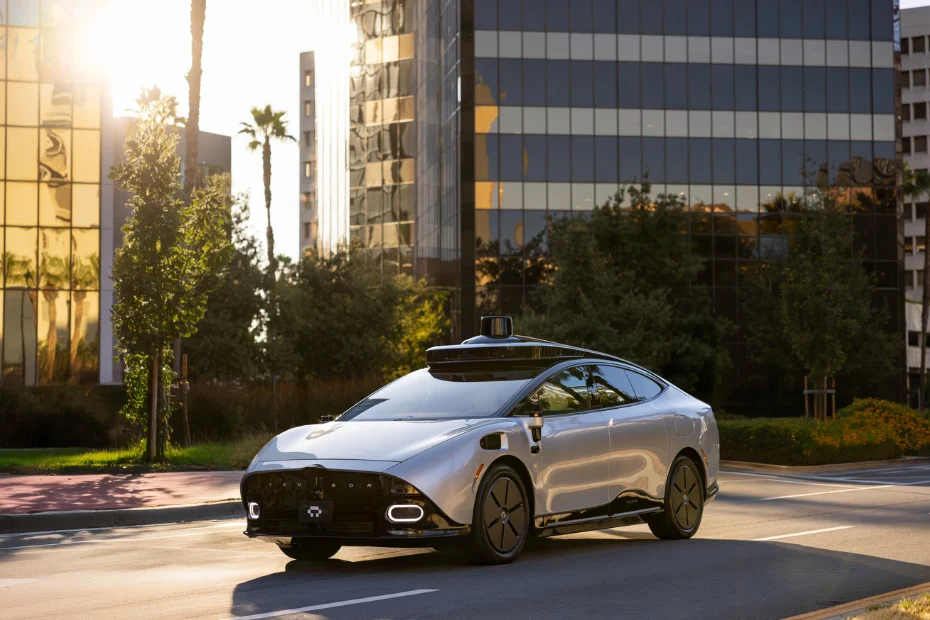
The Sensory Cortex: Over 100 Eyes and Ears: Achieving SAE Level 4 autonomy demands an unparalleled understanding of the vehicle’s surroundings. The Robocar meets this challenge with an astounding array of over 100 sensors, meticulously integrated to provide a comprehensive 360-degree view. This includes five high-resolution lidar arrays (one on the roof and four strategically positioned around the vehicle), an impressive 37 cameras offering diverse perspectives, 11 radars for robust all-weather detection, and 10 ultrasonic sensors for close-range perception. The rooftop lidar alone can detect objects nearly 1,000 feet away, providing crucial long-range awareness.
Critically, for a vehicle designed to operate autonomously in varying real-world conditions, sensor cleanliness and protection are paramount. Tensor has engineered an elaborate system comprising 30 washer nozzles, 13 mini-wipers, and integrated heating elements to combat fogging and snow accumulation. Going a step beyond even current industry leaders, the Robocar features physical covers that automatically retract over the sensors when the vehicle is powered down, shielding them from dirt, debris, and potential damage—a subtle yet significant enhancement for long-term reliability in ADAS sensors.
The Autonomous Brain: AI at the Edge: All this sensory data converges into a colossal onboard computing system, featuring eight Nvidia Drive Thor-X chips. This powerhouse setup is capable of an astronomical 8,000 TOPS (trillion operations per second), providing the raw processing muscle required for real-time perception, prediction, and planning. While cloud connectivity is present, Tensor’s philosophy leans heavily on edge computing, ensuring that the vast majority of processing occurs within the vehicle itself. This is a critical design choice, guaranteeing consistent performance even in areas with limited or no 5G connectivity. Redundancy is also built into the communication channels, with three separate systems for maximum uptime.
The intelligence driving this hardware is the Tensor Foundation Model software, an AI in automotive masterpiece. This system operates two parallel, redundant AI frameworks: one trained extensively by professional human drivers, capturing nuanced driving behaviors and decision-making; the second, leveraging a Visual Language Model (VLM), is designed to tackle unusual and unexpected “edge cases”—the notoriously difficult scenarios that often challenge autonomous systems. This dual-pronged approach aims for a level of robustness and adaptability that allows the Robocar to confidently operate in challenging conditions, including rain and snow, breaking the stereotype of autonomy being limited to sun-drenched environments.
To enhance pedestrian safety and communication, the Robocar also incorporates exterior displays on its lower corners, which broadcast simple messages and pictograms. This visual language informs pedestrians that the vehicle is operating autonomously and has detected them, fostering trust and predictability in shared urban spaces.
A New Relationship with Your Car: Redefining the User Experience
The Tensor Robocar isn’t just a technological marvel; it promises a fundamentally different relationship between owner and vehicle, particularly concerning two critical aspects: data privacy and intelligent interaction.
Your Car, Your Data – A Paradigm Shift: In an era rife with concerns about data collection and privacy, Tensor’s approach is a breath of fresh air. By performing the vast majority of computing onboard, the company significantly minimizes the need to continuously stream user data to the cloud. While the vehicle is capable of sharing information with Tensor’s cloud infrastructure, owners retain full control and must actively opt-in for such sharing. Crucially, all data collected by the vehicle about its owner and users, including biometric data required for operation like facial and palm recognition (essential for security and theft prevention), remains accessible and deletable by the owner directly through the vehicle interface or a companion smartphone app.
Furthermore, acknowledging concerns about constant surveillance, Tensor has equipped interior cameras and microphones with physical covers and dedicated off switches. While these are vital for driver monitoring during manual operation and enabling the voice assistant, the owner has the absolute power to disable them, offering an unparalleled level of automotive cybersecurity and privacy assurance in a modern vehicle. This commitment to data sovereignty is a major differentiator and a significant selling point in the increasingly privacy-conscious 2025 market.
Conversational AI: Beyond Voice Commands: Forget barking commands at your car. The Robocar is equipped with an Agentic AI powered by a sophisticated Large Language Model (LLM), designed for natural, human-like conversation. Instead of rigid instructions, you can simply “talk” to your car, discussing your desired destination or current needs. This intelligent assistant also enables seamless remote interaction; you can summon your Robocar from anywhere with a call or text. Over time, the system will learn your habits, anticipate your routine trips, and even integrate with your calendar to predict charging needs based on your upcoming schedule. This isn’t just convenience; it’s a seamless integration of AI in automotive solutions that promises to transform the daily commute into a truly personalized experience.
Drive When You Want To: Flexibility and Control: While the Robocar’s primary function is autonomous operation, Tensor understands that the desire to drive won’t vanish overnight. The vehicle retains a physical steering wheel and pedals, allowing the owner to take manual control at any time. When driven manually, the Robocar acts as a sophisticated co-pilot, offering a spectrum of assistance from basic automatic emergency braking to advanced Level 3 semi-automated driving, where the system handles most aspects but requires the driver to remain attentive and ready to intervene.
The transition to autonomous mode is elegantly executed: the steering wheel retracts smoothly into the dashboard, and the central infotainment screen slides to conceal it, while the accelerator and brake pedals also retract, creating an expansive, uncluttered interior space. Should you wish to resume control, these elements seamlessly reappear. The vehicle’s steering, braking, and acceleration are all “by-wire” systems, meaning they operate electronically without direct physical linkages. This architecture allows for multiple redundancies within each system, ensuring continuous operation even in the unlikely event of a component failure, a critical aspect of Level 4 safety. Further enhancing maneuverability, rear-wheel steering allows the back tires to pivot up to 7 degrees, giving the Robocar an impressive 37-foot turning circle, comparable to much smaller vehicles despite its substantial size. Safety remains paramount, with Tensor targeting top crash safety scores from the NHTSA, IIHS, and European NCAP.
The Road Ahead: Market Dynamics and Ownership Possibilities
Tensor’s strategic vision extends beyond mere vehicle ownership, exploring innovative models that promise to unlock new value for the consumer. The company has already forged an agreement with Lyft, signaling plans to integrate Robocars into a premium rideshare service. This opens the door to a compelling proposition for private owners: the ability to leverage their personal self-driving car as an income-generating asset. Remember Elon Musk’s long-standing promise of owners deploying their vehicles as autonomous taxis while they’re at work or asleep? Tensor appears to be building the framework to deliver on that aspiration, potentially leapfrogging competitors by providing a certified Level 4 platform capable of independent commercial operation. While the exact details of how private owners would manage hailing and payments through a platform like Lyft are still emerging, the potential for a new revenue stream from an otherwise depreciating asset is incredibly attractive. This blend of personal ownership and potential commercial utility positions the Robocar as a unique intelligent mobility solution.
Naturally, the question of cost arises. While Tensor has yet to provide definitive pricing, industry estimates, drawing parallels to Waymo’s bespoke vehicles, suggest “luxury pricing”—likely in the range of $150,000 to $200,000 or even higher, given the Robocar’s advanced capabilities and ground-up design. This positions it firmly in the premium segment, catering to early adopters and those seeking the ultimate in Level 4 self-driving solutions.
Production for this ambitious undertaking is being handled by Vietnamese automaker VinFast at its factory in Haiphong, Vietnam. While VinFast vehicles have faced scrutiny regarding build quality in some markets, it’s crucial to acknowledge the company’s extensive experience assembling BMWs under license for many years, indicating a foundational understanding of automotive manufacturing precision. Tensor emphasizes a rigorous quality control process, ensuring the Robocar meets stringent international standards. Production is slated to commence in late 2026, with initial deliveries expected in the United Arab Emirates (UAE) in the fourth quarter of that year. Crucially for the U.S. market, deliveries are projected to begin in early 2027, pending crucial regulatory approvals—a key hurdle for any Level 4 autonomous vehicle deployment. Tensor also has its sights set on the European Union, with plans already announced for a rideshare service partnership in Denmark.
The path to widespread Level 4 autonomous vehicle adoption is not without its complexities. Regulatory frameworks are still evolving, and questions around liability in autonomous incidents (such as traffic tickets) will need clear precedents. However, Tensor’s meticulous approach to redundancy, safety testing, and a comprehensive sensor suite positions it strongly to meet these challenges head-on.
The Future Awaits: Your Invitation to Autonomy
The Tensor Robocar is more than just another electric vehicle; it represents a profound leap in personal mobility. It’s a testament to a decade of relentless innovation in autonomous driving technology, culminating in a vehicle designed to offer unparalleled freedom, privacy, and intelligent interaction. As we accelerate into the late 2020s, the notion of a truly self-driving car, owned and commanded by you, is no longer a distant dream but a tangible reality on the horizon.
Tensor isn’t just selling a car; it’s selling the future of personal transportation. It’s an invitation to reclaim your time, reimagine your commute, and experience the road in a way that prioritizes safety, convenience, and unparalleled intelligence. The question isn’t whether Level 4 autonomy will arrive, but whether you’re ready to embrace a future where your vehicle is not just a mode of transport, but a truly intelligent, independent, and entirely personal companion.
Are you ready to witness—and perhaps even own—the next evolution of smart vehicle innovation? Stay informed, follow the journey, and prepare for the ultimate upgrade to your driving experience. The future of personal autonomy is knocking, and it sounds a lot like the Tensor Robocar.