



The Dawn of Private Autonomy: Tensor’s Robocar Rewrites the Future of Personal Mobility
For years, the promise of a truly self-driving car has hovered on the horizon, a tantalizing vision often associated with futuristic robotaxis or highly automated commercial fleets. Yet, as we stand in 2025, with Level 2+ advanced driver-assistance systems becoming commonplace and geo-fenced autonomous taxi services expanding, a new paradigm is emerging: the personal, privately-owned Level 4 autonomous vehicle. Enter the Tensor Robocar, a groundbreaking entry poised to redefine how we perceive and interact with our cars, promising Waymo-level autonomy parked right in your driveway by early 2027. This isn’t just another electric vehicle; it’s a meticulously engineered, AI-driven personal mobility solution designed from the ground up to empower individual owners with genuine self-driving capabilities.
From Robotaxi Pioneer to Personal Autonomy Visionary: A Decade of Innovation
The story of Tensor is one of relentless innovation and strategic evolution, a testament to nearly a decade of dedicated research and development in the complex realm of autonomous systems. Founded in Silicon Valley in 2016 as AutoX, the company initially focused on cracking the code of commercial autonomous vehicles and robotaxis. Their journey began with rigorous testing across California and China, quickly escalating during the pandemic era. By 2020, AutoX had successfully deployed a fleet of over 1,000 autonomous taxis, ferrying passengers across five bustling Chinese cities, gaining invaluable real-world experience and logging millions of autonomous miles. This operational expertise, gleaned from navigating diverse urban environments and interacting with countless public users, forms the deep foundation of what Tensor offers today.
However, the global landscape shifted, bringing increased scrutiny on data privacy and cross-border operational complexities. In a decisive strategic pivot over the past year, the company fully divested from its Chinese operations, rebranded as Tensor, and relocated its core engineering and leadership back to its Silicon Valley roots in San Jose, California. This wasn’t merely a change of name; it was a fundamental reorientation. With a clear vision, Tensor shifted its focus entirely from corporate fleets to delivering a truly autonomous vehicle directly to private customers, prioritizing data sovereignty and individual control – aspects that are increasingly critical in the 2025 tech-consumer market. This bold move underscores their commitment to a distinct market segment, aiming to democratize high-level autonomous driving for the discerning individual.
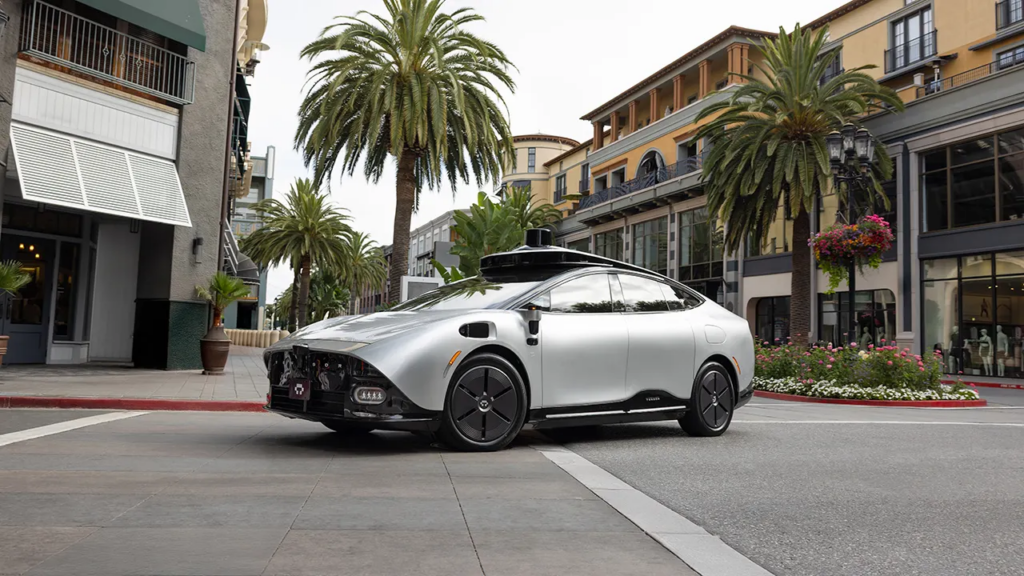
Engineering the Future: The Robocar’s Intelligent Core
At its heart, the Tensor Robocar is an exquisitely engineered electric vehicle designed for the demands of the autonomous age. It features a robust 112-kWh battery pack, providing an estimated 250 miles of range – a comfortable figure for most daily commutes and even longer journeys in 2025, especially with the rapidly expanding charging infrastructure. What truly sets its powertrain apart is the sophisticated 845-volt architecture, enabling lightning-fast charging from 10 to 80 percent in a mere 20 minutes. This ultra-rapid charging capability significantly mitigates range anxiety, a critical factor for mainstream EV adoption.
While specific performance metrics remain under wraps, Tensor confirms a powerful single rear motor, designed to provide efficient and responsive propulsion. Beyond the core electric drivetrain, Tensor is also innovating at the periphery of the ownership experience. Imagine arriving home after a long day; your Robocar not only parks itself but also connects autonomously to an automated charger, thanks to a pioneering robotic arm currently under development. This vision of seamless, hands-free charging integration truly encapsulates the holistic autonomy Tensor aims to deliver.
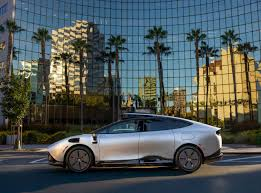
The attention to user experience extends to the very structure of the vehicle itself. The Robocar boasts elegant coach-style center-closing doors, all fully powered and integrated with an array of sensors. These intelligent doors prevent inadvertent collisions with other vehicles or obstacles, ensuring both safety and convenience – a subtle yet significant detail that underscores the car’s ground-up autonomous design philosophy. Every element is conceived to enhance the autonomous journey, making the transition from conventional driving as smooth and intuitive as possible.
Beyond Assisted Driving: True Level 4 Autonomy for the Consumer
Tensor bills the Robocar as a genuine SAE Level 4 autonomous vehicle. For the uninitiated, Level 4 represents a profound leap beyond the current capabilities of most consumer vehicles, including even the most advanced Level 2+ systems like Tesla’s Full Self-Driving (Supervised). A Level 4 vehicle can operate entirely autonomously, without human intervention, under specific operational design domains (ODDs) – think specific geographical areas or environmental conditions. Critically, while the Robocar offers a traditional steering wheel and pedals for manual override, it’s fundamentally designed to perform all driving tasks independently within its ODD, even if the human driver is completely disengaged or absent.
This capability stands in stark contrast to technologies requiring continuous driver attention, even hands-on-the-wheel, eyes-on-the-road supervision. The significance of Tensor’s “ground-up” design philosophy cannot be overstated. Unlike systems that retrofit autonomous tech onto existing vehicle platforms, the Robocar was conceived and engineered from its inception as an autonomous machine. This holistic approach, initiated in 2020 shortly after their successful robotaxi launch, allows for deep integration of sensors, computing, and redundant systems, which are paramount for the safety, reliability, and robustness required for true Level 4 deployment. It’s this meticulous, integrated design that positions the Robocar as a direct competitor to purpose-built robotaxi platforms like Waymo’s, but with the added dimension of private ownership.
The Sensory Arsenal: Eyes, Ears, and Brain of the Robocar
Achieving Level 4 autonomy demands an extraordinary array of sensors and immense computational power. The Tensor Robocar is a technological marvel in this regard, fitted with over 100 sensors that serve as its eyes and ears, providing a 360-degree, high-definition perception of its environment. This formidable suite includes five lidar arrays (one strategically mounted on the roof for panoramic vision, and four others meticulously positioned around the front, sides, and rear), 37 high-resolution cameras, 11 radars, and 10 ultrasonic sensors. The rooftop lidar alone boasts an impressive range, detecting objects nearly 1,000 feet away, providing crucial long-range awareness. This multi-modal sensor fusion ensures robust perception, capable of accurately mapping, detecting, and classifying objects in real-time, even in complex scenarios.
Maintaining the integrity and cleanliness of these critical sensors is paramount for continuous autonomous operation. Tensor has integrated an ingenious system of 30 washer nozzles and 13 mini wipers, complemented by heating elements, to prevent fogging, icing, and dirt accumulation. Going a step further than some competitors, the Robocar incorporates physical covers that automatically deploy over the sensors when the vehicle is powered down, providing essential protection against physical damage and environmental debris – a thoughtful detail born from years of real-world operational experience.
The data streams from these myriad sensors converge into a massive onboard computing platform, powered by eight state-of-the-art Nvidia Drive Thor-X chips. This processing behemoth delivers an astonishing 8,000 TOPS (trillion operations per second), enabling real-time, low-latency decision-making. While the Robocar maintains multiple redundant communication channels for maximum connectivity, ensuring it’s always linked to the cloud, the vast majority of its computing is performed locally. This onboard processing capability is vital for reliable operation even in areas with inconsistent 5G signals, providing a degree of independence and resilience critical for a privately owned autonomous vehicle.
At the core of the Robocar’s intelligence is the Tensor Foundation Model software, an advanced AI-based system. This unique architecture operates two parallel driving systems: one meticulously trained by millions of miles of professional human driving data, and a second leveraging a Visual Language Model (VLM) specifically designed to identify and resolve unusual, “edge case” scenarios that might baffle traditional rule-based systems. This dual-pronged AI approach is a major differentiator, allowing the Robocar to navigate confidently not just in ideal conditions but also in challenging environments like rain and snow – meaning you don’t have to be a Californian to enjoy its benefits. Furthermore, for enhanced pedestrian safety and transparency, subtle displays on the lower exterior corners of the vehicle broadcast simple messages and pictograms, clearly indicating to those outside that the car is operating autonomously and has registered their presence.
Empowering the Owner: Data Privacy and Conversational AI at Your Fingertips
In an era where data privacy is paramount, Tensor has made it a core tenet of the Robocar’s design philosophy. Because virtually all critical computing and decision-making happen onboard, Tensor explicitly states that it does not need to collect data from your car for its autonomous operation. While the vehicle is capable of sharing anonymized diagnostic information with the cloud, owners must actively opt-in for this. Without explicit consent, all your operational data remains securely within your vehicle. Owners retain full control and transparency, with the ability to access and delete any data the car has collected about them or its users directly through the vehicle’s interface or a dedicated smartphone application. This includes sensitive biometric data, such as facial and palm recognition, which are utilized for secure vehicle operation and theft prevention.
Tensor further empowers owners with physical controls over interior sensors. While the vehicle is equipped with interior cameras and microphones for features like driver monitoring during manual operation and voice assistant interaction, each can be physically covered or switched off. This level of granular control over personal data and surveillance is a significant advantage, particularly for privacy-conscious consumers in the 2025 market.
You won’t want to keep those microphones off all the time, however, as a hallmark of the Robocar experience is its advanced Agentic AI, backed by a sophisticated Large Language Model (LLM). This isn’t just a voice assistant; it’s designed for natural, conversational interaction. Instead of rigid commands, you can engage in a dialogue with your car, expressing preferences and destinations as you would to a human driver. This intelligent companion can also be summoned remotely via a simple call or text, ready to pick you up from anywhere. Moreover, the AI learns your habits over time, and if integrated with your personal calendar, it can proactively anticipate upcoming trips, manage battery range, and even initiate charging autonomously – truly transforming the vehicle into a proactive personal assistant.
The Best of Both Worlds: Autonomy and Driver Engagement
While the Robocar is engineered first and foremost for autonomous operation, Tensor understands that personal preference and the joy of driving still hold significant value. Therefore, it retains a fully functional steering wheel and pedals, allowing the owner to take manual control whenever desired. When driven by a human, the Robocar offers a spectrum of assistance, from fundamental safety features like automatic emergency braking (AEB) to advanced Level 3 semi-automated driving, where the vehicle handles steering, acceleration, and braking, potentially even allowing for “eyes-off-the-road” operation under specific conditions.
The transition between modes is a masterclass in interior design and engineering. When you choose autonomous mode, the steering wheel gracefully retracts into the dashboard, and the central infotainment screen slides to conceal it, creating an expansive, open cabin environment (the identical passenger screen remains accessible). Simultaneously, the accelerator and brake pedals retract, disappearing from the footwell. Should you wish to re-engage, these controls seamlessly reappear, putting you back in command in an instant.
Beneath this intuitive interface lies a highly advanced drive-by-wire system for steering, braking, and acceleration, eliminating physical linkages in favor of electronic commands. This design enables precise control and, more importantly, facilitates multiple redundancies across all critical systems, including the sensor suite and drive mechanisms. This built-in redundancy ensures that the car can continue to operate safely even in the unlikely event of a component failure. Furthermore, the Robocar incorporates rear-wheel steering, allowing the back tires to pivot up to 7 degrees in either direction. This engineering feat grants the vehicle an impressive 37-foot turning circle, comparable to a much smaller car like the Tesla Model Y, despite the Robocar’s larger footprint, significantly enhancing maneuverability in urban environments.
Safety remains paramount. Tensor is rigorously targeting top crash safety ratings from leading independent organizations, including the National Highway Traffic Safety Administration (NHTSA) and the Insurance Institute for Highway Safety (IIHS) in the U.S., as well as the European New Car Assessment Programme (Euro NCAP), aiming to set a new benchmark for autonomous vehicle safety.
Beyond Personal Use: Monetizing Your Autonomous Asset
The Tensor Robocar isn’t just a luxury personal transport; it’s designed as a potential income-generating asset. Tensor has already forged a significant partnership with Lyft, planning to integrate Robocars into its luxury rideshare fleet. This strategic alliance hints at a broader vision: enabling private owners to monetize their autonomous vehicle. Remember the long-standing promise from figures like Elon Musk about putting your personal self-driving car to work as a robotaxi while you’re at the office or asleep? Tensor is now articulating a similar, potentially more tangible, vision. Given the cautious, incremental rollout of other private robotaxi services, Tensor, with its dedicated Level 4 platform and strategic partnerships, might be positioned to fulfill this promise sooner for private owners.
While the specifics of how individuals can participate in a privately-owned autonomous rideshare economy are still under wraps, it’s reasonable to assume integration with existing platforms like Lyft will be key. This potential for supplementary income adds an intriguing layer of utility and value to the Robocar, transforming it from a mere mode of transport into a dynamic, revenue-generating asset, pushing the boundaries of vehicle ownership.
The Investment: Pricing, Production, and Market Rollout
While Tensor is holding specific pricing details close, industry insiders and company executives have hinted at a “luxury pricing” tier. Drawing parallels to the cost of a well-optioned Mercedes-Benz S-Class, Waymo’s CEO previously suggested similar price points for their autonomous platforms. Given the advanced technology and ground-up design of the Tensor Robocar, a price range likely upwards of $150,000 to $200,000, placing it at the high end of premium vehicles, seems a reasonable estimate. This reflects the cutting-edge autonomous technology, luxurious appointments, and the inherent value of Level 4 capability.
For manufacturing, Tensor has partnered with Vietnamese automaker VinFast, with production slated to begin at their advanced factory in Haiphong, Vietnam. While VinFast vehicles have faced some scrutiny regarding build quality in the U.S. market, it’s crucial to acknowledge VinFast’s extensive experience. The company has successfully assembled BMWs under license for years, demonstrating a proven capability in high-quality automotive manufacturing. Tensor’s choice of VinFast leverages this established production expertise.
The timeline for market availability is rapidly approaching. Production is set to commence in late 2026, with initial deliveries targeted for the United Arab Emirates (UAE) in the fourth quarter of that same year. For the United States, deliveries are expected to begin in early 2027, contingent upon final regulatory approvals – an ongoing process that is critical for autonomous vehicle deployment. Beyond these initial markets, Tensor has ambitious plans for expansion, including sales in the European Union and a recently announced agreement to supply cars to a rideshare service in Denmark, signaling a robust global strategy.
One question that invariably arises with autonomous vehicles is liability: who pays the fine if a self-driving car gets a ticket? While the legal framework is still evolving, the prevailing assumption, for now, is that the owner of the vehicle would likely be responsible. As these vehicles become more common, regulatory bodies will undoubtedly establish clearer guidelines on this and other nascent aspects of autonomous ownership.
Embrace the Future of Driving
The Tensor Robocar isn’t merely an incremental improvement; it’s a bold leap into the next era of personal transportation, offering private ownership of Level 4 autonomous technology once reserved for commercial fleets. With its decade of pioneering experience, ground-up design, unparalleled sensor suite, AI-driven intelligence, and commitment to data privacy, the Robocar stands poised to redefine luxury, convenience, and independence on the road.
Are you ready to experience the autonomy of tomorrow, today? We invite you to stay informed as Tensor paves the way for truly intelligent mobility, and consider how a private Level 4 autonomous vehicle might fundamentally transform your daily life and investment portfolio. The future of personal driving is no longer a distant dream; it’s a rapidly approaching reality, and the Tensor Robocar is leading the charge.