



The Dawn of Driverless Ownership: Tensor’s Robocar Redefines Private Level 4 Autonomy for 2027
The automotive industry stands on the precipice of a monumental shift. For years, the promise of truly autonomous vehicles has tantalized us, primarily manifested in the burgeoning robotaxi sector. We’ve witnessed Waymo and Cruise navigate urban labyrinthscapes, and Tesla’s “Full Self-Driving (Supervised)” push the boundaries of Level 2 automation. Yet, the holy grail for many has remained elusive: a personal, privately owned car that truly drives itself, a Level 4 autonomous vehicle you can park in your own driveway. As we enter 2025, that vision is no longer a distant dream, but a rapidly approaching reality, championed by an intriguing entrant: Tensor and their groundbreaking Robocar.
Having spent a decade immersed in the trenches of autonomous vehicle development and market analysis, I can confidently state that Tensor’s approach isn’t just iterative; it’s revolutionary. They’re not merely adapting existing platforms; they are engineering an entirely new paradigm for personal mobility. By targeting a ground-up Level 4 experience for private consumers by early 2027, Tensor is poised to redefine not just how we commute, but how we interact with our vehicles and even our cities. This isn’t just another EV; it’s a statement about the future of transportation, engineered with foresight and a deep understanding of the sophisticated demands of truly driverless operation.
From Robotaxis to Your Driveway: Tensor’s Strategic Pivot
Tensor’s journey is as compelling as its current ambition. The company originated in Silicon Valley as AutoX in 2016, quickly establishing itself as a formidable player in the burgeoning robotaxi market. Their initial focus was robust commercial autonomous vehicles, culminating in an impressive fleet of over a thousand self-driving taxis operating across multiple Chinese cities during the height of the pandemic. This deep operational experience, garnered from real-world deployments, is invaluable. It’s one thing to run simulations; it’s another to deploy a vast fleet in complex urban environments, gathering petabytes of invaluable data on edge cases and operational nuances.
However, the global landscape shifted dramatically in recent years. Data privacy concerns escalated, particularly regarding cross-border data flows and the ownership of personal information. Recognizing this evolving regulatory and consumer sentiment, Tensor made a decisive and strategically astute pivot. Divesting completely from its Chinese operations, the company rebranded and relocated its headquarters back to San Jose, California. This wasn’t merely a change of address; it was a fundamental reorientation of their core mission. The new focus: a purpose-built Level 4 autonomous vehicle for individual private customers, directly addressing a market segment that, until now, has been largely underserved by truly capable autonomy. This move immediately sets them apart in the competitive autonomous vehicle technology 2025 landscape, emphasizing user control and data sovereignty – critical differentiators in today’s tech-savvy market.
The Engineering Marvel: A Deep Dive into the Robocar’s Foundation
At its heart, the Tensor Robocar is a sophisticated electric vehicle, designed from the ground up to support advanced autonomous functionalities. This isn’t an EV retrofitted with sensors; it’s an integrated system where every component serves the singular goal of driverless operation.
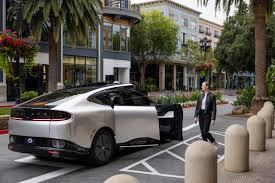
Powertrain and Charging Innovation: The Robocar features a substantial 112-kWh battery pack, engineered to deliver an estimated 250 miles of range. While specific performance metrics for its single rear motor are yet to be disclosed, the robust 845-volt architecture is a significant highlight. This high-voltage system allows for incredibly rapid charging, promising a 10 to 80 percent charge in a mere 20 minutes. This is crucial for maximizing uptime and mitigating range anxiety, especially for those considering using their vehicle for autonomous rideshare services. Furthermore, Tensor is actively developing an automated charger, envisioning a future where a robotic arm seamlessly plugs in your vehicle upon arrival home, automating yet another layer of vehicle ownership. This kind of thoughtful integration underscores their commitment to a truly effortless user experience.
Design for Autonomy and User Experience: The Robocar’s design philosophy extends beyond its powertrain. Its coach-style, center-closing doors are fully powered and equipped with an array of sensors. This isn’t just about luxury; it’s about safety and accessibility in an autonomous context, preventing accidental collisions with obstacles or other vehicles in tight parking scenarios. The interior promises a transformation as well, with the steering wheel and pedals retracting into the dashboard when in autonomous mode, creating an expansive, lounge-like cabin for occupants. This focus on maximizing interior space and passenger comfort is a hallmark of next-gen self-driving cars.
The Sensory Cortex: Unparalleled Situational Awareness
Achieving Level 4 autonomy – the ability for a vehicle to handle all driving tasks in defined operational domains without human intervention – demands an extraordinary level of situational awareness. Tensor’s Robocar is equipped with a sensory suite that is, quite frankly, unmatched in the consumer space, solidifying its position as a leader in L4 AV for consumers.
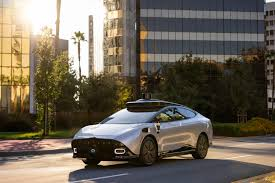
The vehicle boasts over 100 sensors, a testament to its commitment to redundant and comprehensive perception:
Lidar Arrays: Five lidar units are strategically placed – one prominently on the roof for a 360-degree, long-range view (nearly 1,000 feet, providing critical depth perception), complemented by four others around the front, sides, and rear. Lidar’s ability to create precise 3D maps of the environment is indispensable, particularly in low-light conditions or where visual ambiguity exists.
High-Resolution Cameras: A staggering 37 cameras provide a rich tapestry of visual data, capturing everything from traffic signs and lane markings to pedestrian movements and intricate details often missed by other sensors. These are crucial for object classification and understanding complex scenarios.
Radar Units: Eleven radar sensors excel in adverse weather conditions like heavy rain or fog, penetrating environmental obscurants that can challenge cameras and lidar. They provide accurate velocity and distance measurements, essential for predictive path planning and collision avoidance.
Ultrasonic Sensors: Ten ultrasonic sensors handle close-range obstacle detection, invaluable for low-speed maneuvers like parking or navigating congested urban spaces.
Maintaining the integrity of this elaborate sensor array is paramount. Tensor has engineered a sophisticated cleaning system featuring 30 washer nozzles and 13 mini wipers, alongside integrated heating elements to prevent fogging and snow buildup. Going a step beyond even some robotaxi platforms, the Robocar incorporates physical covers that automatically close over the sensors when the vehicle is turned off. This protects them from dirt, dust, and potential damage, ensuring optimal performance from the moment the vehicle is activated. This meticulous attention to detail highlights Tensor’s expert understanding of the real-world operational challenges of self-driving cars.
The Brain of the Robocar: Edge AI and Foundational Models
All this sensory data would be useless without an equally powerful computational backbone. The Robocar houses a massive onboard computer, leveraging eight Nvidia Drive Thor-X chips. This formidable hardware powerhouse is capable of an astounding 8,000 TOPS (trillions of operations per second). This immense processing capability is crucial for handling the real-time demands of Level 4 autonomous driving, enabling lightning-fast perception, prediction, and planning.
A key architectural decision that elevates Tensor’s system is its reliance on edge computing. While the car maintains three redundant communication channels for maximum cloud connectivity, the vast majority of its computing is performed directly onboard. This ensures robust operation even in areas with spotty 5G signals, providing unparalleled reliability and responsiveness. This is a crucial advantage for true autonomous fleet management and individual ownership, where consistent connectivity cannot always be guaranteed.
The software that orchestrates this complex symphony is the Tensor Foundation Model, an AI-based system that employs a dual-parallel processing approach. The first system is extensively trained on vast datasets derived from professional human drivers, replicating expert decision-making. The second system is trained on a Visual Language Model (VLM), designed to address the truly unusual and unexpected “edge cases” that often trip up less sophisticated autonomous systems. By having these two sophisticated AI models working in tandem, the Robocar significantly enhances its ability to safely navigate unforeseen circumstances. Tensor confidently asserts that its system can operate reliably in challenging weather conditions, including rain and snow, breaking the stereotype that advanced autonomy is only viable in sunny climates.
Beyond internal operations, the Robocar also communicates with its external environment. Displays integrated into the lower exterior corners of the vehicle broadcast simple messages and pictograms to pedestrians, clearly indicating the vehicle’s autonomous status and acknowledging their presence. This V2P (vehicle-to-pedestrian) communication is vital for fostering trust and safety in shared urban spaces.
Data Privacy: A Core Differentiator in 2025
One of the most significant anxieties surrounding advanced autonomous vehicles revolves around data privacy. In an era where personal data is often commodified, Tensor has taken a refreshingly proactive stance, positioning data privacy self-driving as a core tenet of the Robocar’s design.
Because the majority of its computing is performed onboard, Tensor dramatically reduces the need to continuously collect and transmit user data to the cloud. Vehicle owners retain ultimate control: while the system is capable of sharing information with Tensor’s cloud infrastructure for potential improvements, owners must explicitly opt-in. If they choose not to, all data generated by their vehicle, including driving patterns, routes, and interactions, remains exclusively within the car.
Furthermore, owners have complete transparency and control over any data collected on them or other users. This includes sensitive biometric data such as facial and palm recognition, which are utilized for secure vehicle operation and theft prevention. All this information can be accessed, reviewed, and permanently deleted by the owner via the vehicle’s interface or a dedicated smartphone application.
Even interior cameras and microphones, essential for driver monitoring during manual operation and enabling voice assistant functionality, are equipped with physical covers and manual off switches. This unprecedented level of user control over internal sensors is a powerful statement, offering peace of mind to privacy-conscious consumers who have grown wary of always-on surveillance. This focus on user privacy is not just a feature; it’s a foundational pillar of Tensor’s value proposition in the 2025 automotive innovation landscape.
Conversational AI: An Intelligent Co-Pilot
The interaction with the Tensor Robocar transcends typical voice commands. Leveraging an advanced Agentic AI backed by a sophisticated Large Language Model (LLM), the vehicle is designed to engage in natural, human-like conversations. Instead of rigid commands, you can simply “talk” to your car, discussing your desired destination or preferences in a fluid, intuitive manner.
This intelligent co-pilot functionality extends beyond simple navigation. Owners can summon the vehicle from anywhere via a call or text message, asking it to pick them up autonomously. Over time, the Robocar learns your habits and preferences, and if connected to your digital calendar, it can proactively anticipate upcoming trips. This predictive capability allows it to optimize charging schedules, ensuring you always have sufficient battery range for your next journey. This personalized autonomous transport experience transforms the vehicle from a mere machine into a truly intelligent companion.
The Best of Both Worlds: Autonomy with a Human Touch
While the Robocar is engineered for Level 4 autonomy, Tensor recognizes that personal choice remains paramount. For those moments when you desire the visceral experience of driving, the vehicle retains a steering wheel and pedals. This hybrid approach offers the best of both worlds: effortless driverless mobility when you need it, and engaging human control when you want it.
When in manual driving mode, the Robocar offers a spectrum of assistance, from foundational safety features like automatic emergency braking to advanced Level 3 semi-automated driving capabilities. This means hands-free, eyes-off-the-road operation in certain conditions, providing a seamless transition point between full manual and full autonomous control.
The transition between modes is remarkably fluid. With a simple command, the steering wheel elegantly retracts into the dash, and the center infotainment screen slides over to conceal it, transforming the cockpit into an open, spacious cabin. Simultaneously, the accelerator and brake pedals also retract, maximizing passenger comfort. Should you wish to re-engage, these controls seamlessly reappear, putting you back in command in an instant.
The underlying control systems are entirely by-wire, meaning steering, braking, and acceleration are all controlled electronically without physical connections. This digital architecture enables precise control and, critically, allows for multiple redundancies in every system. In the unlikely event of a failure in any sensor or drive system, the car is engineered to continue operating safely, ensuring an unparalleled level of safety standards autonomous vehicles demand. This redundancy extends to the vehicle’s maneuverability, with rear-wheel steering allowing the back tires to turn up to 7 degrees. This remarkable capability gives the substantially sized Robocar a claimed 37-foot turning circle, comparable to a compact SUV like a Tesla Model Y, vastly improving urban agility.
Tensor is not just focused on cutting-edge technology; safety is paramount. The company is actively targeting top crash safety scores from leading regulatory bodies like the NHTSA, IIHS, and European NCAP, reinforcing its commitment to passenger protection.
Monetizing Your Mobility: The Robotaxi Investment Opportunity
One of the most compelling, albeit speculative, promises of private autonomous vehicle ownership has been the ability to monetize your car by deploying it as an autonomous taxi while you’re at work or asleep. Elon Musk famously touted this vision for Tesla owners, and while its rollout has been slow, Tensor is positioned to deliver on this promise with the Robocar.
Tensor has already forged a significant partnership with Lyft, planning to introduce Robocars as luxury rideshare vehicles within their network. This collaboration not only validates Tensor’s technology but also lays the groundwork for a broader ecosystem. While specific details on how privately owned Robocars can participate in such a network are still emerging, the underlying infrastructure and technological capability are clearly in place. This opens up exciting possibilities for owners, transforming a depreciating asset into a potential revenue stream, truly embodying the concept of smart mobility solutions. This represents a significant robotaxi investment opportunity, not just for institutional fleets but potentially for individual owners.
The Investment: Price, Production, and Paving the Way for 2027
While Tensor hasn’t officially announced pricing, market analysts and industry insiders anticipate the Robocar will command “luxury pricing.” Given its sophisticated Level 4 capabilities and comparison to vehicles like a well-optioned Mercedes-Benz S-Class, a price point in the range of $150,000 to $200,000 seems plausible, potentially trending towards the higher end due to its unprecedented autonomous feature set. This positions the Robocar as a premium, high-performance EV that delivers unparalleled technological advancement.
Production of the Tensor Robocar will be handled by Vietnamese automaker VinFast at their state-of-the-art factory in Haiphong, Vietnam. While VinFast’s own vehicles have faced some scrutiny regarding initial build quality in the U.S. market, it’s crucial to remember their extensive experience, including years of assembling BMWs under license. VinFast possesses proven manufacturing capabilities and scale, making them a capable partner for Tensor.
The rollout plan is ambitious: production is slated to commence in late 2026, with initial deliveries expected in the United Arab Emirates (UAE) during the fourth quarter of that year. The crucial U.S. market will see deliveries begin in early 2027, contingent upon navigating the complex landscape of regulatory approval for Level 4 autonomous vehicles. Tensor also has its sights set on the European Union and has already announced plans for a rideshare service deployment in Denmark. These phased rollouts reflect a strategic approach to managing regulatory hurdles and market entry across diverse global environments. The journey to widespread adoption of private Level 4 vehicles will undoubtedly involve close collaboration with regulators to define liability and operational frameworks.
Your Future Drive Starts Now.
The Tensor Robocar isn’t just an evolutionary step in autonomous driving; it’s a revolutionary leap towards personal Level 4 autonomy. By combining robust engineering, unparalleled sensor fusion, cutting-edge AI, and an unwavering commitment to data privacy, Tensor is poised to deliver a truly transformative personal mobility experience by 2027. This vehicle promises not just to take you from point A to B, but to redefine your relationship with transportation, offering a blend of effortless autonomy, intelligent interaction, and the freedom to choose your mode of travel.
Are you ready to embrace the dawn of driverless ownership? The future of personal mobility is no longer a concept confined to science fiction; it’s being meticulously engineered for your driveway. Join the conversation and explore how the Tensor Robocar can reshape your world – visit Tensor’s official website or connect with your local automotive innovation specialist to learn more about pre-orders and the future of autonomous driving.