



The Dawn of Personal Autonomy: Tensor’s Robocar Redefines Private Transportation for 2027
As an industry veteran with a decade embedded in the volatile yet exhilarating world of autonomous vehicles, I’ve witnessed the ebb and flow of optimism, the rise and fall of grand promises. From the early days of driver-assistance systems to today’s operational robotaxis in major urban centers, the journey towards true self-driving has been anything but linear. Now, as we stand in 2025, the narrative is shifting again, moving beyond the realm of shared services and into a surprisingly intimate space: personal ownership. Enter Tensor, a name that’s rapidly becoming synonymous with the ambitious vision of delivering a private, Level 4 autonomous vehicle to your driveway by early 2027. This isn’t just another EV; it’s a meticulously engineered leap into the future of personal autonomous vehicles.
For years, the gold standard for fully autonomous driving has largely been defined by fleet operators like Waymo, which deploy purpose-built, highly redundant vehicles designed for specific operational domains. Tesla, while pushing the envelope with its Full Self-Driving (Supervised) software, still firmly places the human driver in command, demanding constant vigilance. Tensor, however, is charting a distinct course, promising consumers a ground-up Level 4 self-driving car – one that can genuinely navigate complex environments without human intervention, yet still offers the traditional controls for when you desire to take the wheel. This audacious move promises to disrupt the automotive industry landscape and redefine expectations for future mobility solutions.
From Robotaxi Pioneer to Personal Autonomy Visionary: Tensor’s Evolution
To truly appreciate Tensor’s current trajectory, one must understand its roots. The company began its journey as AutoX in Silicon Valley back in 2016, a pioneer focused intently on developing autonomous commercial vehicles and robotaxi fleets. Their initial years were marked by rigorous testing, first in California and then extensively in China. During the unprecedented challenges of the COVID pandemic, AutoX strategically shifted its primary operations to China, where it scaled rapidly, deploying a fleet of over 1,000 autonomous taxis providing public rides across five bustling cities. This intensive, real-world deployment generated invaluable data and experience, proving the robustness of their autonomous driving technology in diverse, high-density urban environments.
However, the global geopolitical landscape, particularly concerning data privacy and cross-border data flows, prompted another significant strategic pivot. In a bold move over the past year, the company completely divested from its Chinese operations, citing growing concerns over data sovereignty and compliance complexities. It rebranded as Tensor, repatriated its headquarters to San Jose, California, and recalibrated its mission. The focus narrowed sharply: instead of operating corporate robotaxi fleets, Tensor would concentrate its formidable engineering prowess on building a truly autonomous vehicle specifically for private customers. This return to the heart of innovation in autonomous tech in the US, combined with a decade of accumulated real-world data and expertise, positions Tensor as a formidable contender in the race for next-generation electric vehicles equipped with advanced self-driving capabilities. This strategic reorientation is a testament to the agility and foresight required to thrive in the rapidly evolving electric car market outlook 2025.
The Robocar Unveiled: Engineering a New Standard for Personal EVs
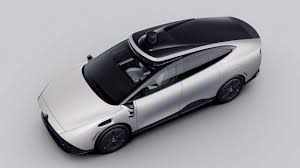
At its core, the Tensor Robocar is far more than just another electric vehicle. It’s an exquisitely designed platform, conceived from the ground up to embody Level 4 autonomy, seamlessly integrated with high-performance EV technology. While many existing autonomous efforts involve retrofitting sensor suites onto conventional vehicles, Tensor’s approach is holistic, designing the vehicle’s every component to support and enhance its autonomous functions.
Powering this vision is a substantial 112-kWh battery pack, providing an estimated 250 miles of range – a respectable figure for urban and suburban commuting in 2025. The current iteration features a single, rear-mounted motor, with performance figures yet to be fully disclosed. However, what truly stands out is the sophisticated 845-volt battery architecture. This isn’t merely about power; it’s about speed. Tensor claims an astonishing 10 to 80 percent fast-charge time in just 20 minutes, a crucial factor for user convenience and a strong competitive edge in the EV infrastructure landscape. This rapid charging capability, facilitated by the cutting-edge battery technology, significantly mitigates range anxiety, making the Robocar a practical choice for daily use. Adding to the convenience, Tensor is actively developing an automated charger, a robotic arm designed to plug in the vehicle upon its return home, signaling a future where even mundane tasks are automated.
Beyond the powertrain, the Robocar’s design exudes both luxury and utility. The coach-style, center-closing doors are a prime example of its thoughtful engineering. These powered doors are equipped with a sophisticated array of sensors, ensuring they open and close smoothly and safely, preventing accidental contact with other vehicles or obstacles. This isn’t just a stylistic flourish; it’s a practical enhancement that improves accessibility and integrates seamlessly into the overall smart car experience. Every aspect of the vehicle, from its sleek lines to its robust construction, speaks to Tensor’s commitment to delivering a premium, luxury autonomous car.
The Nerve Center: Unparalleled Sensor Fusion and Computing Power
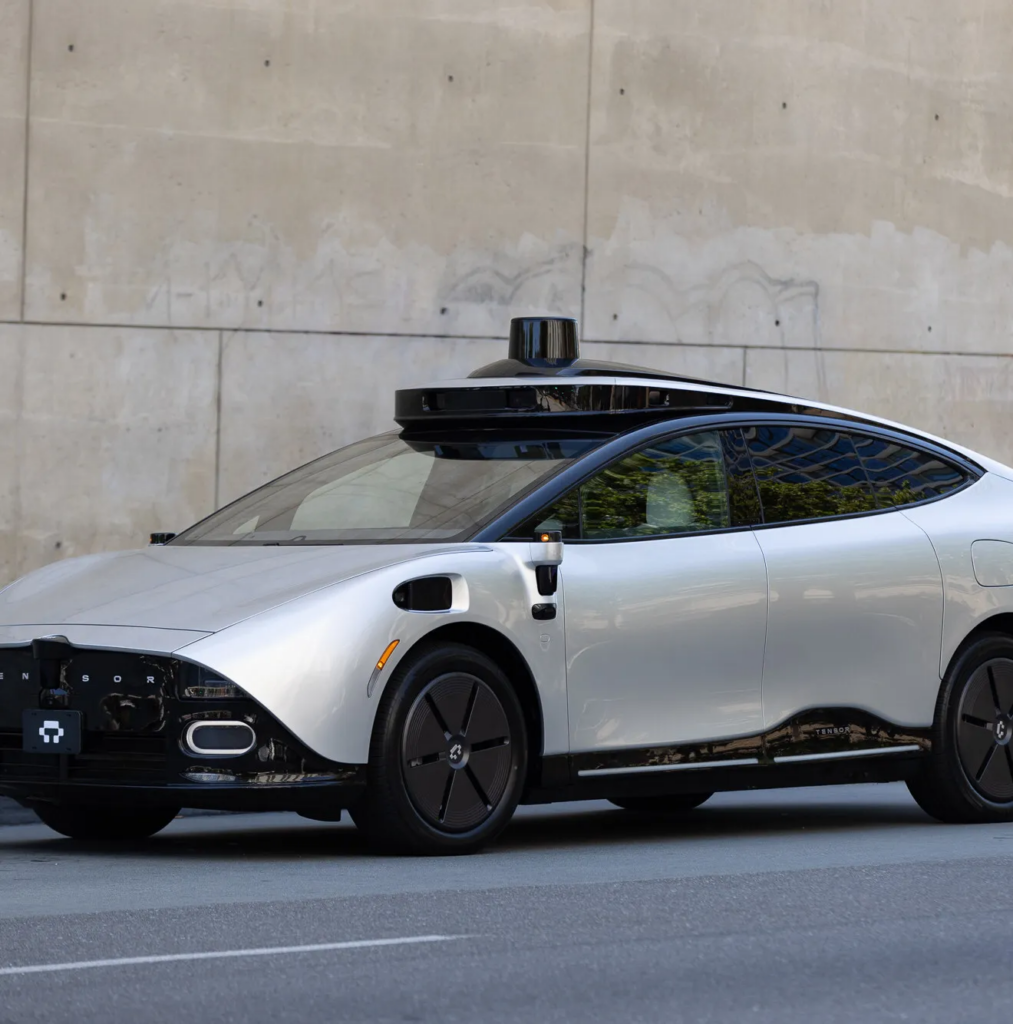
Achieving true Level 4 autonomy is not merely a matter of adding sensors; it requires an intelligent, redundant, and robust sensor suite, meticulously integrated with colossal computing power. The Tensor Robocar is a masterclass in this philosophy, packing over 100 sensors into its sleek form. This includes five high-resolution lidar arrays strategically positioned – one on the roof providing a commanding 360-degree view up to 1,000 feet, and four others encircling the vehicle (front, sides, and rear). Complementing these are 37 cameras, providing multi-spectral visual data, 11 radars for all-weather perception, and 10 ultrasonic sensors for close-range object detection. This sensor fusion technology is designed to create an unparalleled 3D environmental model, allowing the Robocar to “see” and understand its surroundings with exceptional precision, even in challenging conditions.
But what good are sensors if they’re obstructed? Tensor has gone to extraordinary lengths to ensure the continuous clarity of its perception systems. The Robocar features an impressive array of 30 washer nozzles and 13 mini wipers, specifically dedicated to keeping the sensors clean. Additionally, integrated heating elements prevent fogging and snow buildup, enabling reliable operation in diverse climates – a critical consideration for a vehicle launching across the US. Taking this a step further, Tensor has incorporated physical covers that automatically close over the sensors when the vehicle is off, protecting them from dirt, dust, and potential damage. This proactive approach to sensor maintenance is a significant differentiator compared to other autonomous vehicle technologies, including Waymo’s Zeekr-based platform.
All this sensor data is processed by a truly monumental onboard computer, featuring eight Nvidia Drive Thor-X chips. This powerhouse configuration boasts an incredible 8,000 TOPS (trillion operations per second), enabling real-time, complex decision-making directly within the vehicle. While the Robocar maintains triple-redundant communication channels for maximum connectivity to the cloud, the vast majority of its computing is done on-device. This edge computing capability ensures consistent, reliable operation even in areas with poor or non-existent 5G signals, addressing a critical challenge for widespread autonomous driving solutions. The underlying Tensor Foundation Model software is an advanced, AI-based system that operates two parallel perception and decision-making stacks: one trained extensively by professional human drivers, and a second leveraging a Visual Language Model (VLM) specifically designed to address unusual and unexpected “edge cases.” This dual-system approach significantly enhances the Robocar’s ability to handle ambiguous situations, paving the way for safe operation in rain, snow, and other adverse weather conditions, extending its usability far beyond the sunny confines of California.
For the safety of pedestrians and other road users, Tensor has integrated subtle yet effective communication displays on the lower exterior corners of the vehicle. These broadcast simple messages and pictograms, clearly indicating the car’s autonomous operational status and confirming that it has perceived nearby pedestrians, fostering trust and clarity in shared urban spaces.
Your Car, Your Data: A New Paradigm for Digital Privacy
In an era increasingly defined by data monetization and surveillance concerns, Tensor makes a powerful statement: your data, your control. A cornerstone of the Robocar’s design philosophy is its commitment to vehicle data privacy. Because the vast majority of computing and decision-making occurs onboard, Tensor has engineered the system to minimize reliance on cloud data collection. Owners must explicitly opt-in for any data sharing with the cloud; otherwise, all personal and operational data remains securely within the vehicle. Furthermore, owners have full access to all collected data – including biometric data used for vehicle operation and theft prevention (like facial and palm recognition) – via the vehicle interface or a companion mobile app, with the complete freedom to view and delete it at any time.
This proactive stance on privacy extends to the vehicle’s interior. While the Robocar is equipped with interior cameras and microphones for driver monitoring during manual operation and for interacting with the voice assistant, each of these features a physical cover and dedicated off switches, empowering owners to disable them at will. This level of granular control over personal data and interior surveillance systems is a profound differentiator in the automotive innovation 2025 landscape, fostering a deeper sense of trust and ownership. Tensor is setting a new benchmark for ethical AI in automotive design, prioritizing user autonomy over corporate data harvesting.
More Than a Machine: Your Personal AI Chauffeur and Co-Pilot
The Robocar isn’t just a vehicle that drives itself; it’s designed to be an intelligent, conversational companion. At the heart of this interaction is an advanced Agentic AI, backed by a sophisticated Large Language Model (LLM). This isn’t a rudimentary voice command system; it’s engineered to engage in natural, human-like conversation. Instead of rigid commands, you can simply tell your car where you’d like to go, discuss route preferences, or inquire about your schedule.
The convenience extends beyond the in-car experience. Owners can summon their Robocar from anywhere with a simple call or text message, directing it to a specific pickup location. Over time, the vehicle’s AI will learn your habits, preferences, and daily routines. When connected to your digital calendar, it can even anticipate upcoming trips, proactively calculate necessary battery range, and manage charging requirements. This level of predictive intelligence and seamless integration into your daily life represents a significant leap in smart car features and personal assistants, making the Robocar an indispensable element of future mobility solutions.
Drive Yourself, If You Want To: The Seamless Human-Machine Interface
While the Robocar is built for autonomy, Tensor understands the enduring human desire to drive. The vehicle retains a full set of traditional controls – a steering wheel and pedals – ensuring that owners can take manual command whenever they wish. When operating under human control, the Robocar offers a full spectrum of assistance, from fundamental safety features like automatic emergency braking (AEB) to advanced Level 3 semi-automated driving. This means the car can handle hands-free, eyes-off-the-road highway cruising, providing both convenience and a layered safety net.
However, the magic truly unfolds when you engage autonomous mode. With a simple command, the steering wheel gracefully retracts into the dashboard, and the central infotainment screen slides to conceal its cavity. The accelerator and brake pedals also retract flush with the floor, creating an expansive, lounge-like interior. Should you decide to resume manual control, a quick prompt brings all the controls smoothly back into position. This fluid, almost theatrical transformation between autonomous and human-driven modes highlights Tensor’s commitment to a truly versatile and user-centric design.
Engineered for Uncompromising Safety and Durability
The transition to autonomous operation necessitates unparalleled safety engineering. The Tensor Robocar employs a sophisticated by-wire system for steering, braking, and acceleration, meaning there are no physical linkages between the controls and the underlying mechanical systems. This digital control architecture enables superior precision and responsiveness, but more importantly, it facilitates a critical design principle: redundancy. Every vital system – from the drive-by-wire controls to each individual sensor array – features multiple, independent backups. This ensures that even in the unlikely event of a component failure, the vehicle can continue to operate safely, either maintaining its autonomous course or safely transitioning to a minimal risk condition. This fail-operational design is a cornerstone of Level 4 self-driving cars and speaks volumes about Tensor’s dedication to safety.
Further enhancing its maneuverability, the Robocar incorporates rear-wheel steering, allowing the back tires to turn up to 7 degrees in either direction. This engineering feat yields an impressive claimed turning circle of just 37 feet – comparable to a much smaller Tesla Model Y, despite the Robocar being substantially larger. This agility will be invaluable in urban environments.
For occupant protection, Tensor is targeting the highest possible crash safety scores from leading regulatory bodies, including the National Highway Traffic Safety Administration (NHTSA) and the Insurance Institute for Highway Safety (IIHS) in the US, as well as the European New Car Assessment Programme (NCAP). This commitment to exceeding stringent safety standards underscores the Robocar’s robust design and Tensor’s responsibility as a manufacturer of cutting-edge automotive technology.
Unlocking New Revenue Streams: The Autonomous Rideshare Potential
Beyond personal transportation, the Tensor Robocar is poised to unlock new economic opportunities for its owners. Tensor has already secured a significant partnership with Lyft, planning to introduce Robocars into their platform as a premium, luxury rideshare option. But the vision extends further, echoing a promise that has long tantalized the autonomous rideshare market: enabling private owners to monetize their vehicle.
Remember the discussions about letting your self-driving car earn money as a robotaxi while you’re at work or asleep? Tensor is bringing that concept closer to reality. While specific details on the hailing, payment, and operational logistics for privately owned autonomous cars on a rideshare platform are still emerging, the precedent set by the Lyft partnership suggests a structured approach, likely integrating with existing services. This potential for investment in autonomous tech to generate passive income could be a game-changer for early adopters, transforming a personal luxury item into a productive asset within the broader future of transportation ecosystem. Given the cautious, phased rollout of Tesla’s Robotaxi ambitions, Tensor, with its purpose-built Level 4 solution, might indeed be the first to truly democratize this income-generating model.
Investment, Accessibility, and the Road to 2027
While Tensor remains tight-lipped about the exact retail price, expectations point towards “luxury pricing.” Industry benchmarks, such as Waymo’s estimated vehicle costs (comparable to a well-optioned Mercedes-Benz S-Class, placing them in the $150,000 to $200,000 range), suggest the technologically advanced Tensor Robocar will likely sit at the higher end of this spectrum, reflecting its sophisticated engineering and comprehensive Level 4 capabilities. This positions the Robocar as a premium offering in the burgeoning luxury autonomous cars segment.
Production of the Robocar will be handled by Vietnamese automaker VinFast at its state-of-the-art factory in Haiphong, Vietnam. While VinFast vehicles have faced initial challenges in establishing a reputation for consistent build quality in the US market, it’s crucial to remember their extensive history. VinFast has operated for years assembling BMWs under license, demonstrating a deep understanding of sophisticated automotive manufacturing processes and quality control. This partnership leverages VinFast’s production capacity and expertise, allowing Tensor to focus on its core strength: innovative autonomous technology.
The timeline for market introduction is ambitious yet concrete. Production is slated to commence in late 2026, with initial deliveries expected in the United Arab Emirates (UAE) in the fourth quarter of the same year. For the crucial US market, deliveries are projected to begin in early 2027, contingent upon final regulatory approval for autonomous vehicles. Tensor also has its sights set on the European Union and has recently announced plans for a rideshare service deployment in Denmark. The regulatory landscape for autonomous vehicles in the US is complex and constantly evolving, with a patchwork of state and federal guidelines. Securing necessary approvals will be a critical hurdle, but Tensor’s decade of experience and purpose-built approach should facilitate this process. The question of liability, specifically who shoulders the fine if an autonomous Robocar receives a traffic ticket, remains an intriguing legal frontier, though current precedents generally point to the owner assuming responsibility.
Embrace the Autonomous Future
The Tensor Robocar represents a pivotal moment in the evolution of personal transportation. It’s a testament to a decade of relentless innovation, bringing Level 4 autonomy out of specialized fleets and into the hands of the discerning consumer. This vehicle isn’t just about getting from point A to point B; it’s about reclaiming your commute, reimagining your time, and experiencing driving in a fundamentally new way. The convergence of cutting-edge EV performance, unparalleled autonomous capabilities, robust data privacy, and a truly intelligent user interface positions the Robocar as a vanguard for the future of mobility.
Are you ready to transcend the traditional driving experience and usher in a new era of personal autonomy? Stay tuned as Tensor accelerates towards its 2027 launch, promising a future where your car is not just a mode of transport, but a truly intelligent, trusted companion. Visit our website to learn more about how Tensor is driving automotive innovation and transforming the way we move. The future is here, and it’s calling you to take the passenger seat in your own private, self-driving revolution.