



Unlocking the Future: Tensor’s Private Level 4 Robocar Revolutionizes Personal Mobility for 2027
As an expert who’s navigated the tumultuous waters of autonomous vehicle development for over a decade, I can confidently say we’re standing on the precipice of a monumental shift in personal transportation. For years, the promise of a truly self-driving car felt like a distant dream, often relegated to the realm of commercial robotaxis operating in geofenced zones. We’ve seen Waymo’s impressive strides in cities like Phoenix and San Francisco, and even Tesla’s ambitious, albeit supervised, Full Self-Driving efforts. But what if that revolutionary autonomy—the kind where you genuinely don’t need to intervene—wasn’t just for ride-hailing fleets, but for your own driveway?
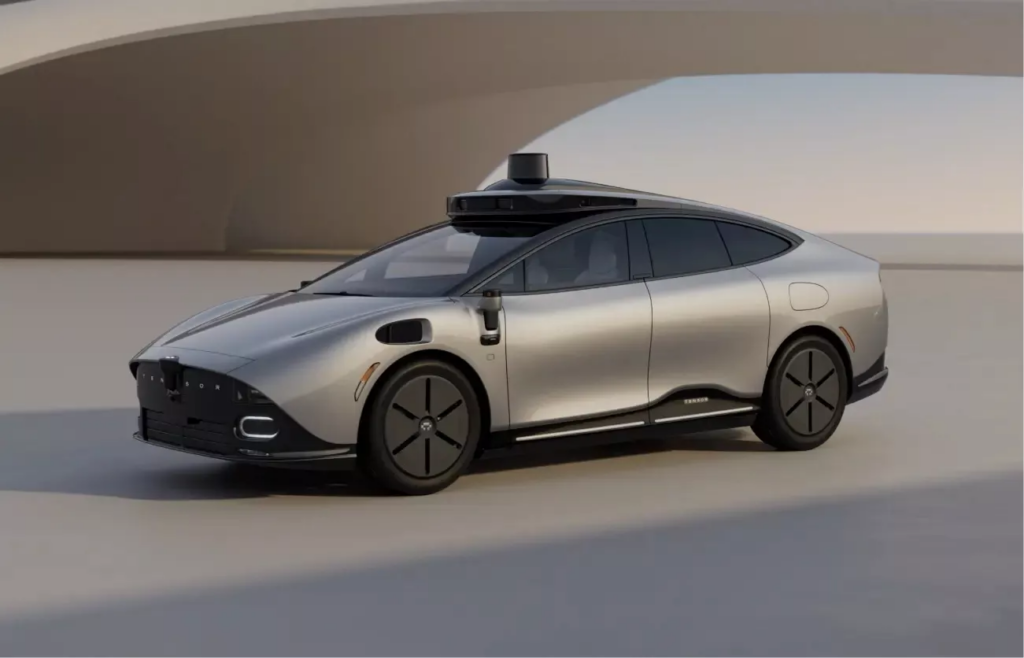
Enter Tensor, a rebranded powerhouse poised to disrupt the luxury self-driving car market with its groundbreaking Robocar. By early 2027, Tensor isn’t just offering another electric vehicle; they’re launching a ground-up, SAE Level 4 private self-driving car, designed explicitly for individual ownership. This isn’t merely an upgrade to an existing car; it’s a completely reimagined personal mobility solution, an AI-powered automotive innovation built from the chassis up to deliver uncompromised autonomy. From my perspective, this marks a pivotal moment, shifting the conversation from “when will robotaxis be everywhere?” to “when can I own a truly autonomous vehicle?”
The Genesis Story: A Decade of Disruption and Strategic Reimagination
To truly appreciate the significance of the Tensor Robocar, we need to rewind a bit, tracing its lineage back to AutoX, founded in Silicon Valley in 2016. My journey in this industry began around the same time, and I remember AutoX quickly making a name for itself, primarily focused on building robust autonomous commercial vehicles and, crucially, robotaxis. They were an early mover, testing autonomous capabilities in both California and China by 2017. Their dedication to real-world deployment accelerated significantly during the COVID-19 pandemic, leading them to relocate fully to China and establish a formidable fleet of over a thousand autonomous taxis. These vehicles ferried the public across five major Chinese cities, accumulating invaluable data and operational experience in diverse urban environments—a feat that few companies globally could match.
However, the global landscape shifted, particularly concerning vehicle data privacy solutions and geopolitical considerations. According to their head of marketing, Amy Luca, Tensor made the strategic, and frankly, astute decision last year to completely divest from its Chinese operations. This was a bold move, underlining a commitment to data security and transparency that would become a cornerstone of their new identity. Rebranding as Tensor and returning to their Silicon Valley roots in San Jose, California, was more than just a name change; it was a fundamental strategic pivot. The vast experience gained from operating a large-scale robotaxi fleet wasn’t discarded but redirected. Instead of corporate fleets, their sights were now firmly set on the discerning private customer, crafting an next-generation personal mobility solution designed from the ground up to redefine individual car ownership. This historical context is critical; Tensor isn’t an overnight sensation but a culmination of nearly a decade of intense R&D and real-world operational expertise, now refocused on a singular, ambitious goal.
Beyond the Wheel: The Robocar’s Core Engineering and Premium EV Architecture
At its heart, the Tensor Robocar represents a sophisticated evolution of the electric vehicle. As an expert deeply familiar with high-performance EV architecture, I can tell you that every detail speaks to a commitment to both efficiency and luxury. Powering this intelligent machine is a substantial 112-kWh battery pack, providing an estimated 250 miles of range. While current details on motor output and curb weight remain under wraps, the focus is clearly on delivering a smooth, refined ride appropriate for a premium segment.
However, where Tensor truly distinguishes itself is in its charging capabilities and thoughtful design. The 845-volt battery pack is a testament to advanced power electronics, enabling a rapid charge from 10 to 80 percent in a mere 20 minutes. This significantly reduces range anxiety and minimizes downtime, a crucial factor for a vehicle intended for both daily commutes and longer journeys. Looking ahead, Tensor is also innovating with an automated charging system featuring a robotic arm—imagine pulling into your garage, and the car plugs itself in. This kind of seamless integration exemplifies the “frictionless” future they’re building.
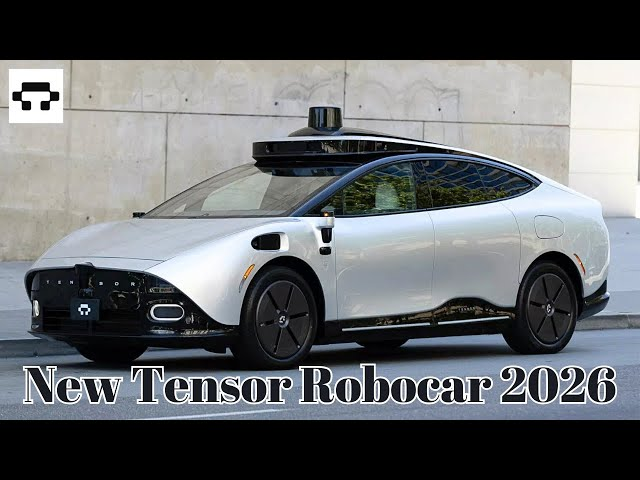
Beyond the powertrain, the physical design reflects an intelligent approach to user experience. The coach-style, center-closing doors aren’t just aesthetically pleasing; they’re fully powered and equipped with an array of sensors. This ensures they open and close elegantly and safely, preventing accidental collisions with obstacles or other vehicles in tight spaces. These subtle yet impactful design choices underscore Tensor’s commitment to delivering a truly premium and effortless experience, setting a new benchmark for premium electric vehicle segment design.
Unlocking True Autonomy: A Deep Dive into Level 4 Autonomous Driving Technology
This is where the Tensor Robocar truly shines and unequivocally justifies its position as a pioneer. Tensor bills the Robocar as an SAE Level 4 autonomous vehicle, and for those of us immersed in the field, this is not a term to be used lightly. Level 4 signifies a vehicle that can perform all driving functions and monitor the driving environment without human intervention under specific conditions. Crucially, it means the car can handle situations even if a human driver fails to respond appropriately. While it retains a steering wheel and pedals for optional manual operation, the fundamental design principle is that it can operate independently.
This capability vastly surpasses current offerings like Tesla’s Full Self-Driving (Supervised), which, despite its marketing, is firmly a Level 2 system. Tesla FSD requires constant driver attention and readiness to intervene, a reality that’s led to much debate and scrutiny within the industry. Tensor, however, went back to the drawing board. Development commenced in 2020, shortly after their robotaxi service launched in China, leveraging that invaluable real-world data. The Robocar was designed from the ground up as an autonomous platform, not as an existing vehicle retrofitted with sensors. This holistic approach is absolutely essential for achieving robust, reliable Level 4 functionality.
Achieving true Level 4 autonomy is an astronomical engineering challenge, demanding an unprecedented fusion of hardware and software. The Tensor Robocar is fitted with over 100 sensors—a staggering number that speaks volumes about their commitment to redundancy and comprehensive environmental understanding. This array includes five lidar arrays (one prominently on the roof, four strategically placed around the front, sides, and back), 37 cameras, 11 radars, and 10 ultrasonic sensors. The rooftop lidar alone boasts a nearly 1,000-foot detection range, offering 360-degree situational awareness. For comparison, many current production vehicles might feature a handful of cameras and radars; Tensor’s sensor suite is in a different league entirely, akin to what we see in high-end Waymo vehicles.
But merely having sensors isn’t enough; they must function flawlessly in all conditions. Tensor has equipped the Robocar with 30 washer nozzles, 13 mini wipers, and integrated heating elements to prevent fogging and snow buildup – details that only an experienced operator would prioritize. Going a step further than even Waymo’s Zeekr-based platform, the Tensor Robocar incorporates physical covers that automatically seal over the sensors when the vehicle is turned off, protecting them from dirt, debris, and potential damage. This demonstrates an exceptional level of foresight and practical engineering, ensuring sensor integrity over the vehicle’s lifespan.
All this sensor data is processed by a massive onboard computer, a veritable supercomputer on wheels. Featuring eight Nvidia Drive Thor-X chips, it boasts an incredible 8,000 TOPS (trillion operations per second) of processing power. While the car has triple-redundant communication channels for maximum connectivity, ensuring it’s always connected to the cloud, the critical distinction here is that most computing happens directly within the vehicle. This edge computing capability is paramount, guaranteeing reliable operation even in areas with spotty or non-existent 5G signals. The Tensor Foundation Model software, an AI-powered automotive innovation, runs two parallel systems: one trained by millions of miles of professional human driving data, and the second leveraging a Visual Language Model (VLM) specifically designed to address unusual and unexpected “edge cases”—those unpredictable scenarios that often stump lesser autonomous systems. This dual-system approach is a significant step forward in making Level 4 ADAS solutions robust enough for the real world. Tensor also confidently states its system can operate in rain and snow, breaking the perception that advanced AVs are only viable in sunny climates, making it a viable option for a broader U.S. demographic.
Adding another layer of intelligence and safety, external displays on the lower corners of the vehicle communicate simple messages and pictograms to pedestrians. This innovative feature clearly informs those outside the vehicle that it’s operating autonomously and, more importantly, that it has detected them, enhancing safety and building trust in busy urban environments.
Privacy, Personalization, and Power: The User Experience of a Truly Smart Car
In an era where personal data is often commodified without explicit consent, Tensor’s approach to vehicle data privacy solutions is a breath of fresh air. This is a critical differentiator for the private owner. Because the vast majority of processing occurs onboard, Tensor has engineered the Robocar so it doesn’t need to collect data from your car and transmit it to the cloud. While it can share information for purposes like fleet learning or diagnostics, owners must explicitly opt-in. Without this consent, all your data remains securely within the vehicle. Furthermore, owners have complete access to all data the car collects on them and its users, which can be easily managed and deleted via the vehicle interface or a companion phone app. This includes sensitive biometric data, such as facial and palm recognition, which are necessary for vehicle operation (e.g., ignition, personalization) and theft prevention. This level of control over one’s own data is a game-changer in the consumer automotive space.
While the Robocar includes interior cameras and microphones for manual driving monitoring and voice assistant interaction, Tensor understands privacy concerns. Each camera and microphone comes with a physical cover and explicit off switches, allowing occupants to disable them at will. This transparent and user-centric design philosophy cultivates trust, something often lacking in the connected car experience.
However, you won’t want those microphones off all the time. One of the most compelling features is the integrated Agentic AI, backed by a sophisticated Large Language Model (LLM). This isn’t your average voice assistant barking back rigid commands; it’s designed for natural, human-like conversation. Instead of rigid instructions, you can simply talk to your car about your desired destination or current needs. Imagine casually saying, “Hey Tensor, I need to get to the airport by 3 PM, then pick up groceries,” and the car intelligently plans the route, considering traffic and suggesting optimal timing. This conversational interface elevates the personalized autonomous driving experience to an unprecedented level.
Beyond in-car interaction, the Robocar leverages its AI for true convenience. You can summon the car from anywhere with a simple call or text. Its predictive capabilities are equally impressive; if connected to your calendar, it will learn your habits, anticipate upcoming trips, and proactively manage its battery range and charging needs. This intelligent foresight means your car isn’t just a machine; it’s a proactive, personalized assistant, always a step ahead.
The Hybrid Future: Drive When You Want To, Unwind When You Don’t
While the Tensor Robocar is engineered primarily for autonomous operation, Tensor understands that the joy of driving, for many, is still cherished. Thus, it seamlessly integrates the option for manual control. The steering wheel and pedals remain, giving owners the freedom to take the wheel whenever they desire. When operated manually, the car offers a spectrum of assistance levels, from basic safety features like automatic emergency braking to sophisticated hands-free, eyes-off-the-road Level 3 semi-automated driving. This allows the driver to choose their preferred level of engagement, enjoying advanced ADAS systems while retaining ultimate control.
When the urge to drive subsides, simply engage autonomous mode. The steering wheel elegantly retracts into the dash, and the center infotainment screen slides to conceal it, transforming the cockpit into a spacious, lounge-like environment. The accelerator and brake pedals also retract, maximizing comfort and space. Should you wish to resume manual control, everything pops back into place instantly. This thoughtful design ensures a smooth transition between modes, enhancing both safety and convenience.
Underneath, the Robocar employs by-wire systems for steering, braking, and acceleration, meaning there are no physical connections between the controls and the underlying mechanics. This advanced architecture allows for precise, electronic control and, critically, facilitates multiple redundancies. Every critical system—from sensors to drive controls—has redundant backups, ensuring the vehicle can continue to operate safely even in the event of a component failure. This level of engineering robustness is foundational for Level 4 autonomy. Furthermore, rear-wheel steering, allowing the back tires to turn up to 7 degrees, grants the Robocar an impressively tight 37-foot turning circle. This agility, comparable to a Tesla Model Y despite the Tensor’s likely larger footprint, makes urban maneuvering a breeze. In the rare event of a collision, Tensor is targeting top crash safety scores from NHTSA, IIHS, and European NCAP, reinforcing their commitment to occupant protection.
Beyond Your Driveway: Monetizing Your Autonomous Asset and Disruptive Automotive Technology Trends
The vision for the Tensor Robocar extends beyond just private ownership; it taps into the burgeoning robotaxi market potential. Tensor has already secured a significant partnership with Lyft to integrate Robocars into its luxury rideshare service. This strategy provides a commercial pathway for their technology and builds brand awareness.
But the most exciting prospect for private owners echoes a vision Elon Musk articulated years ago: putting your car to work. Tensor is suggesting that owners could potentially enlist their Robocar into an autonomous rideshare fleet while they’re at work or asleep, essentially monetizing their asset. Given the comparatively slow rollout and regulatory hurdles faced by Tesla’s Robotaxi service, Tensor, with its ground-up Level 4 capability and established platform partnerships, might just deliver on this promise sooner. While specific details on how private owners would manage hailing and payments for such a service are still emerging, it’s reasonable to assume integration with existing platforms like Lyft would be central. This model represents a significant leap in disruptive automotive technology trends, offering a glimpse into a future where car ownership isn’t just a cost center but a potential income stream, transforming the very economics of personal transport. This move could also open up new subscription models for autonomous vehicles, allowing greater flexibility for owners.
The Investment: What to Expect from This Luxury Pioneer
So, what will it cost to own a piece of this future? Tensor isn’t revealing exact figures yet, but Amy Luca indicated “luxury pricing.” From my experience, considering the complexity and advanced technology, this translates to a substantial investment. Waymo’s CEO has hinted that their fully autonomous vehicles are comparable in cost to a well-optioned Mercedes-Benz S-Class, placing them in the $150,000 to $200,000 range. Given the Tensor Robocar’s sophisticated sensor suite, computing power, and ground-up Level 4 design, I anticipate it will fall towards the higher end of that spectrum, making it a premium offering within the autonomous vehicle investment opportunities landscape.
On the production front, Tensor has forged a partnership with Vietnamese automaker VinFast, utilizing their factory in Haiphong, Vietnam. While VinFast vehicles have faced some scrutiny regarding build quality in the U.S. market, it’s crucial to remember that VinFast has a history of assembling BMWs under license for many years. This demonstrates their capability and experience in manufacturing high-quality automobiles. Tensor will undoubtedly have rigorous quality control processes in place to ensure their exacting standards are met. Production is slated to begin in late 2026, with initial deliveries expected in the United Arab Emirates (UAE) in the fourth quarter of that same year, a strategic choice for early market penetration. U.S. deliveries will commence in early 2027, contingent upon the necessary autonomous vehicle regulatory landscape approvals, which remain a complex and evolving challenge. The company also has its sights set on the European Union market and has already announced plans for a rideshare service in Denmark, showcasing its global ambitions.
As for who pays the ticket if your autonomous car gets one? While official policy will likely evolve with regulations, the current expectation in the industry is that the owner, as the registered party, would likely be responsible. This is just one of the many legal and ethical considerations that will shape the widespread adoption of Level 4 autonomous driving technology.
The Tensor Robocar isn’t just another vehicle; it’s a vision for the future of private vehicle ownership, blending unparalleled autonomy, cutting-edge AI, and a refreshingly user-centric approach to data privacy. It promises not just a ride, but an experience—a true leap forward in how we interact with our personal transportation.
Ready to dive deeper into the world of truly autonomous personal mobility and explore how smart car connectivity solutions and ethical AI in self-driving cars are shaping our future? Connect with us to stay informed about the unfolding revolution in premium personal transport.