



The Promise Unlocked: Owning Your Level 4 Autonomous Future with the Tensor Robocar
The year is 2025, and the relentless march of autonomous vehicle technology continues to redefine our relationship with transportation. For over a decade, we’ve witnessed the exhilarating, often complex, evolution of self-driving cars. From early ADAS systems to the burgeoning robotaxi fleets dotting our urban landscapes, the vision of a truly autonomous future has been tantalizingly close. Yet, one segment has largely remained elusive: the private, consumer-owned, fully Level 4 (L4) self-driving vehicle. While Waymo and Cruise operate their L4 services, and Tesla refines its “Full Self-Driving (Supervised)” capabilities, the keys to a personal L4 vehicle have felt like a distant dream.
Enter Tensor. A name quickly becoming synonymous with disruption in the autonomous space, Tensor isn’t just selling another EV; they’re offering a paradigm shift: a ground-up engineered, L4 autonomous vehicle designed for your driveway, your command, and your private ownership. This isn’t a robotaxi you hail; it’s your Robocar. As someone who has navigated the intricacies of this industry for the past ten years, I can confidently say this is the pivot point many of us have been anticipating.
A Decade of Driving Innovation: From AutoX to Tensor’s Vision
To truly appreciate Tensor’s current trajectory, we must glance back at its roots. Founded in Silicon Valley in 2016 as AutoX, the company cut its teeth in the fiercely competitive world of commercial autonomous vehicles and robotaxis. Its early years were characterized by intensive testing across California and China, quickly scaling to a fleet of over 1,000 autonomous taxis serving the public in five Chinese cities during the height of the pandemic. This period, while pivotal for technology development, also highlighted the complex geopolitical and data sovereignty challenges inherent in cross-border operations.
The past year, however, has seen a strategic, and frankly, astute, repositioning. Citing data privacy concerns and a desire to serve the American market directly, the company divested entirely from its Chinese operations. Re-emerging as Tensor, headquartered back in San Jose, California, the focus shifted dramatically. No longer solely a robotaxi operator, Tensor has channeled its accumulated expertise, engineering prowess, and formidable capital into a singular mission: bringing a truly autonomous vehicle to private customers. This isn’t merely a business pivot; it’s a redefinition of the personal mobility landscape, recognizing the latent demand for owning and controlling one’s L4 autonomous experience. This strategic move positions Tensor uniquely in the luxury autonomous vehicle segment, directly targeting discerning early adopters and high-net-worth individuals who value cutting-edge AI in automobiles and advanced driver-assistance systems beyond anything currently available.
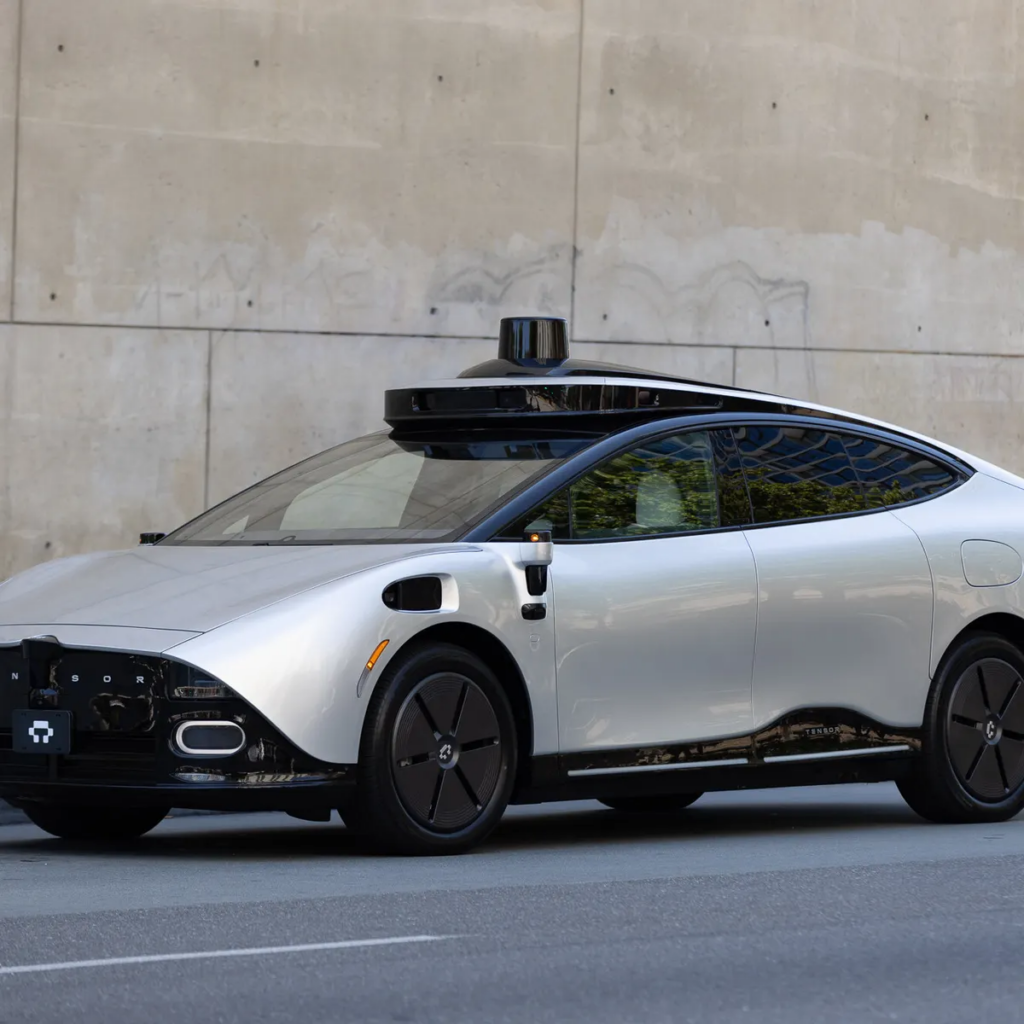
The Robocar Unpacked: Engineering a Personal Autonomous Future
At its core, the Tensor Robocar is an engineering marvel designed from the first bolt to be an L4 autonomous platform. This isn’t an existing vehicle retrofitted with sensors; it’s a holistic integration of hardware and software. The vehicle is built on a robust electric vehicle (EV) architecture, featuring a substantial 112-kWh battery pack. While performance metrics are still under wraps, the focus is clearly on range and efficiency, with an estimated 250 miles—a practical figure for urban and inter-city commutes.
The 845-volt battery architecture is a critical detail, enabling ultra-fast charging capabilities. Tensor claims a 10 to 80 percent charge in just 20 minutes, a statistic that drastically mitigates range anxiety and enhances the overall user experience. This commitment to convenience extends beyond the battery itself; the company is actively developing an automated robotic charging arm, promising a truly hands-off experience from arrival to departure. This innovation, while seemingly small, addresses a key friction point in EV ownership and contributes significantly to the seamless autonomous experience Tensor aims to deliver.
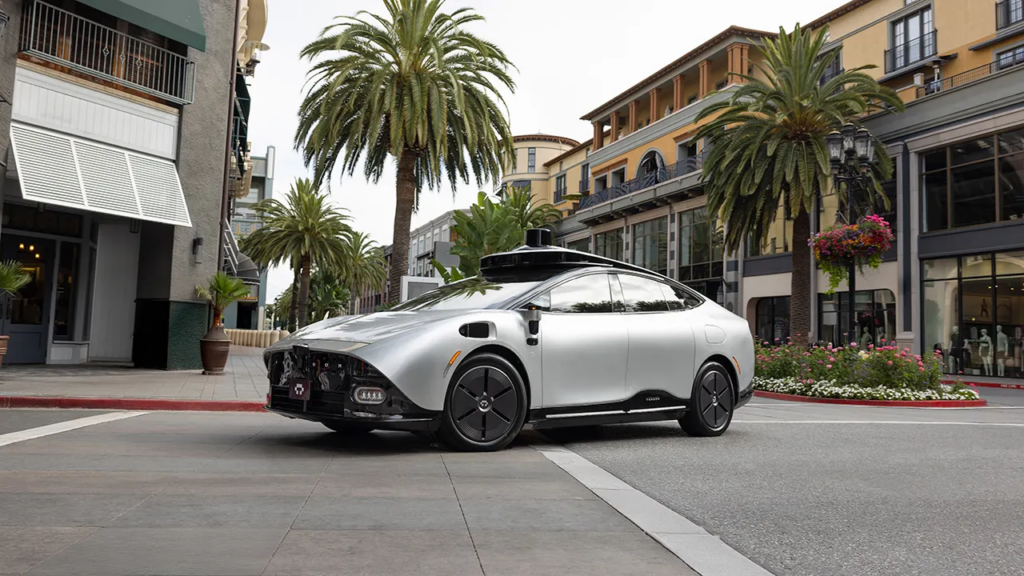
But the thoughtful design extends further. The coach-style, center-closing powered doors, equipped with proximity sensors, speak volumes about the user-centric approach. No more dinging adjacent vehicles or struggling with cumbersome access—every interaction is designed for effortlessness. These subtle but impactful design choices underscore Tensor’s commitment to a premium, next-generation EV technology experience.
Beyond ADAS: True Level 4 Autonomy, Reimagined for You
What truly sets the Robocar apart is its commitment to SAE Level 4 autonomy. For the uninitiated, L4 signifies a vehicle capable of performing all driving tasks under specific conditions without human intervention. Crucially, a human driver is not required to monitor the environment or take over control. This is a monumental leap beyond even the most advanced Level 2+ systems currently available, such as Tesla’s FSD (Supervised), which still demands driver attention and readiness to intervene. The distinction isn’t just semantic; it’s operational and philosophical.
Tensor’s decision to design the vehicle from the ground up for L4 autonomy, with development commencing as early as 2020, stands in stark contrast to the iterative approach of many competitors. This foundational strategy ensures that every component, from the chassis to the compute stack, is optimized for autonomous operation, mitigating the compromises often associated with adapting conventional vehicles. This isn’t just about self-driving car technology; it’s about engineering purpose-built high-autonomy cars. This approach is a strong signal to autonomous vehicle investment circles that Tensor is serious about delivering a complete, robust solution.
A Symphony of Sensors and Silicon: The Brains Behind the Wheel
Achieving L4 autonomy demands an unparalleled sensory and computational arsenal. The Robocar’s sensor suite reads like a spec sheet from a military-grade reconnaissance vehicle: over 100 sensors strategically placed to provide a 360-degree, high-resolution understanding of its environment. This includes five lidar arrays (a crucial differentiator from camera-only systems), 37 cameras, 11 radars, and 10 ultrasonic sensors. The rooftop lidar, for instance, boasts a nearly 1,000-foot range, offering comprehensive environmental mapping even at speed. This multi-modal sensor fusion is critical for robust perception, especially in complex and unpredictable urban environments.
Maintaining the integrity of these sensors is paramount. Tensor has addressed this with an impressive array of 30 washer nozzles, 13 mini wipers, and integrated heating elements to combat fogging, rain, and snow buildup. Going a step further than even advanced robotaxi fleets, the Robocar features physical covers that automatically shield sensors when the vehicle is off, protecting them from dirt and potential damage—a small detail, perhaps, but indicative of a deep understanding of real-world operational challenges.
All this raw data feeds into a computational beast: a massive onboard computer powered by eight Nvidia Drive Thor-X chips, delivering a staggering 8,000 TOPS (trillion operations per second). This immense processing power enables most deep learning in automotive and computer vision for AV tasks to be handled directly on the vehicle, ensuring reliable operation even in areas with spotty 5G connectivity (though the car itself boasts three redundant communication channels for maximum uptime). The Tensor Foundation Model software, an AI-based system, employs a dual-parallel processing approach: one system trained by professional drivers, and another leveraging a Visual Language Model (VLM) to tackle novel and unexpected “edge cases.” This redundancy and sophisticated AI architecture allow the Robocar to confidently navigate diverse weather conditions, from rain-slicked city streets to snowy mountain passes, making smart transportation a reality for a broader geographic base.
Your Privacy, Your Control: Data Ownership in the Age of AI
In an era increasingly concerned with digital privacy, Tensor takes a bold stance that resonates deeply with US consumers. By performing the vast majority of its computing onboard, the Robocar significantly reduces its reliance on constant cloud data collection. While the vehicle is capable of sharing information with the cloud, owners must opt-in for this functionality. Otherwise, all personal and operational data remains securely within the vehicle. Furthermore, owners have full access to their car’s collected data, including biometric identifiers used for vehicle operation (like facial or palm recognition), with the ability to review and delete it through the vehicle’s interface or a dedicated phone app.
This commitment extends to interior monitoring. While the vehicle includes internal cameras and microphones for manual driver monitoring and voice assistant interaction, each is equipped with a physical cover and a dedicated off-switch. This level of granular control over personal data and privacy hardware is a significant differentiator, especially when compared to the often opaque data practices of other tech companies. For a generation increasingly wary of constant surveillance, Tensor’s approach to data privacy in vehicles is not just a feature, it’s a core value proposition.
The Conversational Cockpit: Interacting with Your Intelligent Companion
Tensor envisions a future where you don’t just use your car; you converse with it. The Robocar is equipped with an Agentic AI, backed by a cutting-edge Large Language Model (LLM), designed for natural, human-like interaction. Forget rigid voice commands; imagine discussing your destination, asking about traffic, or refining your route in a fluid, conversational manner. This integration of sophisticated automotive AI aims to make the vehicle a truly intuitive and responsive companion.
Beyond in-car interaction, the Robocar extends its intelligence to remote control. Summoning your car from a parking lot or having it pick you up from a different location becomes as simple as a phone call or text message. The system also learns your habits and, when connected to your digital calendar, can anticipate upcoming trips, manage battery range, and even pre-empt charging needs. This predictive mobility transforms the car from a mere conveyance into a truly intelligent personal assistant, anticipating your needs before you even voice them.
The Driver’s Seat (Should You Choose It): Blended Autonomy and Manual Control
While the Robocar is engineered for autonomous operation, Tensor understands that the joy of driving isn’t entirely obsolete. The vehicle retains a physical steering wheel and pedals, providing the owner with the option to take manual control whenever desired. This hybrid approach is a pragmatic nod to both enthusiasts and those who prefer to maintain control in certain situations.
When operating manually, the Robocar offers a spectrum of assistance, from essential safety aids like automatic emergency braking to advanced Level 3 semi-automated driving (hands-free, eyes-off-the-road under specific conditions). This flexibility ensures a familiar driving experience while still leveraging the vehicle’s inherent intelligence.
Switching to autonomous mode is a theatrical experience itself. The steering wheel gracefully retracts into the dashboard, and the center infotainment screen slides to conceal it, creating an expansive, uncluttered cabin. The accelerator and brake pedals similarly withdraw from sight. Should you wish to resume control, these elements seamlessly reappear, thanks to a fully by-wire system for steering, braking, and acceleration. This absence of physical connections is not just about aesthetics; it enhances safety through multiple redundancies, ensuring critical systems remain operational even in the event of a single component failure. The addition of rear-wheel steering (up to 7 degrees) further enhances maneuverability, giving this substantial vehicle a compact 37-foot turning circle, comparable to a Tesla Model Y.
Safety First: Engineering for the Unforeseeable
In the realm of autonomous vehicles, safety is not merely a feature; it’s the bedrock of trust and acceptance. Tensor understands this implicitly, targeting the highest crash safety scores from critical regulatory bodies like the NHTSA and IIHS in the U.S., and the European NCAP. This commitment, combined with the multiple redundancies built into all drive-by-wire and sensor systems, underpins the Robocar’s core design philosophy. The comprehensive sensor suite, coupled with the sophisticated AI, is designed to perceive, predict, and prevent accidents far more effectively than a human driver. This focus on automotive cybersecurity and robust engineering provides peace of mind for future owners.
Beyond Personal Use: Monetizing Your Autonomous Asset
Tensor isn’t just selling you a car; they’re selling you a potential income stream. The company has already forged a partnership with Lyft to integrate Robocars into its luxury rideshare fleet. But the vision extends further, echoing a promise once made by Elon Musk: the ability for private owners to deploy their autonomous vehicle for rideshare services while they’re at work, asleep, or simply not using it.
While the specifics of hailing and payment for privately owned autonomous cars remain to be fully detailed, the concept of autonomous ride-sharing or “transportation as a service (TaaS)” on a personal level is profoundly compelling. Imagine your car earning revenue for you, seamlessly integrating into an existing platform like Lyft. This ability to monetize a significant investment could fundamentally alter the economics of vehicle ownership, making the high upfront cost a more palatable proposition for many. This isn’t just an EV; it’s a smart, revenue-generating asset, contributing to the broader smart city infrastructure.
The Price of Pioneering: Estimating Your Investment in Tomorrow’s Mobility
So, what will it cost to own a piece of this future of personal mobility? While Tensor is maintaining tight lips on exact pricing, the phrase “luxury pricing” has been invoked. Considering the deep engineering, advanced AI, and L4 capabilities, it’s reasonable to estimate a cost comparable to a well-optioned Mercedes-Benz S-Class, putting it firmly in the $150,000 to $200,000 range. This positions the Robocar as a premium, high-tech investment rather than a mainstream vehicle, targeting an early adopter segment willing to pay for groundbreaking technology and unparalleled convenience. It’s an investment in a vision of freedom and efficiency, not just a mode of transport. For luxury autonomous vehicles, this pricing aligns with the sophisticated technology on offer.
Production is being handled by Vietnamese automaker VinFast at its state-of-the-art factory in Haiphong, Vietnam. While VinFast’s brand in the US market is relatively new, it’s crucial to remember their extensive history assembling BMWs under license, demonstrating a solid foundation in manufacturing quality. Tensor indicates that production will commence in late 2026, with initial deliveries slated for the United Arab Emirates (UAE) in Q4 2026. Crucially for the US market, deliveries are projected to begin in early 2027, pending crucial autonomous driving regulations and approvals. The company also has ambitious plans for expansion into the European Union and recently announced a deal to supply cars to a Danish rideshare service, signaling a global vision.
The Tensor Robocar represents more than just a new vehicle; it’s a bold statement about the future of private ownership in an increasingly autonomous world. It challenges the conventional wisdom that L4 autonomy must remain confined to fleet operations, offering a compelling vision where cutting-edge technology, privacy, and personal freedom converge. This is not just a car; it’s your entry into the next chapter of transportation.
Are you ready to truly own your autonomous future? Explore how the Tensor Robocar can transform your daily commute, unlock new possibilities, and redefine your relationship with the road. The future isn’t just coming; it’s available for pre-order. Visit Tensor’s official channels to be among the first to experience the dawn of personal L4 autonomy.