



Unlocking the Future of Personal Mobility: The Tensor Robocar and the Dawn of Private Level 4 Autonomous Driving (2025-2027)
As an industry veteran who’s tracked the autonomous vehicle (AV) revolution for over a decade, I can attest that 2025 marks a pivotal moment. The discourse around self-driving technology has matured, moving beyond mere speculation to tangible, albeit carefully managed, real-world deployments. While robotaxi services like Waymo and increasingly sophisticated ADAS features from Tesla have dominated headlines, a new contender is emerging with a truly disruptive vision: the Tensor Robocar. This isn’t just another high-tech EV; it’s a meticulously engineered Level 4 autonomous vehicle designed for private ownership, promising to redefine personal transportation as we know it by early 2027.
Tensor’s audacious move to bring a Waymo-style experience directly to consumers is a game-changer, addressing a segment of the autonomous vehicle market that has, until now, remained largely untapped. Imagine the convenience of a vehicle that operates entirely on its own, capable of navigating complex urban environments or open highways, yet remains exclusively yours. This article will delve into the engineering marvel, strategic pivot, and profound implications of the Tensor Robocar, offering an expert’s perspective on why this vehicle is poised to be a benchmark for next-gen self-driving cars and a significant player in the luxury autonomous vehicles segment.
The Genesis of Autonomy: A Decade of Innovation and a Strategic Pivot
Tracing its roots back to Silicon Valley in 2016 as AutoX, this entity meticulously laid the groundwork for advanced autonomy. The early years, steeped in robust research and development, saw AutoX focus primarily on building commercial autonomous vehicles and robotaxis. By 2017, their prototypes were already navigating the challenging roads of California and China, gathering invaluable data and refining their algorithms.
The subsequent years, particularly through the unprecedented challenges of the COVID pandemic, saw AutoX make significant strides in China. They scaled their operations to an impressive fleet of over 1,000 autonomous taxis, providing public rides across five bustling cities. This intensive real-world deployment generated an unparalleled data trove, honing their AI-powered personal transport systems to a remarkable degree of sophistication.
However, the global landscape for technology companies shifted dramatically around 2024-2025, particularly concerning data governance and privacy. In a bold strategic move, the company completely divested from its Chinese operations, a decision profoundly influenced by an acute awareness of data privacy concerns in autonomous cars. This wasn’t merely a rebranding; it was a fundamental reorientation. Re-emerging as Tensor and resettling in San Jose, California, the company sharpened its focus from corporate fleets to individual consumers, recognizing a burgeoning demand for private, fully autonomous solutions.
This pivot wasn’t without precedent in the automotive sector, but its execution by Tensor positions them uniquely. They leveraged a decade of hard-won experience in complex robotaxi operations, transferring that robust, safety-critical knowledge directly into the design of a consumer-facing product. This deep operational background, rather than a purely theoretical approach, underpins their claim of delivering true Level 4 autonomy.
Beyond the Wheel: The Robocar’s Engineering Marvel
At its core, the Tensor Robocar is not just an autonomous system; it’s a premium electric vehicle (EV) designed for the future. Its powertrain specifications reflect the cutting-edge of EV technology innovations in 2025, promising both robust performance and sustainability.
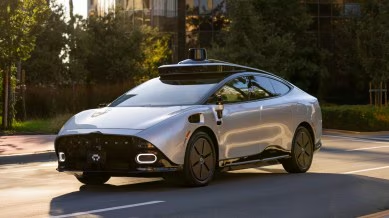
Powering the Robocar is a substantial 112-kWh battery pack, engineered to deliver an estimated 250 miles of range. This range is competitive within the premium EV segment, offering ample flexibility for daily commutes and longer journeys alike. While specific motor output remains under wraps, Tensor has confirmed a single rear-mounted motor, indicating a focus on efficiency and a balanced power delivery. The real standout, however, is its 845-volt battery architecture, a feature typically found in high-performance EVs and critical for ultra-fast charging. Tensor claims the Robocar can replenish its battery from 10 to 80 percent in a mere 20 minutes, a benchmark that significantly mitigates range anxiety and enhances user convenience.
Beyond the core EV capabilities, Tensor is pushing the boundaries of user experience with an ambitious concept for an automated charger. Imagine returning home and having a robotic arm seamlessly plug your vehicle into its charging port. This isn’t just about convenience; it’s a glimpse into the fully integrated, hands-free automotive ecosystem that Tensor envisions.
The Robocar’s physical design also prioritizes an effortless experience. The coach-style, center-closing doors are fully powered and equipped with an array of sensors. This intelligent system prevents collisions with obstacles or other vehicles in tight parking spaces, ensuring a graceful and secure entry and exit every time. These thoughtful design elements underscore Tensor’s commitment to a seamless, premium user journey, extending the autonomous experience beyond mere driving.
True Autonomy Defined: Unpacking Level 4 Capability
In the complex lexicon of autonomous driving technology, SAE Level 4 stands as a critical benchmark. It signifies that a vehicle can drive itself without human intervention under specific operational design domains (ODDs), such as geofenced areas or certain weather conditions. Crucially, while a steering wheel and pedals are present for optional manual control, they are not required for the vehicle to operate autonomously within its ODD. The Robocar embodies this definition, presenting a capability far beyond what most consumers currently encounter.
To truly appreciate Tensor’s achievement, it’s essential to draw a clear distinction from other advanced systems on the market. For instance, Tesla’s Full Self-Driving (Supervised) technology, while incredibly sophisticated, remains a Level 2+ or Level 3 system, fundamentally requiring an attentive human driver ready to intervene at any moment. The driver is ultimately responsible. The Tensor Robocar, by contrast, is designed to assume full driving responsibility within its defined ODD, allowing occupants to relax, work, or engage in other activities without the burden of supervision.
This profound leap in capability stems from a foundational design philosophy: Tensor engineered the entire car from the ground up to be an autonomous vehicle. This wasn’t an existing chassis retrofitted with self-driving tech; development began in 2020, shortly after their robotaxi service launched in China, ensuring that every component, every sensor placement, and every line of code was optimized for uncompromised autonomy. This holistic approach is critical for achieving the robust, reliable, and safe performance demanded of Level 4 vehicles, setting it apart in the burgeoning autonomous vehicle market trends 2025.
The Sensor Symphony & AI Brain: A Masterclass in Perception and Processing
Achieving such a profound level of autonomy demands an unparalleled sensory array and computational prowess. The Tensor Robocar is nothing short of a mobile supercomputer, equipped with a comprehensive suite of more than 100 sensors that serve as its eyes and ears. This includes five high-definition LiDAR arrays (one prominently mounted on the roof, complemented by four strategically placed around the front, sides, and rear), 37 cameras offering a 360-degree view, 11 radars providing depth and velocity data, and 10 ultrasonic sensors for close-range detection. The rooftop LiDAR alone boasts an impressive range, capable of detecting objects nearly 1,000 feet away in every direction, providing crucial long-range perception for proactive decision-making.
Tensor hasn’t overlooked the practical challenges of maintaining optimal sensor performance. The Robocar features 30 washer nozzles and 13 mini wipers, ensuring that critical sensors remain clean and unobstructed, even in adverse conditions. Furthermore, integrated heating elements prevent fogging and snow buildup, a vital consideration for expanding autonomous vehicle adoption beyond perpetually sunny climates. Taking robustness a step further, Tensor has incorporated physical covers that automatically retract over the sensors when the vehicle is powered down, protecting them from environmental damage and dirt – a significant improvement over many current AV designs.
All these sensors feed an immense amount of data to a colossal onboard computer. This computational powerhouse is driven by eight Nvidia Drive Thor-X chips, collectively capable of an astounding 8,000 TOPS (trillion operations per second). This level of processing power is essential for real-time perception, prediction, and planning in complex driving scenarios. While the Robocar maintains triple-redundant communication channels for maximum connectivity to the cloud, the vast majority of its computing is performed directly in the vehicle. This edge computing capability ensures robust performance even in connectivity-challenged areas, a crucial consideration for nationwide deployment across varying network coverages.
The Tensor Foundation Model software, the brain of the operation, is an advanced AI system operating with remarkable sophistication. It employs a dual-system approach: one trained extensively by professional human drivers to learn optimal driving behaviors, and a second system leveraging a Visual Language Model (VLM) specifically designed to address unusual and unexpected edge cases. This dual-layer intelligence enhances reliability and safety, allowing the Robocar to navigate diverse conditions. Tensor explicitly states its capability to operate reliably in rain and snow, breaking the perception that smart mobility solutions are only viable in specific geographic regions.
Finally, integrating the vehicle into the human environment, displays on the lower exterior corners of the Robocar will communicate simple messages and pictograms to pedestrians. This feature, designed to clearly indicate the vehicle’s autonomous status and acknowledge the presence of pedestrians, fosters trust and predictability in shared urban spaces – a critical aspect of robotics in automotive that often goes overlooked.
Pioneering Data Privacy in Autonomous Vehicles
In an era where digital privacy is paramount, Tensor champions a radical approach to user data, setting a new standard for automotive cybersecurity and consumer trust. Unlike many connected vehicles that constantly upload extensive data to the cloud, the Robocar processes most information onboard, granting owners unprecedented control over their personal digital footprint.
This fundamental design choice means that while the vehicle is capable of sharing certain information with the cloud, owners must explicitly opt-in for such data transmission. Without this consent, all personal data collected by the vehicle remains securely within the car itself. Owners have complete access to all data the car has collected about them and their usage patterns, which can be easily managed and deleted through the vehicle’s interface or a dedicated phone app. This includes sensitive biometric data, such as facial and palm recognition, which are utilized for secure vehicle operation and theft prevention. Tensor’s commitment to user control addresses a significant concern for early adopters of advanced driver-assistance systems (ADAS) and fully autonomous vehicles.
Furthermore, acknowledging that interior cameras and microphones are often a privacy sticking point, Tensor has designed these features with user autonomy in mind. While necessary for driver monitoring during manual operation (should the owner choose to drive) and for interacting with the voice assistant, each interior camera and microphone is equipped with a physical cover and a dedicated off switch. This allows owners to physically disable these sensors, providing complete peace of mind and upholding their privacy preferences. This proactive stance on data sovereignty is a significant selling point, especially as consumers in 2025 become more discerning about their digital footprints and the companies they entrust with their personal information.
Conversational AI: Your Intelligent Co-Pilot
Imagine not merely commanding your car, but conversing with it. The Tensor Robocar moves beyond rudimentary voice commands by integrating an Agentic AI backed by an advanced Large Language Model (LLM). This sophisticated system is designed to engage with you in a truly human-like conversation, transforming your vehicle into an intelligent co-pilot and personal assistant.
Instead of rigid instructions like “Navigate to X,” you can interact naturally, saying something like, “I’d like to go to the new Italian place downtown, the one we talked about last week.” The Robocar’s AI understands context, nuance, and learns your preferences over time. This personalized interaction extends to summoning the vehicle; you can simply call or text your Robocar and ask it to pick you up from anywhere, streamlining your daily logistics.
Moreover, this intelligent system isn’t just reactive; it’s predictive. By integrating with your digital calendar and learning your routines, the Robocar anticipates your upcoming trips, proactively assesses battery range requirements, and even suggests optimal charging times. This level of personalized intelligence represents a significant leap in personalized autonomous experience, transforming a mode of transport into an indispensable, intuitive companion. It’s a demonstration of how deeply AI in cars can enhance not just driving, but daily life.
The Driver’s Choice: When You Want to Take the Wheel
While the allure of pure autonomy is undeniably strong, Tensor understands the enduring human desire for control and the pleasure of driving. The Robocar offers a seamless transition between fully autonomous operation and manual control, providing unparalleled flexibility.
When you opt for autonomous mode, the interior transforms. The steering wheel gracefully retracts into the dashboard, and the central infotainment screen slides to conceal it, creating an expansive, uncluttered passenger space. Simultaneously, the accelerator and brake pedals discreetly retract out of the way. When the driving mood strikes, a simple command or a touch to the controls instantly reinstates them, with the steering wheel and pedals smoothly emerging, ready for your input.
This capability is facilitated by sophisticated steer-by-wire and brake-by-wire systems. Without physical connections between the controls and the wheels/brakes, the vehicle can execute precise maneuvers under AI control or seamlessly respond to human input. Crucially, these systems, along with all the critical sensors, incorporate multiple redundancies. This architectural resilience ensures that the car will continue to operate safely even in the unlikely event of a component failure, a paramount safety feature for any next-gen self-driving car.
When driven manually, the Robocar doesn’t abandon its intelligence; it becomes an exceptionally smart co-pilot. It can provide varying degrees of assistance, from fundamental safety aids like automatic emergency braking (AEB) and lane-keeping assistance, all the way up to advanced Level 3 semi-automated driving. This means the car can handle specific driving tasks, such as highway cruising, with the driver’s eyes off the road but still ready to take over if prompted.
Adding to its exceptional maneuverability, the Robocar features rear-wheel steering, allowing the back tires to turn up to 7 degrees in either direction. This advanced feature, often found in high-end luxury vehicles, dramatically reduces the turning circle to a claimed 37 feet – comparable to a much smaller SUV like a Tesla Model Y, despite the Robocar’s potentially larger footprint. This enhances agility in tight urban environments and parking scenarios.
Safety remains paramount, and Tensor is targeting the highest crash safety scores from leading regulatory bodies, including the National Highway Traffic Safety Administration (NHTSA) and the Insurance Institute for Highway Safety (IIHS) in the U.S., as well as the European New Car Assessment Programme (Euro NCAP). This commitment underscores its robust design and engineering for occupant protection.
Unlocking New Value: Monetizing Your Autonomous Asset
Beyond personal enjoyment and convenience, the Tensor Robocar offers intriguing possibilities for future proofing vehicle ownership and generating passive income. The concept of leveraging a personal autonomous vehicle for commercial purposes is not new; Elon Musk famously touted the idea for Tesla owners. However, Tensor, with its true Level 4 capabilities and a clear strategic vision, might be closer to realizing this ambition.
Tensor has already inked a significant deal with Lyft to integrate Robocars into its luxury rideshare fleet. This partnership not only validates the Robocar’s commercial viability but also hints at a broader ecosystem. While specific details on how privately owned Robocars could participate in such a network are still under wraps, the implication is clear: you could potentially deploy your personal Robocar as an autonomous rideshare vehicle while you’re at work, asleep, or simply not using it.
This proposition of transforming a personal vehicle into a revenue-generating asset positions the Robocar as a potential game-changer in smart mobility solutions. It could significantly offset the initial investment, making luxury autonomous vehicles more financially accessible over their lifespan. While platform integration, insurance liability for commercial operations, and regulatory frameworks for such a model are complex and will need to be carefully established (likely through existing platforms like Lyft), the foundational technology and Tensor’s strategic partnerships lay a strong groundwork for this innovative economic model.
The Investment in Future Mobility: Pricing & Production
Such groundbreaking autonomous driving technology, coupled with premium EV features and unprecedented data privacy controls, comes at a premium. Tensor has indicated “luxury pricing” for the Robocar. My informed estimate, based on similar high-tech automotive launches, the sheer complexity of Level 4 integration, and comparisons to Waymo’s estimated vehicle costs (often compared to a well-optioned Mercedes-Benz S-Class), places the Tensor Robocar comfortably within the $150,000 to $200,000 range. This positions it firmly in the high-end segment of the EV market and reflects the cutting-edge innovation packed into every aspect of the vehicle.
For production, Tensor has strategically partnered with Vietnamese automaker VinFast, utilizing their advanced factory in Haiphong, Vietnam. While some in the U.S. market may associate VinFast with a nascent brand reputation, it’s crucial to acknowledge their extensive experience as a contract manufacturer. VinFast has, for years, assembled BMW vehicles under license, demonstrating a sophisticated understanding of precision manufacturing and quality control standards required for high-end automobiles. This partnership leverages established infrastructure and expertise, mitigating potential risks associated with new manufacturing facilities.
The rollout plan is ambitious yet structured. Production is slated to commence in late 2026, with initial deliveries expected in the United Arab Emirates (UAE) late in the fourth quarter of that same year, capitalizing on a market known for early adoption of luxury technology. Crucially for the U.S. market, deliveries are projected to begin in early 2027, pending the necessary regulatory approvals that are always a critical hurdle for autonomous vehicle adoption. Beyond these initial markets, Tensor also has plans to expand into the European Union and has recently announced a deal to supply cars for a rideshare service in Denmark, underscoring its global aspirations.
A pragmatic, yet frequently asked question, remains: who will be liable for traffic tickets if the autonomous car receives one? While specific legal frameworks are still evolving, the prevailing assumption across the regulatory landscape for autonomous vehicles is that the owner of the vehicle will ultimately be responsible. This is a crucial consideration for prospective buyers and highlights an area where legislative clarity will continue to develop as these vehicles become more common.
Embrace the Autonomous Future
The Tensor Robocar isn’t just another car; it’s a testament to a decade of relentless innovation and a harbinger of a new era in personal transportation. By offering a privately owned, true Level 4 autonomous vehicle by early 2027, Tensor is leapfrogging competitors and delivering on the promise of future of transportation in a way that respects both convenience and privacy. It represents not just a vehicle, but a meticulously engineered ecosystem designed for freedom, security, and unparalleled convenience, pushing the boundaries of what AI-powered personal transport can achieve.
Are you ready to redefine your relationship with the road? Discover more about the Tensor Robocar and position yourself at the forefront of this automotive revolution.
Visit Tensor’s official channels to learn more about this groundbreaking vehicle and sign up for exclusive updates on its impending launch. The future isn’t just coming; with Tensor, you can own it.