



The Dawn of Personal Autonomy: Why Tensor’s Robocar is Reshaping the 2025 Automotive Landscape
As we stand firmly in 2025, the automotive industry isn’t just evolving; it’s undergoing a profound metamorphosis. For years, the promise of true self-driving cars felt perpetually five to ten years away, a tantalizing future reserved for sci-fi blockbusters or highly restricted commercial fleets. Yet, a seismic shift is underway, propelled by companies daring to challenge the status quo. Enter Tensor, a name rapidly gaining traction, poised to disrupt the narrative by offering something unprecedented: a private, ground-up Level 4 autonomous vehicle designed not for ride-hailing networks, but for you, the individual consumer. This isn’t just another electric vehicle; it’s a statement, a testament to what a decade of relentless innovation in autonomous vehicle technology can deliver, bringing Waymo-level capability directly to your driveway.
Having spent the last decade immersed in the intricate world of autonomous driving, from nascent sensor arrays to sophisticated AI models grappling with edge cases, I can confidently say that what Tensor is bringing to market with its Robocar is a game-changer. It’s not an incremental upgrade; it’s a redefinition of personal mobility, carefully engineered for the discerning individual who demands both cutting-edge technology and uncompromising privacy.
A Decade-Long Odyssey: From Robotaxi Pioneer to Personal Autonomy Visionary
The journey of Tensor is as compelling as its product. Many in the industry will recall AutoX, founded in Silicon Valley back in 2016. Their initial focus was ambitious: building robust autonomous commercial vehicles and scalable robotaxi fleets. From 2017 onwards, AutoX was on the front lines, testing autonomous vehicles in the rigorous environments of both California and China. By the peak of the COVID pandemic, they had solidified their presence in China, deploying over a thousand autonomous taxis across five major cities, providing public rides and gathering invaluable real-world data.
This extensive operational experience laid the bedrock of their current endeavor. However, the global landscape shifted, particularly regarding data governance and cross-border data flows. As Amy Luca, Tensor’s head of marketing, articulates, the company made a strategic pivot in the past year, divesting completely from its Chinese operations due to escalating data privacy concerns. This wasn’t merely a business decision; it was a philosophical realignment. Rebranding as Tensor and returning to its roots in San Jose, California, the company sharpened its focus: to build a truly autonomous vehicle for private ownership. This strategic move, anticipating the growing consumer demand for data sovereignty and transparent privacy practices, positions Tensor uniquely in the competitive landscape of AI-powered mobility solutions.
Engineering Marvel: The Robocar’s Foundation
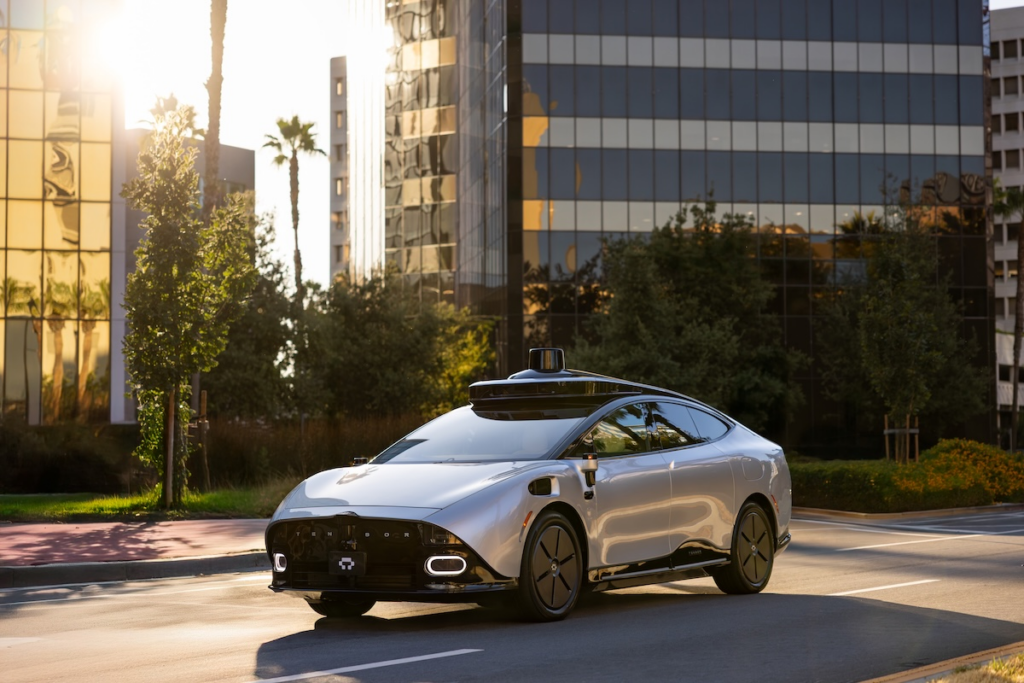
At its core, the Tensor Robocar is a meticulously engineered electric vehicle, but it’s the synthesis of its EV architecture with its autonomous capabilities that truly sets it apart. Powering this intelligent machine is a substantial 112-kWh battery pack, providing an estimated 250 miles of range – a respectable figure for a vehicle of its projected class in 2025. What’s particularly impressive is its 845-volt architecture, enabling lightning-fast charging from 10 to 80 percent in a mere 20 minutes. This isn’t just a convenience; it’s a critical enabler for practical Level 4 autonomous vehicle ownership, mitigating range anxiety and maximizing operational uptime.
While specific performance metrics like motor output and curb weight are yet to be fully disclosed, the emphasis is clearly on seamless, intelligent operation rather than raw acceleration. Tensor is also pushing the boundaries of user experience with an automated charging system, featuring a robotic arm designed to plug in the car upon arrival home. Imagine the convenience – no more fumbling with cables in the dark or rain. Similarly, the coach-style, center-closing doors aren’t just a design flourish; they are fully powered and equipped with sensors to prevent contact with obstacles, embodying a holistic approach to user comfort and futuristic interaction. This level of thoughtful integration demonstrates an understanding of the end-to-end user journey that many traditional automakers are still striving to achieve.
The True Definition of Autonomy: Level 4, Unleashed
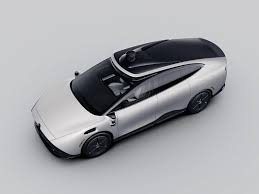
This is where the Tensor Robocar truly distinguishes itself. It’s marketed as an SAE Level 4 autonomous vehicle. For those unfamiliar, Level 4 is a monumental leap beyond the Level 2 and nascent Level 3 systems currently available to the public. In Level 4, the vehicle can handle all aspects of driving under specific conditions, without human intervention or even the expectation of it. Critically, it still retains a steering wheel and pedals for manual operation, offering owners the ultimate flexibility. Think of it as owning your own personal Waymo, capable of independent operation in defined operational design domains (ODDs), yet available for your manual input whenever the mood strikes.
This capability vastly surpasses current offerings like Tesla’s Full Self-Driving (Supervised) technology, which, while highly advanced, remains firmly a Level 2 system requiring constant driver attention and readiness to intervene. Tensor’s achievement stems from a fundamental design philosophy: building the entire car from the ground up specifically as an autonomous platform, rather than retrofitting existing vehicle architectures. This ground-up approach, initiated in 2020 shortly after their robotaxi service launch, allows for deep integration of sensors, computing, and safety redundancies, circumventing the inherent compromises of layered systems. It’s this meticulous engineering that addresses the core challenges of L4 self-driving market entry.
A Symphony of Sensors and Supercomputing
Achieving true Level 4 autonomy is a Herculean task, demanding an extraordinary sensory suite and prodigious computing power. The Robocar is outfitted with over 100 sensors: five lidar arrays strategically placed on the roof and around the vehicle (front, sides, rear), 37 cameras, 11 radars, and 10 ultrasonic sensors. The rooftop lidar, in particular, boasts an impressive 1,000-foot, 360-degree detection range, crucial for comprehensive environmental perception.
But sensor integrity is paramount. Tensor addresses this with an innovative system of 30 washer nozzles and 13 mini wipers, complemented by heating elements to combat fogging and snow buildup – a vital consideration for operation outside perpetually sunny climates. Going a step further than even some leading robotaxi operators, the Robocar features physical covers that automatically seal over sensors when the vehicle is off, protecting them from damage and environmental grime. This detail speaks volumes about Tensor’s commitment to real-world robustness and longevity.
All this data, flowing in torrents, is processed by a truly gargantuan onboard computer featuring eight Nvidia Drive Thor-X chips. This setup delivers an astounding 8,000 TOPS (trillion operations per second) of compute power. While the vehicle maintains redundant communication channels for maximum connectivity, the vast majority of processing occurs on-device. This edge computing approach ensures the Robocar can operate flawlessly even in areas with spotty 5G coverage, a critical consideration for ubiquitous autonomous deployment. The Tensor Foundation Model software, an AI-based system, runs two parallel operating systems: one trained on the vast data of professional human driving, and the other leveraging a Visual Language Model (VLM) specifically designed to address unusual and unpredictable “edge cases.” This dual-system approach is a powerful testament to their dedication to safety and reliability, even in diverse weather conditions like rain and snow, breaking the California-centric mold of many autonomous developers.
Furthermore, subtle yet effective exterior displays on the lower corners of the vehicle communicate simple messages and pictograms to pedestrians, reassuring them that the car is operating autonomously and has registered their presence. This focus on clear communication with other road users is an often-overlooked but crucial aspect of public acceptance for advanced driver-assistance systems (ADAS) evolution and L4 widespread adoption.
Your Car, Your Data: A Privacy-First Paradigm
In an era where digital privacy is a paramount concern, Tensor has positioned the Robocar as a sanctuary for personal data. The decision to perform most computing onboard is not just for operational robustness; it’s a foundational element of their data privacy strategy. Unlike many connected services, Tensor explicitly states that while the car is capable of sharing information with the cloud, owners must actively opt-in. Without explicit consent, all your vehicle and personal data remains securely within the car itself.
Owners retain full control, with the ability to access and delete all data the car collects, including sensitive biometric information like facial and palm recognition, which is used for vehicle operation and theft prevention. This level of transparency and user control is a refreshing departure from the “collect everything” approach prevalent in many tech sectors. Even interior cameras and microphones, essential for driver monitoring in manual mode and voice assistant interaction, are equipped with physical covers and manual off switches, empowering the owner to decide when and how their privacy is maintained. This commitment to data privacy in autonomous vehicles is a significant selling point, resonating deeply with a privacy-conscious consumer base.
Conversational Autonomy: Talking to Your Car
Forget rigid voice commands. The Tensor Robocar aims to redefine human-machine interaction through an Agentic AI backed by a Large Language Model (LLM). This isn’t about barking orders; it’s about engaging in a natural, conversational dialogue with your vehicle. You can articulate your destination preferences, discuss routes, or simply chat with the car as you would with a human assistant.
The integration extends beyond mere conversation. Owners can summon their Robocar from anywhere with a call or text message. The system is designed to learn your habits, anticipate upcoming trips by syncing with your calendar, and proactively manage battery range and charging needs. This intelligent, predictive capability elevates the autonomous driving experience from a functional service to a truly integrated lifestyle partner, embodying the future of premium personal transportation.
The Best of Both Worlds: Autonomy and Manual Control
While the Robocar is engineered for autonomous living, Tensor recognizes that the joy of driving is still a cherished experience for many. Therefore, it retains a fully functional steering wheel and pedals. When driven manually, the vehicle offers a spectrum of assistance, from fundamental safety features like automatic emergency braking to sophisticated Level 3 semi-automated driving, allowing hands-free, eyes-off-the-road operation in appropriate conditions.
The seamless transition between modes is an engineering marvel. In autonomous mode, the steering wheel elegantly retracts into the dashboard, and the center infotainment screen slides over to conceal it, revealing an uncluttered, expansive interior. Simultaneously, the accelerator and brake pedals discreetly retract out of the way. Should the driver wish to take control, these elements gracefully reappear, ready for engagement.
This “by-wire” system for steering, braking, and acceleration means there are no physical connections, but this doesn’t imply fragility. Each critical system, along with every sensor, features multiple redundancies, ensuring continuous operation even in the unlikely event of a component failure. Adding to its agility, rear-wheel steering allows the back tires to turn up to 7 degrees, giving the Robocar a remarkable 37-foot turning circle – comparable to a much smaller vehicle like a Tesla Model Y, despite its larger footprint.
Safety, naturally, is paramount. Tensor is targeting the highest crash safety scores from leading global authorities: NHTSA and IIHS in the U.S., and Euro NCAP in Europe. This pursuit of top-tier safety certifications underscores their commitment to consumer confidence and demonstrates a mature approach to autonomous vehicle safety standards.
Beyond Ownership: Your Car, Your Business
The vision for the Tensor Robocar extends beyond personal convenience; it also offers intriguing economic opportunities for owners. Tensor has already secured a significant partnership with Lyft, planning to integrate Robocars into their luxury rideshare offerings. But the exciting prospect, reminiscent of Elon Musk’s long-held vision for Tesla owners, is the ability to leverage your own autonomous vehicle for income.
Imagine your Robocar earning revenue as a premium rideshare while you’re at work, asleep, or on vacation. While the specifics of how a privately owned autonomous vehicle might integrate into existing platforms for hailing and payment are still being ironed out, likely through partnerships with services like Lyft, the potential for individual owners to monetize their advanced mobility asset is a compelling proposition. This directly addresses the “investment in autonomous technology” angle, suggesting that a Robocar purchase could be both a luxury and a smart financial move.
The Price of Progress: Luxury and Anticipation
So, what will this extraordinary piece of advanced automotive technology cost? Tensor isn’t revealing specific figures just yet, but Amy Luca indicates “luxury pricing.” Drawing parallels with Waymo’s estimated vehicle costs, which hover around a well-optioned Mercedes-Benz S-Class ($150,000-$200,000), and given the Robocar’s sophisticated, ground-up Level 4 design, we can anticipate it landing at the higher end of that spectrum, possibly exceeding it. This places it firmly in the “luxury autonomous EVs” segment, competing not just on features, but on a transformative ownership experience.
Production is being handled by Vietnamese automaker VinFast at its factory in Haiphong, Vietnam. While VinFast’s own brand has faced scrutiny regarding build quality in the U.S. market, it’s crucial to remember their extensive experience as a contract manufacturer, having assembled BMWs under license for years. This partnership leverages established manufacturing expertise, mitigating potential concerns. Production is slated to commence in late 2026, with initial deliveries targeting the United Arab Emirates (UAE) in late Q4 of that year. Crucially for the U.S. market, deliveries are projected to begin in early 2027, pending the necessary regulatory approvals that are continuously evolving for Level 4 systems. Plans are also underway for sales in the European Union, with a recent announcement confirming a deal to supply cars to a rideshare service in Denmark, indicating a global strategy for this disruptive automotive technology.
The question of who bears the responsibility for fines or incidents when the car is operating autonomously remains an area the industry is actively grappling with. However, the prevailing expectation in 2025, pending evolving legal frameworks, is that the owner will ultimately be responsible.
A New Era of Personal Freedom Awaits
The Tensor Robocar isn’t just a vehicle; it’s a bold declaration of a new era for personal mobility. It’s a meticulously crafted fusion of electric propulsion, Level 4 autonomy, AI-driven intelligence, and an unwavering commitment to data privacy. For those who have dreamt of a truly self-driving car – one that isn’t just a futuristic concept but a tangible, privately owned asset – the wait is nearly over. Tensor is paving the way for a future where personal transportation is not only effortless and intelligent but also profoundly liberating.
Are you ready to experience the next frontier of personal mobility? This is more than just buying a car; it’s investing in the future of how you move, interact, and live. Keep a close eye on Tensor’s progress, as the first private Level 4 autonomous vehicles are set to redefine our roads. Explore the possibilities, engage with the technology, and prepare for a future where your car truly drives itself, on your terms.