



The Dawn of Personal Autonomy: Tensor’s Robocar Unlocks True Level 4 Self-Driving for Private Ownership by 2027
As someone who’s spent the last decade immersed in the intricate world of autonomous vehicles, from the early days of sensor fusion to the complex ethical debates surrounding AI decision-making, I can tell you this: the promise of a truly self-driving car has always been just over the horizon. We’ve seen tantalizing glimpses – robotaxis ferrying passengers in select urban pockets, and advanced driver assistance systems (ADAS) pushing the boundaries of what’s possible on public roads. Yet, the holy grail for many has remained a personal, privately-owned vehicle that genuinely drives itself, allowing the driver to disengage entirely.
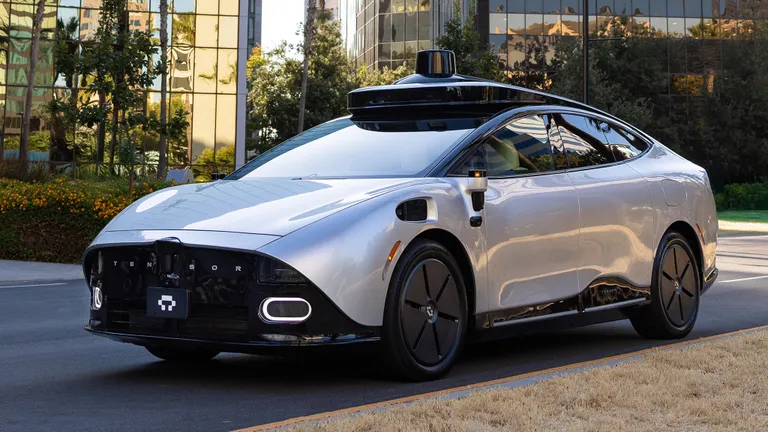
Enter Tensor. A name that might not yet be a household staple, but one that’s poised to redefine personal autonomous mobility with its groundbreaking Robocar, slated for U.S. deliveries in early 2027. This isn’t another incremental upgrade to an existing system; it’s a ground-up Level 4 autonomous vehicle, designed from first principles to offer a private, Waymo-esque experience directly to consumers. In a market often fragmented by overpromise and under-delivery, Tensor’s approach is not just ambitious, it’s strategically disruptive, directly targeting the aspirations of those who crave the ultimate future of transportation.
A Decade of Refinement: From Robotaxi Fleets to Private Innovation
The story of Tensor isn’t an overnight sensation; it’s a testament to persistence, adaptation, and a deep understanding of autonomous driving technology. The company’s roots stretch back to 2016 in Silicon Valley, where it was founded as AutoX. Their initial focus was squarely on commercial autonomous vehicles and robotaxi operations, a high-stakes, capital-intensive endeavor that provided invaluable real-world data and engineering challenges.
From 2017 onwards, AutoX became a significant player, rigorously testing AVs in both California and China. The subsequent pivot during the COVID pandemic saw the company move operations entirely to China, where it scaled an impressive fleet of over 1,000 autonomous taxis. This wasn’t merely piloting; these vehicles were actively providing rides to the public across five major cities, accumulating millions of miles of critical operational experience in diverse and challenging urban environments. This extensive practical application in high-density areas, facing real-world traffic scenarios, provided a crucible for their AI machine learning autonomous driving systems, allowing them to harden their algorithms against a myriad of edge cases and unforeseen circumstances.
However, the global landscape shifts, and so too must visionary companies. In a significant strategic business pivot over the past year, AutoX completely divested from its Chinese operations. This decision, driven by evolving data privacy concerns and a desire to control their technological destiny in a key market, led to a rebranding as Tensor and a decisive return to its Silicon Valley birthplace in San Jose, California. This move signals a renewed focus, not on competing in the cutthroat robotaxi space, but on delivering a truly autonomous vehicle specifically for private customers – a segment that, until now, has largely been underserved by genuine Level 4 capabilities. It’s a bold play, leveraging a decade of fleet experience to address the individual consumer.
The Robocar: A Purpose-Built Electric Dream for the Autonomous Era
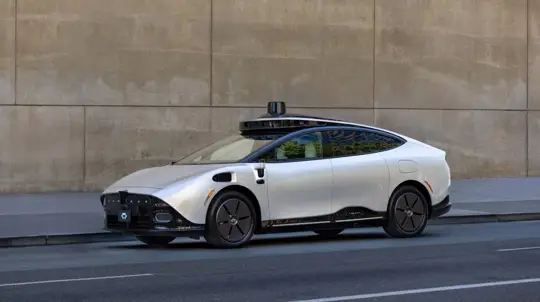
At its heart, the Tensor Robocar is a marvel of high-performance EV technology, built from the ground up to embody its autonomous mission. Unlike many contenders that attempt to retrofit existing vehicle architectures, Tensor started with a clean sheet, designing every component with Level 4 autonomy as the paramount goal. This fundamental decision is crucial for achieving the kind of safety, integration, and reliability required for true driverless operation.
Powering this vision is a substantial 112-kWh battery pack, delivering an estimated range of 250 miles – perfectly respectable for a luxury EV in 2025. What truly stands out, however, is the 800V architecture electric vehicles utilize, allowing for lightning-fast charging from 10 to 80 percent in a mere 20 minutes. This kind of rapid turnaround is not just a convenience; it’s a necessity for an AV that might be called upon for extended periods, or even to perform tasks like self-charging. Tensor is even exploring electric vehicle charging innovation with a robotic arm that will automatically plug the car in upon arrival home – a small touch that speaks volumes about the holistic luxury EV features being considered for the future user experience.
Beyond the powertrain, the Robocar champions an ethos of effortless interaction. The elegant, coach-style, center-closing doors are fully powered and equipped with an array of sensors, preemptively preventing collisions with obstacles or adjacent vehicles. This isn’t just about aesthetics; it’s about providing a seamless, intuitive experience that anticipates the user’s needs in a world where physical interaction with the vehicle becomes increasingly minimal. The underlying “by-wire” systems for steering, braking, and acceleration, while invisible to the user, are engineering marvels in themselves, offering not just precision control but multiple layers of redundancy – a non-negotiable for robust AV systems.
Decoding True Autonomy: Beyond Supervised Driving
Tensor bills the Robocar as an SAE Level 4 autonomous vehicle, and it’s imperative to understand what that designation truly means, especially in contrast to what the public currently associates with “self-driving.” Unlike Tesla FSD (Supervised), which, despite its impressive capabilities, remains firmly in Level 2 ADAS territory, requiring constant human attention and readiness to intervene, Level 4 represents a profound leap.
A Level 4 AV can operate entirely without human input under specific conditions – its Operational Design Domain (ODD). Within this domain, the vehicle is responsible for all aspects of driving, including navigating complex situations and even pulling itself over safely in the event of a system failure. While the Robocar retains a steering wheel and pedals, this is primarily for user choice, regulatory comfort, and addressing any unforeseen edge cases outside its ODD where manual intervention might still be desired. It’s a pragmatic approach, acknowledging both technological prowess and the psychological comfort of the human occupant.
Tensor’s decade of operating robotaxi fleets provided an unparalleled training ground for developing the sophisticated autonomous driving capabilities required for L4. This deep reservoir of real-world data, collected from thousands of vehicles navigating chaotic urban environments, has been instrumental in fine-tuning their perception, prediction, and planning modules – the three pillars of any successful autonomous driving system. The company’s commitment to building the car from the ground up for autonomy, rather than modifying existing platforms, has been key to achieving this robust level of functionality, ensuring that every sensor, every processor, and every line of code works in concert towards the singular goal of safe, reliable driverless operation.
A Symphony of Sensors and AI: The Brains Behind the Drive
Achieving Level 4 autonomy is not for the faint of heart; it demands an unparalleled orchestration of hardware and software. The Tensor Robocar is a veritable fortress of perception, boasting over 100 individual sensors. This includes a strategic deployment of five LiDAR radar camera fusion arrays – one on the roof for a commanding 360-degree, 1,000-foot view, and four others meticulously positioned around the front, sides, and rear. Complementing these are 37 cameras, 11 radars, and 10 ultrasonic sensors. This redundancy and diversity of sensor types are critical for sensor fusion, allowing the vehicle to build a comprehensive, multi-layered understanding of its environment, minimizing blind spots, and maximizing robustness against adverse conditions.
Maintaining the clarity of these eyes on the road is equally critical. Tensor has equipped the Robocar with 30 washer nozzles, 13 mini wipers, and integrated heating elements to combat fogging, rain, and snow buildup – ensuring reliable all-weather autonomous operation. Going a step further than even some leading robotaxi competitors, the Robocar features physical covers that automatically close over the sensors when the vehicle is off, protecting them from dirt, debris, and potential damage, underscoring a meticulous attention to long-term reliability.
The sheer volume of data generated by these sensors demands prodigious processing power. At the heart of the Robocar’s intelligence lies a massive onboard computer, housing eight Nvidia Drive Thor-X chips. This formidable setup is capable of an astounding 8,000 TOPS (trillion operations per second), placing it at the forefront of edge computing autonomous vehicles. While the car maintains redundant communication channels for cloud connectivity, the vast majority of its computing is done directly on the vehicle. This crucial decision ensures robust AV systems can operate seamlessly even in areas with poor 5G signals, providing unwavering reliability regardless of connectivity.
The software stack, built upon the Tensor Foundation Model, is inherently AI-based. It operates two parallel systems: one meticulously trained by professional human drivers, capturing nuanced driving behaviors, and another, trained on a cutting-edge Visual Language Model (VLM). This VLM is particularly adept at solving unusual and unexpected edge cases, allowing the system to interpret complex, real-world scenarios that might fall outside traditional rule-based programming. Furthermore, the commitment to all-weather autonomous operation means the Robocar is designed to handle rain and snow, breaking free from the perception that L4 AVs are solely for sunny climates. Visual displays on the vehicle’s exterior communicate simple messages and pictograms to pedestrians, an important step in building trust and clarity in human-machine interface autonomous vehicles.
Your Car, Your Data: A Privacy-First Approach
In 2025, vehicle data privacy solutions are not just a feature; they are a fundamental right. Tensor understands this implicitly, addressing one of the most significant consumer concerns surrounding connected and autonomous vehicles head-on. Because the Robocar performs the bulk of its computing onboard, Tensor doesn’t need to harvest vast quantities of your personal driving data. Owners have explicit control: while the vehicle is capable of sharing information with the cloud for diagnostics or optional feature enhancements, this is an opt-in choice. Otherwise, all your data, from driving habits to biometric information, remains securely within the car.
This commitment extends to user control autonomous data, allowing owners full access to the data collected on them and their journeys via the vehicle’s interface or a dedicated smartphone app. Critically, owners retain the power to delete this data at will. This includes sensitive biometric data, such as facial and palm recognition, which is used for vehicle operation and anti-theft measures. Furthermore, interior cameras and microphones, designed for driver monitoring during manual operation and voice assistant interaction, are equipped with physical covers and dedicated off switches, ensuring absolute privacy when desired. This proactive approach to ethical data handling AVs sets a new benchmark in an industry where data monetization is often prioritized over cybersecurity autonomous cars and individual privacy.
Conversational AI: Talking to Your Future Car
The Robocar isn’t just a vehicle; it’s designed to be an intelligent companion. Leveraging a sophisticated Agentic AI backed by a powerful Large Language Model (LLM), the interaction with your car transcends simple commands. Imagine having a natural, flowing conversation with your vehicle about your desired destination or current traffic conditions. This conversational AI in vehicles allows for a far more intuitive and personalized experience, moving beyond rigid voice prompts to genuine dialogue.
The convenience extends to summoning your vehicle. A simple call or text can instruct the Robocar to pick you up from anywhere, anticipating your needs and arrival times. This smart vehicle integration also learns your habits and, when connected to your digital calendar, can proactively anticipate upcoming trips. It will then intelligently manage its battery range and charging needs, ensuring it’s always ready for your next journey. This proactive, predictive AI driving systems approach to personalized mobility experience epitomizes the blend of luxury and cutting-edge technology Tensor is striving for.
The Best of Both Worlds: Autonomy and the Joy of Driving
While the Robocar is engineered first and foremost for autonomous operation, Tensor wisely recognizes that the joy of driving isn’t entirely obsolete. For those moments when you simply want to take the wheel, the vehicle provides a seamless transition. The steering wheel and pedals are always present, though they gracefully retract into the dash and floor respectively when autonomous mode is engaged, revealing a streamlined, distraction-free environment where the center infotainment screen slides to reveal its passenger-side twin. When the desire to drive strikes, they reappear just as smoothly.
In manual mode, the Robocar transforms into an advanced adaptive driving assistance system, offering a spectrum of aids from basic automatic emergency braking to full Level 3 semi-automated driving, allowing for hands-free, eyes-off-the-road operation in specific highway conditions. This hybrid model not only caters to varying driver preferences but also builds trust as users gradually acclimate to higher levels of autonomy.
Safety, as always, remains paramount. The all-by-wire control systems – steering, braking, and accelerating – are equipped with multiple redundancies. This means that even if a sensor or drive system experiences a failure, the car can continue to operate safely. Furthermore, vehicle safety standards are a cornerstone of Tensor’s design, targeting top crash safety scores from critical bodies like the NHTSA, IIHS, and European NCAP. With rear-wheel steering allowing the back tires to turn up to 7 degrees, the Robocar boasts an impressive 37-foot turning circle, akin to a much smaller vehicle like a Tesla Model Y, enhancing maneuverability in urban environments.
Monetizing Mobility: Your Car, Your Robotaxi?
Beyond personal use, Tensor envisions a future where your Robocar can also work for you. The company has already forged a significant partnership with Lyft, planning to introduce Robocars as premium luxury rideshare vehicles. This strategic move not only validates the Robocar’s capabilities but also opens up a fascinating proposition for private owners.
Remember the long-standing promise from Elon Musk that your Tesla could earn money as an autonomous ridesharing platform while you’re at work or asleep? Tensor is making a similar, and perhaps more credible, claim for its L4 offering. With the slow, complex rollout of other shared mobility models, Tensor, with its decade of robotaxi experience, might very well get there first. While the specifics of how a privately owned Robocar can integrate into a platform like Lyft – from hailing and payment to insurance and operational logistics – are yet to be fully detailed, the concept of personal fleet management and an individual participating in the gig economy future transportation via their own AV is a compelling one, offering new avenues for investment in autonomous vehicles.
Luxury Autonomy: Price and Production Ahead
So, what will this groundbreaking piece of luxury self-driving cars technology cost? While Tensor isn’t ready to release specific figures, expect “luxury pricing.” Industry insights from Waymo’s CEO suggest their L4 vehicles command a price tag comparable to a well-optioned Mercedes-Benz S-Class, placing it potentially between $150,000 and $200,000. Given the Robocar’s advanced, purpose-built nature and its commitment to premium features and data privacy, it’s reasonable to anticipate Tensor positioning itself at the higher end of this spectrum, appealing to a discerning clientele seeking the pinnacle of Level 4 autonomous vehicle cost.
Production for the Robocar is strategically handled by Vietnamese automaker VinFast at their state-of-the-art facility in Haiphong, Vietnam. While VinFast vehicles have faced scrutiny regarding build quality in the U.S. market, it’s crucial to acknowledge their extensive manufacturing expertise, including years of assembling BMWs under license. This suggests a foundational understanding of high-quality automotive production.
The ambitious timeline sees production commencing in late 2026, with initial deliveries slated for the United Arab Emirates (UAE) late in the fourth quarter of that same year – often a preferred market for early adoption of high-tech luxury vehicles. U.S. deliveries will begin in early 2027, contingent upon the successful navigation of complex regulatory challenges autonomous cars USA faces, a landscape that is continually evolving. Tensor also has its sights set on the European Union market and has recently announced plans for a rideshare service partnership in Denmark, showcasing its vision for global AV market expansion. One open question remains: who pays the ticket if your autonomous car gets a speeding fine? Until regulations fully catch up, anticipate that responsibility falling to you, the owner.
Embracing the Autonomous Revolution
Tensor’s Robocar isn’t just another car; it’s a statement. It represents a mature, sophisticated answer to the long-held dream of private, truly autonomous personal transportation. By blending a decade of real-world robotaxi experience with a privacy-first, purpose-built design and cutting-edge AI, Tensor is poised to deliver a game-changing vehicle that moves beyond the hype and into the realm of tangible Level 4 autonomy for the individual.
The year 2027 could mark a pivotal moment in the future of personal mobility. If you’re ready to experience the ultimate evolution of driving, where your vehicle not only transports you but truly understands and anticipates your needs, the Tensor Robocar deserves your undivided attention. It’s time to re-imagine your commute, your road trips, and your relationship with your vehicle.
Are you prepared to embrace the next era of personal freedom and convenience that Level 4 autonomous driving promises? Explore how the Tensor Robocar can transform your daily life and redefine your journey into the future.