



Decoding Tensor’s Robocar: Why Private Level 4 Self-Driving is Poised to Revolutionize Your 2027 Commute
As an industry veteran with over a decade immersed in the pulsating heart of autonomous vehicle (AV) development, I’ve witnessed the ebb and flow of hype cycles, the breathtaking breakthroughs, and the sobering realities. We stand in 2025, a pivotal moment where the promise of self-driving is no longer a distant sci-fi fantasy, but a tangible, albeit nascent, reality. Robotaxis like Waymo are navigating select urban centers, demonstrating the sheer potential. Meanwhile, the consumer market grapples with advanced Level 2+ systems – impressive, yes, but still demanding constant human vigilance. Yet, a seismic shift is rumbling through Silicon Valley, poised to redefine our understanding of personal mobility: the Tensor Robocar, a ground-up Level 4 autonomous vehicle designed not for fleets, but for you, the private owner, hitting the streets by early 2027.
This isn’t merely an incremental upgrade; it’s a paradigm leap. For years, the holy grail of true self-driving – where the vehicle handles all driving tasks under specific conditions without human intervention – seemed exclusively destined for commercial applications. Tensor is disrupting this narrative, offering an unparalleled blend of advanced mobility, cutting-edge AI, and, critically, a profound commitment to personal data privacy, all wrapped in a luxury package that speaks to the future of personal transportation.
From Robotaxis to Personal Autonomy: The Tensor Genesis Story
To truly appreciate Tensor’s visionary move, we must understand its roots. Founded in Silicon Valley in 2016 as AutoX, the company cut its teeth in the fiercely competitive world of autonomous commercial vehicles and robotaxis. By 2017, their test vehicles were navigating the complex environments of California and China. The subsequent years saw AutoX rapidly scale its operations, deploying a fleet of over 1,000 autonomous taxis across five Chinese cities, providing real-world public rides. This wasn’t theoretical; this was practical, large-scale autonomous operation, generating invaluable data and refining their core AI.
However, the global landscape shifted, bringing increased scrutiny on data governance and cross-border data flows. Recognizing the paramount importance of user privacy and strategic focus, AutoX underwent a dramatic transformation in the past year. Divesting completely from its Chinese operations, the company rebranded as Tensor, repatriated its headquarters to San Jose, California, and crucially, recalibrated its mission. The experience gained from a thousand robotaxis wasn’t discarded; it was distilled and redirected towards an even more ambitious goal: bringing a truly autonomous, Level 4 vehicle directly to the private consumer. This pivot demonstrates not just adaptability, but a strategic foresight into what the discerning global consumer will demand in the coming years: seamless, unsupervised autonomy coupled with robust data protection.
Engineering Excellence: Powering the Future of Personal Mobility
At its core, the Tensor Robocar is a masterclass in modern electric vehicle engineering, meticulously designed from the ground up to support its autonomous mandate. Powering this vision is a substantial 112-kWh battery pack, engineered to deliver an estimated 250 miles of range. In the rapidly evolving EV landscape of 2025, while 250 miles might seem standard, Tensor’s true innovation lies in its charging architecture. The 845-volt battery system promises blistering fast-charging capabilities, topping up from 10 to 80 percent in a mere 20 minutes. This significantly reduces range anxiety and enhances the overall user experience, making long-distance autonomous journeys more practical and efficient.
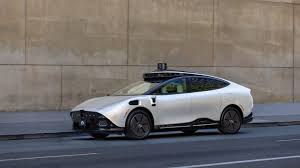
While specific performance figures remain under wraps, Tensor confirms a powerful single rear motor, and the absence of curb weight data keeps us speculating on acceleration. However, the meticulous attention to detail extends beyond the powertrain. The Robocar features elegant, coach-style, center-closing doors – fully powered and equipped with an array of sensors to prevent accidental bumps. This isn’t just about luxury; it’s an integral part of the autonomous experience, ensuring seamless entry and exit, whether you’re summoning the vehicle or stepping out at your destination. Furthermore, Tensor is actively developing an automated charger with a robotic arm, promising to completely automate the charging process when you arrive home, cementing the vehicle’s commitment to truly hands-off convenience. This holistic approach to design ensures that every facet of the Robocar contributes to its overarching mission of effortless, autonomous ownership.
The Apex of Autonomy: Unpacking SAE Level 4 for the Private Owner
This is where the Tensor Robocar truly distinguishes itself. Tensor confidently bills its vehicle as an SAE Level 4 autonomous system. For those unfamiliar with the nuanced SAE classification, Level 4 signifies “high driving automation.” In layman’s terms, the vehicle can perform all driving tasks and monitor the driving environment under specific conditions (called its operational design domain or ODD), without human intervention or supervision. Crucially, if the system encounters a situation it cannot handle within its ODD, it will execute a safe minimum risk maneuver, potentially bringing the vehicle to a safe stop.
This capability stands in stark contrast to even the most advanced consumer systems available in 2025. While Tesla’s Full Self-Driving (Supervised) has made incredible strides, offering robust Level 2+ assistance, it unequivocally requires a human driver to remain attentive, hands on the wheel (or ready to grab it), and prepared to take over at any moment. Similarly, Level 3 systems, such as Mercedes-Benz’s DRIVE PILOT, allow for “eyes-off” driving under very specific, geofenced, and often low-speed highway conditions, but still require the driver to be available to resume control within a specific timeframe.
The Tensor Robocar, like its Waymo robotaxi counterparts, is designed to operate without human supervision within its ODD. The key difference? You own it. You park it in your driveway. This is not a service you hail; it’s your personal Level 4 autonomous vehicle ownership. This audacious goal necessitated a clean-sheet design, with development commencing in 2020. Tensor understood that simply adding sensors and software to an existing vehicle architecture would never achieve the inherent safety and reliability required for unsupervised L4 operation. Every component, from the chassis to the electrical systems, has been engineered with autonomy as its foundational purpose, making it a true Level 4 self-driving car from its very genesis.
The Sensory Armada and Cognitive Powerhouse
Achieving Level 4 autonomy is a Herculean task, demanding an unparalleled sensory network and immense computational horsepower. The Tensor Robocar is nothing short of a mobile supercomputer, fitted with over 100 sensors. This includes a strategic deployment of five high-resolution lidar arrays – one prominently mounted on the roof for panoramic 360-degree vision (with a nearly 1,000-foot range) and four strategically placed around the front, sides, and rear. Complementing these are an astonishing 37 cameras, providing detailed visual perception, 11 radars for all-weather object detection, and 10 ultrasonic sensors for close-range sensing and parking maneuvers. This automotive sensor fusion architecture provides an exceptionally rich and redundant perception of the environment, crucial for navigating complex, dynamic scenarios.
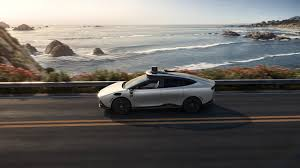
Recognizing that even the most advanced sensors are useless if obstructed, Tensor has gone to extraordinary lengths to ensure their operational integrity. The Robocar features 30 washer nozzles and 13 mini wipers, akin to tiny windshield wipers, ensuring unimpeded vision even in heavy rain or slush. Integrated heating elements prevent fogging and snow buildup. What truly sets Tensor apart, however, are the physical covers that automatically retract over the sensors when the vehicle is powered down. This innovative feature protects sensitive hardware from dirt, damage, and environmental degradation, significantly enhancing system longevity and reliability – a vital consideration for consumer autonomous vehicles.
All this raw sensory data funnels into a colossal onboard computer, featuring no fewer than eight Nvidia Drive Thor-X chips. This formidable processing unit is capable of an staggering 8,000 TOPS (trillion operations per second). While cloud connectivity is available for updates and optional data sharing, the bulk of the computational heavy lifting – the real-time perception, prediction, and planning – is executed directly within the vehicle. This distributed architecture is paramount for ensuring consistent, low-latency performance, allowing the Robocar to operate with unwavering reliability even in areas with poor or no 5G signal.
The brain behind the brawn is the Tensor Foundation Model software, an AI-powered driving system that runs two parallel cognitive pathways. The first is extensively trained on vast datasets derived from professional human drivers, imparting learned human driving heuristics. The second is informed by a Visual Language Model (VLM), designed to comprehend unusual and unexpected “edge cases” – those tricky scenarios that traditional rule-based systems often struggle with. This dual-system approach significantly enhances the Robocar’s robustness and adaptability. Tensor confidently asserts its ability to operate effectively in challenging weather conditions like rain and snow, breaking the stereotype that fully autonomous driving is only suitable for perpetually sunny climates. For the urban pedestrian, a thoughtful touch: exterior displays on the lower corners of the vehicle broadcast simple messages and pictograms, communicating the car’s autonomous status and acknowledging their presence – a small but significant step towards building public trust in smart mobility solutions.
Reclaiming Your Data: Privacy by Design
In an era where personal data is often indiscriminately collected and monetized, Tensor’s unwavering commitment to privacy is a breath of fresh air, addressing a critical concern for vehicle data privacy in 2025. Because the vast majority of computational processing occurs onboard, Tensor fundamentally doesn’t need to collect vast quantities of data from your vehicle. While it is capable of sharing anonymized or specific information with the cloud for system improvement, owners retain absolute control; this sharing is strictly opt-in. Unless you explicitly choose to share, all your driving data, behavioral patterns, and even biometric data (such as facial and palm recognition used for secure access and theft prevention) remain securely within your vehicle.
Owners have complete access to the data their car collects about them and its operation, viewable and manageable directly through the vehicle’s interface or a dedicated phone application. Crucially, owners possess the power to review and delete this data at their discretion.
Tensor further reinforces its privacy commitment with physical safeguards. While interior cameras and microphones are present – enabling driver monitoring during manual operation and facilitating interaction with the voice assistant – each features a physical cover and a dedicated off switch. This means you can physically and electronically disable these components, ensuring that your private conversations and moments remain exactly that: private. This automotive cyber security and privacy-by-design approach positions the Tensor Robocar as a compelling choice for discerning users who prioritize control over their personal information.
Your Car, Your Conversational Partner: The Agentic AI Assistant
Imagine a world where your car isn’t just a machine you command, but an intelligent companion you converse with. This is the promise of the Robocar’s integrated Agentic AI, powered by a sophisticated Large Language Model (LLM). Moving beyond rudimentary voice commands, this system is designed to engage in natural, human-like conversations. Instead of stiffly instructing, “Navigate to 123 Main Street,” you can simply say, “Hey Tensor, I need to get to the new bistro downtown for my 7 PM reservation, can you take me?” The car, equipped with AI in automotive intelligence, will understand the nuance, check your calendar, and plot the most efficient course.
The utility extends far beyond simple navigation. You can summon your Robocar from anywhere with a call or text, instructing it to pick you up at a specific location or time. Over time, the system learns your habits, preferences, and daily routines. Connected to your digital calendar, it can anticipate upcoming trips, pre-conditioning the cabin, ensuring sufficient battery range, and even initiating charging cycles autonomously before your next scheduled departure. This predictive AI for driving transforms the vehicle from a mere mode of transport into a proactive, intelligent assistant, seamlessly integrated into your daily life and enhancing the human-machine interface (HMI) in AVs.
The Choice to Drive: Seamless Transition and Redundant Safety
While the Robocar is engineered for unsupervised autonomy, Tensor understands that the joy of driving remains a cherished experience for many. Therefore, the vehicle retains a traditional steering wheel and pedals, allowing you to take manual control whenever the mood strikes. When driving manually, the Robocar transforms into an advanced driver assistance system (ADAS) powerhouse, offering a spectrum of assistance. From fundamental aids like automatic emergency braking to sophisticated Level 3 semi-automated driving capabilities (hands-free, but still eyes-on-the-road in certain contexts), the driver can choose their desired level of engagement.
The transition to autonomous mode is nothing short of elegant. With a simple command, the steering wheel gracefully retracts into the dashboard, and the central infotainment screen slides horizontally to conceal it, creating an expansive, uncluttered passenger cabin (the identical passenger screen remains stationary). Simultaneously, the accelerator and brake pedals retract, disappearing from view. When you wish to resume control, these components smoothly reappear, ready for your input.
Underpinning both manual and autonomous operation is a sophisticated by-wire system for steering, braking, and acceleration, meaning there are no physical linkages. This architecture, coupled with multiple redundancies across all driving systems and sensors, ensures exceptional safety. Should a fault occur in any single component or sensor, backup systems immediately take over, allowing the vehicle to continue operation or execute a safe stop. Further enhancing maneuverability, the Robocar boasts rear-wheel steering, allowing the back tires to pivot up to 7 degrees in either direction. This engineering feat grants the vehicle an impressive 37-foot turning circle – comparable to a significantly smaller Tesla Model Y, despite the Robocar’s larger footprint – making it remarkably agile in urban environments. Tensor is also targeting top-tier crash safety scores from leading regulatory bodies, including the NHTSA, IIHS, and European NCAP, underscoring their commitment to passenger protection.
Beyond Ownership: Unlocking Autonomous Earning Potential
The vision of a privately owned autonomous mobility solutions vehicle goes beyond convenience; it extends into economic empowerment. Remember Elon Musk’s long-standing promise that Tesla owners could deploy their vehicles as autonomous robotaxis while they’re at work or asleep, generating income? Tensor is echoing this audacious vision, and with its Level 4 capabilities designed for unsupervised operation, it might just be the company to deliver on this promise for private owners first.
Tensor has already secured a significant partnership with Lyft, planning to integrate Robocars into their luxury rideshare offerings. This demonstrates a clear path for commercial deployment and validates the vehicle’s readiness for such services. While the specifics of how a privately owned Robocar could participate in a rideshare network – hailing protocols, payment mechanisms, liability – are still being refined, the potential is undeniable. Imagine your luxury self-driving cars not just transporting you, but also earning revenue, offsetting ownership costs, and transforming passive depreciating assets into active income generators. This could fundamentally reshape the economics of car ownership, ushering in an era of autonomous fleet management on a personal scale.
The Road to 2027: Pricing, Production, and Regulatory Horizons
The question on everyone’s mind, of course, is cost. While Tensor remains tight-lipped on exact figures, their Head of Marketing, Amy Luca, indicated “luxury pricing.” Considering Waymo’s CEO has suggested their autonomous vehicles approach the cost of a well-optioned Mercedes-Benz S-Class – placing them in the $150,000 to $200,000 range – it’s reasonable to anticipate the more technologically advanced and privacy-centric Tensor Robocar will likely sit at the higher end of this spectrum, or potentially even exceed it. This positions the Robocar as a premium investment in future of personal transportation.
Production for the Robocar is slated to begin in late 2026, handled by the Vietnamese automaker VinFast at its state-of-the-art factory in Haiphong, Vietnam. While VinFast’s own brand has faced scrutiny regarding build quality in the nascent U.S. market, it’s crucial to contextualize this. VinFast has a proven track record, having assembled BMW vehicles under license for years. This experience demonstrates their manufacturing capability and adherence to stringent quality control standards, particularly when building for another brand under contract. This partnership leverages VinFast’s established infrastructure and skilled workforce, mitigating concerns and ensuring a high-quality product for Tensor.
The initial rollout will see deliveries commence in the United Arab Emirates (UAE) in late Q4 2026, a strategically chosen market often eager to embrace cutting-edge technology. Crucially for the North American market, U.S. deliveries are projected to begin in early 2027, contingent upon final regulatory approval from federal and state authorities. Tensor also has its sights set on European expansion, with plans to introduce the Robocar in the European Union and an announced deal with a rideshare service in Denmark already in place.
One critical point that remains largely unanswered is liability in the event of an autonomous driving infraction. While the legal framework is still evolving, the prevailing assumption, as with any vehicle, is that the owner will ultimately bear responsibility for tickets or fines incurred while the car is driving itself. This is an area that will undoubtedly see significant development and clarification as private Level 4 vehicles become more prevalent.
Embrace the Future of Driving
The Tensor Robocar represents not just an advancement in automotive technology, but a fundamental rethinking of our relationship with vehicles. It’s an invitation to experience electric vehicle innovation and freedom that transcends anything currently available to the private consumer. By combining unprecedented Level 4 autonomy, a steadfast commitment to data privacy, a revolutionary conversational AI, and the potential for passive income generation, Tensor is poised to redefine what a car can be. This isn’t just about driving; it’s about intelligent, effortless living, orchestrated by a machine that anticipates your needs and prioritizes your privacy.
As we stand on the cusp of this unprecedented shift, the question isn’t whether autonomous vehicles will change our lives, but when you’re ready to embrace the future of personal mobility. Don’t be left in the slow lane. Visit Tensor’s official channels today to learn more about the Robocar and discover how you can be among the first to experience this revolution in personal transportation. The future isn’t just coming; it’s arriving in your driveway.