



Unlocking Personal Autonomy: A Deep Dive into Tensor’s Private Level 4 Self-Driving Car for 2027
For years, the promise of a truly self-driving car has hovered on the horizon, tantalizing us with visions of liberated commutes and enhanced productivity. While autonomous robotaxis like Waymo and Cruise have begun to normalize driverless experiences in select urban pockets, and even Tesla’s Full Self-Driving (Supervised) pushes the boundaries of assisted driving, a significant chasm remained: the personal, privately owned Level 4 autonomous vehicle. This is where Tensor steps in, poised to redefine our understanding of vehicle ownership by offering a groundbreaking, ground-up Level 4 autonomous vehicle for private customers by early 2027.
As a seasoned observer and participant in the autonomous vehicle (AV) space for the past decade, I’ve witnessed countless prototypes, ambitious roadmaps, and the inevitable pivot or two. What makes Tensor’s proposition so compelling, especially as we stand in 2025, is its audacious commitment to deliver a fully capable, human-driver-optional car directly to consumers. This isn’t just another EV; it’s a meticulously engineered piece of future mobility, designed from its inception to navigate the complexities of our roads independently, offering an unparalleled blend of convenience, privacy, and advanced technology. This article will delve into the intricacies of the Tensor Robocar, examining its journey, technological prowess, economic implications, and its potential to revolutionize the electric autonomous vehicle market for private users.
A Decade in the Making: Tensor’s Strategic Evolution
Tensor’s journey is a fascinating chronicle of adaptation and strategic foresight, reflecting the dynamic nature of the autonomous driving industry. Founded in Silicon Valley in 2016 as AutoX, the company initially set its sights on the burgeoning commercial AV and robotaxi sectors. For years, AutoX was a prominent player, diligently testing and refining its autonomous technology across California and, notably, in China. By the height of the COVID-19 pandemic, AutoX had firmly established a robust fleet of over 1,000 autonomous taxis, ferrying passengers across five Chinese cities – a remarkable feat that showcased its technical capabilities and operational scalability.
However, the global landscape shifted, bringing increased scrutiny on data governance and international data flows. Recognizing the evolving regulatory environment and intensifying vehicle data privacy concerns, AutoX made a bold and decisive move. According to Amy Luca, Tensor’s Head of Marketing, the company completely divested from its extensive Chinese operations over the past year. This strategic pivot, a masterclass in adapting to geopolitical realities, saw the company rebrand as Tensor, relocate its core operations back to San Jose, California, and crucially, shift its entire focus. No longer primarily chasing commercial fleets, Tensor dedicated itself to building a truly autonomous vehicle for the individual customer, a move that speaks volumes about their long-term vision for intelligent mobility solutions. This transition from a robotaxi operator to a direct-to-consumer Level 4 AV manufacturer signals a maturity in the market and a belief that the private sector is now ready for such advanced technology.
The Robocar’s Core: Engineering for the Autonomous Future
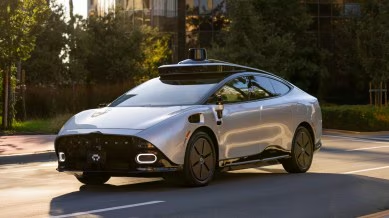
At its heart, the Tensor Robocar is built on a sophisticated electric vehicle (EV) platform, embodying the cutting edge of automotive engineering as we see it in 2025. It features a substantial 112-kWh battery pack, providing an estimated driving range of 250 miles – a respectable figure that aligns with modern EV expectations for daily usability. While specific performance metrics like motor output and curb weight are yet to be fully disclosed, Tensor emphasizes efficiency and rapid energy replenishment. Its 845-volt battery architecture is a critical differentiator, enabling lightning-fast charging from 10 to 80 percent in a mere 20 minutes. This ultra-fast charging capability is a significant boon, mitigating range anxiety and making the transition to electric autonomy far more practical for consumers.
Beyond the immediate practicality, Tensor is also innovating in the charging experience itself. The company is actively developing an automated charging solution featuring a robotic arm designed to autonomously plug in the car upon its return home. This level of futuristic convenience underscores Tensor’s commitment to a seamless user experience, envisioning a future where vehicle ownership is truly effortless.
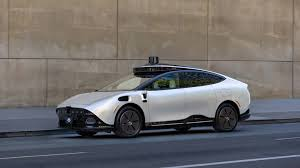
Accessibility and user interaction have also been meticulously considered in the Robocar’s design. Owners will appreciate the powered, coach-style, center-closing doors, equipped with advanced sensors that prevent collisions with other vehicles or obstacles. This elegant solution not only enhances the vehicle’s aesthetic appeal but also provides a practical and safe means of ingress and egress, particularly in tight urban environments. Such thoughtful design choices are crucial for a vehicle aiming to usher in a new era of next-gen self-driving technology.
Achieving True Level 4 Autonomy: Beyond Supervised Driving
Tensor emphatically bills the Robocar as an SAE Level 4 autonomous vehicle. For the uninitiated, Level 4 represents a profound leap beyond what many consumers currently experience. It signifies that the vehicle can handle all aspects of driving under specific operational design domains (ODDs) without any human intervention. While it still retains a steering wheel and pedals for optional manual operation, the key distinction is that no human driver is required to pay attention or intervene when the Level 4 system is engaged within its validated ODDs. This is in stark contrast to systems like Tesla’s Full Self-Driving (Supervised), which, despite its advanced capabilities, is firmly categorized as a Level 2+ system, requiring continuous driver supervision and readiness to take over at any moment.
Tensor’s ability to offer this level of autonomy to private citizens is rooted in its fundamental design philosophy. Unlike many existing AV projects that retrofit autonomous systems onto conventional vehicles, the Robocar was designed from the ground up as an autonomous platform. Development commenced in 2020, leveraging insights gained from their extensive robotaxi operations. This holistic approach allows for deep integration of hardware and software, optimizing every component for driverless operation, and sidestepping the inherent compromises of modified vehicles. This is a critical distinction in the competitive landscape of autonomous vehicle investment.
To achieve its robust Level 4 capabilities, the Robocar is equipped with an unprecedented array of more than 100 sensors. This sophisticated perception suite includes:
Five LiDAR arrays: One prominently mounted on the roof, offering a 360-degree view of objects nearly 1,000 feet away, complemented by four additional LiDAR units strategically placed around the front, sides, and rear. LiDAR is crucial for precise 3D mapping and object detection, especially in varying light conditions.
37 cameras: Providing high-resolution visual data, essential for object recognition, lane keeping, and traffic signal interpretation. These cameras feed into advanced computer vision autonomous vehicles systems.
11 radars: Capable of measuring speed and distance with high accuracy, radars excel in adverse weather conditions like fog and heavy rain, complementing the visual and LiDAR data.
10 ultrasonic sensors: Ideal for short-range detection, particularly useful for parking maneuvers and obstacle avoidance at low speeds.
Maintaining the integrity of this sensor suite in real-world conditions is paramount. Tensor has engineered an impressive solution: 30 washer nozzles and 13 mini-wipers keep the sensors clear, while integrated heating elements prevent fogging and snow buildup. Going a step further than even some leading robotaxi services, the Robocar features physical covers that automatically close over the sensors when the vehicle is turned off, safeguarding them from damage and dirt – a practical innovation born from years of operational experience. The sheer volume and redundancy of these sensors are a testament to Tensor’s commitment to safety and reliability, addressing one of the core Level 4 autonomy challenges in the industry.
The Brain of the Robocar: AI and Edge Computing Prowess
The sheer volume of data generated by the Robocar’s sensor array demands extraordinary processing power. Tensor has equipped the vehicle with a formidable onboard computer, featuring eight Nvidia Drive Thor-X chips. This powerhouse system boasts an astonishing 8,000 TOPS (trillion operations per second) of compute capability. This immense processing capacity is critical because, while the car maintains robust connectivity to the cloud, the vast majority of its decision-making and perception processing occurs onboard. This edge computing architecture is vital for ensuring seamless and instantaneous operation, even in areas with limited or no 5G signal – a practical necessity that sets Tensor apart. To guarantee maximum connectivity, the car is also fitted with three redundant communication channels, mitigating the risk of signal loss.
At the heart of the Robocar’s intelligence lies the Tensor Foundation Model software, an AI-driven system that operates on a dual-path architecture. The first path is rigorously trained by professional human drivers, capturing nuanced driving behaviors and decision-making processes. The second, and perhaps most innovative, path is trained on a Visual Language Model (VLM). This VLM is specifically designed to tackle unusual and unexpected “edge cases” – those rare, unpredictable scenarios that often trip up traditional autonomous systems. By leveraging the VLM, the Robocar can better understand and react to novel situations, enhancing its safety and adaptability.
Tensor’s commitment to real-world utility extends to its claim of reliable operation in challenging weather conditions, including rain and snow. This capability is a significant advancement, broadening the vehicle’s operational design domain beyond the sunny climates typically favored by early AV deployments. Furthermore, external displays on the lower corners of the vehicle communicate simple messages and pictograms to pedestrians, clearly indicating the car’s autonomous status and acknowledging their presence – a small yet crucial detail for fostering public trust and safety in AI driverless cars.
Reclaiming Your Data: Privacy by Design
In an era increasingly defined by concerns over personal data, Tensor has adopted a profoundly consumer-centric approach to vehicle data security and privacy. A cornerstone of their design philosophy is that because the majority of computing is done onboard, Tensor does not inherently need to collect data from your car. Cloud sharing of vehicle information is strictly opt-in, meaning owners maintain explicit control. Unless you grant permission, all your data, from driving patterns to preferences, remains securely within your vehicle.
Owners are given unprecedented transparency and control over their data. All information collected by the car, pertaining to its owner and users, is accessible through the vehicle’s interface or a dedicated phone app, and crucially, can be deleted by the owner at any time. This extends to sensitive biometric data, such as facial and palm recognition, which is used for secure vehicle operation and theft prevention.
Addressing widespread privacy anxieties, Tensor has gone further. While interior cameras and microphones are present to enable driver monitoring during manual operation and facilitate interaction with the voice assistant, each of these features is equipped with physical covers and dedicated off switches. This “privacy by design” approach allows owners to fully disable interior surveillance whenever they choose, offering a level of control that is often lacking in modern connected vehicles and directly responding to calls for more ethical AI in vehicles.
The Conversational Car: Agentic AI Interaction
The Robocar isn’t just an autonomous machine; it’s designed to be an intelligent companion. Central to this vision is an Agentic AI system, powered by a sophisticated Large Language Model (LLM). This isn’t a rudimentary voice command system; it’s engineered for natural, human-like conversation. Instead of rigid commands, you can engage in a fluid dialogue with your car about your desired destinations, preferences, and even contextual information.
The integration of this Agentic AI in vehicles extends beyond simple navigation. You can summon your Robocar from anywhere by simply calling or texting it, asking it to pick you up. Over time, the car learns your habits and routines, and if connected to your digital calendar, it can proactively anticipate upcoming trips, assess necessary battery range, and even suggest charging needs. This predictive capability and intuitive interaction exemplify the vision of smart car technology 2025, transforming the vehicle from a mere mode of transport into a truly intelligent, anticipatory assistant.
The Driver’s Choice: Manual Override and Advanced Assistance
While the Robocar is intended primarily for autonomous use, Tensor understands the desire for choice and control. It retains a steering wheel and pedals, allowing owners to take manual control whenever they wish. The transition between modes is seamless and elegant: when in autonomous mode, the steering wheel retracts smoothly into the dashboard, and the center infotainment screen slides to conceal it, while the accelerator and brake pedals also retract out of the way. Should you decide to take the reins, these controls gracefully reappear, ready for your input.
When driven manually, the Robocar offers a spectrum of advanced driver assistance. From fundamental safety aids like automatic emergency braking to sophisticated Level 3 semi-automated driving capabilities (allowing hands-free, eyes-off-the-road operation in specific conditions), the driver can customize the level of assistance desired.
Underpinning both autonomous and manual operations are “by-wire” systems for steering, braking, and acceleration, meaning there are no direct physical connections. This digital control allows for extreme precision and enables multiple layers of redundancy in each system. Should a failure occur in any sensor or drive component, the vehicle’s redundant architecture ensures continued safe operation. Furthermore, rear-wheel steering, allowing the back tires to turn up to 7 degrees, provides an impressively tight 37-foot turning circle – comparable to a much smaller Tesla Model Y, despite the Robocar’s likely larger footprint. This level of engineering detail reflects a deep understanding of vehicle safety features and operational reliability.
Tensor is also setting ambitious safety targets, aiming for top crash safety scores from leading authorities like NHTSA, IIHS, and European NCAP. This commitment underlines their dedication to passenger protection in both autonomous and human-driven scenarios.
Beyond Ownership: The Robocar’s Economic Potential
Tensor isn’t just selling a car; it’s offering a platform for future economic engagement. The company has already forged a strategic alliance with Lyft, indicating that Robocars will be integrated into Lyft’s network as luxury rideshare vehicles. This partnership offers a glimpse into the autonomous vehicle monetization strategies that could emerge.
Echoing visions articulated by figures like Elon Musk, Tensor suggests that owners could potentially put their Robocars to work as autonomous rideshare vehicles while they are at the office, asleep, or otherwise occupied. While Tesla’s Robotaxi service has seen a slower rollout than initially projected, Tensor’s dedicated, ground-up Level 4 architecture might position it to be a frontrunner in enabling this owner-monetized autonomous rideshare model. However, specific details on the logistics of hailing and compensating owners for privately operated autonomous cars through platforms like Lyft are still pending. This represents a significant area of development for the robotaxi business model and the broader shared autonomous vehicles landscape.
The ability for a private vehicle to generate income autonomously could fundamentally alter the economics of car ownership, transforming a depreciating asset into a revenue-generating one. This potential for new economic models represents a fascinating frontier for autonomous vehicle investment and the future of personal wealth.
The Price of Autonomy: Cost, Production, and Regulatory Hurdles
Tensor has yet to disclose the exact pricing for the Robocar, but Amy Luca has indicated that customers should anticipate “luxury pricing.” Given the unparalleled technology and capabilities, comparisons to high-end vehicles are inevitable. The CEO of Waymo has previously suggested that their autonomous cars carry a price tag similar to a well-optioned Mercedes-Benz S-Class, placing it in the range of $150,000 to $200,000. Considering the Tensor Robocar’s ground-up Level 4 design, extensive sensor suite, and advanced computing, it’s reasonable to estimate its private self-driving car cost will reside on the higher end of this spectrum, if not exceed it.
Production for the Robocar will be handled by Vietnamese automaker VinFast at its factory in Haiphong, Vietnam. While VinFast vehicles have faced some scrutiny regarding build quality in the nascent U.S. market, it’s crucial to acknowledge VinFast’s extensive manufacturing expertise. The company has a long history of assembling BMWs under license for years, demonstrating a proven capability to produce high-quality automobiles. Tensor’s decision to partner with VinFast suggests confidence in their manufacturing prowess to meet the stringent demands of an advanced autonomous vehicle.
The rollout schedule is ambitious: production is slated to commence in late 2026, with initial deliveries expected in the United Arab Emirates (UAE) late in the fourth quarter of that same year. U.S. deliveries are anticipated to begin in early 2027, pending the necessary autonomous vehicle regulation US approvals. Tensor also has plans for expansion into the European Union and recently announced a deal to supply cars to a rideshare service in Denmark, indicating a global strategy for Level 4 deployment.
A crucial, often overlooked, aspect of autonomous vehicle ownership in 2025 is liability. While discussions around AV liability laws are ongoing globally, the prevailing assumption remains: if your privately owned autonomous vehicle incurs a traffic violation or is involved in an incident while operating in self-driving mode, the owner will likely bear the responsibility. This is an area that will require continued regulatory clarity as Level 4 vehicles become more commonplace.
Your Future, Your Autonomy
As we look towards 2027, the Tensor Robocar represents more than just a new vehicle; it symbolizes a paradigm shift in personal mobility. It’s a testament to a decade of relentless innovation, a strategic response to evolving market dynamics, and a bold vision for a future where true Level 4 autonomy is not just for fleets, but for individuals.
This isn’t merely about convenience; it’s about reclaiming time, enhancing safety, and potentially redefining economic models around car ownership. Tensor’s commitment to data privacy, advanced AI, and a robust, ground-up autonomous platform positions it as a formidable contender in the race to deliver the ultimate personal self-driving experience. The future of transportation is rapidly approaching, and the Robocar is set to be a significant mile marker on that journey.
Are you ready to embrace a future where your car is not just a mode of transport, but an intelligent, autonomous partner? Explore the potential of the Tensor Robocar and consider how personal Level 4 autonomy could transform your daily life. The era of the private, self-driving car is no longer a distant dream; it’s a rapidly approaching reality.