



Your Personal Driver in 2027: Tensor’s Private Level 4 Autonomous Car Revolution
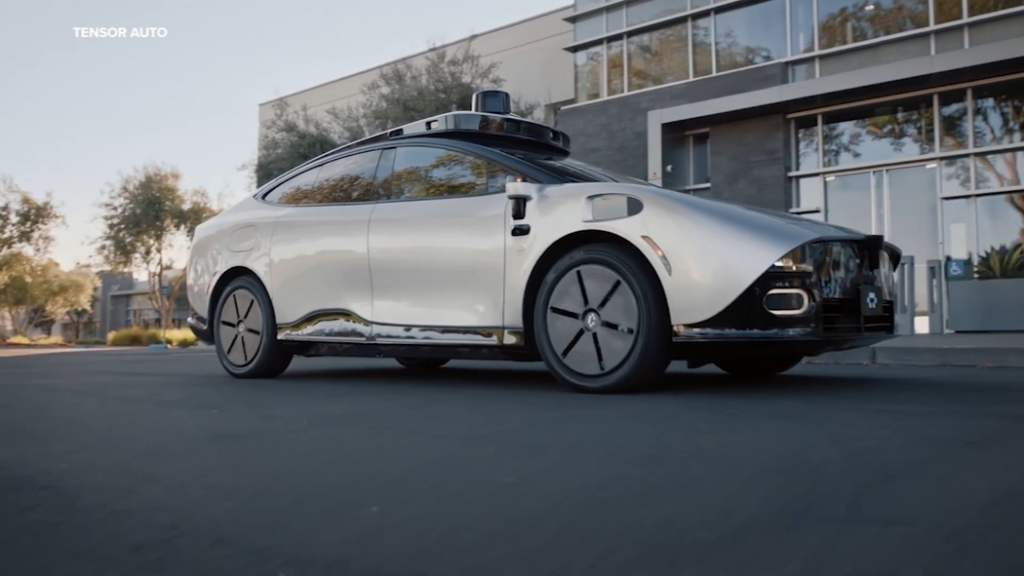
For over a decade, the promise of truly autonomous vehicles has shimmered on the horizon, a tantalizing vision of a future free from the mundane chore of driving. In 2025, while robotaxi services like Waymo and increasingly sophisticated ADAS (Advanced Driver-Assistance Systems) from Tesla navigate the complexities of urban environments, a new player is emerging with an even bolder proposition: your very own Level 4 self-driving car. Meet the Tensor Robocar, a private autonomous vehicle designed from the ground up to redefine personal mobility, hitting U.S. streets as early as 2027.
As a seasoned expert who’s tracked the twists and turns of the autonomous vehicle industry for the past ten years, I can tell you this isn’t just another concept. Tensor, formerly AutoX, is taking the Waymo model of full autonomy and putting it directly into consumer hands, offering a freedom and capability that current systems, even advanced ones, simply cannot match for private ownership. This is more than a car; it’s a personal mobility platform engineered for a future where your commute is productive, your road trips are relaxing, and your vehicle is an intelligent extension of your lifestyle.
A Decade of Autonomous Vision: From Robotaxi Roots to Personal Revolution
The journey to the Tensor Robocar began not yesterday, but back in 2016 in Silicon Valley. Founded as AutoX, the company initially plunged into the nascent world of commercial autonomous vehicles and robotaxis. By 2017, their test fleets were already navigating the intricate traffic patterns of both California and China. The subsequent years, especially during the pandemic, saw AutoX rapidly expand its footprint, deploying over 1,000 autonomous taxis across five Chinese cities, providing real-world rides to the public. This extensive operational experience in diverse, challenging urban environments provided an invaluable data trove and refined their core AI and hardware stack in ways few competitors can claim.
However, the global landscape shifts. In a strategic pivot driven by evolving data privacy concerns and a desire to refocus on Western markets, AutoX completely divested from its Chinese operations over the past year. The company rebranded as Tensor, re-established its headquarters in San Jose, California, and re-calibrated its mission. The new focus? To transition its hard-won Level 4 autonomous vehicle technology from corporate fleets to individual consumers, developing a truly autonomous vehicle for private ownership. This isn’t a hasty retooling; it’s a calculated move by a company with deep expertise, leveraging years of real-world operational data to meet a burgeoning market demand for advanced, private, self-driving solutions.
Engineering Autonomy: The Robocar’s Core Foundations
At its heart, the Tensor Robocar is an all-electric vehicle meticulously crafted to support its autonomous aspirations. Powering this advanced machine is a robust 112-kWh battery pack, targeting an estimated range of 250 miles – more than sufficient for daily commutes and longer excursions for a vehicle designed to take the stress out of travel. What truly stands out, however, is its 845-volt architecture, a premium EV specification that enables blistering fast charging. Tensor claims a 10 to 80 percent charge can be achieved in just 20 minutes, a crucial factor for a vehicle intended to be a seamless part of your life, minimizing downtime.
While specific performance figures for its single rear motor remain under wraps, the focus here is less on blistering acceleration and more on smooth, predictable, and ultra-reliable operation, characteristic of high-end personal autonomous transport. The design choices extend beyond the powertrain. Tensor has integrated convenience and intelligence into every detail. Consider the coach-style, center-closing doors, fully powered and fitted with proximity sensors to prevent unsightly dents or awkward collisions in tight parking spots. Furthermore, the company is actively developing an automated charging solution with a robotic arm, envisioning a future where your car parks itself and plugs in, entirely removing another minor chore from your daily routine. These thoughtful design elements underscore Tensor’s commitment to a holistic, user-centric autonomous experience.
The Apex of Autonomy: Decoding SAE Level 4 for the Private Owner
Tensor proudly bills the Robocar as an SAE Level 4 autonomous vehicle, a distinction that carries profound implications for private ownership. Unlike the current crop of advanced driver-assistance systems (ADAS), including Tesla’s Full Self-Driving (Supervised), which still demands continuous driver attention and intervention, Level 4 represents a significant leap. It signifies a vehicle capable of operating entirely on its own, without human intervention, under specific operational design domains (ODDs). This means the Robocar can truly drive itself, often without a human aboard, though critically, it retains a steering wheel and pedals for optional manual control.
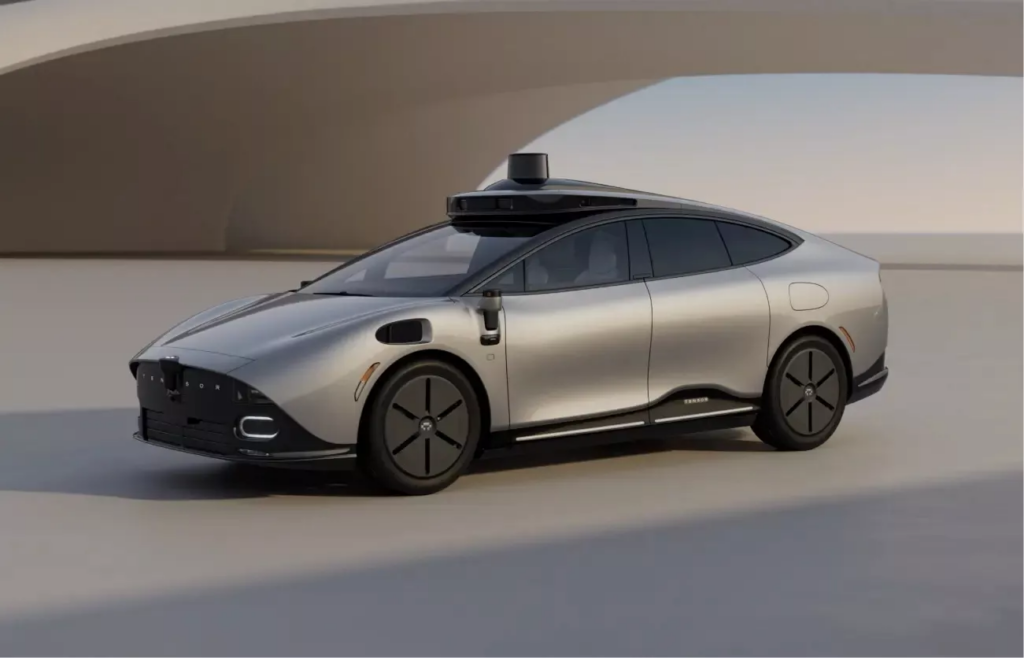
The key differentiator here is Tensor’s ground-up design philosophy. Instead of attempting to retrofit an existing vehicle architecture with autonomous capabilities, a common approach with varying degrees of success, Tensor conceived the Robocar from day one as an autonomous driving technology platform. Development commenced in 2020, leveraging insights gained from their extensive robotaxi operations. This holistic approach allows for seamless integration of hardware and software, optimizing every component for reliability and performance in autonomous mode. For a private owner, this translates to a confidence in the system that simply isn’t present with lesser levels of autonomy, truly ushering in an era of self-driving car for private ownership.
The Symphony of Sensors: Perception Beyond Human Capability
Achieving true Level 4 autonomy in a complex, unpredictable world demands an unparalleled array of sensors and immense computational power. The Tensor Robocar is outfitted with over 100 sensors, creating a comprehensive, redundant perception system that far exceeds human capabilities. This includes five LiDAR arrays – one strategically placed on the roof for a commanding 360-degree view, and four others intelligently distributed around the front, sides, and rear. These LiDAR units are crucial for high-resolution 3D mapping and object detection, capable of perceiving objects nearly 1,000 feet away.
Supplementing LiDAR are 37 cameras, providing rich visual data for object classification and traffic light detection; 11 radars for long-range detection and speed measurement, crucial in adverse weather; and 10 ultrasonic sensors for close-range obstacle avoidance, particularly useful in parking maneuvers. This multi-modal sensor fusion is the bedrock of robust autonomous operation, ensuring that the vehicle can ‘see’ and interpret its surroundings with incredible accuracy.
One often-overlooked but critical aspect of sensor performance is maintenance. Tensor addresses this with innovative design, incorporating 30 washer nozzles, 13 mini wipers, and integrated heating elements to keep sensors clear of fog, ice, and snow. Going a step further than many robotaxi competitors, the Robocar features physical covers that automatically close over the sensors when the vehicle is turned off, providing essential protection from dirt, debris, and potential damage. This attention to detail is paramount for long-term reliability and underscores Tensor’s commitment to delivering a truly robust robotic car for the consumer market.
The Brain Behind the Drive: Edge AI, Redundancy, and Real-World Readiness
All this sensory input is orchestrated by a formidable onboard computer, the veritable brain of the Robocar. This system features eight Nvidia Drive Thor-X chips, delivering a staggering 8,000 TOPS (trillion operations per second) of processing power. This immense automotive AI solution enables complex real-time decision-making, crucial for navigating dynamic environments safely. While the vehicle is designed for seamless cloud connectivity, Tensor emphasizes that the vast majority of its computing is performed directly within the vehicle. This edge computing approach ensures the Robocar can operate with full capability even in areas with poor or no 5G signal, a practical consideration for a nation with varying network coverages. To further bolster reliability, the car boasts three redundant communication channels for maximum connectivity when available.
Tensor’s proprietary Foundation Model software is AI-based and operates with a dual-system approach. The first system is extensively trained on data from millions of miles driven by professional human drivers, capturing nuanced driving behaviors. The second is trained on a Visual Language Model (VLM), designed to address unusual and unexpected “edge cases” – those rare, unpredictable scenarios that often challenge autonomous systems. This parallel processing architecture significantly enhances safety and adaptability. Perhaps most exciting for consumers beyond sunny California, Tensor explicitly states the Robocar is engineered to operate reliably in rain and snow, a critical capability for widespread adoption across diverse U.S. climates.
Beyond its internal logic, the Robocar also communicates outwardly. Displays on its lower exterior corners broadcast simple messages and pictograms to pedestrians, clearly indicating the car’s autonomous status and acknowledging their presence. This proactive communication is vital for fostering trust and ensuring safe interactions in shared urban spaces, a key aspect of autonomous vehicle safety.
Your Car, Your Data: Prioritizing Privacy in an Intelligent World
In an era increasingly defined by data privacy concerns, Tensor makes a bold statement: your data is yours. By performing the bulk of its computing onboard, the company significantly reduces its reliance on continuous cloud data collection from your vehicle. While the Robocar is capable of sharing information with the cloud for updates or improvements, owners must explicitly opt in. Otherwise, all your sensitive data remains securely within your car.
Furthermore, Tensor provides unprecedented transparency and control over any data the vehicle does collect about its owner and users. This information, including biometric data like facial and palm recognition necessary for vehicle operation and theft prevention, can be accessed and deleted by the owner through the vehicle’s interface or a dedicated smartphone app.
Understanding the unease some feel about constant surveillance, even within their own vehicles, Tensor has equipped the Robocar with interior cameras and microphones for driver monitoring during manual operation and voice assistant interaction. Crucially, each of these components features a physical cover and a dedicated off switch, empowering owners to disable them at will. This level of user control over personal data and privacy sets a new benchmark for AI-powered vehicles and positions Tensor as a leader in ethical AI deployment in the automotive sector.
The Conversational Co-Pilot: Engaging with Agentic AI
Leaving those microphones off permanently, however, would mean missing out on one of the Robocar’s most innovative features: its Agentic AI voice assistant, powered by a sophisticated Large Language Model (LLM). This isn’t your typical command-and-response system. Tensor’s vision is for you to have genuine conversations with your car, interacting with it as naturally as you would a human co-pilot. Instead of rigid voice commands, you can discuss your desired destination, preferences, or even ask questions, and the car will understand and respond contextually.
This intelligent assistant extends to seamless vehicle summoning. Whether by a simple call or text message, you can instruct your Robocar to pick you up from anywhere, autonomously navigating to your location. Beyond direct commands, the system learns your habits, anticipating your needs. When connected to your calendar, it can proactively suggest upcoming trips, ensuring the battery has sufficient range and initiating charging if necessary. This personalized, predictive intelligence transforms the vehicle from a mere mode of transport into a proactive, intuitive assistant, a genuine evolution in smart car technology.
The Best of Both Worlds: When You Want to Drive (or Not)
While the Tensor Robocar is engineered first and foremost for autonomous operation, the company wisely recognizes that driving can still be a pleasure. For those moments when you wish to take the wheel, the vehicle provides that option. When manually driven, it offers a spectrum of assistance, from fundamental safety features like automatic emergency braking (AEB) to advanced Level 3 semi-automated driving. This means hands-free, eyes-off-the-road capability in specific conditions, providing a sophisticated layer of support.
When you’re ready to relinquish control, a simple switch activates autonomous mode. The steering wheel elegantly retracts into the dashboard, and the central infotainment screen glides over to conceal it, enhancing the spacious, futuristic cabin. The accelerator and brake pedals also retract, maximizing legroom and transforming the driving space into a lounge. Should you decide to take over again, these elements swiftly return to their positions, ensuring a fluid transition between autonomous and manual operation.
Underneath it all, the Robocar employs by-wire systems for steering, braking, and acceleration, meaning there are no physical linkages. This architecture is critical for autonomous control and enables seamless transitions. Crucially, each of these systems, along with the extensive sensor suite, features multiple redundancies. This robust design ensures that even in the unlikely event of a component failure, the car can continue to operate safely, reinforcing its commitment to autonomous vehicle safety. Adding to its agility, rear-wheel steering allows the back tires to turn up to 7 degrees in either direction, granting the Robocar an impressive 37-foot turning circle. This is comparable to a Tesla Model Y, despite the Tensor being a substantially larger vehicle, a testament to its advanced engineering.
Safety extends to passive measures as well. Tensor is targeting the highest crash safety scores from leading regulatory bodies globally, including the NHTSA, IIHS, and European NCAP, signaling their commitment to occupant protection in all scenarios.
Monetizing Your Mobility: The Rideshare Proposition
Beyond personal convenience, Tensor envisions a future where your vehicle can also generate income. The company has already forged a significant partnership with Lyft, planning to integrate Robocars into its luxury rideshare fleet. This validates the technology’s commercial viability and demonstrates its readiness for broad deployment.
For private owners, the vision extends to what Elon Musk once famously promised: the ability to put your personal autonomous vehicle to work as a rideshare while you’re at the office or asleep. Tensor aims to deliver on this promise, potentially even before Tesla’s Robotaxi service sees widespread private adoption. While the specifics of how a privately owned Robocar would integrate into existing platforms like Lyft and manage payments are still being ironed out, the concept of passive income from autonomous vehicles represents a compelling value proposition, transforming a depreciating asset into a revenue generator. This is a game-changer for future of transportation infrastructure.
The Price of Progress: Luxury Autonomy and Global Rollout
Such groundbreaking technology and premium features come with an expected price tag. Tensor hasn’t released official pricing, but “luxury pricing” is the key indicator. Industry experts estimate the cost of a fully optioned Waymo vehicle to be in the range of a high-end Mercedes-Benz S-Class, placing it between $150,000 and $200,000. Given the Tensor Robocar’s sophisticated, ground-up design and extensive sensor package, it’s reasonable to anticipate it will reside at the higher end of this spectrum, catering to early adopters and those seeking the ultimate luxury autonomous vehicle.
Production of the Robocar is entrusted to Vietnamese automaker VinFast, utilizing its state-of-the-art factory in Haiphong, Vietnam. While VinFast’s brand is relatively new to the U.S. market, it’s vital to remember their extensive experience, including years of assembling BMWs under license. This background demonstrates their capability in high-quality automotive manufacturing, a factor Tensor would undoubtedly have vetted thoroughly. Production is slated to commence in late 2026, with initial deliveries expected in the United Arab Emirates (UAE) during the fourth quarter of that year.
For U.S. consumers, the wait will be slightly longer, with deliveries projected to begin in early 2027, pending crucial regulatory approvals. Tensor also has ambitious plans for the European Union and has already announced an agreement to supply cars to a rideshare service in Denmark. One practical question remains: who pays the fine if your autonomous car gets a ticket? The current legal framework in most places points to the owner, a detail that will undoubtedly evolve as next-generation self-driving cars become more common.
The Dawn of a New Mobility Era
The Tensor Robocar represents a significant milestone in the evolution of personal transportation. By blending a decade of robotaxi operational experience with a renewed focus on consumer privacy and a luxury experience, Tensor is poised to deliver a truly transformative product. The promise of a Level 4 autonomous vehicle in your driveway, capable of driving itself, interacting intelligently, and even earning income, is no longer a distant dream but a tangible reality just around the corner.
This is more than just a car; it’s a profound shift in how we interact with our vehicles and how we envision our daily lives. The freedom it offers, the enhanced productivity, and the potential for a completely reimagined travel experience are truly compelling.
Are you ready to embrace the future of personal mobility? Explore what the Tensor Robocar means for your world and join the conversation as we enter this exciting new era of autonomous driving. Your journey is about to get a whole lot smarter.