



The Dawn of Personal Autonomy: Tensor’s Robocar Redefines Private Transportation for 2027
As we stand in late 2025, the automotive world is abuzz with the accelerating pace of autonomous vehicle technology. For years, the promise of a truly self-driving car has been tantalizingly close, primarily materializing in the form of robotaxi services from industry giants like Waymo and Cruise in select urban centers. Tesla’s Full Self-Driving (Supervised) has pushed the boundaries of ADAS technology for private owners, yet it still demands constant human oversight. Now, a new player, Tensor, is poised to disrupt the entire paradigm, shifting the focus from shared fleets to personal autonomous mobility with the launch of its ground-up Level 4 autonomous vehicle, the Tensor Robocar, slated for private customer deliveries in early 2027.
This isn’t just another electric vehicle with advanced driver aids; it’s a fundamental re-imagining of what a car can be when built from its very inception to navigate the world independently. Having immersed myself in the intricacies of future of transportation for over a decade, tracking every nuance from sensor development to regulatory shifts, I can confidently say that Tensor’s approach represents a bold leap. They’re not just offering convenience; they’re offering genuine freedom from the act of driving, wrapped in a privacy-first package that challenges many established norms.
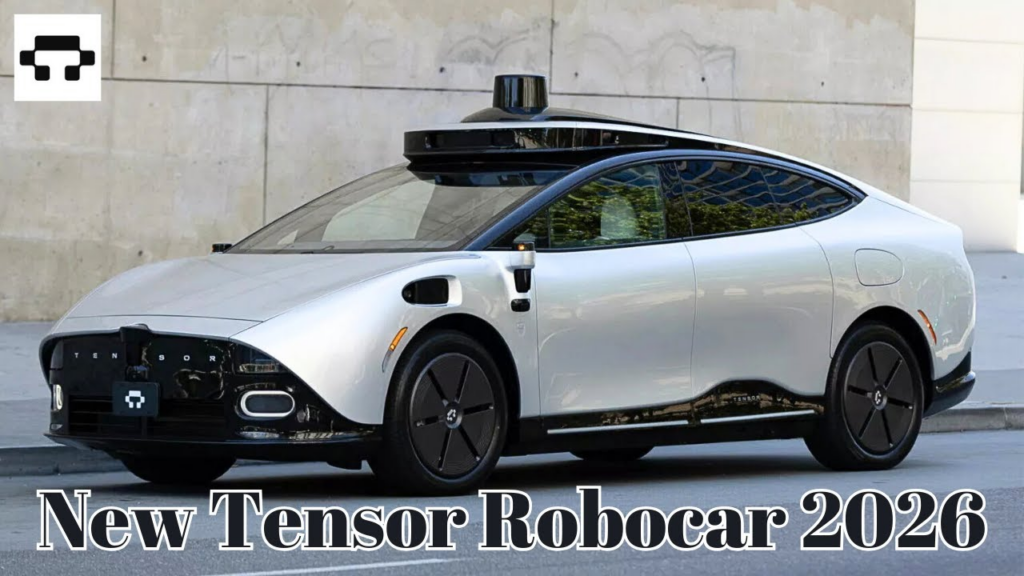
From Silicon Valley Startup to Global Pioneer: Tensor’s Evolution
The journey of Tensor is as compelling as its product. Founded in Silicon Valley in 2016 under the name AutoX, the company initially set its sights on developing autonomous commercial vehicles and the nascent robotaxi market. Early test fleets in California and later China showcased impressive capabilities. The strategic decision during the pandemic to fully commit to Chinese operations led to a massive scaling, with over 1,000 autonomous taxis providing public rides across five cities. This hands-on experience in real-world, complex urban environments proved invaluable, acting as an unparalleled training ground for their AI in autonomous vehicles and robust sensor suite.
However, the global landscape of vehicle data privacy and regulatory scrutiny evolved rapidly. Recognizing the critical importance of data sovereignty and local market alignment, AutoX executed a pivotal strategic shift in the past year. The company completely divested from its Chinese ventures, rebranded as Tensor, and strategically relocated back to its Silicon Valley roots in San Jose, California. This wasn’t merely a change of address; it signaled a profound change in mission: to bring a truly private autonomous car to individual consumers, rather than solely corporate fleets. This pivot, made in late 2024 and early 2025, has set the stage for their aggressive 2027 launch strategy, focusing intently on the burgeoning luxury autonomous vehicle segment in the U.S. and other key Western markets.
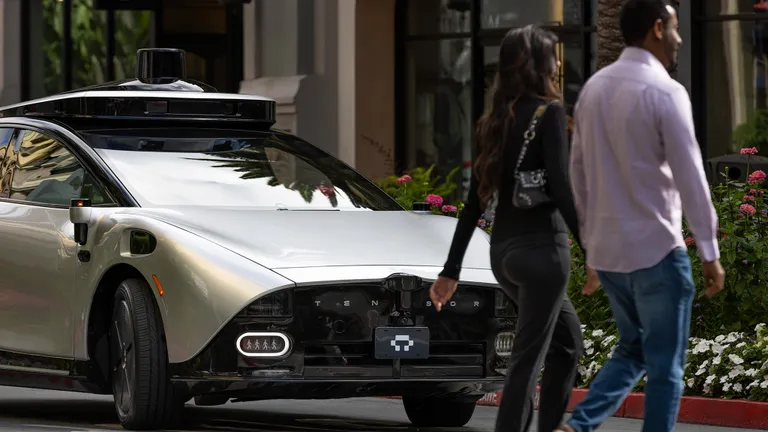
Engineering Autonomy from the Ground Up: The Robocar’s Core
At its heart, the Tensor Robocar is an advanced electric vehicle (EV) designed with autonomy as its primary function, not an afterthought. It boasts a substantial 112-kWh battery, offering an estimated 250 miles of range. While 250 miles might seem standard for a 2027 EV, the emphasis here is on reliable, consistent performance under autonomous operation, where range predictions need to be exceptionally accurate for mission planning. The 845-volt battery architecture is particularly noteworthy, enabling ultra-fast charging solutions that can take the pack from 10 to 80 percent in a mere 20 minutes. This speed is crucial for maximizing uptime, whether for personal use or potential future commercial applications. Tensor is even exploring automated charging solutions with robotic arms, envisioning a future where your car parks itself and plugs in, entirely without human intervention.
Beyond the powertrain, the physical design reflects its autonomous purpose. The coach-style, center-closing powered doors aren’t just a stylistic flourish; they’re integrated with sensors to prevent collisions with obstacles, enhancing both safety and user experience. Such meticulous attention to detail underscores the “design for autonomy” philosophy that Tensor champions, a stark contrast to many existing vehicles adapted for self-driving capabilities. This ground-up approach allows for optimal sensor integration, structural integrity, and computational housing, all critical for achieving reliable Level 4 autonomy.
The Zenith of Self-Driving: True Level 4 Capability
Tensor unequivocally bills the Robocar as an SAE Level 4 autonomous vehicle. For those navigating the often-confusing landscape of autonomous driving levels, this distinction is paramount. Unlike Level 2+ systems like Tesla’s FSD (Supervised), which, despite their sophistication, require the human driver to remain attentive and ready to intervene at all times, a Level 4 system operates completely independently within defined operational design domains (ODDs). This means the vehicle can truly drive itself without any human input, even if the driver is unresponsive. While the Robocar retains a steering wheel and pedals for manual override, its primary mode of operation is full autonomy. This is the holy grail many have been chasing, and Tensor’s deep experience in operating large-scale robotaxi fleets has provided them with the data and expertise to tackle this challenge head-on.
Achieving this level of autonomy demands an unparalleled fusion of hardware and software. The Robocar is festooned with an astonishing array of over 100 sensors: five lidar sensor technology arrays strategically placed (one on the roof, four around the perimeter), 37 cameras offering comprehensive visual coverage, 11 radars for all-weather object detection, and 10 ultrasonic sensors for close-range sensing. The rooftop lidar, in particular, is a marvel, capable of detecting objects nearly 1,000 feet away with 360-degree precision.
Maintaining the integrity of this sensor network is critical. Tensor goes above and beyond, integrating 30 washer nozzles, 13 mini wipers, and heating elements to combat fogging, snow, and dirt. A unique feature I find particularly impressive are the physical covers that automatically retract over the sensors when the vehicle is powered down, protecting them from environmental damage and grime – a subtle but significant enhancement over existing autonomous driving technology applications.
The computational backbone powering this sensory input is equally formidable. The Robocar houses a massive onboard computer featuring eight Nvidia Drive Thor-X chips, delivering a staggering 8,000 TOPS (trillion operations per second) of processing power. While the vehicle is designed for cloud connectivity (with three redundant communication channels for maximum uptime, a vital component of autonomous vehicle reliability), the majority of its complex AI processing is done directly on the vehicle. This edge computing approach ensures robust performance even in areas with spotty 5G signals, providing a crucial layer of redundancy and responsiveness that is non-negotiable for Level 4 self-driving.
The Tensor Foundation Model software, an AI-based driving system, employs a dual-system approach. One system is rigorously trained on millions of miles of data from professional drivers, while the other is guided by a Visual Language Model (VLM) designed to interpret and solve unusual and unexpected “edge cases.” This VLM approach allows the car to understand context beyond simple object recognition, improving its ability to handle novel situations. Crucially, Tensor explicitly states the Robocar can operate effectively in diverse weather conditions, including rain and snow, breaking the stereotype that advanced autonomous driving is limited to sunny California.
For public interaction and safety, the vehicle features external displays on its lower corners that broadcast simple messages and pictograms to pedestrians. This visual communication, informing people that the car is operating autonomously and has detected them, is a smart way to foster trust and predict behavior in shared urban spaces, a key aspect of autonomous vehicle safety protocols.
Your Car, Your Data: A Privacy-First Paradigm
In an era increasingly concerned with digital privacy, Tensor’s stance on vehicle data privacy is a powerful differentiator. They understand that for a private autonomous car, control over personal data is paramount. Because the majority of computing is performed onboard, Tensor fundamentally doesn’t need to collect your data. While the car is capable of sharing anonymized information with the cloud for fleet learning, owners have an explicit opt-in choice. Unless explicitly granted permission, all your data, from driving patterns to preferences, remains securely stored within your vehicle.
Owners have complete access to the data their car collects about them and can delete it at any time, either through the vehicle’s interface or a companion smartphone app. This includes sensitive biometric data like facial and palm recognition, which are utilized for vehicle operation, security, and theft prevention. Furthermore, while the Robocar is equipped with interior cameras and microphones for driver monitoring during manual operation and voice assistant interaction, each features a physical cover and a hard-off switch. This granular control over internal sensing hardware is a direct response to consumer privacy concerns, offering peace of mind to those wary of constant surveillance, a critical consideration for mainstream adoption of personal autonomous mobility.
The Conversational Cockpit: Intuitive Interaction with Agentic AI
The user experience extends far beyond merely turning on autonomous mode. The Robocar is designed to be your intelligent co-pilot, equipped with an Agentic AI backed by a powerful Large Language Model (LLM). This isn’t about rigid voice commands; it’s about natural conversation. Instead of barking “Navigate to Main Street,” you can simply say, “Hey Tensor, could you take me to that new cafe downtown we talked about yesterday?” The AI understands context, nuance, and learns your preferences over time.
This seamless interaction extends to summoning the vehicle. Whether you’re across town or at a friend’s house, you can call or text your Robocar and have it autonomously pick you up. Beyond immediate commands, the AI proactively learns your habits. When connected to your calendar, it can anticipate upcoming trips, intelligently manage battery range, and even initiate charging when needed. This level of personalized, predictive assistance transforms the car from a mere mode of transport into an intuitive, intelligent companion, fundamentally altering the automotive user experience.
Driver’s Choice: Manual Control and Uncompromising Safety
Despite its autonomous capabilities, Tensor recognizes that some drivers still cherish the act of driving. The Robocar, therefore, retains a steering wheel and pedals, allowing for manual operation whenever desired. When a human takes the wheel, the vehicle offers a comprehensive suite of assistance, from basic features like automatic emergency braking (AEB) to advanced driver-assistance systems that enable hands-free, eyes-off-the-road Level 3 semi-automated driving in specific conditions.
When autonomy is engaged, the interior transforms. The steering wheel retracts smoothly into the dashboard, and the center infotainment screen slides over to conceal it, creating an expansive, uncluttered space. The accelerator and brake pedals also retract, maximizing legroom and passenger comfort. Should you decide to resume control, these elements swiftly reappear, making the transition between autonomous and manual driving fluid and intuitive.
Underpinning this flexibility is a robust by-wire system for steering, braking, and acceleration – meaning no physical connections. Crucially, every one of these critical drive systems, along with the entire sensor suite, features multiple redundancies. This engineering marvel ensures that even in the unlikely event of a component failure, the car can continue to operate safely, a testament to Tensor’s commitment to autonomous vehicle safety as a core design principle. Furthermore, rear-wheel steering allows the back tires to turn up to 7 degrees, giving the Robocar an impressive 37-foot turning circle. This agility, comparable to a compact SUV like a Tesla Model Y despite the Robocar’s potentially larger footprint, is invaluable for urban maneuverability and parking, enhancing the overall personal autonomous mobility experience.
In the unfortunate event of a collision, Tensor is not cutting corners on passive safety either, targeting top crash safety scores from leading authorities like the NHTSA, IIHS, and European NCAP. This holistic approach to safety, combining cutting-edge active autonomy with robust passive protection, is essential for building consumer confidence in disruptive automotive technology.
A New Economy of Mobility: Making Your Car Work for You
Tensor isn’t just selling a car; they’re envisioning a new ecosystem of mobility. They’ve already inked a significant deal with Lyft to integrate Robocars into their luxury rideshare services, providing a premium autonomous option for discerning customers. This strategic partnership also opens the door for private owners. Remember Elon Musk’s long-standing vision of owners monetizing their autonomous car by dispatching it as a robotaxi while they’re at work or asleep? Tensor is bringing that concept closer to reality. While the exact operational and financial models for privately owned autonomous rideshare remain to be fully detailed, it’s safe to assume integration with existing platforms like Lyft would be central. This concept of roboshare services for private owners could unlock significant economic value, transforming a depreciating asset into a revenue generator, a compelling aspect of the future of transportation.
The Investment in Innovation: Pricing and Production
So, what will this groundbreaking Level 4 autonomous vehicle cost? Tensor hasn’t released firm pricing, but Amy Luca, head of marketing, has indicated “luxury pricing.” Given the complexity, the vast array of sensors, powerful computing, and bespoke engineering, comparisons to existing luxury electric vehicles and insights from Waymo’s estimated vehicle costs suggest a price point likely between $150,000 and $200,000. This places it firmly in the premium segment, reflecting the significant investment in autonomous vehicle technology and R&D.
Production for the Robocar is being handled by Vietnamese automaker VinFast at its state-of-the-art factory in Haiphong, Vietnam. While VinFast vehicles have faced initial challenges in the U.S. market regarding build quality perceptions, it’s crucial to remember that VinFast has extensive experience, including assembling BMWs under license for years, demonstrating a proven capability in quality manufacturing. Tensor’s choice of VinFast is a strategic one, leveraging established production infrastructure for rapid scaling.
The rollout schedule is ambitious: production is slated to commence in late 2026, with initial deliveries beginning in the United Arab Emirates (UAE) late in the fourth quarter of that same year. U.S. deliveries, eagerly anticipated, are set to follow in early 2027, pending the necessary regulatory framework for autonomous vehicles approvals. Tensor also has its sights set on the European Union and has recently announced plans to supply vehicles to a rideshare service in Denmark, indicating a robust global market strategy for personal autonomous mobility.
A lingering question, of course, revolves around liability: who pays the ticket if your private autonomous car gets one? While the legal landscape for AVs is still evolving, the current assumption, and a likely reality in 2027, is that the owner, as the vehicle’s registered party, will bear this responsibility. This highlights one of the many complex ethical and legal considerations that still need to be fully ironed out as we transition into this autonomous future.
The Road Ahead: Are You Ready for True Autonomy?
Tensor’s Robocar represents more than just an engineering feat; it’s a statement about the direction of personal autonomous mobility. By offering a privacy-centric, ground-up Level 4 autonomous vehicle directly to consumers, Tensor is challenging the prevailing robotaxi-only model and opening a new frontier for how we interact with our cars. As we look towards 2027, the prospect of owning a vehicle that truly drives itself, learns your habits, and even earns you income, is no longer a distant dream but an impending reality. The convergence of AI in autonomous vehicles, advanced sensor technology, and a renewed focus on consumer control promises to redefine our relationship with transportation.
The era of merely assisted driving is fading; the dawn of genuine personal autonomy is upon us. What are your thoughts on owning a truly self-driving vehicle? Are you ready to embrace the ultimate freedom from the wheel, or do you still have reservations? Join the conversation and share your vision for the future of personal mobility.