



The Dawn of Personal Autonomy: Tensor’s Robocar Redefines the Private Self-Driving Experience for 2027
For years, the promise of a truly self-driving car has hovered on the horizon, tantalizing us with visions of effortless commutes and reclaimed time. While the advent of autonomous robotaxis in select urban centers has offered a glimpse into this future, the dream of personal autonomy—owning a vehicle that can navigate the world without human intervention, parked right in your driveway—has remained just out of reach. Until now. As we stand in 2025, a decade of relentless innovation in artificial intelligence and automotive engineering is culminating in a groundbreaking proposition: the Tensor Robocar, an SAE Level 4 autonomous vehicle engineered from the ground up for private ownership, poised to hit U.S. roads by early 2027.
Having witnessed the evolution of autonomous driving technology from its nascent stages to its current complex realities, I can confidently state that Tensor isn’t just entering the market; they’re redefining it. This isn’t another glorified advanced driver-assistance system (ADAS) masquerading as full self-driving. This is a meticulously crafted, purpose-built machine designed to deliver a genuine “eyes-off, mind-off” driving experience in defined operational domains, fundamentally shifting our understanding of personal mobility.
The Genesis of Genuine Autonomy: Tensor’s Decade-Long Journey
To truly appreciate the significance of the Tensor Robocar, one must understand the company’s roots. Tensor was founded in Silicon Valley in 2016 as AutoX, immediately immersing itself in the burgeoning field of autonomous commercial vehicles and robotaxis. My colleagues and I watched closely as AutoX began rigorous testing in both California and China, quickly establishing itself as a serious contender in the autonomous vehicle (AV) space. They accumulated invaluable real-world data and operational experience, building and managing a fleet of over 1,000 autonomous taxis that served the public in five Chinese cities during a period of intense global disruption.
However, the global landscape shifted, particularly concerning data privacy and geopolitical considerations. In a strategic move that underscores its commitment to the U.S. market and consumer trust, the company completely divested from its Chinese operations. Rebranding as Tensor and returning to its Californian roots in San Jose, this pivot wasn’t merely a geographical relocation; it was a fundamental reorientation of its mission. Tensor made a decisive shift from operating commercial fleets to developing a truly autonomous vehicle specifically for private customers. This journey, spanning nearly a decade, has equipped them with an unparalleled depth of expertise in everything from sensor fusion and perception to robust software architecture and fleet management—all critical ingredients for building a safe and reliable personal AV. This deep operational experience is what differentiates Tensor from many new entrants; they’ve learned the hard lessons in the demanding environment of public robotaxi service, now applying those insights to a consumer product.
Engineering Tomorrow: The Robocar’s Core Specifications
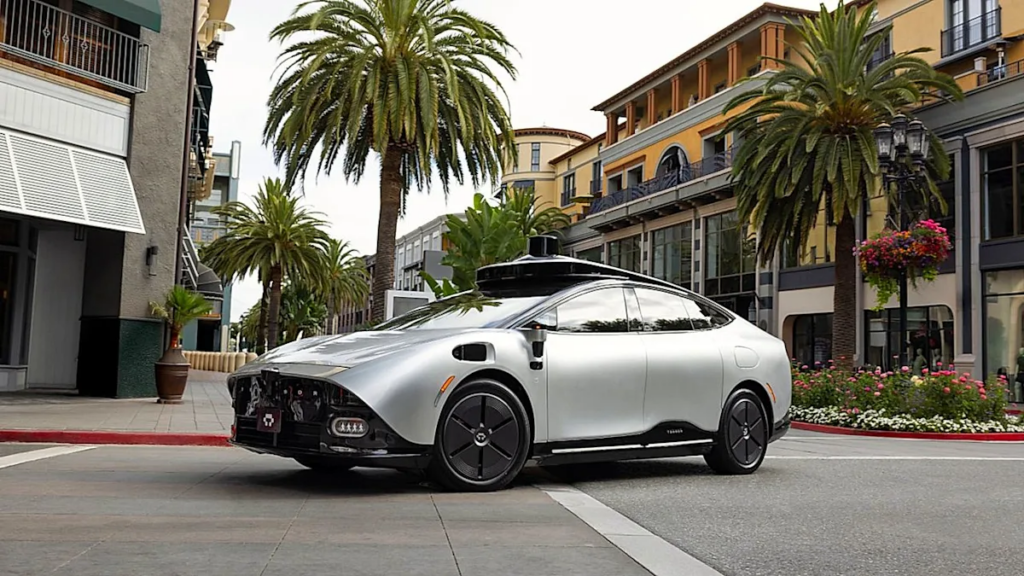
At its heart, the Tensor Robocar is an exemplary piece of electric vehicle (EV) innovation. It features a substantial 112-kWh battery pack, providing an estimated range of 250 miles—a practical figure for most daily commutes and even longer trips, especially when coupled with its rapid charging capabilities. What truly sets it apart in the rapidly evolving EV landscape is its 845-volt architecture, allowing for ultra-fast charging from 10 to 80 percent in a mere 20 minutes. This significantly mitigates range anxiety, a critical factor for widespread EV adoption, and aligns perfectly with the demands of a high-tech, always-on lifestyle.
Beyond the powertrain, Tensor has meticulously engineered every aspect of the vehicle for convenience, safety, and a premium experience. Imagine pulling into your driveway and your car autonomously parking itself, then a robotic arm extends to plug in the charger, ensuring you always wake up to a fully charged vehicle. This isn’t a concept sketch; Tensor is actively developing such an automated charging solution, embodying the seamless integration of smart mobility solutions into daily life.
The Robocar’s design also prioritizes user experience and safety. Its striking coach-style, center-closing doors are fully powered and equipped with an array of sensors. This isn’t just a luxury aesthetic; these intelligent doors prevent accidental collisions with other vehicles or obstacles, showcasing a thoughtful approach to urban mobility. Furthermore, the vehicle incorporates state-of-the-art by-wire systems for steering, braking, and acceleration. This means there are no physical connections, allowing for precise control and, crucially, multiple layers of redundancy. Each system, along with the sophisticated sensor suite, features robust backups, ensuring the car can continue to operate safely even in the unlikely event of a component failure. This level of integrated redundancy is a cornerstone of Level 4 autonomy, offering a degree of safety far beyond what traditional vehicles can achieve.
Decoding Level 4: A True Autonomous Leap
The core differentiator of the Tensor Robocar is its designation as an SAE Level 4 autonomous vehicle. For those of us immersed in the intricacies of autonomous driving technology, this is a monumental distinction. Unlike Level 2 or 3 systems—like Tesla’s Full Self-Driving (Supervised), which, while highly capable, still demands constant human supervision and readiness to intervene—Level 4 means the vehicle can operate entirely on its own within a defined operational design domain (ODD) without any human input. The steering wheel and pedals are present for manual override, but they are not required for autonomous operation. This represents the long-awaited “eyes-off, mind-off” experience, freeing occupants to work, relax, or simply enjoy the journey.
Tensor achieved this remarkable feat by designing the entire car from the ground up as an autonomous platform, a process that began shortly after its robotaxi service launched in China in 2020. This stands in stark contrast to many manufacturers attempting to retrofit autonomous capabilities onto existing vehicle architectures. A ground-up design allows for optimal sensor placement, integration of high-performance computing, and fundamental structural considerations for safety and redundancy that are simply not possible with modifications.
Achieving true Level 4 autonomy demands an unparalleled array of sensors and prodigious computing power. The Robocar is fitted with over 100 sensors working in concert. This includes five distinct lidar arrays—one strategically placed on the roof for a commanding view, and four others intelligently distributed around the front, sides, and rear. Lidar technology is indispensable for Level 4 vehicles, providing precise 3D depth perception that is robust in varying lighting conditions and crucial for object detection and tracking up to nearly 1,000 feet, providing a full 360-degree situational awareness. Complementing the lidar are 37 cameras, providing rich visual data; 11 radars, excelling in adverse weather and range detection; and 10 ultrasonic sensors for close-range object detection. This multi-modal sensor fusion creates an incredibly comprehensive and redundant environmental model, critical for safe operation.
But sophisticated sensors are only effective if they can see clearly. Tensor has addressed real-world operational challenges with remarkable ingenuity. The Robocar features 30 washer nozzles and 13 mini wipers dedicated to keeping these vital sensors clean, along with integrated heating elements to prevent fogging and snow buildup. Going a step further than even some leading robotaxi platforms, Tensor incorporates physical covers that automatically close over the sensors when the vehicle is turned off. This protects them from dirt, debris, and potential damage, ensuring optimal performance every time the car is engaged.
All this sensory input requires an equally formidable brain. The Robocar houses a massive onboard computer powered by eight Nvidia Drive Thor-X chips, collectively capable of an astonishing 8,000 TOPS (trillion operations per second). This immense processing capability is crucial for real-time perception, prediction, and planning, ensuring the vehicle can make instantaneous, safe decisions. While the car maintains robust connectivity through three redundant communication channels, most of the complex computing is done directly in the vehicle. This emphasis on edge computing for AVs is critical for reliable operation even in areas with patchy 5G signals, ensuring consistent performance and responsiveness regardless of external network conditions.
The intelligence driving the Robocar is Tensor’s AI-based Foundation Model software, which employs a sophisticated dual-system approach. One system is rigorously trained by professional drivers, absorbing countless hours of human driving nuances. The second is trained on a Visual Language Model (VLM), designed to address unusual and unexpected “edge cases”—those rare, complex scenarios that often challenge autonomous systems. This dual training methodology significantly enhances the system’s ability to navigate complex urban and suburban environments. Furthermore, Tensor explicitly states the Robocar is designed to operate reliably in rain and snow, breaking the perception that advanced autonomous vehicles are limited to sunny climates, thus expanding its operational design domain across a much broader geographic footprint in the U.S.
Finally, for the benefit of all road users, subtle displays on the lower exterior corners of the vehicle broadcast simple messages and pictograms to pedestrians. These clear visual cues let people know the car is operating autonomously and, more importantly, that it sees them, fostering greater trust and predictability in shared spaces.
Your Data, Your Control: A New Paradigm of Privacy
In an era increasingly defined by concerns over personal data, Tensor has positioned itself as a champion of owner privacy—a critical high CPC keyword consideration for the U.S. market. A significant advantage of the Robocar’s powerful onboard computing is that it largely eliminates the need for constant data transmission to the cloud. Most of your vehicle’s operational data, and critically, your personal data, stays right in the car. While the vehicle is capable of sharing information with the cloud, owners must explicitly opt-in for this functionality. Otherwise, all your data remains securely within your personal vehicle.
Tensor takes this commitment further by providing owners with unprecedented control. All data the car collects on its owner and users—including sensitive biometric data like facial and palm recognition, which are essential for operating the vehicle and preventing theft—can be accessed directly through the vehicle’s interface or a dedicated phone app, and, most importantly, deleted by the owner at will. This transparent data management protocol sets a new standard for data privacy in autonomous cars, empowering owners rather than treating them as mere data points.
Even the interior of the Robocar reflects this privacy-first philosophy. While interior cameras and microphones are present to enable driver monitoring during manual operation and facilitate interaction with the voice assistant, each unit is equipped with physical covers and dedicated off switches. This allows owners to physically disable these sensors, providing an unassailable guarantee of privacy that software controls alone cannot offer. This thoughtful design element resonates deeply with growing consumer demand for control over their digital footprint within their vehicles.
Conversational AI & Seamless Interaction
The Robocar isn’t just a mode of transport; it’s designed to be a highly intelligent, conversational companion. Tensor has integrated an Agentic AI, backed by a sophisticated Large Language Model (LLM), to provide an intuitive and natural interface. Forget barking rigid commands; you can engage in a fluid conversation with your car, expressing your destination and preferences as if talking to a human co-pilot. This represents a significant leap in AI voice assistant automotive technology, making interaction seamless and genuinely helpful.
This AI is also deeply integrated into your daily life. You can summon the car from anywhere with a simple call or text, asking it to pick you up at a specific location. Furthermore, the Robocar learns your habits over time. When connected to your calendar, it can anticipate upcoming trips, proactively calculate the necessary battery range, and manage charging needs, all without direct input. This predictive capability and proactive service embody the true potential of the future of transportation, transforming your vehicle from a mere appliance into a personalized, intelligent assistant.
The Best of Both Worlds: Manual Control & Passive Income Potential
Despite its advanced autonomous capabilities, Tensor acknowledges that some drivers still cherish the act of driving. The Robocar is intelligently designed to accommodate this. It retains a steering wheel and pedals, allowing you to take manual control whenever the mood strikes. When a human is driving, the vehicle can provide a spectrum of assistance, from essential safety features like automatic emergency braking to sophisticated hands-free, eyes-off-the-road Level 3 semi-automated driving. This allows the driver to choose their desired level of engagement, enjoying advanced driver-assistance systems without feeling overwhelmed.
When you switch to autonomous mode, the interior transforms. The steering wheel elegantly retracts into the dashboard, and the center infotainment screen slides over to conceal it, creating an expansive, uncluttered space. The accelerator and brake pedals also retract, maximizing comfort and space for occupants. Should you decide to take over, all controls seamlessly reappear, ensuring a smooth transition between autonomous and manual modes.
Beyond personal use, Tensor is also tapping into the lucrative potential of the sharing economy. They’ve already forged a strategic partnership with Lyft to introduce Robocars as luxury rideshare vehicles. But the vision extends to private owners as well. Drawing parallels to early promises from other EV manufacturers, Tensor is actively exploring ways for owners to put their Robocar to work as an autonomous rideshare vehicle while they’re at the office or asleep. While specific details on hailing and payment for privately owned AVs are still being finalized, it’s highly probable this will leverage existing platforms like Lyft, transforming the vehicle into a potential revenue generator. This opens up an exciting avenue for investment in autonomous vehicles, allowing owners to offset the cost of their luxury purchase through passive income generated by their vehicle.
The Path to Your Driveway: Pricing, Production, and the Road Ahead
As an expert in the automotive market, I can tell you that cutting-edge technology and luxury experiences come with a premium. Tensor isn’t ready to confirm final pricing, but head of marketing Amy Luca has indicated to expect “luxury pricing.” Given its Level 4 capabilities and advanced features, comparing it to a well-optioned Mercedes-Benz S-Class, as Waymo’s CEO once suggested for their vehicles, would place the Tensor Robocar in the range of $150,000 to $200,000, likely towards the higher end given its complexity and private ownership focus. This positions it as a premium product aimed at early adopters, technology enthusiasts, and those seeking the ultimate in personal mobility and convenience.
Production for the Tensor Robocar is being handled by Vietnamese automaker VinFast at its state-of-the-art factory in Haiphong, Vietnam. While VinFast vehicles have faced some scrutiny regarding build quality in the U.S. market, it’s crucial to remember their extensive experience. VinFast has assembled BMWs under license for years, demonstrating a proven capability in manufacturing high-quality vehicles. This strategic partnership leverages VinFast’s scalable production capacity, ensuring Tensor can meet anticipated demand.
The rollout is ambitious but carefully planned. Production is slated to commence in late 2026, with initial deliveries expected in the United Arab Emirates (UAE) in the fourth quarter of the same year. For U.S. customers, deliveries are projected to begin in early 2027, contingent upon final regulatory approvals—a crucial step for any Level 4 autonomous vehicle. Tensor also has clear plans for expansion into the European Union and has already announced a deal to supply cars to a rideshare service in Denmark, signaling a robust global strategy.
One question that invariably arises with autonomous vehicles is liability. If your Robocar gets a ticket while driving itself, who pays the fine? While the legal framework for this is still evolving across different jurisdictions, it’s generally safe to assume that, for the foreseeable future, you, the owner, will ultimately be responsible. This is an important consideration as we navigate the exciting, yet complex, regulatory landscape of self-driving cars.
The Invitation to Your Autonomous Future
The Tensor Robocar represents more than just a new car; it embodies a paradigm shift in personal transportation. It’s the culmination of a decade of intensive research, development, and real-world operational experience, bringing Level 4 autonomy directly to your driveway. With its unwavering focus on privacy, groundbreaking AI, robust safety systems, and the promise of effortless travel, the Robocar isn’t just an evolution; it’s a revolution in personal mobility, arriving in 2027.
As we stand on the precipice of this transformative era, the future of personal mobility is not just approaching – it’s being meticulously engineered for you. Don’t just observe this revolution; be a part of it. Visit Tensor’s official website today to register your interest and be among the first to experience the dawn of truly private, Level 4 autonomous driving. Your journey to the future begins now.