



Title: Navigating Tomorrow: Tensor’s Robocar Reimagines Private Autonomous Travel in 2027
From my decade immersed in the autonomous vehicle (AV) landscape, the promise of a truly self-driving car has always been a shimmering, just-out-of-reach horizon. Yet, as we stand in 2025, that horizon is rapidly approaching, blurring the lines between sci-fi fantasy and tangible reality. While robotaxi services like Waymo and increasingly sophisticated ADAS (Advanced Driver-Assistance Systems) from mainstream manufacturers hint at the future, a new player, Tensor, is poised to redefine personal mobility. By January 2027, they aim to deliver what many have only dreamt of: a ground-up, SAE Level 4 autonomous vehicle designed for private ownership, a personal Waymo for your driveway. This isn’t just another electric car; it’s a meticulously engineered, AI-driven platform challenging our very perception of vehicle ownership and the future of transportation.
The Genesis of an Autonomous Vision: Tensor’s Decades of Innovation
The story of Tensor is one of relentless innovation and strategic evolution. Founded in Silicon Valley as AutoX back in 2016, the company initially plunged into the complex world of commercial autonomous vehicles and robotaxis. Their early years, marked by rigorous testing in California and China, laid the foundational expertise that few in the industry possess. By the height of the COVID-19 pandemic, AutoX had firmly established itself in China, deploying a fleet of over a thousand autonomous taxis across five bustling cities, providing invaluable real-world data and operational experience.
However, the global landscape shifts, and so too must visionary companies. In a decisive move over the past year, AutoX completely divested from its Chinese operations, citing growing data privacy concerns – a critical differentiator in today’s digital economy. Rebranding as Tensor and returning to its Silicon Valley roots in San Jose, California, the company executed a strategic pivot: instead of serving corporate fleets, their mission became the creation of a truly autonomous vehicle for the individual consumer. This isn’t merely a business model adjustment; it’s a philosophical statement about the empowerment of the private owner in the burgeoning era of driverless technology. This decade-long journey from experimental startup to a focused pioneer positions Tensor uniquely to deliver on its ambitious 2027 timeline. Their deep understanding of both the technological hurdles and the intricate regulatory environment places them at the forefront of the next-generation mobility solutions.
Engineering the Future: Hardware, Power, and Seamless Design
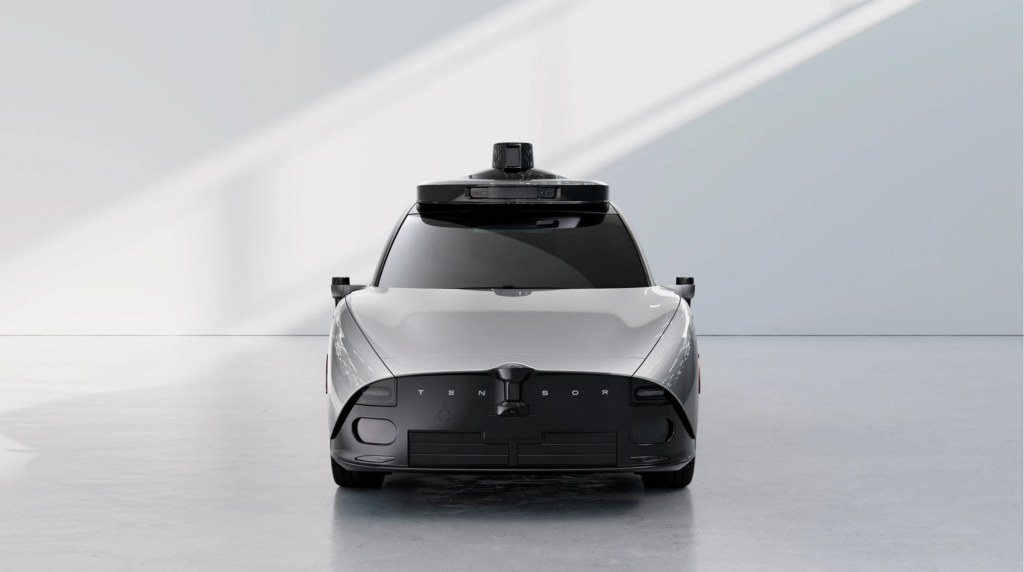
At its core, the Tensor Robocar represents the pinnacle of modern automotive engineering. It begins as a dedicated Electric Vehicle (EV) platform, featuring a robust 112-kWh battery pack designed for impressive longevity and performance. Tensor estimates a practical 250 miles of range, a sweet spot for daily commuting and weekend excursions in the burgeoning EV infrastructure of 2025. What truly sets it apart in the premium EV market is its 845-volt architecture, enabling ultra-fast charging capabilities – a crucial factor for user convenience. Imagine boosting your vehicle from 10% to 80% charge in a mere 20 minutes, a speed that radically diminishes range anxiety. Looking even further ahead, Tensor is developing an automated charging solution featuring a robotic arm that will seamlessly connect your vehicle to its power source upon arrival home, automating yet another aspect of vehicle ownership and making the charging process truly effortless.
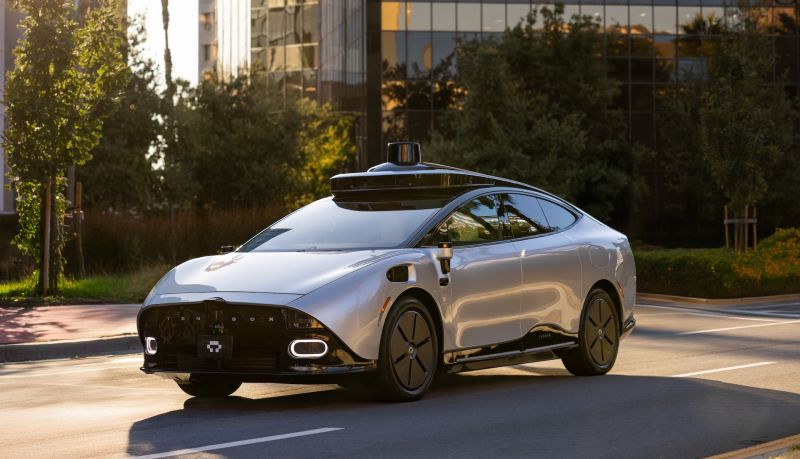
The design philosophy extends beyond mere functionality. The Robocar boasts distinctive coach-style, center-closing doors, all fully powered and equipped with an array of sensors. These aren’t just for aesthetics; they actively prevent collisions with adjacent vehicles or obstacles, showcasing an attention to detail that blends luxury with practicality. While performance metrics like horsepower remain unspecified for the single rear motor, the focus on a ground-up design suggests optimal integration of its electric powertrain with the demands of autonomous operation. Every curve, every panel, every component is conceived to enhance the vehicle’s autonomous capabilities and elevate the user experience. This holistic approach is crucial for delivering a truly integrated and reliable personal autonomous transport solution.
The Apex of Autonomy: True Level 4 Capability, Demystified
The cornerstone of the Tensor Robocar’s appeal is its classification as an SAE Level 4 autonomous vehicle. For those unfamiliar with the nuances, this designation is critical and sets it miles apart from even the most advanced advanced driver-assistance systems (ADAS) on the market today. Unlike Level 2+ systems, such as Tesla’s Full Self-Driving (Supervised), which still mandate constant driver attention and readiness to intervene, Level 4 means the vehicle can operate entirely autonomously under specific conditions, without human intervention. In essence, it’s designed to drive itself without a human occupant, though crucially, it retains a steering wheel and pedals for optional manual operation – a nod to user preference and regulatory demands.
To achieve this ambitious feat, Tensor embarked on a journey that began shortly after its autonomous taxi service launched in China in 2020: designing the entire car from the ground up for autonomous operation. This isn’t an existing vehicle retrofitted with sensors; it’s an integrated system where every engineering decision supports the autonomous core. This fundamental distinction underpins its reliability and safety.
The computational and sensory demands for true Level 4 autonomy are staggering. The Robocar is a veritable mobile supercomputer, equipped with over 100 sensors meticulously integrated into its design. This comprehensive suite includes five high-resolution lidar arrays (one on the roof offering 360-degree vision up to 1,000 feet, and four strategically placed around the vehicle), 37 cameras providing overlapping fields of view, 11 radars for all-weather object detection, and 10 ultrasonic sensors for close-range sensing. This multi-modal sensor fusion creates an unparalleled environmental awareness, ensuring the vehicle “sees” and understands its surroundings with exceptional precision, even in complex urban environments.
Maintaining the integrity of this sensor array is paramount. Tensor has gone to extraordinary lengths, incorporating 30 washer nozzles, 13 mini-wipers, and integrated heating elements to combat fogging, rain, and snow buildup – ensuring clear vision in adverse conditions. Furthermore, in a design flourish that surpasses even industry leaders like Waymo’s Zeekr-based vehicles, the Robocar features physical covers that automatically deploy over the sensors when the vehicle is turned off, providing essential protection against dirt, debris, and potential damage.
Driving this sensory powerhouse is a colossal onboard computing system featuring eight Nvidia Drive Thor-X chips, collectively delivering an astonishing 8,000 TOPS (trillion operations per second). While cloud connectivity is present, the vast majority of processing occurs directly on the vehicle – a critical design choice for ensuring uninterrupted operation even in areas with limited or no 5G signal. To further guarantee connectivity, the Robocar incorporates three redundant communication channels, offering maximum uptime. The Tensor Foundation Model software, an advanced AI-based system, employs a dual-path approach: one system is trained extensively on data from professional human drivers, while the second leverages a Visual Language Model (VLM) to tackle novel and unexpected “edge cases” – those unusual scenarios that often challenge autonomous systems. This dual-layered AI ensures robust performance in diverse conditions, including rain and snow, broadening the operational design domain beyond perpetually sunny locales like California.
Crucially, the Robocar is designed to communicate with its environment. Subtle displays on its lower exterior corners broadcast simple messages and pictograms to pedestrians, clearly indicating that the vehicle is operating autonomously and has acknowledged their presence. This vital visual feedback enhances trust and safety for everyone sharing the road, a key element for the successful integration of driverless car ownership into urban fabric.
Your Car, Your Data: A New Paradigm of Privacy and Control
In an era increasingly defined by data, Tensor’s approach to user privacy is a significant differentiator and a key selling point for discerning consumers. Because the vast majority of computational processing is conducted directly onboard the vehicle, Tensor has fundamentally reduced its reliance on collecting user data for cloud-based analysis. While the vehicle is capable of sharing anonymized information with the cloud for system improvements, owners retain ultimate control through an opt-in mechanism. Unless explicitly granted permission, all your data remains securely within your Robocar.
Furthermore, Tensor champions data transparency and user agency. Owners have complete access to all data collected about them and their usage patterns, accessible directly through the vehicle’s interface or a dedicated smartphone application. Crucially, this data can be fully deleted by the owner at any time. This includes sensitive biometric data, such as facial and palm recognition, which are integral to operating the vehicle and preventing unauthorized access or theft.
Even interior monitoring features, which include cameras and microphones for manual driving assistance and voice assistant interaction, are designed with user privacy in mind. Each has a physical cover and a dedicated off switch, empowering owners to disable them as they see fit. This commitment to user privacy fosters trust and positions the Tensor Robocar as a vehicle that respects individual autonomy, not just automotive autonomy, a critical factor for the widespread adoption of smart car technology.
Conversational AI: Your Intelligent Co-Pilot
The user experience within the Tensor Robocar transcends traditional human-machine interaction. This isn’t about rigid voice commands; it’s about genuine conversation. The vehicle is equipped with an advanced Agentic AI, backed by a sophisticated Large Language Model (LLM), designed to interact with you in a natural, human-like manner. Instead of barking “Take me home,” you can simply engage in a dialogue, explaining your destination and preferences as you would with a human driver.
This intelligent co-pilot learns your habits and seamlessly integrates with your digital life. Connect it to your calendar, and it will proactively anticipate your upcoming appointments, ensuring it’s charged and ready for your next trip. Need a ride? Simply call or text your Robocar, and it will autonomously navigate to your location to pick you up. This level of personalized, proactive assistance transforms the vehicle from a mere mode of transport into an intuitive, always-available assistant, enhancing the overall premium self-driving experience.
The Driver’s Choice: Autonomy or Command?
While the Robocar is unequivocally designed for autonomous use, Tensor understands the lingering desire for manual control. The vehicle retains a full set of traditional controls: a steering wheel and pedals. The magic lies in their seamless transition. When you elect autonomous mode, the steering wheel gracefully retracts into the dashboard, and the central infotainment screen slides to conceal it, creating an expansive, uncluttered cabin. Simultaneously, the accelerator and brake pedals discreetly retract out of sight. Should you wish to resume manual control, a simple command brings them back into position effortlessly.
Even in manual driving, the Robocar offers a spectrum of assistance, from fundamental safety aids like automatic emergency braking to sophisticated Level 3 semi-automated driving. This allows for hands-free, eyes-off-the-road operation under specific conditions, providing a taste of advanced autonomy even when you choose to drive.
Safety and redundancy are paramount. Steering, braking, and acceleration are all “by-wire” systems, meaning they operate electronically without physical mechanical linkages. Crucially, each of these systems, alongside all primary sensors, features multiple redundancies. This engineering ensures that even in the unlikely event of a component failure, the vehicle’s critical functions remain operational, maintaining safety. The vehicle also boasts four-wheel steering, with rear tires capable of turning up to 7 degrees in either direction. This remarkably tight turning radius, a claimed 37 feet (comparable to a Tesla Model Y despite the Robocar’s larger footprint), significantly enhances maneuverability in urban environments.
In the unfortunate event of a collision, Tensor is not leaving safety to chance. They are targeting the highest crash safety scores from leading regulatory bodies globally, including the NHTSA (National Highway Traffic Safety Administration) and IIHS (Insurance Institute for Highway Safety) in the U.S., and the European NCAP, underscoring their commitment to occupant protection.
Beyond Personal Use: The Autonomous Entrepreneur
The vision for the Tensor Robocar extends beyond personal convenience; it taps into the burgeoning sharing economy, offering a path to passive income generation. Tensor has already secured a strategic partnership with Lyft, planning to integrate Robocars into its luxury rideshare fleet. This move validates the Robocar’s commercial viability and operational readiness.
But the real disruption could come from individual owners. Remember the tantalizing promise from Elon Musk about putting your Tesla to work as an autonomous rideshare while you’re at the office or asleep? Tensor is making that same, compelling offer, and given the measured rollout of Tesla’s Robotaxi service, they might just get there first for private owners. While specific details on how hailing and payment for a privately owned autonomous car would work through a platform like Lyft are still emerging, the potential for leveraging your personal AV as an income-generating asset is a powerful proposition. This opens up entirely new possibilities for urban mobility solutions and driverless car investment.
Investment in Innovation: Pricing and Production Outlook
The Tensor Robocar, with its cutting-edge technology and luxury experience, comes with an anticipated premium price tag. While Tensor is not yet ready to disclose exact figures, Head of Marketing Amy Luca indicated “luxury pricing.” Industry benchmarks, such as Waymo’s estimated costs for its autonomous vehicles (comparable to a well-optioned Mercedes-Benz S-Class), suggest a range between $150,000 and $200,000. Given the advanced features and ground-up autonomous design of the Robocar, it’s reasonable to expect it to lean towards the higher end of this spectrum, placing it firmly in the luxury autonomous vehicles segment. This pricing reflects not just the vehicle but the bundled autonomous driving technology it embodies.
Production of this visionary vehicle is entrusted to Vietnamese automaker VinFast, utilizing their state-of-the-art factory in Haiphong, Vietnam. While VinFast’s brand perception in the U.S. market has faced some initial challenges regarding build quality for their consumer models, it’s crucial to acknowledge their extensive manufacturing capabilities. VinFast has, for years, assembled BMW vehicles under license, demonstrating a proven track record in high-quality automotive production. This partnership leverages established manufacturing expertise to bring Tensor’s advanced design to fruition.
The production timeline is ambitious yet realistic: manufacturing is slated to commence in late 2026. The initial wave of deliveries will target the United Arab Emirates (UAE) in the fourth quarter of the same year, a strategic market known for its embrace of innovative technology and luxury goods. For U.S. consumers, early 2027 marks the anticipated start of deliveries, contingent upon crucial regulatory approvals – a significant hurdle for any Level 4 autonomous vehicle. Tensor also has its sights set on the European Union and has recently announced plans to supply Robocars to a rideshare service in Denmark, signaling a robust global rollout strategy.
One question that invariably arises with autonomous vehicles is liability: who pays the fine if your car gets a parking ticket or traffic infraction while driving itself? While the regulatory framework is still evolving, the current assumption, absent specific legislation otherwise, is that the owner of the vehicle will bear ultimate responsibility. This highlights an important area for ongoing development in the legal landscape surrounding autonomous vehicles.
Your Future Awaits: Embrace the Era of Personal Autonomy
As we stand at the precipice of 2027, the Tensor Robocar isn’t just another vehicle; it’s a profound statement about the future of transportation, personal freedom, and technological empowerment. It represents the culmination of a decade of relentless effort, bringing Level 4 autonomous capabilities directly to the consumer. This isn’t merely about getting from point A to point B; it’s about reclaiming your time, enhancing your safety, and experiencing a truly intelligent companion on the road.
The era of personal autonomous travel is no longer a distant dream but a tangible reality, and Tensor is poised to lead that charge. If you’re ready to experience the next evolution of mobility, to own a vehicle that anticipates your needs, protects your privacy, and offers unparalleled convenience, then the Tensor Robocar demands your attention. Explore the future of intelligent automotive systems. Visit Tensor’s official channels and sign up for updates to be among the first to welcome this revolution into your life.