



The Dawn of Personal Autonomy: Tensor’s Vision for Your Private Self-Driving Future
The year is 2025, and the hum of autonomous vehicles (AVs) is no longer a futuristic whisper but a palpable presence across American cities. From Waymo’s established robotaxi services to the nascent but expanding footprint of Tesla’s “robotaxi” pilot programs, the concept of a vehicle driving itself has firmly entered the public consciousness. Yet, for all the excitement around shared autonomous mobility, a distinct void has remained: the truly private, owner-operated, Level 4 (L4) self-driving car. Enter Tensor, a name poised to redefine luxury and convenience, promising to deliver not just an advanced electric vehicle, but your very own Waymo-style autonomous companion for your driveway by early 2027.
As someone who has navigated the intricate currents of the autonomous vehicle technology landscape for over a decade, I’ve witnessed the ebb and flow of hype, the breakthroughs, and the inevitable setbacks. What Tensor is proposing isn’t just another EV; it’s a meticulously engineered ecosystem designed from the ground up to empower individual owners with unprecedented Level 4 self-driving car capabilities. This isn’t merely an upgrade to an existing platform; it’s a fundamental reimagining of what private autonomous vehicle ownership entails, poised to be a significant disruption in the future of personal mobility.
From Robotaxi Prowess to Personal Autonomy: Tensor’s Evolution
Tensor’s journey is a testament to resilience, strategic pivots, and deep technical expertise honed in the toughest proving grounds. Tracing its roots back to the Silicon Valley-based AutoX in 2016, the company initially focused on cracking the code of commercial autonomous fleets and robotaxis. By 2017, AutoX was already testing its autonomous vehicles in both California and China, quickly becoming a frontrunner in the nascent robotaxi scene. The pandemic years saw a full immersion into the Chinese market, where it successfully deployed a fleet of over 1,000 autonomous taxis, ferrying the public across five major cities. This wasn’t just theoretical development; it was real-world, large-scale operation, generating an invaluable trove of data and experience.
However, the geopolitical and data privacy landscape shifted dramatically. In a bold and decisive move over the past year, the company completely divested from its Chinese operations, citing growing concerns around data sovereignty and regulatory complexities. This wasn’t a retreat; it was a strategic recalibration. Rebranding as Tensor, the company returned to its roots in San Jose, California, carrying with it a decade’s worth of practical know-how. The mission, however, had sharpened: instead of corporate fleets, the focus was now squarely on building a truly L4 autonomous vehicle for the discerning private customer, offering a unique blend of luxury autonomous transportation and personal freedom. This pivot isn’t just about market opportunity; it’s about addressing a critical desire for personal control and privacy in the AI-powered mobility revolution.
Engineering a New Era: The Tensor Robocar’s Core
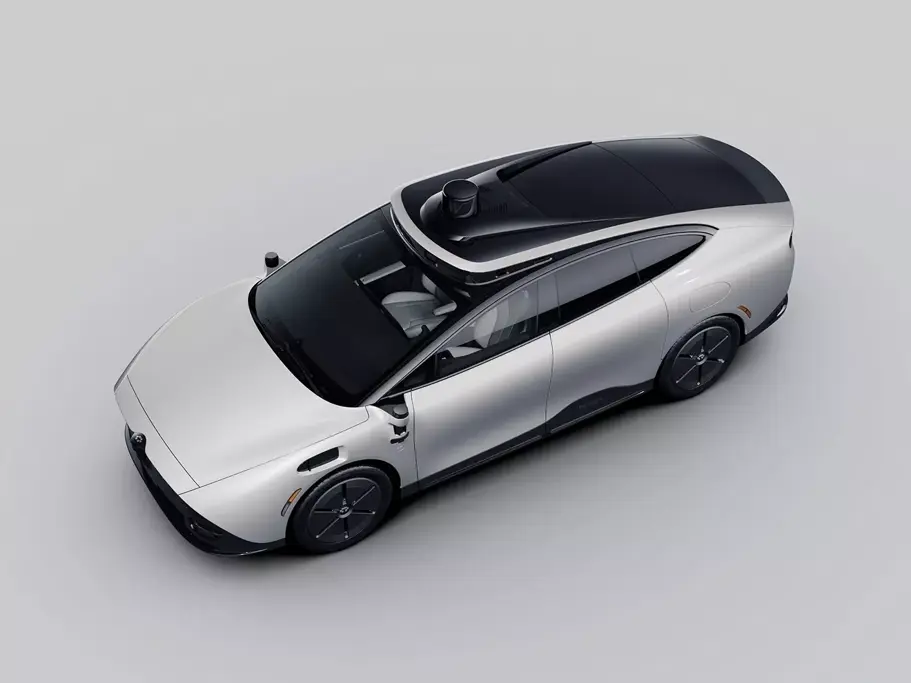
At its heart, the Tensor Robocar is a testament to cutting-edge next-generation electric vehicles (EVs) design. It’s built around a robust 112-kWh battery pack, targeting an estimated 250 miles of range – a solid, practical figure for the majority of daily commutes and intercity travel in 2025. While performance specifics remain under wraps for now, the single rear motor configuration suggests a focus on efficient power delivery, typical for an urban-centric autonomous vehicle, rather than outright blistering acceleration.
What truly sets the Robocar apart in the EV space is its advanced 845-volt battery architecture. In a market where 400V systems are still common, and 800V is becoming the premium standard, 845V signifies a commitment to future-proofing. This higher voltage enables ultra-rapid charging, with Tensor claiming a remarkable 10 to 80 percent charge in just 20 minutes – a game-changer for reducing range anxiety and enhancing usability. Imagine pulling into a charging station, getting a quick coffee, and being ready to go. Furthermore, Tensor is pushing the boundaries of convenience with the development of an automated charging system featuring a robotic arm designed to plug in the car for you upon arrival home. This seemingly small detail speaks volumes about the holistic, user-centric design philosophy behind the Robocar, elevating the convenience of EV ownership to unprecedented levels.
Beyond the powertrain, the physical interaction with the Robocar also redefines the experience. Forget fumbling with door handles; the coach-style, center-closing doors are fully powered and equipped with sophisticated sensors. These aren’t just for show; they intelligently prevent collisions with obstacles or adjacent vehicles, embodying the seamless, effortless luxury that defines smart vehicle AI integration. It’s a subtle yet profound shift from simply operating a car to interacting with an intelligent, attentive companion.
True Autonomy Defined: Level 4 for the Private Owner
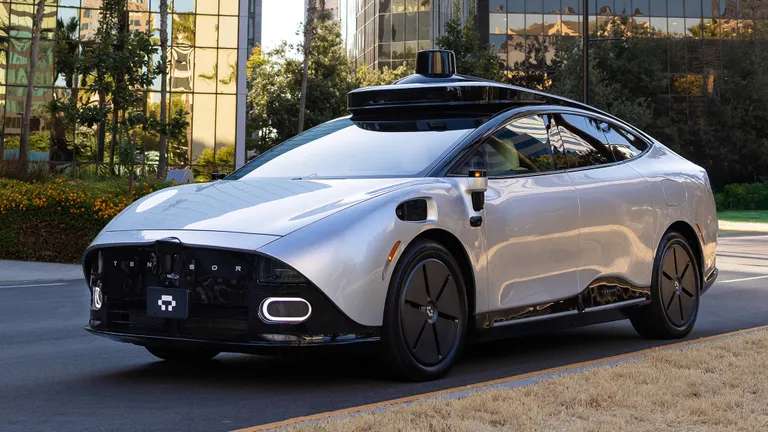
Tensor proudly positions the Robocar as an SAE Level 4 autonomous vehicle. For the uninitiated, this is where the critical distinction lies. A Level 4 AV can operate entirely on its own, without human intervention, under specific conditions and within defined operational design domains (ODDs) – typically geofenced areas. Crucially, it doesn’t require a human in the driver’s seat, ready to take over. While the Robocar retains a steering wheel and pedals for optional manual control, its primary mode is full autonomy.
This capability stands in stark contrast to even the most advanced Advanced Driver-Assistance Systems (ADAS) available to consumers today, including Tesla’s acclaimed “Full Self-Driving (Supervised)” technology. As of 2025, FSD (Supervised) is still firmly categorized as a Level 2+ system, demanding constant driver attention and readiness to intervene. While highly capable, it’s an assistance system, not a truly autonomous driver replacement. Tensor, by designing the Robocar “from the ground up” specifically for L4 autonomy, bypasses the inherent limitations of retrofitting an existing human-driven vehicle. Development for this began in 2020, even as their robotaxi service was scaling in China, indicating a clear, long-term vision for delivering unparalleled autonomous driving safety and reliability directly to consumers. This ground-up approach allows for optimal integration of sensors, compute, and redundant systems, which is paramount for achieving genuine L4 capability.
A Symphony of Sensors and an AI Brain: The Perception Architecture
Achieving true L4 autonomy is an immense technological feat, demanding an extraordinary sensory network and immense computational power. The Tensor Robocar is nothing short of a mobile supercomputer, outfitted with over 100 sensors working in concert. This includes five distinct lidar arrays – one strategically mounted on the roof for a commanding view, and four others meticulously placed around the front, sides, and rear, providing comprehensive environmental mapping. Complementing these are a staggering 37 cameras, 11 radars, and 10 ultrasonic sensors, creating a rich, multi-modal sensor fusion technology platform. The rooftop lidar alone boasts a nearly 1,000-foot range, offering a 360-degree, high-definition perception of the vehicle’s surroundings.
But merely having sensors isn’t enough; they must operate flawlessly in all conditions. Tensor has meticulously addressed this, equipping the Robocar with 30 washer nozzles and 13 mini-wipers to ensure clear visibility, along with heating elements to combat fogging and snow buildup – a critical feature for expanding AV operations beyond perpetually sunny climates. Taking a cue from their robust commercial experience, Tensor goes a step further than many existing AVs, including Waymo’s Zeekr-based vehicles, by incorporating physical covers that automatically close over the sensors when the vehicle is off. This ingenious detail protects these delicate and crucial components from dirt, debris, and potential damage, underscoring Tensor’s practical approach to real-world deployment and long-term durability.
All this sensory data converges into a colossal onboard computer, powered by eight Nvidia Drive Thor-X chips. This powerhouse system boasts an incredible 8,000 TOPS (trillion operations per second) of processing capability – a figure that represents a monumental leap in edge computing in automotive. While cloud connectivity is a given (with three redundant communication channels for maximum reliability), the majority of complex computations are performed directly within the vehicle. This crucial design choice ensures that the Robocar can operate with exceptional robustness even in areas with spotty 5G signals, providing unwavering performance and safety.
The intelligence driving this hardware is the Tensor Foundation Model software, an AI-powered mobility platform that utilizes a dual-system approach. The first system is rigorously trained on the driving patterns and decisions of professional human drivers, capturing invaluable human expertise. The second system, leveraging a Visual Language Model (VLM), is specifically designed to tackle unusual and unexpected “edge cases” – those rare, unpredictable scenarios that often trip up traditional AI. This parallel processing approach significantly enhances the system’s ability to navigate complex, real-world environments safely and effectively. Tensor confidently states its system is capable of operating in adverse weather conditions like rain and snow, eliminating the geographical limitations often associated with early AV deployments and truly opening up autonomous transportation for a wider audience.
Finally, in a nod to pedestrian safety and trust, the Robocar features discreet displays on its lower exterior corners. These provide simple messages and pictograms to passersby, clearly indicating that the vehicle is operating autonomously and, crucially, that it has perceived them – a vital step in fostering acceptance and seamless integration into urban environments.
Your Car, Your Data: Reclaiming Digital Privacy
In 2025, data privacy isn’t just a concern; it’s a fundamental right that consumers demand, especially from their increasingly connected vehicles. Tensor addresses this head-on with a privacy-first philosophy that truly differentiates it in the market. Because the vast majority of its computing is done onboard, the Robocar minimizes the need to constantly upload data to the cloud. While it is capable of sharing information for system improvements or personalized services, owners must actively opt-in. Without explicit consent, all your vehicle data, from driving patterns to preferences, remains securely within your car.
Furthermore, Tensor provides owners with complete transparency and control over their personal information. All data collected by the car on its owner and users – including biometric data like facial and palm recognition, which are utilized for vehicle operation and theft prevention – is fully accessible through the vehicle’s interface or a companion phone app. Owners have the unequivocal right to review and delete this data at any time.
Even interior cameras and microphones, which serve functions like driver monitoring during manual driving and enabling the voice assistant, are designed with privacy in mind. Each is equipped with a physical cover and a dedicated off switch, granting owners granular control over their digital footprint and ensuring peace of mind. This commitment to data privacy in smart cars is not merely a feature; it’s a core tenet of the Tensor experience, reflecting a deeper understanding of user concerns in the era of pervasive digital connectivity.
Your Co-Pilot, Your Concierge: The Agentic AI Experience
Forget the stilted, command-based interactions of yesterday’s voice assistants. The Tensor Robocar is designed to be a truly conversational companion, equipped with an Agentic AI backed by a powerful Large Language Model (LLM). This isn’t just about understanding spoken instructions; it’s about engaging in natural dialogue, interpreting intent, and anticipating needs. Instead of barking commands, you can converse with your car about your desired destination, discuss alternative routes, or even ask it to recommend a local eatery.
The intelligence extends beyond the cabin. You can summon your Robocar from anywhere simply by calling or texting it, asking it to come pick you up. More impressively, the system learns your habits, preferences, and even integrates with your digital calendar. This personalized AI experience allows it to anticipate upcoming trips, intelligently manage battery range, and even initiate charging autonomously, ensuring your vehicle is always ready when you are. Imagine your car proactively suggesting departure times based on traffic, or preparing the cabin climate for your next appointment – this is the promise of Tensor’s smart vehicle AI.
The Best of Both Worlds: When You Want to Drive
While the Robocar’s primary purpose is autonomous operation, Tensor understands that the joy of driving isn’t entirely obsolete. For those moments when you want to take the wheel, the vehicle seamlessly transitions between modes. The steering wheel, accelerator, and brake pedals are all “by-wire” systems – meaning no physical connections, only electronic signals. When in autonomous mode, these controls elegantly retract into the dash and floor, transforming the cabin into a spacious, lounge-like environment. The central infotainment screen even slides over to reveal a continuous dashboard, while the identical passenger screen remains fixed for entertainment or productivity. Should you decide to take control, these elements gracefully reappear, ready for your input.
When driven manually, the Robocar acts as an intelligent co-pilot, offering a spectrum of assistance tailored to the driver’s preference. This ranges from foundational aids like automatic emergency braking to sophisticated, hands-free, “eyes-off-the-road” Level 3 semi-automated driving. This allows drivers to enjoy the journey with augmented safety and reduced fatigue, embracing a hybrid driving experience that marries human control with advanced driver augmentation.
Underpinning this flexibility is an unparalleled level of redundancy. Every critical system – steering, braking, acceleration, and all sensor arrays – features multiple backups. This ensures that even in the unlikely event of a component failure, the car can safely continue to operate, significantly enhancing autonomous driving safety. Further boosting maneuverability, the Robocar incorporates rear-wheel steering, allowing the back tires to turn up to 7 degrees in either direction. This translates to an incredibly tight 37-foot turning circle, comparable to a much smaller vehicle like a Tesla Model Y, despite the Robocar’s potentially larger footprint – a huge advantage for urban navigation and parking.
Safety doesn’t stop at preventing accidents. Tensor is actively targeting the highest crash safety ratings from leading bodies such as the NHTSA, IIHS, and European NCAP, reinforcing its commitment to occupant protection in any scenario.
Beyond Personal Use: Monetizing Your Autonomous Asset
The vision for the Tensor Robocar extends beyond just personal ownership; it offers a compelling proposition for asset monetization. Tensor has already secured a significant partnership with Lyft, planning to integrate Robocars into their luxury rideshare fleet. This not only validates the platform but also opens the door for private owners.
Remember Elon Musk’s long-standing promise that Tesla owners could put their vehicles to work as robotaxis while they were at the office or asleep? Tensor is making a similar, and potentially more tangible, claim. Given the gradual rollout of Tesla’s own robotaxi service, Tensor’s L4 architecture and established commercial experience could very well give it a head start in delivering on this promise. While specific details on how private owners could list their Robocars on a platform for autonomous rideshare revenue are still emerging, the underlying technology and strategic partnerships suggest a viable path. One could easily envision seamless integration with existing platforms like Lyft, allowing owners to generate income from their vehicle during downtime, truly leveraging their investment in sustainable urban mobility. This isn’t just a car; it’s a potential income stream, redefining the utility of a personal vehicle.
The Price of Pioneering: Investment in Innovation
Tensor isn’t ready to release official pricing, but the message is clear: expect “luxury pricing.” Industry insights, coupled with comparisons to Waymo’s fleet vehicles (which have been estimated to cost as much as a well-optioned Mercedes-Benz S-Class, ranging from $150,000 to $200,000), suggest the highly advanced Tensor Robocar will likely fall on the higher end of this spectrum. This reflects not just the premium materials and design, but the unprecedented Level 4 autonomous vehicle technology packed within. It’s an investment in the future of transportation, offering unparalleled convenience, safety, and a unique private AV ownership experience.
Production for the Robocar is being managed by the Vietnamese automaker VinFast at its state-of-the-art facility in Haiphong, Vietnam. While VinFast’s own brand has faced scrutiny regarding build quality in the competitive U.S. market, it’s crucial to remember their extensive experience in contract manufacturing. VinFast has a proven track record, having assembled BMWs under license for years, demonstrating a clear capability in high-quality vehicle assembly. Tensor’s confidence in this partnership underscores a focus on robust manufacturing processes.
The rollout strategy is phased, with production slated to commence in late 2026. The first deliveries are anticipated in the United Arab Emirates (UAE) late in the fourth quarter of that same year, strategically targeting a market receptive to luxury and cutting-edge technology. Crucially for the American market, U.S. deliveries are projected to begin in early 2027, pending crucial regulatory approvals. Tensor also has ambitious plans for the European Union and has recently announced a partnership for a rideshare service in Denmark, signaling a broad global vision for its private autonomous vehicle offering.
One final, practical question often arises in the realm of autonomous vehicles: who pays the ticket if your car gets one while driving itself? While regulatory frameworks are still evolving, the prevailing assumption, as with any vehicle, is that the owner will ultimately bear responsibility. This is an area where policy will need to catch up with technology, but for now, it’s a point of consideration for early adopters.
Embrace the Autonomous Future
The Tensor Robocar isn’t just another vehicle; it’s a statement. It represents the convergence of a decade of autonomous driving expertise, advanced EV engineering, and a profound understanding of the private owner’s desires for luxury, privacy, and ultimate convenience. As we stand on the precipice of 2025, the promise of a truly personal, Level 4 self-driving car is no longer a distant dream but a tangible reality fast approaching.
Are you ready to experience the next evolution of personal mobility? To command a vehicle that anticipates your needs, protects your privacy, and transforms every journey into an effortless experience? Explore the future of driving with Tensor and be among the first to redefine what your personal vehicle can truly be. Visit our site or connect with a specialist today to learn how you can secure your place in the dawn of personal autonomy.