



Title: The Dawn of Driverless Ownership: Tensor’s Private Level 4 Autonomous Car for 2027
As we stand in 2025, the automotive landscape is experiencing an unprecedented shift, rapidly evolving beyond mere electrification to embrace a future where our vehicles transcend the role of transportation to become intelligent, self-aware companions. For years, the promise of a truly self-driving car has captivated enthusiasts and industry experts alike, primarily manifesting in the burgeoning realm of autonomous taxis. From Waymo’s established presence in major U.S. cities to burgeoning robotaxi services globally, the concept of being chauffeured by a machine is no longer science fiction. Yet, the holy grail for many has always been the personal, privately owned autonomous vehicle – a future that seemed perpetually just over the horizon.
Enter Tensor, a name that in 2025 has become synonymous with audacious innovation in autonomous driving technology. This isn’t just another tech startup dabbling in software; this is a company emerging from a decade of deep, hands-on experience, poised to deliver a game-changing product: the Robocar, a ground-up Level 4 autonomous vehicle designed for individual ownership, slated for U.S. delivery in early 2027. Having closely tracked the evolution of this sector, I can confidently say that Tensor’s approach represents a pivotal moment, pushing the boundaries of what consumers can expect from luxury electric self-driving cars.
A Decade Forged in Autonomy: From AutoX to Tensor
To truly appreciate Tensor’s vision, one must understand its roots. Founded in Silicon Valley in 2016 as AutoX, the company was an early pioneer in the robotaxi market, focused on developing robust autonomous commercial vehicles. My own observation over the years placed AutoX among the serious contenders, demonstrating genuine technical prowess and a pragmatic approach to scaling. They began rigorous testing in California and China, quickly establishing a strong engineering footprint. During the unprecedented challenges of the COVID pandemic, AutoX strategically concentrated its operations in China, where it successfully deployed a fleet of over 1,000 autonomous taxis, providing public rides across five cities. This wasn’t merely testing; this was real-world, large-scale operation in diverse, complex urban environments, gathering invaluable data and refining their systems under high-pressure scenarios.
However, the global landscape shifted, particularly regarding data governance and regulatory frameworks. In a bold strategic move over the past year (late 2024 to early 2025), the company completely divested from its Chinese operations. This decision, driven by stringent data privacy concerns and a desire to align with evolving Western market expectations, led to a rebranding as Tensor and a decisive return to its Silicon Valley origins in San Jose, California. This wasn’t just a geographical relocation; it marked a profound pivot in business strategy: instead of corporate fleets, Tensor set its sights squarely on building a truly private, consumer-facing autonomous vehicle. This repositioning is critical, as it directly addresses a latent demand for personal autonomous mobility that has largely been overlooked by the commercial robotaxi players.
The Robocar: A Symphony of EV Design and Autonomous Integration
At its core, the Tensor Robocar is a sophisticated next-gen EV technology marvel. Powering this intelligent machine is a substantial 112-kWh battery, engineered to provide an estimated 250 miles of range – a respectable figure for a vehicle undoubtedly packing considerable onboard computing. While specific performance metrics like motor output and curb weight are still under wraps (a common strategy for companies nearing launch, ensuring optimal tuning), Tensor’s commitment to cutting-edge EV design is evident in its 845-volt battery pack. This high-voltage architecture isn’t just a number; it translates directly into impressive charging capabilities, boasting a 10 to 80 percent charge in just 20 minutes. For an electric vehicle innovation 2025 standard, this is highly competitive, minimizing range anxiety and maximizing convenience.
But Tensor is looking beyond just fast charging. They are actively developing an automated charging solution featuring a robotic arm designed to plug in the car itself when it arrives home. Imagine the convenience: your car parks, then charges itself without any human intervention. This foresight into the holistic ownership experience is a testament to their decade of experience in making autonomous systems work seamlessly.
The exterior design itself signals a departure from traditional automotive norms. The coach-style, center-closing doors aren’t just a design flourish; they’re powered and equipped with an array of sensors, intelligently preventing collisions with other vehicles or obstacles in tight parking spaces. This attention to detail, integrating practical functionality with advanced sensing, underscores Tensor’s “ground-up” design philosophy. It’s not just an EV; it’s an AI-powered vehicle where every component is optimized for autonomous operation and user convenience.
Defining True Level 4 Autonomy for the Consumer
Tensor proudly bills the Robocar as an SAE Level 4 autonomous vehicle. For those unfamiliar with the SAE J3016 classification, this is a monumental claim for a consumer product. Level 4 means the vehicle can operate entirely on its own within defined operational design domains (ODDs) – a fancy term for specific conditions and areas – without any human intervention. Crucially, it doesn’t require a human driver to be present or attentive. While the Robocar retains a steering wheel and pedals for manual override (a sensible inclusion for consumer acceptance and flexibility), its primary mode of operation is full self-driving.
This capability starkly differentiates it from even the most advanced advanced driver assistance systems (ADAS) 2025 available to private individuals today, including Tesla’s Full Self-Driving (Supervised). As of 2025, while FSD has made incredible strides and offers extensive hands-free driving, it firmly remains a Level 2+ system. It demands constant human supervision, eyes on the road, and readiness to intervene at any moment. Tensor’s Robocar, by contrast, is designed from the outset to perform with genuine autonomy, echoing the operational philosophy of commercial robotaxis like Waymo, but in a vehicle you own. This commitment to designing the entire car around the autonomous stack, rather than retrofitting an existing platform, is a key to achieving this robust Level 4 designation. Development began in 2020, leveraging insights gained from their burgeoning robotaxi service.
A Technological Tour de Force: Sensors, Compute, and AI
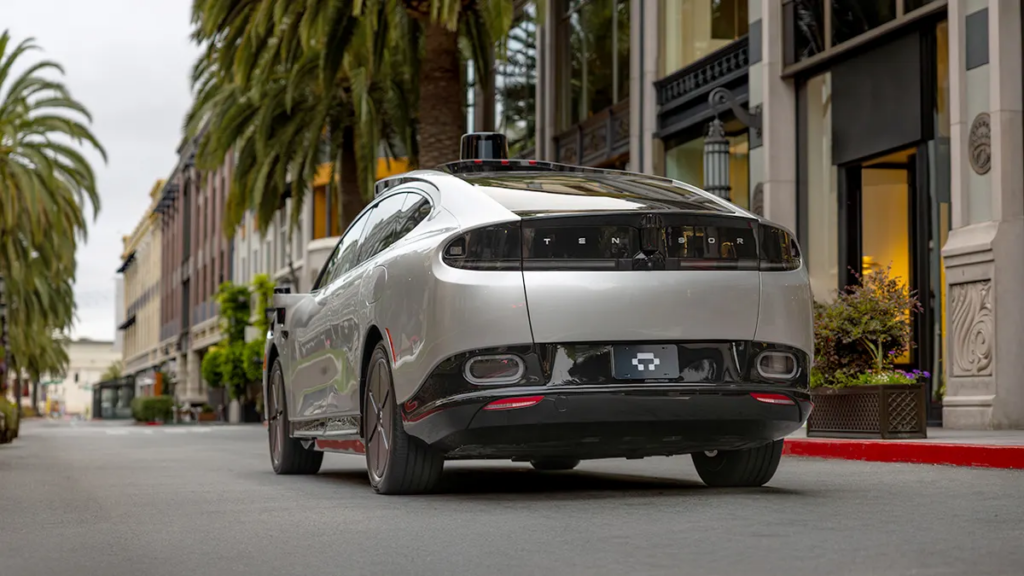
Achieving Level 4 autonomy is not for the faint of heart; it requires an extraordinary fusion of hardware and software. Tensor’s Robocar is equipped with an astounding array of over 100 sensors, creating a comprehensive 360-degree perception system. This includes five high-resolution lidar arrays (one prominently mounted on the roof, four strategically placed around the vehicle’s front, sides, and rear), 37 cameras offering multiple perspectives, 11 radars providing robust object detection in adverse weather, and 10 ultrasonic sensors for close-range maneuvering. The rooftop lidar alone boasts a nearly 1,000-foot range, offering unparalleled environmental awareness. This sophisticated cutting-edge vehicle sensors suite is the eyes and ears of the Robocar.
Ensuring these critical sensors remain operational in all conditions is paramount. Tensor has gone above and beyond, integrating 30 washer nozzles, 13 mini wipers, and heating elements to prevent fogging, icing, and snow buildup. Furthermore, demonstrating a level of protective engineering that surpasses many current commercial AVs, the Robocar features physical covers that automatically close over the sensors when the vehicle is powered down. This innovative feature protects sensitive components from dirt, debris, and potential damage, enhancing durability and reliability – crucial for a privately owned asset.
All this sensor data funnels into a truly massive onboard computer, a veritable data center on wheels. It’s powered by eight NVIDIA Drive Thor-X chips, collectively capable of an astounding 8,000 TOPS (trillion operations per second). This colossal processing power is vital for real-time perception, prediction, and planning, ensuring the vehicle can make instantaneous, safe decisions. While the car is cloud-connected for updates and optional data sharing, the vast majority of its computing is done locally. This edge computing capability allows the Robocar to operate flawlessly even in areas with poor or no 5G signal, a practical consideration often overlooked. To ensure maximum connectivity when needed, the vehicle incorporates three redundant communication channels.
The software backbone is Tensor’s AI-based Foundation Model, a sophisticated system operating two parallel decision-making architectures. The first is trained on an extensive dataset derived from professional human driving, capturing nuances of human behavior. The second is honed using a Visual Language Model (VLM), designed to address “edge cases” – those unusual, unexpected scenarios that often trip up traditional autonomous systems. This dual-pronged AI strategy is engineered to handle complex situations, and Tensor confidently states the Robocar can operate effectively in challenging conditions like rain and snow, breaking the perception that self-driving cars are only viable in perpetual sunshine. This expands the potential market beyond California and Arizona, making smart mobility solutions a reality for a broader population.
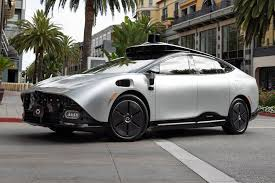
For pedestrian interaction, subtle yet effective displays on the lower exterior corners of the vehicle broadcast simple messages and pictograms. These visual cues inform pedestrians that the car is operating autonomously and, more importantly, that it “sees” them, fostering trust and predictability in shared urban spaces.
Your Car, Your Data: A New Paradigm of Privacy
One of the most compelling differentiators Tensor offers, particularly in 2025, is its commitment to data privacy in autonomous cars. With the significant computing power onboard, Tensor doesn’t need to continuously upload and collect data from your car to the cloud. While it can share information, owners must explicitly opt-in. This means, by default, all your driving data, personal preferences, and biometric information remain securely within your vehicle.
Owners have complete access to all data the car collects about them and its usage, viewable and deletable through the vehicle interface or a companion phone app. This includes biometric data like facial and palm recognition, which are used for vehicle operation and theft prevention – essential features for such an advanced, high-value asset.
Even interior cameras and microphones, which facilitate driver monitoring during manual driving and enable voice assistance, come with physical covers and dedicated off switches. This level of granular control over personal data and privacy is a significant selling point, appealing to a consumer base increasingly concerned about how their digital footprints are managed. It establishes Tensor as a leader in user-centric autonomous vehicle design.
Conversational Autonomy: Talk to Your Car
While privacy is paramount, Tensor also envisions a deeply interactive relationship between owner and vehicle. The Robocar is equipped with an Agentic AI, backed by a sophisticated Large Language Model (LLM), designed for natural, human-like conversation. Forget rigid voice commands; you can simply discuss your destination, preferences, and plans with your car. This elevates the user experience beyond mere functionality to genuine interaction.
This conversational capability extends to summoning the vehicle. A simple call or text can bring your Robocar to your location. Beyond reactive commands, the system learns your habits, anticipating upcoming trips by integrating with your calendar. It can proactively suggest charging needs or prepare for a journey based on your schedule, showcasing a truly intelligent vehicle assistant. This move towards deeply integrated LLM-based interfaces is a key AI in automotive industry trend for 2025 and beyond.
The Best of Both Worlds: Drive Yourself, If You Want To
Despite its profound autonomous capabilities, Tensor understands that the joy of driving remains for many. The Robocar offers the flexibility of manual operation, retaining a physical steering wheel and pedals. When a human takes the wheel, the car can provide a customizable level of assistance, from fundamental safety aids like automatic emergency braking (AEB) to advanced Level 3 semi-automated driving, offering hands-free, eyes-off-the-road assistance in specific highway scenarios.
When autonomous mode is engaged, the interior transforms. The steering wheel retracts smoothly into the dashboard, and the central infotainment screen slides over to conceal it, creating an expansive, uncluttered passenger space. Similarly, the accelerator and brake pedals retract, maximizing comfort and space. Should you wish to regain control, these elements seamlessly pop back into position, ensuring a swift and safe transition.
Engineering for Redundancy and Uncompromising Safety
Underneath its sleek exterior, the Robocar is an engineering marvel focused on safety. All critical control systems – steering, braking, and acceleration – are fully by-wire, meaning there are no physical linkages. This architecture allows for unparalleled precision and integration with the autonomous system. Crucially, each of these by-wire systems, along with every sensor and computing module, incorporates multiple redundancies. This “fail-operational” design ensures that if any single component or system experiences an issue, backup systems immediately take over, allowing the car to continue operating safely until it can reach a designated safe stop or repair facility. This level of redundancy is a hallmark of truly robust Level 4 systems and essential for building confidence in autonomous vehicle safety standards.
Further enhancing maneuverability, the Robocar features rear-wheel steering, allowing the back tires to pivot up to 7 degrees in either direction. This seemingly minor detail provides an impressive 37-foot turning circle, comparable to a much smaller Tesla Model Y, despite the Robocar’s likely larger footprint. This agility will be a significant advantage in urban environments.
Tensor is also setting its sights on the highest possible crash safety ratings from leading organizations like the NHTSA, IIHS, and European NCAP. This commitment underlines their dedication not just to preventing accidents through autonomy, but also to protecting occupants should an unforeseen collision occur.
Monetizing Your Robocar: The Autonomous Rideshare Opportunity
Beyond personal use, Tensor is unlocking a fascinating economic dimension to Robocar ownership. The company has already forged a strategic partnership with Lyft, planning to introduce Robocars into their luxury rideshare fleet. This echoes Elon Musk’s long-standing vision for Tesla owners to monetize their vehicles as robotaxis while they’re not in use. Given the slower-than-anticipated rollout of Tesla’s own Robotaxi network by 2025, Tensor is strategically positioning itself to potentially be the first to realize this promise for private owners.
While the specifics of how a privately owned Robocar could participate in a rideshare network – including hailing, payment, and operational logistics – are still being refined, the potential is immense. It’s likely such integration would occur through existing platforms like Lyft, allowing owners to offset the vehicle’s cost or even generate passive income. This vision truly embodies autonomous fleet management at a personal scale, transforming a significant investment into a revenue-generating asset. The Robocar market outlook isn’t just about driving; it’s about smart asset utilization.
Pricing and Production: The Path to 2027
So, what will this groundbreaking piece of premium autonomous vehicles technology cost? Tensor isn’t revealing exact figures yet, but Amy Luca, Tensor’s head of marketing, indicates that consumers should expect “luxury pricing.” For context, the CEO of Waymo has previously suggested their autonomous vehicles cost roughly equivalent to a well-optioned Mercedes-Benz S-Class, which in 2025 would place it in the $150,000 to $200,000 range. Given the complexity and advanced features of the Tensor Robocar, my expert assessment is that it will likely fall towards the higher end of that spectrum, possibly exceeding it slightly for early adopters or fully optioned models.
Production is being handled by Vietnamese automaker VinFast, utilizing their state-of-the-art factory in Haiphong, Vietnam. While VinFast vehicles have faced some initial scrutiny regarding build quality in the competitive U.S. market, it’s crucial to remember that VinFast has a history of assembling BMWs under license for many years. This demonstrates significant manufacturing capability and adherence to stringent quality controls. Tensor’s choice of VinFast suggests a confidence in their ability to meet the high standards required for a Level 4 autonomous vehicle.
Production of the Robocar is slated to commence in late 2026, with the first deliveries targeting the United Arab Emirates (UAE) late in the fourth quarter of that same year. U.S. deliveries are projected to begin in early 2027, contingent upon final regulatory approvals – a standard but critical hurdle for all new AV deployments. Tensor also has ambitious plans for the European Union market and has already announced an agreement to supply cars to a rideshare service in Denmark.
One final, intriguing question remains for the 2027 rollout: who pays the ticket if your Robocar gets cited while operating autonomously? While the legal frameworks are still evolving, the industry consensus, and logical assumption, leans towards the owner bearing that responsibility. This highlights the ongoing dialogue surrounding autonomous vehicle regulation and legal liability, areas that will undoubtedly see continued refinement as Level 4 vehicles become more prevalent.
The Future is Now: An Invitation to Autonomous Luxury
The Tensor Robocar isn’t just another car; it’s a paradigm shift. It represents the culmination of a decade of relentless innovation, bringing Level 4 autonomy directly into the hands of the private consumer. From its advanced sensor suite and robust AI to its unwavering commitment to data privacy and the potential for passive income, the Robocar stands as a testament to what’s possible in the world of future of personal transportation.
As we look towards 2027 and beyond, Tensor is offering more than just a vehicle; it’s offering freedom, convenience, and a glimpse into a truly transformed way of life. This isn’t just about getting from point A to point B; it’s about reclaiming your commute, reimagining your travel, and stepping into an era of unprecedented automotive intelligence.
Are you ready to experience the next evolution of personal mobility? Explore the future, unlock true autonomous freedom, and redefine what your vehicle can be. The era of private Level 4 autonomous luxury is closer than you think.