



The Future of the F-150 Lightning: A Hybrid Revolution for Uncompromised Range
For years, the automotive landscape has been abuzz with the promise of a fully electric future. The Ford F-150 Lightning, a groundbreaking entry into the electric pickup truck segment, was a testament to this vision. However, as the market evolves and consumer needs crystallize, even the most forward-thinking strategies require recalibration. In a significant strategic shift, Ford has announced a radical transformation for its iconic F-150 Lightning, moving away from a purely battery-electric model to an Extended-Range Electric Vehicle (EREV) powertrain. This isn’t just a minor tweak; it’s a fundamental reimagining designed to address the evolving demands of truck buyers, prioritizing unmatched range and robust capability.
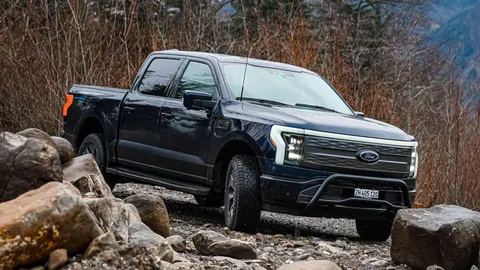
The current iteration of the F-150 Lightning, while pioneering, has encountered market realities that necessitate this pivot. Production of the all-electric Lightning has already been phased out, with the Rouge plant now focusing on internal combustion engine (ICE) F-Series trucks – a move initially conceived as temporary but now understood as a precursor to a permanent strategic realignment. This new direction centers on an EREV system, where an internal combustion engine functions exclusively as a generator, feeding power to the electric drivetrain. While details regarding production timelines and specific availability remain under wraps, with plans to eventually manufacture these advanced vehicles in Dearborn, the message is clear: the future of the F-150 Lightning is one of amplified performance and extended journeys.
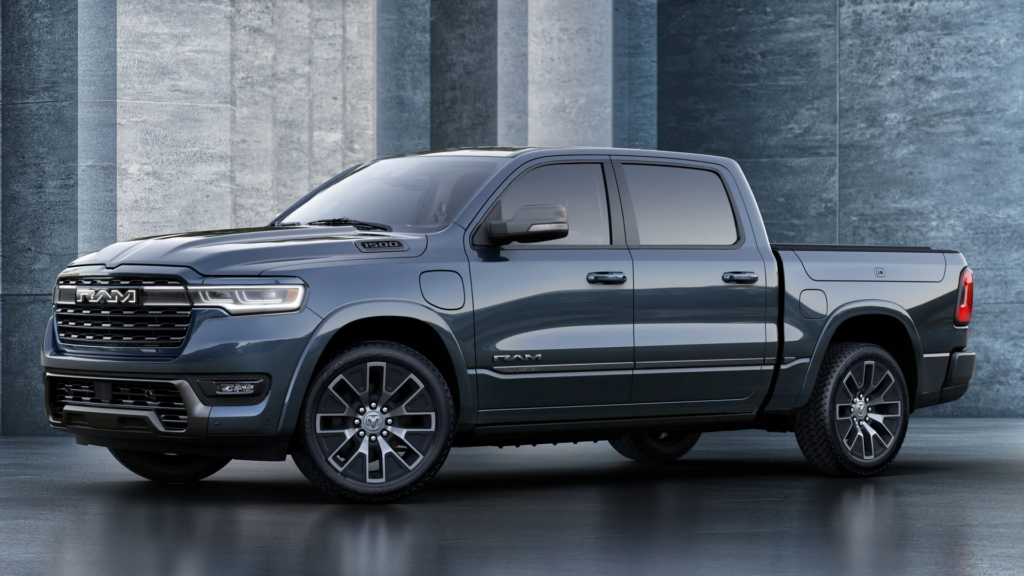
This strategic maneuver bears a striking resemblance to actions taken by competitors. Stellantis, for instance, initially outlined plans for both a fully electric Ram REV and an EREV variant, the Ramcharger. However, observing the fluctuating market sentiment and the performance of early electric truck entries, Ram ultimately pivoted, concentrating its efforts entirely on the EREV Ramcharger. Ford’s decision mirrors this pragmatic approach. The key distinction lies in the scale of the pivot. Ford had already invested significantly in the Lightning platform and was deep into the development of a next-generation all-electric successor. This recalibration represents a substantial financial undertaking, estimated to impact the company’s bottom line by approximately $19.5 billion, underscoring the magnitude of the commitment to this new hybrid paradigm.
The trend toward EREV technology isn’t isolated. Volkswagen’s resurrected Scout brand is also charting a course for extended-range electric trucks and SUVs, further validating this evolving market preference. Andrew Frick, President of Ford Blue and Ford Model e, emphasizes that this strategic evolution is deeply customer-centric. The decision, he asserts, is a direct response to current market realities, a move away from projections made years ago and a focus on what consumers genuinely desire today. Affordability and the assurance of sufficient range to meet diverse lifestyle needs are paramount. The upcoming F-150 Lightning EREV is engineered to exceed these expectations, boasting an impressive projected range of over 700 miles. Furthermore, Ford is signaling its commitment to a broader spectrum of affordable electric vehicles, with plans to introduce a family of more budget-friendly EVs commencing in 2027, beginning with a compact pickup truck.
Looking ahead, Ford anticipates a significant hybridization of its product portfolio. By the end of the decade, the company projects that hybrids, EREVs, and pure EVs will constitute half of its global sales volume, a substantial leap from the current 17 percent. Crucially, this recalibrated strategy is designed to ensure profitability across its expanded electric and hybrid lineup.
Beyond the Powertrain: Strategic Investments in Energy Storage
Adding another layer to Ford’s renewed focus on electrification and profitability is its ambitious entry into the battery storage sector. In a move that leverages existing infrastructure and expertise, Ford intends to utilize its joint-venture battery plants in Kentucky and Michigan, along with their associated licenses, to produce Lithium Iron Phosphate (LFP) batteries. This strategic diversification allows Ford to capitalize on the burgeoning demand for energy storage solutions, particularly from data centers and other grid-scale customers. These same facilities were originally slated to produce batteries for the next generation of large electric vehicles, codenamed T3, a program now discontinued, allowing for this new focus.
This transition, while strategically sound, will unfortunately lead to workforce adjustments. Employees within the battery joint venture, including approximately 1,600 at the Kentucky battery plant, will be affected by layoffs. However, Ford plans to subsequently hire around 2,100 new employees to manage the production and shipping of 20-gigawatt-hour (GWh) storage systems, expected to commence in 2027. Similar operational shifts are anticipated at the Marshall, Michigan, plant. This proactive approach to repurposing manufacturing capabilities demonstrates Ford’s commitment to adapting and innovating in a dynamic industrial landscape.
The expansion of Ford’s product offerings is also on the horizon, with an increased emphasis on trucks, SUVs, and vans. The Ohio plant, currently responsible for manufacturing commercial vans, is slated for job expansion and will introduce a new gasoline-electric hybrid van to its lineup. Meanwhile, at another Blue Oval facility in Kentucky, the focus will be on producing gasoline-powered F-Series trucks, alongside the introduction of a new, more compact, and affordable pickup truck – a segment that continues to hold significant appeal for a broad range of consumers.
The move towards an Extended-Range Electric Vehicle (EREV) powertrain for the F-150 Lightning signifies a pragmatic and customer-focused evolution in the automotive industry. This strategic pivot, driven by real-world market demands and a keen understanding of consumer priorities, ensures that Ford continues to lead the charge in delivering robust, capable, and exceptionally long-range pickup trucks.
For businesses seeking the ultimate combination of power, efficiency, and unparalleled range, understanding the implications of these advancements is crucial. Exploring the capabilities of Extended-Range Electric Vehicles and how they can optimize operations is a forward-thinking step. We invite you to connect with our team of experts to discuss how the future of electrified trucking, specifically tailored to meet your operational needs, can drive your business forward.