



Revolutionizing Automotive Design: How Drako’s DriveOS is Reshaping Vehicle Manufacturing
The automotive industry, long a bastion of intricate engineering and gradual evolution, is at a precipice. Today’s vehicles, while marvels of engineering, are increasingly defined by staggering complexity and prohibitive costs. A decade ago, two visionary Silicon Valley entrepreneurs, Dean Drako and Shiv Sikand, whose fortunes were forged in the crucible of semiconductor innovation, embarked on a mission to fundamentally alter this trajectory. Their audacious endeavor: to develop a revolutionary operating system for vehicles, one that could distill unparalleled performance and advanced features into even the most accessible automotive platforms. To prove their concept, they built a hypercar – a veritable technological showcase – which I recently had the privilege of experiencing firsthand.
From Silicon Valley to the Supercar Circuit: The Genesis of Drako Motors
Dean Drako and Shiv Sikand are no strangers to the complexities of high-stakes technological development. Their prior success with IC Manage, a sophisticated design-data management platform indispensable to silicon chip manufacturers for product development and change tracking, provided the financial bedrock and technical acumen for their ambitious venture, Drako Motors. Their core proposition for Drako DriveOS echoes familiar, yet profoundly impactful, themes in modern automotive discourse: a centralized computing architecture that interfaces directly with vehicle sensors and actuators, dramatically reducing latency for enhanced performance, bolstered safety, and fortified cybersecurity. This vision bears a striking resemblance to BMW’s “Heart of Joy” concept for the 2026 iX3, but Drako’s ambition amplifies it, aiming for a singular, all-encompassing control nexus for every aspect of vehicle operation.
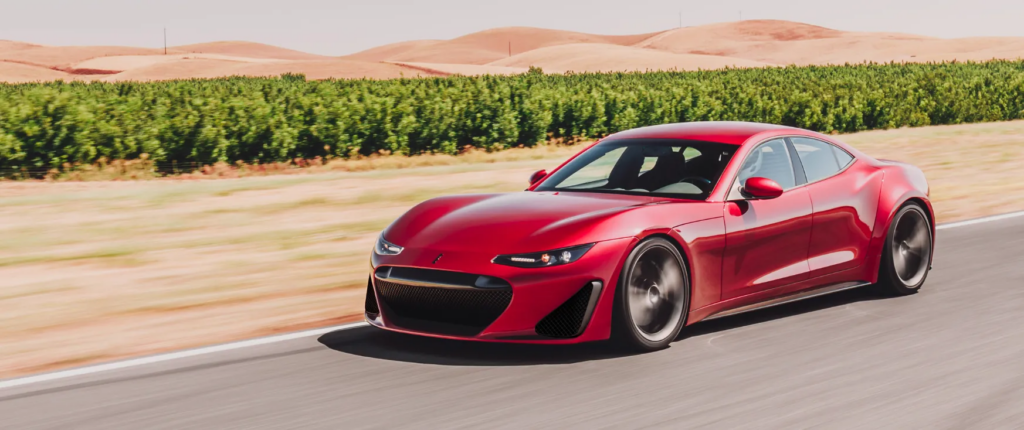
The most exhilarating, and arguably most convincing, method to showcase the prowess of their new operating system was through a 1,200-horsepower, four-motor electric vehicle. This platform would not only enable granular torque-vectoring control at each wheel but also manage all safety systems, infotainment, and dynamic driving functions. In 2014, however, the landscape lacked readily available four-motor EVs suitable for such a radical retrofit. Consequently, Drako Motors undertook the monumental task of building their own proving ground: the Drako GTE. A fascinating footnote to this genesis is Drako Motors’ collaboration with Pankl Racing Systems to engineer ultra-high-strength half-shafts for the GTE. Pankl, now a respected supplier to leading electric hypercar manufacturers, continues to leverage this expertise in today’s most advanced performance vehicles.
The Drako GTE and the Imminent Drako Dragon SUV: Tangible Manifestations of Innovation
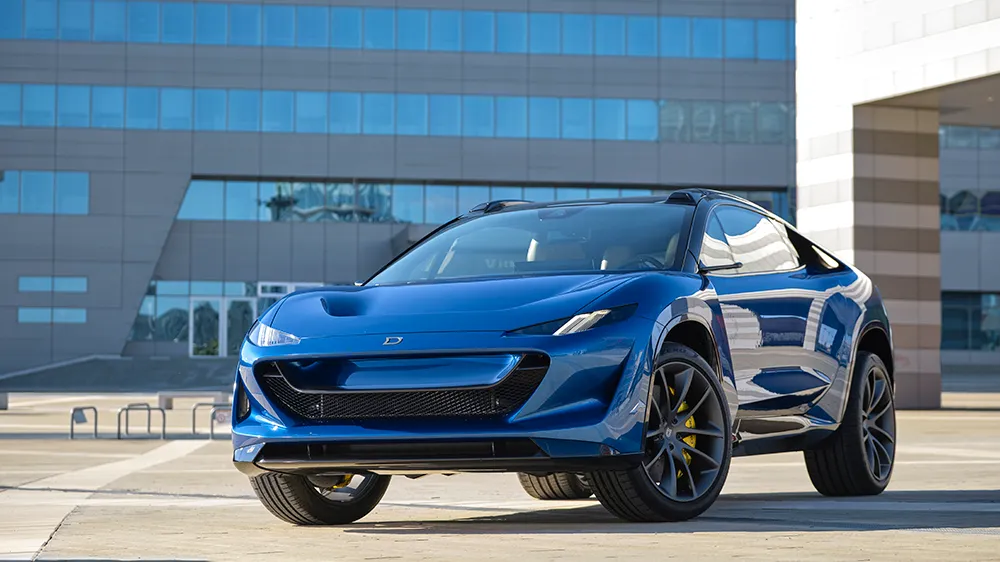
To accelerate the development of foundational automotive components such as glass, hinges, instrumentation, and switchgear, the GTE was ingeniously constructed upon the chassis of the Fisker Karma. This established platform underwent a comprehensive redesign and electrification, integrating a substantial 90 kWh battery pack within the vehicle’s central tunnel and beneath an elevated floor. The resulting combined output of the GTE reaches an astonishing 1,200 horsepower. Initially slated for a limited production run of 25 units with an announced price tag of $1.25 million, the first GTE is currently nearing completion. Looking ahead, Drako Motors is poised to introduce the Drako Dragon, a five-seat SUV that promises a staggering 2,000 horsepower and an even more appealing $300,000 price point, featuring distinctive gullwing doors. However, the overarching narrative and the driving force behind these halo vehicles remain the comprehensive demonstration and validation of Drako DriveOS.
The Escalating Software Burden: A Looming Crisis in Automotive Affordability
The financial implications of automotive software are often underestimated. In 1980, software constituted a mere 10% of a vehicle’s total cost. This figure has experienced exponential growth, now hovering between 30% and 40% of a new car’s price this decade. Projections indicate that the integration of advanced safety features and autonomous driving capabilities will push this percentage to an astonishing 50% by 2030, placing further strain on affordability and potentially creating a significant divide in the new car market. Understanding this trend is crucial when evaluating the long-term viability and accessibility of automotive technology.
Bridging the Gap: Drako DriveOS vs. Traditional Electronic Architectures
The automotive industry has been remarkably resistant to the paradigm shift that has swept through other technology sectors. While personal computing and consumer electronics have embraced the transition from a multitude of specialized Electronic Control Units (ECUs) to a more consolidated architecture leveraging commodity PC core processors, the automotive realm has largely clung to its legacy systems. This inertia stems, in part, from a perceived deficit in software-savvy engineering talent within traditional automotive manufacturers.
Furthermore, established suppliers have argued that widely adopted operating systems like Windows and Linux, while ubiquitous in other domains, are inherently unsuitable for the stringent real-time processing demands of safety-critical automotive functions. Their contention is that these general-purpose operating systems cannot reliably prioritize safety-related data inputs without potential interruptions from less critical functions, such as environmental sensors or tire pressure monitors. Consequently, the “safest” and most readily implementable solution, according to this viewpoint, has been to delegate each specific function to dedicated, bespoke controllers – an approach that leads to an explosion of ECUs managing everything from anti-lock braking and airbags to seat massagers and even scent dispensers.
This proliferation of dedicated ECUs, each often running its own miniature real-time operating system, results in a complex, sprawling network of wiring – what many affectionately (or perhaps despairingly) refer to as “spaghetti wiring.” This intricate web not only adds significant weight and cost but also creates numerous “attack surfaces,” vulnerabilities that can be exploited by malicious actors seeking to compromise vehicle communication networks. Incidents involving unauthorized access to vehicle systems via radio interfaces (as seen in some Jeep models) or even lighting systems (as reported with certain Porsche vehicles) underscore the inherent cybersecurity risks associated with such distributed architectures. This is where the disruptive potential of Drako DriveOS becomes profoundly evident.
The Drako DriveOS Advantage: A Smarter, Safer, and More Affordable Future
The world, in large part, runs on Linux. Its adaptability, open-source nature, and widespread adoption have made it a cornerstone of modern computing. However, as noted, its inherent architecture isn’t designed for the absolute determinism and real-time precision required for safety-critical automotive applications. This is precisely where Drako DriveOS, in collaboration with Boston University’s esteemed Professor Richard West, introduces a groundbreaking solution. Their innovation, codenamed Quest V, addresses the real-time processing challenge through novel kernel design and a unique “data pipe” mechanism.
Kernels, the fundamental bridge between a computer’s hardware (CPU, memory, peripherals) and its software applications, are responsible for managing system resources. They act as hypervisors, ensuring a secure and consistent environment for applications to interact with hardware. The Drako kernel revolutionizes this by incorporating a proprietary “data pipe” that establishes a direct, high-speed, memory-to-memory link between the safety-critical processor and the silicon responsible for receiving critical sensor data. This ingenious design effectively creates isolated, secure zones for safety-critical tasks, preventing them from being “distracted” by less urgent data streams. This architectural innovation empowers Drako DriveOS to run robust safety systems on the familiar and powerful Linux backbone, achieving the best of both worlds: the versatility of Linux and the deterministic reliability of a dedicated safety system. This represents a significant leap forward for automotive software development.
Streamlining Communication, Slashing Costs, and Enhancing Security
Beyond its core real-time processing capabilities, Drako DriveOS offers profound advantages in simplifying communication protocols and driving down manufacturing costs. While Drako DriveOS can interface with existing sensor and actuator networks using established protocols like Ethernet, CAN, Flexray, and LIN, it also introduces a more efficient alternative. Many of these traditional protocols necessitate complex and time-consuming translation or conversion of commands between the central processor and the peripheral components. Furthermore, their data transmission rates are often considerably slower, contributing to inherent latency. Shiv Sikand points out that the fastest response achievable with Ethernet is approximately 514 microseconds, a figure significantly longer than the 108 microseconds achievable with USB.
The true game-changer lies in Drako DriveOS’s ability to leverage the ubiquitous USB communication and control protocol, a standard feature integrated into virtually every Intel processor. This allows the central processing unit to issue commands directly to sensors and actuators without the need for intermediary translation layers. Moreover, at the sensor and actuator level, only a simple, cost-effective pin connector is required to direct these USB signals. This eliminates the need for expensive custom silicon typically mandated by other proprietary networks, potentially saving manufacturers between $4 and $10 per connection. As automotive autonomy rapidly advances, the inherent bandwidth advantages of USB become even more critical. USB 5, for instance, promises to deliver a staggering 80 gigabits per second, dwarfing the maximum 20 megabits per second of CAN XL – and that’s after CAN XL data has been compressed. Commodity cameras, a fundamental component of autonomous driving systems, already natively communicate over USB, further simplifying integration and reducing costs. This focus on cost reduction makes affordable electric cars with advanced features a much more tangible reality.
In the realm of cybersecurity, Drako DriveOS presents a compellingly simplified and more secure architecture. By operating on a consolidated PC core, the system presents a single, unified attack surface. Crucially, because USB is designed as an infrastructure for device control rather than merely a communication protocol, the DriveOS software can establish its own proprietary communication protocols. These custom protocols are inherently more difficult for hackers to penetrate and exploit compared to industry-standard protocols like CAN or Ethernet, which are widely understood and have established vulnerabilities. This enhanced cybersecurity posture is paramount as vehicles become increasingly connected and reliant on software. This enhanced cybersecurity in automotive is a critical selling point for manufacturers and consumers alike.
The Road Ahead: Democratizing Advanced Automotive Technology
Shiv Sikand eloquently encapsulates the Drako mission: “Bill Gates put a PC on everyone’s desk, and everyone’s still got one on their desk. We want to put another one in their car.” Drako Motors is not seeking to hoard its groundbreaking technology. The company is receptive to licensing its performance-enhancing and cost-saving software solution, recognizing that widespread adoption is key to realizing its transformative potential. A modest licensing fee of a few hundred dollars per vehicle, spread across the tens of millions of cars produced annually, would represent a substantial return on the millions of investment capital poured into DriveOS development. This approach democratizes access to cutting-edge automotive technology, making hypercar technology for everyday cars a distinct possibility.
My personal experience driving vehicles equipped with similar advanced computing architectures, such as the BMW iX3, has underscored the palpable benefits of reduced latency. The improvements in cornering precision, acceleration response, and braking efficacy are undeniable. Having witnessed the passion and expertise that Dean Drako and Shiv Sikand bring to their automotive pursuits – evident in the meticulously maintained classic Ferraris and other performance icons they enjoy on the scenic roads of California’s central coast – I am confident in their vision. They possess an intrinsic understanding of what makes a vehicle truly exhilarating to drive, and their application of silicon-based innovation to elevate vehicle performance is not merely theoretical; it is deeply rooted in the passion of true car enthusiasts.
The future of automotive manufacturing is undeniably tied to intelligent software architecture. Drako DriveOS represents a significant leap forward, offering a pathway to more performant, more secure, and critically, more affordable vehicles. As the automotive industry navigates the complexities of electrification and autonomous driving, solutions like Drako DriveOS will be instrumental in shaping a future where advanced automotive technology is not the exclusive preserve of the ultra-wealthy, but a tangible reality for a broader spectrum of drivers.
If you are a manufacturer seeking to innovate and deliver unparalleled value to your customers, or an enthusiast eager to understand the technological forces shaping the future of driving, we invite you to explore the revolutionary possibilities of Drako DriveOS. Discover how Drako’s DriveOS can transform your next vehicle project and redefine automotive excellence.