



Revolutionizing Automotive Engineering: The Era of Unified Intelligent Vehicle Architecture
The automotive landscape of 2025 is undeniably defined by an escalating cost and an almost bewildering complexity in vehicle design and manufacturing. Today’s vehicles, laden with intricate electronic systems, represent a significant departure from the simpler machines of previous decades. This paradigm shift, while delivering unprecedented levels of functionality and luxury, has pushed the price of even mainstream vehicles into stratospheric territory. However, a compelling new vision is emerging from the heart of Silicon Valley, championed by entrepreneurs who have not only mastered the intricacies of silicon but are now channeling their expertise and capital into redefining the very essence of automotive construction. Their ambitious undertaking: the development of a revolutionary operating system designed to democratize advanced vehicle capabilities, making them accessible to a far broader spectrum of the automotive market. This groundbreaking innovation, spearheaded by Drako Motors and their proprietary Drako DriveOS, promises to fundamentally alter how vehicles are built, from the most exclusive hypercars to the most budget-conscious commuters.
From Silicon Valley Success to Automotive Innovation
At the core of this transformative initiative are Dean Drako and Shiv Sikand, seasoned technologists whose foundational success lies in co-founding IC Manage. This company provides a critical design-data management platform, indispensable for silicon chip manufacturers in streamlining product development and change tracking. The immense success of IC Manage has provided the financial bedrock for their enduring passion project, Drako Motors, a venture dedicated to pioneering a radically new automotive operating system.
Their initial proposition for Drako DriveOS resonates with a familiar yet elevated ambition: a centralized compute platform that engages directly with sensors and actuators, thereby drastically minimizing latency. This streamlined communication flow is engineered to unlock superior performance, bolster safety protocols, and enhance cybersecurity. The concept bears a striking resemblance to the ambitious “Heart of Joy” initiative seen in the 2026 BMW iX3, but amplified to an extraordinary degree. The dream is a singular, all-encompassing computational “brain” operating with zero latency, granting precise control over every facet of the vehicle’s operation, including its four wheels.
Drako and Sikand astutely recognized that the most impactful demonstration of their operating system’s prowess would be within a high-performance electric vehicle. Their chosen platform: a 1,200-horsepower, four-motor electric vehicle. This extreme application would not only showcase unparalleled torque-vectoring capabilities at each wheel but would also serve as the central nervous system for all safety systems, infotainment, and dynamic driving functions. The challenge in 2014, however, was the scarcity of readily available four-motor EVs to serve as a development platform. The solution? They built one from the ground up – the Drako GTE. A testament to their commitment and engineering foresight, Drako Motors collaborated with Pankl Racing Systems to develop exceptionally robust half-shafts for the GTE. This collaboration proved so successful that Pankl now supplies similar advanced components to several of today’s leading electric hypercar manufacturers.
The Drako GTE and the Upcoming Dragon SUV: Platforms for Innovation
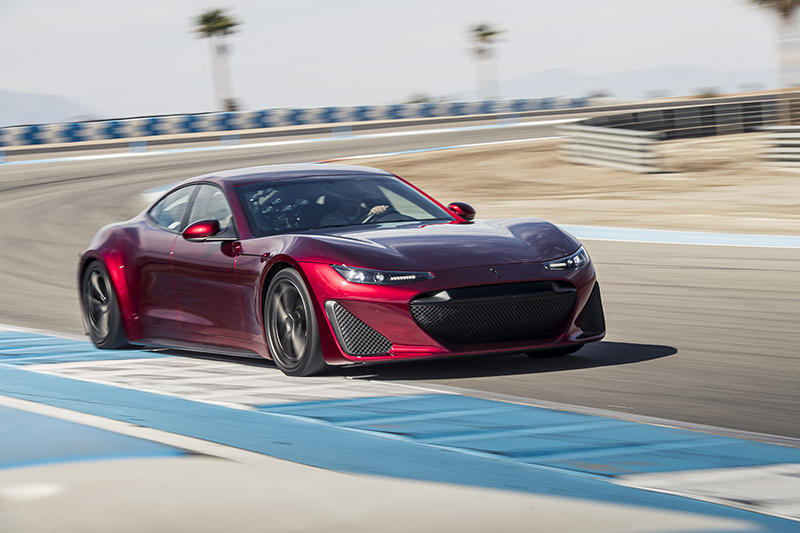
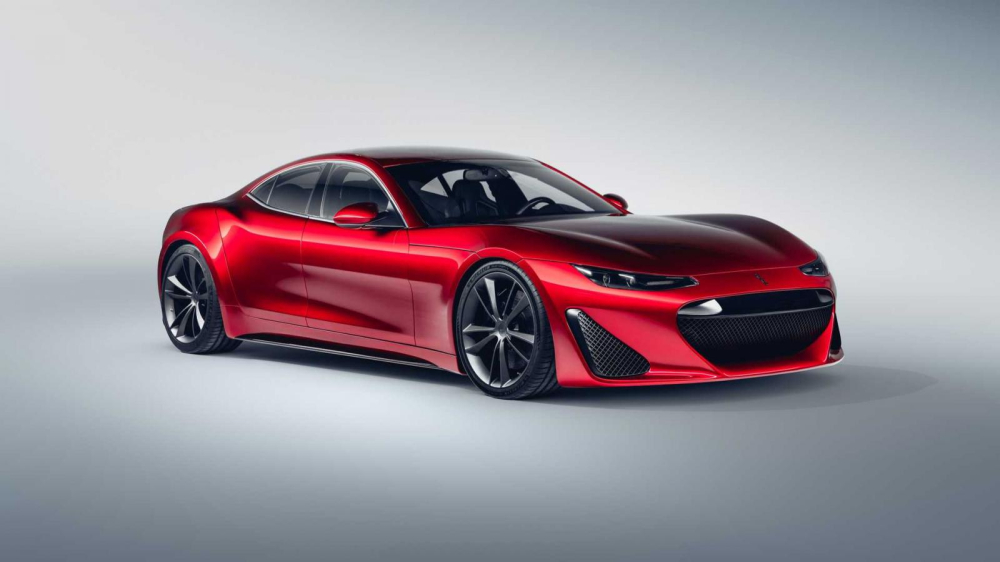
The Drako GTE sedan, while a marvel of engineering in its own right, serves primarily as a tangible proof of concept for the Drako DriveOS. To accelerate the development of non-core components like glass, hinges, gauges, and switches, the GTE is built upon the foundation of the Fisker Karma. This established chassis has undergone a comprehensive redesign and electrification. A substantial 90 kWh battery pack is ingeniously integrated into the vehicle’s central tunnel and beneath a raised floor. This potent combination delivers a staggering 1,200 horsepower. Initially slated for a limited production run of 25 units with a price tag of $1.25 million, the first GTE is currently in advanced stages of production. Complementing the GTE is the forthcoming Drako Dragon, a five-seat SUV that embodies luxury and performance. Featuring dramatic gullwing doors, an awe-inspiring 2,000 horsepower, and a more accessible price point of $300,000, the Dragon further underscores Drako Motors’ commitment to pushing the boundaries of electric vehicle technology, all while showcasing the capabilities of Drako DriveOS.
The Escalating Software Burden: A Costly Reality in Modern Vehicles
The economic implications of modern automotive design are stark. In 1980, software constituted a mere 10 percent of a vehicle’s total cost. Fast forward to the current decade, and this figure has ballooned to an alarming 30-40 percent. Projections indicate that the relentless integration of advanced safety features and burgeoning autonomous driving capabilities will propel this software share to an astounding 50 percent by 2030. This exponential rise in software cost is a significant driver behind the increasing price of new vehicles, posing a considerable challenge for both manufacturers and consumers seeking affordable new car technologies and affordable electric vehicles.
Challenging Traditional Automotive Electronic Architectures
The automotive industry, historically resistant to fundamental change, has largely sidestepped the industry-wide transition from an array of dozens, even hundreds, of specialized Electronic Control Units (ECUs) to a more streamlined architecture employing a limited number of commodity PC core processors. This architectural rigidity is common across nearly every other sector of the technology industry, from desktop computers to gaming consoles and smartphones.
A primary impediment to this evolutionary leap within the automotive sector is the persistent shortage of individuals with deep software expertise within traditional car manufacturers. Industry suppliers have long argued that widely adopted operating systems such as Windows and Linux, while ubiquitous, are not inherently suited for the rigorous demands of real-time, safety-critical data processing. Consequently, the prevailing, albeit less efficient, solution has been to delegate specific functions to specialized controllers developed by various suppliers. This encompasses everything from anti-lock braking systems and airbag deployment to seat massagers and even scent dispensers.
The consequence of this approach is a complex web of hundreds of dedicated ECUs, each running its own diminutive real-time operating system. These are interconnected by miles of intricate wiring, often referred to as a “spaghetti wiring harness.” This convoluted infrastructure presents numerous “attack surfaces,” providing potential entry points for malicious actors to compromise vehicle communication networks, as tragically demonstrated by past vulnerabilities in systems like Jeep’s Uconnect or even Porsche’s headlamps and taillamps. This pervasive complexity not only inflates costs but also significantly compromises car cybersecurity and the overall vehicle safety system.
The Drako DriveOS Paradigm: A Unified and Intelligent Approach
The global technological infrastructure largely operates on Linux, a testament to its versatility and power. However, its inherent limitations – namely, its lack of true real-time determinism – render it unsuitable for prioritizing safety-critical sensor inputs without potential interruptions from less critical data, such as that from tire pressure monitors or even rain sensors.
This is precisely where Drako’s innovative solution, Quest V, developed in collaboration with Richard West of Boston University, steps in. Quest V addresses the real-time processing challenge through novel kernel and pipe designs. Kernels, the fundamental software bridges between a computer’s hardware (CPU, memory, devices) and its applications, are responsible for managing system resources. In the context of Quest V, these kernels function akin to hypervisors, establishing a secure and consistent environment for applications to interact with hardware.
The core innovation within the Drako kernel is a proprietary “data pipe.” This mechanism creates a direct, memory-based connection between the safety-critical processor and the dedicated silicon responsible for receiving vital safety data. This effectively creates a secure, isolated environment for safety-critical tasks, shielding them from distractions and ensuring unwavering focus on critical data. This architecture empowers Drako DriveOS to operate sophisticated safety systems seamlessly atop a familiar Linux foundation, ushering in a new era of advanced vehicle control systems.
Simplifying Communication, Reducing Costs, and Enhancing Performance
Beyond its core processing capabilities, Drako DriveOS also streamlines communication between the central processing unit, actuators, and sensors. While it can interface with existing protocols such as Ethernet, CAN, Flexray, and LIN – the standard across today’s vast array of ECUs – these often come with inherent drawbacks. Translating commands between different protocols and the typically slower data transmission rates introduce undesirable latency. Shiv Sikand notes that Ethernet’s fastest response time is around 514 microseconds, while USB can achieve an impressive 108 microseconds. This reduction in latency is crucial for delivering the responsive and engaging driving dynamics that consumers increasingly expect, impacting everything from performance EV tuning to autonomous driving sensor integration.
A significant advantage of Drako DriveOS is its native support for the Universal Serial Bus (USB) communication and control protocol, a standard feature on virtually every Intel chip. This allows the central processor to transmit commands directly to devices without the need for complex translation layers. Furthermore, by integrating a simple pin connector near sensors and actuators, these USB signals can directly control functions like lights or seats. This eliminates the need for costly custom silicon typically required for other network interfaces, resulting in estimated savings of $4 to $10 per connection. The sheer bandwidth offered by USB also positions it as the future for high-demand applications. USB 5, for instance, will support a remarkable 80 gigabits per second, dwarfing the maximum 20 megabits per second of CAN XL, even after compression. Commodity cameras, increasingly vital for advanced driver-assistance systems (ADAS) and AI in automotive applications, already communicate natively over USB, further simplifying integration and reducing costs. This architectural simplification has the potential to lower the overall cost of EV manufacturing and accelerate the adoption of future automotive technology.
Fortifying Vehicle Security: A Shield Against Cyber Threats
The implications of a unified compute platform for car cybersecurity are profound. By consolidating vehicle functions onto a single PC core processor running Drako DriveOS, the attack surface for potential hackers is dramatically reduced to a single point. Moreover, because USB is designed as an infrastructure for device control rather than solely a communication protocol, the Drako DriveOS software can establish its own bespoke communication protocols. These proprietary protocols are inherently more challenging to infiltrate than widely adopted industry-standard communication protocols like CAN or Ethernet, offering a significant enhancement in vehicle network security. This advanced security architecture is paramount as vehicles become increasingly connected and reliant on external networks for updates and communication, making solutions like secure automotive software a critical differentiator.
The Future of Automotive Computing: Democratizing Advanced Features
Shiv Sikand eloquently encapsulates the Drako mission: “Bill Gates put a PC on everyone’s desk, and everyone’s still got one on their desk. We want to put another one in their car.” Drako Motors harbors no intention of monopolizing its performance-enhancing and cost-saving software solution. Their licensing model envisions a modest royalty of a few hundred dollars per vehicle. Applied across a global market of tens of millions of cars annually, this represents a substantial, yet reasonable, return on the significant investment capital poured into developing Drako DriveOS.
The tangible benefits of reduced latency have already been experienced in vehicles like the BMW iX3, where it translates to improved cornering, acceleration, and braking dynamics. Having personally witnessed the passion and expertise Dean Drako and Shiv Sikand bring to their driving endeavors on the scenic roads of California’s central coast – including encounters with iconic machines like the Ferrari 288 GTO – it is clear that their instincts regarding the application of silicon-based solutions to elevate vehicle performance are deeply informed and trustworthy. Their work with Drako DriveOS is not merely about creating faster or more luxurious cars; it’s about fundamentally reimagining the automotive architecture for the 21st century, paving the way for more affordable, safer, and technologically advanced vehicles for everyone.
The implications of Drako DriveOS extend far beyond the realm of hypercars. Imagine affordable performance cars equipped with the responsiveness and safety features previously exclusive to million-dollar exotics. Consider the potential for next-generation infotainment systems that are not only feature-rich but also lightning-fast and highly secure. This unified intelligent vehicle architecture promises to democratize innovation, making cutting-edge automotive technology accessible to a wider audience. For automotive engineers and manufacturers looking to stay ahead of the curve, understanding and adopting principles like those embodied by Drako DriveOS is no longer optional – it is imperative for developing innovative vehicle solutions that meet the demands of the modern consumer and the future of mobility.
If you are an automotive professional, a technology enthusiast, or simply someone who believes in a future where advanced automotive features are within reach for all, we invite you to explore the transformative potential of unified intelligent vehicle architecture. Discover how Drako DriveOS is not just changing how cars are built, but redefining the very experience of driving.