



The Million-Dollar Maestro: Unpacking the 2025 Value Surge of the 1995 Honda NSX-R
The year is 2025, and the automotive landscape continues its relentless march towards electrification and autonomous systems. Yet, amidst this technological tide, a particular breed of analog perfection from the past is not just holding its ground but skyrocketing in value, confounding traditional market expectations. We’re talking about the 1995 Honda NSX-R – a machine that, in its purest form, embodies the pinnacle of naturally aspirated performance and driver engagement. What was once considered an unattainable dream for JDM enthusiasts has now firmly cemented its place in the ultra-exclusive realm of luxury sports car investment, with pristine examples commanding figures that rival, and often surpass, iconic European exotics.
As an expert who’s navigated the intricate world of high-performance vehicles and collectible Japanese sports cars for over a decade, I’ve witnessed firsthand the meteoric rise of the NSX. But the NSX-R, specifically the NA1 generation, stands as a unique outlier, a testament to engineering purity that resonates more strongly than ever in today’s digitally saturated world. The recent auction results on platforms like Bring a Trailer are not merely impressive; they are epoch-making, redefining what a “Honda” can truly represent in the pantheon of high-end classic cars.
The Genesis of an Analog Legend: Engineering Purity Meets F1 Pedigree
To truly appreciate the 1995 Honda NSX-R’s unprecedented market ascent, we must first revisit its origins. Introduced globally in 1990 as the Honda NSX and in North America as the Acura NSX, this groundbreaking supercar was a declaration of intent. Honda, fresh from its dominance in Formula 1 with McLaren, aimed to redefine the daily drivable supercar, offering Ferrari performance with Honda reliability. The result was a mid-engined marvel boasting an all-aluminum monocoque chassis, a high-revving 3.0-liter VTEC V6, and a driving experience so refined it immediately set new benchmarks.
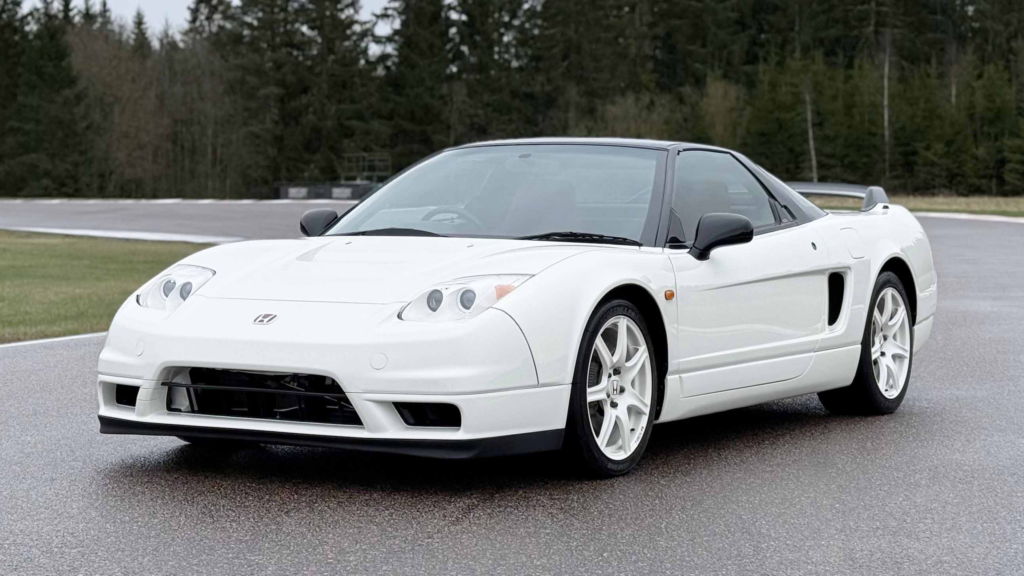
But for a select few, “refined” wasn’t enough. They craved raw, unadulterated performance. Enter the NSX-R in 1992. This wasn’t merely a trim package; it was a comprehensive engineering overhaul, a relentless pursuit of lightness and track-focused agility. Honda’s engineers, driven by a philosophy of continuous improvement and a keen understanding of racing dynamics, stripped away every ounce of non-essential weight. They replaced power steering, sound deadening, and even the spare tire with lighter alternatives, including carbon-Kevlar Recaro seats, a lightweight Momo steering wheel, and forged aluminum wheels.
The result was a staggering 265-pound weight reduction over the standard NSX. But the R-treatment went far beyond shedding pounds. The C30A V6 engine received a meticulous “blueprinting” process usually reserved for race engines. This involved hand-balancing the crankshaft, connecting rods, and pistons to ultra-tight tolerances, resulting in a more free-revving, responsive engine with unparalleled smoothness. The suspension was completely re-tuned with stiffer springs, dampers, and bushings, while larger anti-roll bars enhanced cornering prowess. Aerodynamic enhancements, including a unique rear spoiler and front lip, further refined its high-speed stability. The NSX-R was, in essence, a street-legal race car, a pure driver’s machine crafted with obsessive attention to detail.
And then there’s the legendary connection to Ayrton Senna. The iconic video of the F1 maestro, dapper in his loafers, effortlessly dancing on the pedals of an NSX-R at Suzuka, became more than just a marketing coup; it became a cornerstone of automotive mythology. Senna’s precise, fluid inputs, showcasing the car’s sublime balance and responsiveness, etched the NSX-R into the minds of a generation. In 2025, this video, readily available across digital platforms, continues to fuel the mystique and desirability of the Ayrton Senna NSX, serving as a powerful emotional anchor for collectors and enthusiasts worldwide.
The 2025 Auction Phenomenon: Decoding Multi-Million Dollar Honda Sales
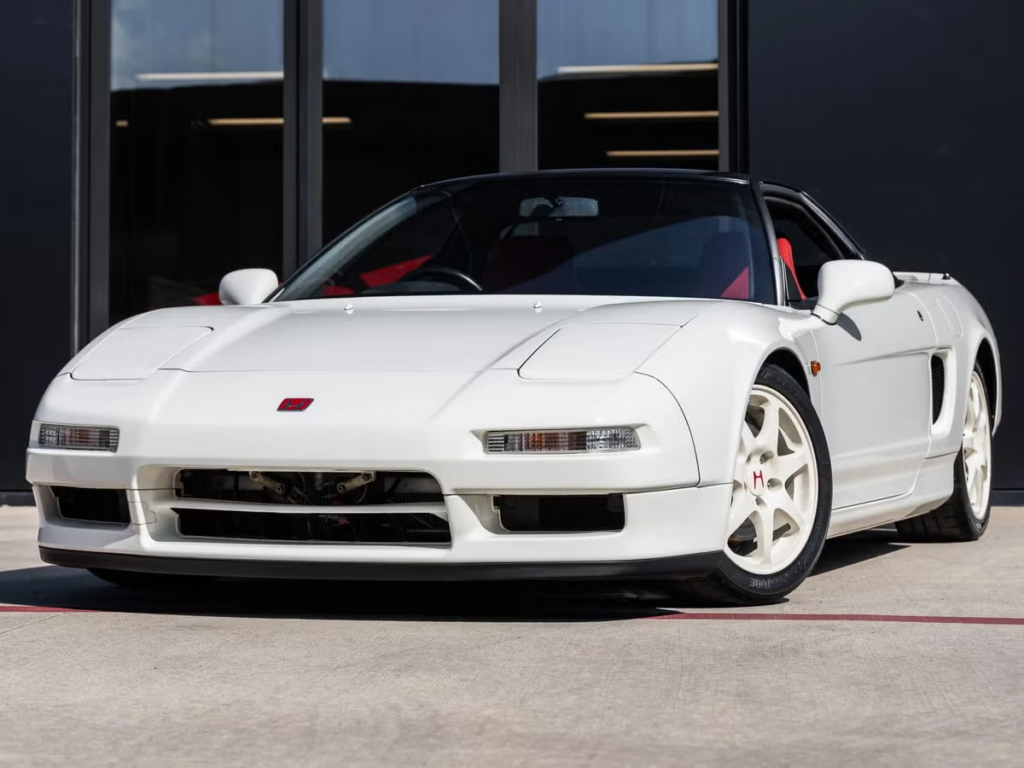
Fast forward to 2025, and the automotive auction circuit is buzzing with unprecedented valuations for these rare beasts. The initial story of a 1995 Honda NSX-R fetching Ferrari-like figures on Bring a Trailer is no longer an isolated incident but a recurring headline, indicative of a seismic shift in the classic car market trends. While the original NA1 NSX-R production run was limited to just 483 units, the scarcity is magnified by the pristine condition and meticulous provenance demanded by today’s top-tier collectors.
Just weeks ago, another exquisite example of an NA1 NSX-R, a low-mileage 1994 model, closed above the $900,000 mark on a prominent online auction platform. This was followed swiftly by rumors of a private sale exceeding seven figures, solidifying the NSX-R’s status as a bona fide million-dollar maestro. What’s driving these astronomical figures for a car that, while exceptional, still bears a Honda badge? It’s a confluence of factors, expertly analyzed by those of us deep in the automotive investment sphere:
Rarity and Purity: With fewer than 500 units ever made, the NA1 NSX-R is inherently rare. But its “purity” – the uncompromising focus on driver involvement, lightweighting, and naturally aspirated perfection – makes it uniquely appealing in an era of increasingly complex, hybridized, and digitally-assisted supercars. Collectors are actively seeking out these analog experiences.
Investment Vehicle Status: The JDM performance car segment has exploded into a serious automotive investment category. What started with iconic Skylines and Supras has now culminated with the NSX-R, which represents the apex. Wealthy collectors are diversifying their portfolios, viewing these rare Japanese legends as appreciating assets alongside traditional art and real estate. The capital appreciation witnessed over the past five years for top-tier JDM performance vehicles has outperformed many conventional investments.
Digital Auction Impact: Platforms like Bring a Trailer have democratized and globalized the exotic car auction market. Their transparent bidding, detailed photography, and active community engagement create a highly competitive environment. This increased visibility and accessibility bring more buyers to the table, driving up prices and establishing new benchmarks with astonishing rapidity. These platforms have been instrumental in showcasing the genuine value of collector Honda NSX models to a worldwide audience.
Demographic Shift and Nostalgia: A significant segment of today’s affluent collectors grew up during the golden era of JDM performance, often with posters of the NSX adorning their bedroom walls. For them, owning an NSX-R is not just about acquiring a car; it’s about recapturing a piece of their youth, a tangible connection to their automotive idols. This powerful emotional resonance translates directly into higher willingness to pay.
The “Ferrari Alternative” Paradigm: While it may sound audacious, the NSX-R is increasingly viewed not just as a competitor but as a superior Ferrari alternative by certain discerning collectors. For the cost of a modern Ferrari, one can acquire a classic NSX-R that offers similar, if not greater, exclusivity, a more engaging driving experience (for purists), and arguably better long-term reliability and lower maintenance costs, particularly with Honda’s renewed support. The sheer enjoyment and prestige of owning such an exclusive sports car is undeniable.
This shift isn’t just about the NSX-R; it’s emblematic of a broader re-evaluation of classic Japanese performance cars. The market is maturing, recognizing that innovation, driving pleasure, and historical significance are not exclusive to European marques. The NSX-R has shattered old paradigms, proving that excellence, regardless of its origin, will ultimately command its deserved value.
Securing the Legacy: Honda’s Forward-Thinking Approach
One of the most significant factors bolstering investor confidence and contributing to the NSX-R’s soaring valuation is Honda’s proactive and farsighted commitment to supporting its heritage. Recognizing the growing collector interest and the importance of preserving its flagship supercar, Honda (and Acura in North America) embarked on an ambitious “NSX-R Restoration Project” and launched an expanded “Heritage Parts Program.”
This initiative goes far beyond simply stocking a few common replacement items. Honda has strategically re-manufactured hundreds of critical parts for the original NSX generations (NA1 and NA2), often tooling up entirely new production lines for components that have been unavailable for decades. From body panels and suspension components to engine internals and intricate electronic modules, this program ensures that owners of these collectible Japanese sports cars can maintain, restore, and even daily drive their vehicles without fear of parts scarcity.
For an exotic car auction piece, the availability of factory-original parts is a monumental advantage. It dramatically reduces the cost and complexity of high-performance vehicle restoration and provides peace of mind for buyers concerned about long-term ownership. This commitment from the original manufacturer essentially future-proofs the investment, guaranteeing that these magnificent machines can be kept in concours condition or enjoyed on the open road for generations to come. It’s a move that many other classic car manufacturers should emulate, as it directly translates into tangible value for existing and prospective owners.
Beyond the R: The Broader NSX Market and Investment Outlook
The NSX-R’s incredible value surge isn’t just an isolated phenomenon; it creates a significant ripple effect across the entire NSX market. The rising tide of the NSX-R lifts all NSX boats. While a standard NA1 NSX or a later NA2 model may not command multi-million-dollar figures, their values have seen substantial appreciation. Clean, low-mileage examples of even base model NSXs are now firmly established as serious automotive investments, trading hands for six-figure sums that would have seemed unthinkable a decade ago.
This trend is likely to continue. As the world moves further into electrification, the desire for pure, unadulterated, naturally aspirated combustion engines will only intensify among collectors. The NSX, with its unparalleled blend of reliability, exquisite handling, and legendary status, is perfectly positioned to capture this demand. Furthermore, the growing sophistication of high-performance vehicle restoration services ensures that even cars requiring significant work can be brought back to their former glory, making them viable investment opportunities.
The NSX-R stands as a testament to Honda’s engineering prowess and vision. It is more than just a fast car; it is a philosophy on wheels, a finely honed instrument designed to connect the driver to the road with unparalleled intimacy. In 2025, its market value is a reflection not just of its rarity, but of its enduring relevance as an icon of automotive purity in an increasingly complex world. It’s a reminder that some legends simply transcend time, their true worth only fully appreciated as the years pass.
Are you ready to explore the dynamic world of luxury sports car investment and discover which automotive legends are poised for similar meteoric rises? Or perhaps you’re seeking to understand the nuances of high-end classic cars to make an informed decision on your next acquisition? Connect with a trusted expert today to navigate the thrilling landscape of collectible performance vehicles and secure your piece of automotive history.