


The Million-Dollar Legacy: Why the 1995 Honda NSX-R Continues to Redefine the Collector Market in 2025
For a decade now, I’ve navigated the intricate currents of the automotive collector world, witnessing trends rise and fall, icons emerge, and values skyrocket. Yet, even to a seasoned observer, the recent auction performance of the 1995 Honda NSX-R on platforms like Bring a Trailer isn’t just a noteworthy sale; it’s a seismic event, signaling a profound shift in the very definition of “investment-grade” vehicles. We’re talking about figures that once exclusively belonged to storied Italian marques, now commanded by a Japanese masterpiece – a testament to its unparalleled provenance, engineering prowess, and enduring cultural impact. In 2025, the NSX-R isn’t just a car; it’s a financial instrument, a piece of motorsport history, and a stark reminder that true automotive artistry transcends badges and perceived hierarchies.
The recent flurry of activity on premier auto auctions, culminating in a jaw-dropping near-$400,000 bid for a low-mileage 1995 NSX-R, is not an anomaly. It’s the latest data point in a trajectory that has seen this naturally aspirated marvel ascend to the pantheon of elite collector vehicles. This article will delve deep into the market dynamics, historical context, and future outlook of the NA1 NSX-R, particularly from the lens of a collector and investor in the ever-evolving 2025 landscape.
The Genesis of a Legend: Honda’s Audacious Vision and Senna’s Imprint
To truly appreciate the current market valuation of the NSX-R, one must revisit its audacious genesis. In the late 1980s, Honda, then a dominant force in Formula 1, embarked on a mission to build a world-class sports car, one that could challenge the established European supercar elite while offering unparalleled daily usability. The result was the original NSX (New Sports eXperimental), launched in 1990. It was a technological tour de force: the world’s first all-aluminum monocoque chassis production car, a mid-mounted, high-revving 3.0-liter VTEC V6 engine, and a driving experience so refined it reset expectations for what a supercar could be.
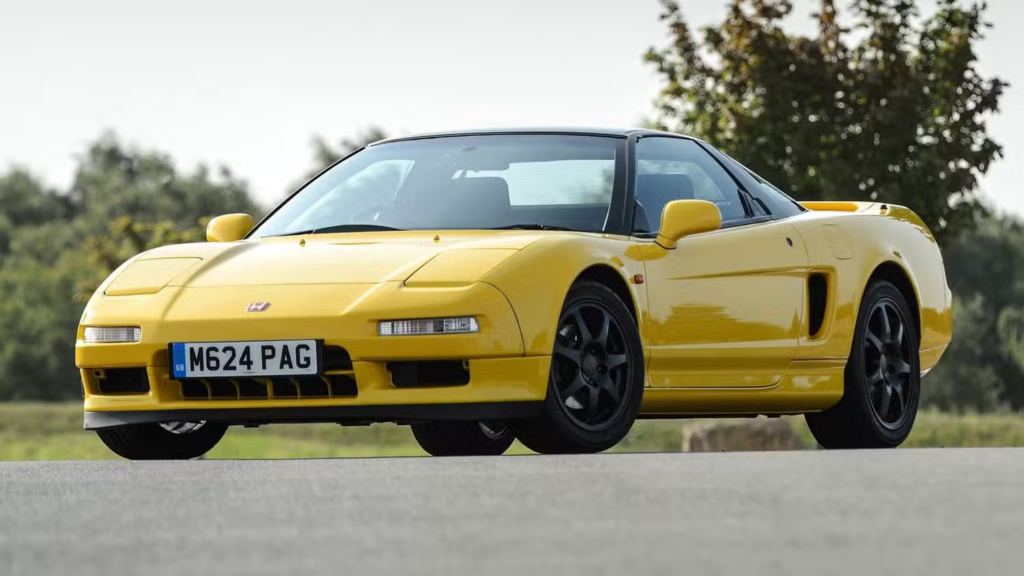
But Honda, ever the perfectionist, wasn’t content. They wanted to create a more extreme, track-focused variant. Enter the NSX-R, introduced in 1992. This wasn’t merely an option package; it was a comprehensive engineering overhaul. Honda’s engineers embarked on an obsessive weight-reduction program, stripping out nearly 265 pounds from the already lightweight standard NSX. This involved thinner glass, manual steering, no sound deadening, lighter wheels, and even a carbon fiber hood and rear spoiler. The engine, while retaining the same power output, was meticulously balanced and blueprinted, with a lightweight flywheel for sharper throttle response. The suspension was completely re-tuned for track performance, creating a car that was surgically precise and breathtakingly agile. This was a direct, unapologetic declaration of performance intent, designed for the most discerning drivers.
Crucially, the NSX-R’s legend was indelibly forged by its association with Ayrton Senna, the legendary three-time Formula 1 World Champion, who was then driving for McLaren-Honda. Senna’s involvement in the NSX’s development, his insightful feedback, and especially that iconic video of him effortlessly dancing on the pedals of an NSX-R at Suzuka while wearing loafers, became the stuff of legend. This wasn’t just marketing; it was validation from the greatest racing driver of his generation, imbuing the car with an almost mythical aura. For an entire generation of enthusiasts, Senna’s endorsement cemented the NSX-R as the ultimate naturally aspirated Honda performance machine – the holy grail. That video, endlessly replayed online, continues to drive emotional value and desirability, transcending mere specifications.
The 2025 Collector Car Market: A Paradigm Shift
Fast forward to 2025, and the landscape of investment grade vehicles has undergone a significant transformation. The traditional dominance of classic Ferraris, Porsches, and Aston Martins is increasingly being challenged by a new wave of highly desirable assets: ultra-rare Japanese sports cars, often dubbed “Youngtimers.” This isn’t just about nostalgia; it’s about discerning collectors recognizing exceptional engineering, limited production numbers, and cultural significance.
Several factors are converging to fuel this shift:
Generational Wealth Transfer: A new generation of collectors, many of whom grew up with these cars as dream machines, now have the disposable income to acquire them. For them, a 1990s JDM icon holds as much, if not more, emotional weight than a 1960s European grand tourer. This demographic shift is critical in driving the demand for high-performance sports cars from the late 20th century.
Rarity and Provenance: The NSX-R was produced in extremely limited numbers – only 483 NA1 NSX-Rs were ever built, exclusively for the Japanese domestic market (JDM). This inherent rarity, combined with a well-documented history, low mileage, and often an association with motorsport legends like Senna, makes specific examples highly sought after. These are not merely cars; they are rare sports cars with impeccable provenance.
Technological Significance: The NSX-R represented the zenith of naturally aspirated performance and a different philosophy compared to its contemporaries. Its balance, precision, and visceral driving experience are increasingly valued in an era of complex, turbocharged, and electrified vehicles. This makes it a benchmark for automotive purists and a future classic car.
Market Transparency and Accessibility: Online auction platforms like Bring a Trailer have democratized the collector car market. By providing unprecedented access to detailed vehicle histories, high-resolution photography, and an engaged community, BaT has become a primary driver of price discovery. These platforms connect sellers and discerning buyers globally, facilitating premier auto auctions and establishing new benchmarks for vehicle appreciation. The transparency fosters confidence, leading to higher bids for investment vehicles.
Within this context, the NSX-R isn’t just appreciating; it’s redefining market segments. Once considered an outlier compared to a Ferrari, it now sits comfortably in the same investment grade category, demonstrating luxury classic cars aren’t exclusively European.
Deconstructing the Auction: A Case Study in Valuation
Let’s dissect the recent $395,000 (and climbing) bid for the 1995 NSX-R on Bring a Trailer. This particular example, with approximately 12,000 miles on the odometer, represents a highly desirable specimen. While it might feature a few tasteful aftermarket upgrades, it’s far from a heavily modified vehicle, retaining much of its factory integrity. This balance of being a drivable, enjoyable machine rather than a static museum piece contributes to its broad appeal. It’s not just for the purest museum collector but also for the enthusiast who occasionally wants to experience that legendary Senna connection on the road.
This sale is particularly significant because it surpasses previous high bids for NA1 NSX models on BaT. However, it’s not the highest price ever achieved for an NSX-R globally. Earlier this year, a 2003 NA2 NSX-R (the later, fixed-headlight model) famously fetched over $1 million at the Concorso d’Eleganza Ville d’Este auction. While that was an ultra-low mileage, virtually showroom-condition example with an almost unparalleled provenance, it set a new ceiling for what a Honda NSX-R could command. The fact that an NA1 model, even one with 12,000 miles, can approach Ferrari-like figures underscores the enduring allure and the strength of the market for these ultra-rare NSX models.
The current bid highlights several critical valuation factors:
Year of Manufacture: The 1995 model year falls squarely within the original NA1 NSX-R production, widely considered the most iconic and pure iteration. It’s the exact model tested by Senna.
Low Mileage: While not “delivery mileage,” 12,000 miles is exceptionally low for a nearly 30-year-old high-performance sports car, suggesting meticulous care and limited use.
Condition: Photos and descriptions confirm an excellent overall condition, with minimal wear commensurate with its mileage. This speaks to its preservation and likely future appreciation.
“Usable” Collectible Status: Unlike some hyper-rare classics that become garage queens, this NSX-R still offers the opportunity for its next owner to experience its legendary dynamics without significantly impacting its value. This balances investment potential with the joy of ownership.
The trajectory suggests that the “million-dollar Honda” isn’t a fluke but a harbinger of a new valuation tier for these exceptional Japanese supercars. This isn’t just about a specific car; it’s about the broader perception of what constitutes a top-tier collector vehicle.
The Ripple Effect: Sustaining the NSX Ecosystem
The skyrocketing values of the NSX-R have a profound and positive ripple effect across the entire NSX ecosystem, benefitting not just collectors of the “R” models but all original NSX owners and enthusiasts.
Heritage Parts Programs: The surge in market value has not gone unnoticed by Honda. Recognizing the immense economic incentive, Honda has significantly expanded its “Heritage Parts” program (or “NSX-R Parts Project” in some regions). This initiative, which manufactures new replacement parts for original NSX models, ensures the long-term viability and drivability of these iconic vehicles. Where scarcity once threatened to ground these cars, the availability of new, OEM-quality components – from body panels to intricate engine components – extends their operational life indefinitely. This dramatically enhances the investment potential of all original NSXs, making them more attractive to discerning buyers who prioritize ease of maintenance and longevity. A robust parts supply bolsters confidence in NSX restoration and long-term ownership.
The Rise of Specialist Restoration: With the investment calculus shifting, restoring a neglected or higher-mileage NSX is now not only emotionally rewarding but also financially sensible. High-quality, frame-off restorations by specialized shops can command significant prices, bringing previously undervalued examples back to concours condition. The cost of NSX restoration, once prohibitive for cars valued in the $50k-$80k range, now makes perfect sense when the finished product can be worth several hundred thousand dollars. This stimulates an entire industry of expert mechanics, body specialists, and detailers dedicated to preserving these machines, ensuring that even a slightly weary NSX can be reborn as a pristine example, adding to the pool of valuable assets.
Broadening the NSX Appeal: While the NSX-R leads the charge, the halo effect extends to all variants of the original NA1 and NA2 NSX. Base model cars, especially those in excellent condition, are seeing a steady and significant appreciation. This means that fulfilling those “Civic-driving daydreams” of owning a piece of Honda’s supercar legacy might still be within reach for a broader range of enthusiasts, albeit at a significantly higher entry point than a decade ago. It establishes the NSX as a truly iconic sports car appreciation model, one whose influence radiates throughout its entire lineage.
Cementing JDM as Investment-Grade: The NSX-R’s performance solidifies the position of Japanese supercars and JDM collector cars as legitimate, blue-chip investments. It signals that meticulous Japanese engineering, combined with compelling provenance and rarity, can command values on par with the most venerated European exotics. This opens the door for other iconic Japanese models from the era to see continued growth in the collector market.
Expert Outlook: Navigating the Future of JDM Supercar Investments
From my vantage point, having observed a decade of market shifts, the NSX-R’s ascent is not a fleeting trend but a fundamental re-evaluation of automotive heritage. For prospective investors and collectors in 2025, here are my insights:
Continued Appreciation: The trajectory for ultra-rare NSX models, particularly the NA1 NSX-R, remains upward. The confluence of limited supply, growing demand from an affluent collector base, and robust factory support for parts will continue to drive values. These are investment grade vehicles that are likely to see further vehicle appreciation.
Originality is King (with caveats): While a pristine, factory-original NSX-R will always command a premium, the market is also showing appreciation for “sympathetically modified” examples – cars with carefully chosen, reversible upgrades that enhance performance without detracting from the car’s core identity. However, for maximum investment potential, originality (and a comprehensive paper trail) remains paramount.
Due Diligence is Crucial: As values climb, so does the importance of rigorous pre-purchase inspections and thorough provenance research. Authenticity, condition, and service history are non-negotiable for such high-value assets. Utilizing expert appraisers and specialized inspection services is a wise investment.
The “Driving Investment” Dilemma: The beauty of an NSX-R is its drivability. Unlike some fragile classics, it’s a car meant to be driven and enjoyed. Balancing preservation with enjoyment is a personal choice, but a low-mileage, well-maintained example can offer both significant financial return and an unparalleled driving experience. This is one of the rare instances where you can own a heroic machine and actively engage with its legend.
The Next Icons: The NSX-R’s success paves the way for a deeper exploration into other Japanese performance legends. Wise collectors are already looking at other rare JDM performance cars, anticipating similar trajectories as generational interest solidifies.
The 1995 Honda NSX-R has transcended its origins to become a global automotive icon, an investment-grade asset, and a symbol of engineering excellence. Its journey from a track-focused variant to a million-dollar contender reflects a broader maturation of the collector car market, where quality, rarity, and an compelling narrative are universally valued, regardless of country of origin. The chuckle from Soichiro Honda’s ghost echoing towards Maranello isn’t just about the money; it’s about a dream realized, an underdog triumphant, and a legacy cemented.
Are you passionate about the future of classic car investment, or perhaps considering adding a piece of automotive history to your collection? The evolving market for iconic JDM vehicles presents both exhilarating opportunities and unique challenges. Don’t navigate these complex waters alone. Connect with us today to discuss your specific interests, receive expert insights into current market trends, and explore personalized strategies for acquiring or divesting in the dynamic world of collector vehicles. Your next investment-grade classic car journey starts here.