



Title: The Forgotten Ford: How a 1953 Cisitalia Prototype Nearly Redefined American Automotive Luxury
In the annals of automotive history, there exist pivotal moments where the trajectory of an entire industry hung in the balance, decided by a confluence of vision, economics, and sheer ambition. One such tantalizing “what if” scenario emerged from the early 1950s, a period when American automotive giants, flush with post-war prosperity, cast an envious gaze across the Atlantic. While Ford Motor Company’s iconic Thunderbird would ultimately define its foray into the burgeoning personal luxury car market, a lesser-known, exquisitely sculpted Italian-American grand tourer almost stole the show: the 1953 Cisitalia 808XF Coupe Prototype. This isn’t merely a tale of a car that wasn’t; it’s a deep dive into the strategic foresight, design brilliance, and economic realities that shaped the American automotive landscape, offering invaluable insights for collectors, enthusiasts, and anyone interested in the enduring legacy of automotive heritage preservation.
Detroit’s European Dream: The Genesis of an Ambitious Project
The early 1950s marked a significant shift in the American automotive psyche. While domestic manufacturers continued to churn out chrome-laden land yachts, a subtle but persistent challenge arrived on American shores in the form of agile, aesthetically captivating European sports cars. Brands like MG and Jaguar, with their nimble handling and exotic allure, began to carve out a niche among discerning buyers who craved something beyond the conventional. This growing segment didn’t escape the keen eye of Henry Ford II, the formidable “Deuce” who steered Ford Motor Company in the post-war era. Known for his appreciation of fine European craftsmanship—he personally owned a elegant Cisitalia 202 coupe—Henry Ford II envisioned a sophisticated, yet attainable, sports car for the American market. His ambition was not just to compete, but to redefine American luxury, pushing Ford into the prestige classic car segment with a bold, international statement.
The concept was simple, yet revolutionary for its time: combine the artistic flair and coachbuilding prowess of Italy with the robust, mass-producible mechanicals of Ford. It was a formula that Volkswagen would famously perfect with the Karmann Ghia, marrying humble Beetle underpinnings with stunning Italian bodywork. Ford, however, aimed higher, targeting a more upscale, grand tourer experience. This strategic direction led them to Cisitalia, a boutique Italian manufacturer renowned for its innovative designs and impressive racing pedigree, despite its comparatively small scale. The project to create what could have been Ford’s first true sports car was thus born, sparking an exploration into Italian American automotive design that continues to fascinate luxury car collectors today.
The Maestro and the Machine: Cisitalia’s Legacy and the 808XF’s Genesis
To fully appreciate the Cisitalia 808XF, one must first understand the remarkable, albeit brief, history of Cisitalia itself. Founded by Piero Dusio in 1946, Cisitalia (Compagnia Industriale Sportiva Italia) quickly garnered a reputation for engineering excellence and breathtaking design. It was a small outfit that punched well above its weight, attracting luminaries like racing legend Tazio Nuvolari, who famously piloted Cisitalia race cars to victory. Perhaps even more significantly, the brilliant Ferry Porsche, son of Ferdinand Porsche, lent his engineering genius to Cisitalia, notably designing the revolutionary Type 360 Grand Prix car. The fees from this project famously helped secure Ferdinand Porsche’s bail after World War II, cementing Cisitalia’s place in the broader narrative of automotive design history.
This heritage of innovation and design sensibility made Cisitalia an ideal partner for Ford’s ambitious project. The task of styling the 808XF Coupe Prototype fell to Giovanni Savonuzzi, Cisitalia’s chief designer. Savonuzzi was a visionary, and his design, executed by the renowned Turin coachbuilder Ghia, was a masterpiece of mid-century aesthetics. It embodied a sleek, flowing silhouette that perfectly balanced European elegance with an underlying sense of American strength. The collaboration between Savonuzzi’s creative genius and Ghia’s masterful craftsmanship was evident in every line, promising a car that would turn heads and challenge preconceived notions of what a Ford could be. This fusion of boutique car manufacturing expertise with a global automotive giant’s ambition highlights a fascinating chapter in custom car design.
An Italian Heart, American Muscle: Engineering the Prototype
The engineering philosophy behind the 808XF was pragmatic: leverage existing, reliable Ford mechanicals to simplify production and maintenance, while offering the allure of bespoke Italian styling. At its core, the prototype was designed around a robust 256-cubic-inch Mercury flathead V-8 engine, a powerplant known for its dependable torque and smooth operation. This V-8, typically found in larger American sedans and coupes, was initially paired with a three-speed automatic transmission—a clear indicator of the car’s intended role as a comfortable, effortless vintage grand tourer rather than an outright track-focused sports car. While a column-shift manual transmission was also considered, the automatic underlined the emphasis on luxury and ease of use for the American consumer.
Beyond the powertrain, the 808XF showcased a sophisticated blend of components. The front suspension utilized a Mercury double wishbone setup, providing a relatively compliant ride and predictable handling. At the rear, an advanced De Dion axle, incorporating elements from Lincoln, promised superior road holding and reduced unsprung weight—a feature usually reserved for high-end European sports cars. Braking was handled by drum brakes at all four corners, standard for the era but underscoring the car’s grand touring rather than race-bred intentions. This careful selection of components was a testament to the engineering team’s goal: to create a car that felt exotic, yet possessed the underlying reliability and serviceability essential for the American market. It was an exercise in strategic component sharing, aiming for an optimal balance of high-performance classic car potential and production feasibility.
The Road Not Taken: Ford’s Evaluation and the Thunderbird’s Triumph
The meticulously crafted Cisitalia 808XF Coupe Prototype arrived in the United States in 1952 for rigorous evaluation by Ford’s engineering and marketing teams. The car was a sensation, a physical embodiment of Ford’s ambitious foray into the luxury sports segment. However, the realities of mass production and market economics quickly set in. Ford’s engineers, pragmatic and keenly aware of manufacturing costs, determined that producing the 808XF to Cisitalia’s exacting standards and with Ghia’s specialized coachwork would simply be too expensive for a mass-market American vehicle. The projected unit cost would place it in a price bracket that few could afford, undermining the “attainable luxury” aspect of Henry Ford II’s vision.
This cost-benefit analysis led Ford to a pivotal decision: to develop a wholly domestic product. The Thunderbird, launched in 1955, was a bold, distinctively American response to the European sports car challenge. It offered V-8 power, stylish two-seater aesthetics, and a level of comfort and convenience that resonated deeply with American buyers, all at a price point that made it a resounding success. The Thunderbird’s triumph, while significant, meant that the Cisitalia 808XF was relegated to the realm of a fascinating “what if.” It became a prototype that, despite its beauty and innovative spirit, ultimately represented the road not taken in Ford’s illustrious history. Its story is a poignant reminder of the complex interplay between design aspirations and economic realities in automotive development.
A Phoenix from the Past: The Prototype’s Enduring Legacy
After its evaluation by Ford, the 1953 Cisitalia 808XF Coupe Prototype found itself on the open market, an exceptionally rare and historically significant machine. It was listed for sale in Road & Track magazine for what was then a princely sum of $7,500. After a brief exhibition in New York City, it was acquired by a discerning enthusiast, whose family would cherish and preserve this unique piece of rare automobile history for over half a century.
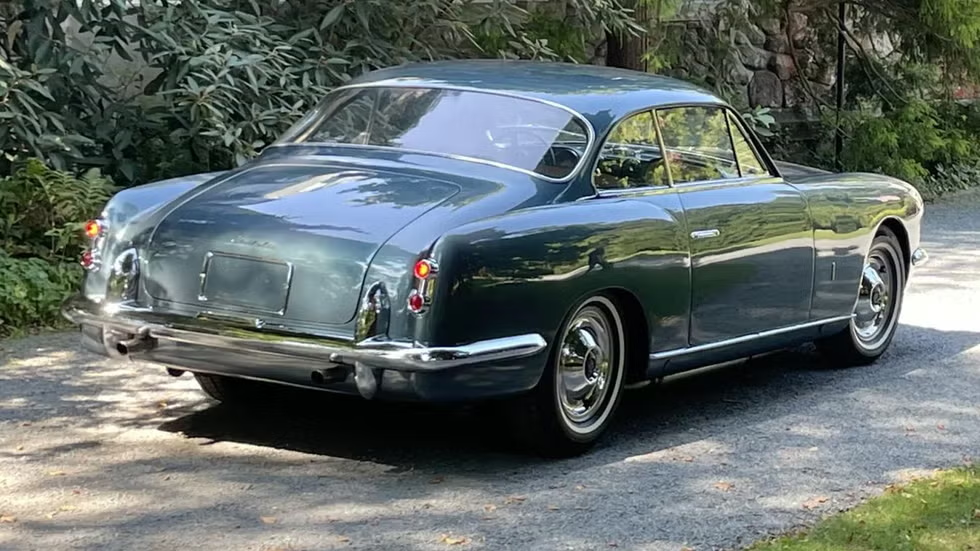
In recent years, the 808XF has undergone a comprehensive and meticulous restoration, bringing it back to its original showroom splendor. This careful work has elevated its status from a forgotten prototype to a celebrated collector car, a testament to the dedication of restoration specialists and the passionate owners who recognize its unparalleled significance. Its recent appearances at prestigious events like the Greenwich Concours d’Elegance have cemented its place among elite concours d’elegance stars, where it has deservedly garnered numerous awards. Just a glance at its stunning lines, the perfect marriage of Italian curves and American power, confirms its enduring appeal. It’s more than just a car; it’s a rolling sculpture, a piece of collectible automotive art that tells a compelling story of ambition, innovation, and the path not traveled.
The 2025 Perspective: Investment, Rarity, and the Art of Automotive Preservation
As we look at the automotive landscape of 2025, the Cisitalia 808XF Coupe Prototype holds a unique and increasingly valuable position. In an era dominated by electrification, autonomous technology, and digitally integrated driving experiences, the appreciation for tangible automotive heritage has never been stronger. Historically significant prototypes, especially those from legendary brands or those representing pivotal “what if” moments, are now considered high-value classic cars and unparalleled classic car investments. The 808XF, with its direct connection to Ford and Cisitalia, its unique cross-continental design philosophy, and its pristine restoration, stands as a prime example of this trend.
The rarity factor alone—being a single, surviving prototype—drives its appeal among luxury car collectors and connoisseurs of automotive history. Such vehicles are no longer merely transportation; they are museum-quality artifacts, commanding significant attention at global auto auctions and exclusive exhibitions. The market for vintage car collecting places a premium on provenance, originality (or sympathetic restoration), and the narrative a vehicle embodies. The 808XF delivers on all fronts, offering a tangible link to a period of boundless automotive experimentation and strategic realignment. Its value is not just monetary; it represents the collective ingenuity of an era, a physical manifestation of dreams that almost came true. Owning such a vehicle is not just acquisition; it’s an act of automotive heritage preservation, safeguarding a crucial piece of the industry’s past for future generations.
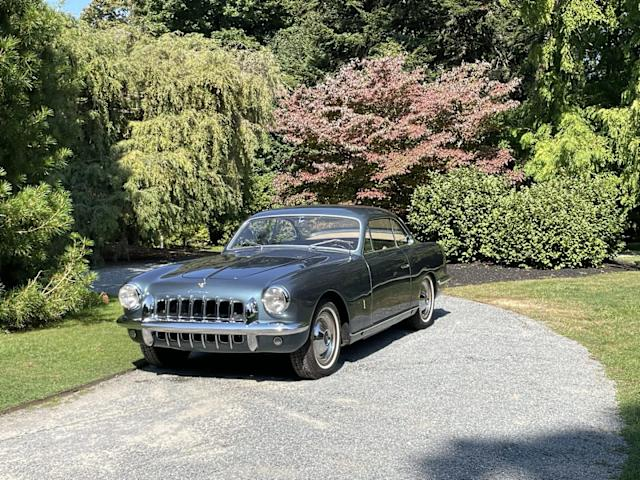
In 2025, the discourse around classic cars also increasingly includes themes of sustainability in restoration and ethical collecting. The preservation of a vehicle like the 808XF, using period-correct techniques and materials where possible, contributes to a wider understanding of industrial design and engineering evolution. It speaks to the craft of earlier generations and reminds us that innovation is not exclusive to our current time.
The 1953 Cisitalia 808XF Coupe Prototype serves as a powerful reminder of how complex and serendipitous automotive history truly is. It’s a testament to the bold visions of individuals like Henry Ford II, the artistic genius of Italian coachbuilders, and the pragmatic realities of mass production. It’s a car that nearly rewrote Ford’s history, a vehicle that, even in its unfulfilled potential, carved out a unique place for itself in the pantheon of automotive legends.
Seize the Story: Engage with Automotive History
Are you captivated by the untold stories behind iconic marques and the groundbreaking prototypes that shaped our automotive world? Do you recognize the profound investment potential and cultural value inherent in preserving these magnificent machines? We invite you to delve deeper into the rich tapestry of automotive history, explore the unparalleled craftsmanship of these rare sports cars, and consider the unique opportunity to become a custodian of such extraordinary legacies. Discover how you can engage with the world of high-value classic cars and contribute to the ongoing narrative of innovation and design. The next chapter of automotive excellence is being written, but the lessons from the past, encapsulated in vehicles like the Cisitalia 808XF, remain timeless and invaluable.