



Unlocking True Autonomy: The Tensor Robocar Arrives for Private Ownership in 2027
For over a decade, we’ve watched the promise of autonomous vehicles (AVs) evolve from science fiction to a nascent reality. From Waymo’s pioneering robotaxi services in select cities to the ambitious, if sometimes controversial, advancements in Tesla’s Full Self-Driving (Supervised) system, the automotive landscape is undeniably shifting. Yet, a fundamental question has persisted: when will true, Level 4 autonomy – the ability for a vehicle to drive itself entirely in defined conditions without human intervention – become a reality for private ownership? In 2025, as we look ahead, a compelling answer is emerging from a familiar name with a fresh vision: Tensor, with its groundbreaking Robocar, poised for a transformative US market launch by early 2027.
This isn’t just another electric vehicle (EV) with advanced driver-assistance systems (ADAS). The Tensor Robocar is designed from the ground up as a Level 4 autonomous machine, offering a sophisticated, Waymo-style self-driving experience that you can own and park in your driveway. After years of intensive development and a strategic pivot, Tensor is set to redefine personal mobility, offering a vision of hassle-free, AI-powered transportation directly to consumers.
From Robotaxi Pioneer to Personal Autonomy Leader: Tensor’s Evolved Trajectory
To truly appreciate the significance of the Tensor Robocar, one must understand the company’s rigorous journey. Founded in Silicon Valley in 2016 as AutoX, the company was an early trailblazer in the robotaxi market evolution. Its initial focus was squarely on developing commercial autonomous vehicles and operating extensive robotaxi fleets. By 2017, AutoX was already testing AVs in both California and China, rapidly accumulating millions of real-world driving miles. During the challenging years of the COVID-19 pandemic, the company intensified its focus on China, deploying a fleet of over 1,000 autonomous taxis providing public rides across five major cities. This period wasn’t merely about scale; it was about invaluable data collection, refinement of AI algorithms, and confronting the complex edge cases that define real-world autonomous driving.
However, the global landscape shifted, particularly concerning data privacy features and geopolitical considerations. In a strategic move over the past year, AutoX completely divested from its Chinese operations. Rebranding as Tensor, the company returned its headquarters to San Jose, California, and executed a profound strategic pivot: moving away from fleet-based robotaxi services to developing a truly autonomous vehicle for individual, private customers. This pivot isn’t just a business model change; it leverages years of hardcore autonomous vehicle technology development and real-world operational experience to solve a new, consumer-centric challenge. This is the foundation upon which the Tensor Robocar is built, promising a level of autonomy typically reserved for corporate fleets, now available for personal use.
Engineered for Autonomy: The Robocar’s Core Specifications
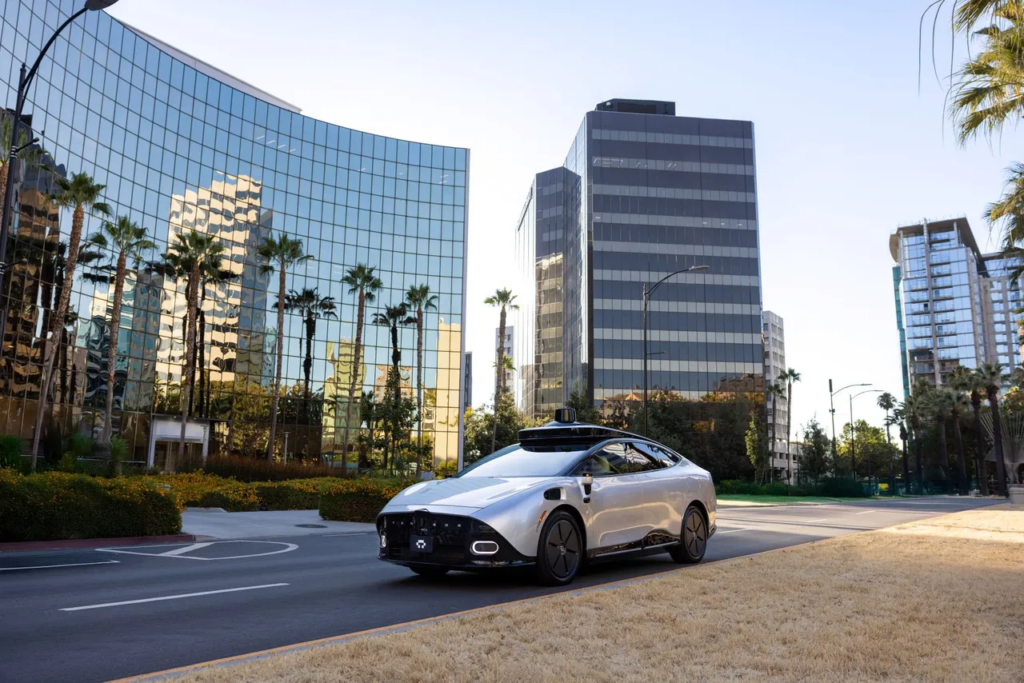
At its heart, the Tensor Robocar is a sophisticated premium electric vehicle, meticulously engineered to support its autonomous capabilities. It features a robust 112-kWh battery pack, delivering an estimated 250 miles of range – a practical figure for urban and suburban commuting in 2025, aligning with the needs of a luxury EV. What truly sets it apart is its 845-volt battery architecture, enabling 845-volt fast charging from 10 to 80 percent in a remarkable 20 minutes. This ultra-fast charging capability is a critical advantage, significantly reducing range anxiety and enhancing convenience, especially as the EV charging infrastructure continues to expand across the US.
While specific performance metrics like motor output and curb weight are still under wraps, the current single rear motor configuration suggests a focus on efficiency and refined urban performance, rather than raw straight-line speed. However, one of the most innovative design elements, enhancing both luxury and convenience, is the powered coach-style center-closing doors. Equipped with an array of sensors, these doors intelligently prevent collisions with obstacles, offering a seamless and sophisticated entry and exit experience without manual effort. Furthermore, Tensor is actively developing an automated charging solution featuring a robotic arm, aiming to make recharging your Robocar as effortless as pulling into your garage.
The Pinnacle of Personal Autonomy: True Level 4 Capability
Tensor bills the Robocar as an SAE Level 4 autonomous vehicle, a classification that truly distinguishes it in the automotive market. This means the vehicle can perform all driving tasks under specific operational design domains (ODDs) without any human intervention. While it retains a steering wheel and pedals for optional manual operation, the intent is for the Robocar to operate entirely on its own.
This represents a monumental leap beyond what is widely available to private consumers today. To put it in perspective, Tesla’s Full Self-Driving (Supervised) technology, despite its advancements and widespread use, remains a Level 2+ system. It requires the driver to be attentive, hands on the wheel, and ready to take over at any moment. The Tensor Robocar, by contrast, operates on a fundamentally different principle: it is designed to eliminate the need for driver engagement when in autonomous mode. This distinction is paramount, moving beyond mere driver assistance to genuine driver replacement within its operational limits.
The key to achieving this L4 autonomous driving solution lies in Tensor’s “ground-up” design philosophy. Development commenced in 2020, shortly after their robotaxi service launched in China. Unlike many systems that attempt to retrofit autonomy onto existing vehicle platforms, Tensor engineered every component and system with autonomy as the primary objective. This integrated approach ensures seamless hardware-software integration, crucial for the robust reliability and safety required for Level 4 operations.
A Symphony of Sensors and Supercomputing: Powering AI-Driven Mobility
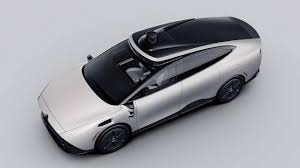
Achieving true Level 4 autonomy demands an extraordinary array of sensors and immense computational power. The Tensor Robocar is a technological marvel, integrating over 100 sensors that constantly perceive its surroundings. This multi-modal sensor fusion includes:
Five LiDAR arrays: One prominently positioned on the roof, providing a 360-degree, nearly 1,000-foot perception range, generating precise 3D maps of the environment. Four additional LiDAR units are strategically placed around the front, sides, and rear for comprehensive coverage.
37 cameras: Offering high-resolution visual data for object classification, lane keeping, traffic light recognition, and detailed semantic understanding of the scene.
11 radars: Providing robust all-weather detection of objects, speed, and distance, unaffected by fog, heavy rain, or snow – crucial for reliability in diverse climates.
10 ultrasonic sensors: Ideal for close-range obstacle detection, parking maneuvers, and navigating tight spaces.
Maintaining the clarity and functionality of these critical sensors is paramount. Tensor addresses this with a sophisticated system of 30 washer nozzles and 13 mini wipers, complemented by heating elements to prevent fogging and ice buildup. Going a step further than even some leading robotaxi operators, the Robocar incorporates physical covers that automatically retract over the sensors when the vehicle is off, protecting them from damage, dirt, and environmental wear.
All this sensor data is processed by a cutting-edge automotive AI housed within a massive onboard computer. This system features eight Nvidia Drive Thor-X chips, collectively capable of an astounding 8,000 TOPS (trillion operations per second). This immense AI-powered driving capability is primarily processed within the vehicle itself, ensuring robust operation even in areas with limited or no 5G connectivity. While three redundant communication channels provide maximum connectivity to the cloud when available, the emphasis on local processing underscores Tensor’s commitment to reliability and real-time decision-making, even in challenging environments.
The heart of Tensor’s intelligence is its Foundation Model software, an AI-based driving system that operates two parallel cognitive networks. The first is meticulously trained by data from professional human drivers, capturing nuanced driving behaviors and decision patterns. The second leverages a Visual Language Model (VLM), designed to understand and interpret complex, unusual, and unexpected edge cases – those unpredictable scenarios that often challenge autonomous systems. This dual-system approach is a significant step towards achieving robust, generalizable autonomy capable of operating safely in diverse conditions, including rain and snow, breaking the perception that AVs are only suitable for sunny climates.
For pedestrian safety and communication, the Robocar features discreet displays on its lower exterior corners. These provide simple messages and pictograms, clearly signaling the vehicle’s autonomous status and acknowledging pedestrians, fostering trust and predictability in shared urban spaces.
Your Car, Your Data: Prioritizing Digital Privacy
In an era of increasing concerns about digital surveillance and data exploitation, Tensor has made data privacy features a cornerstone of the Robocar’s design. A key differentiator is the emphasis on onboard processing. Because the vast majority of computational tasks are handled within the vehicle, Tensor significantly reduces its reliance on continuous data collection and transmission to the cloud.
Owners have explicit control over their data. While the Robocar is capable of sharing information with Tensor’s cloud services, this is strictly an opt-in feature. If an owner chooses not to opt in, all data generated by their vehicle remains securely on board. Furthermore, owners have complete access to all data collected about them and their usage habits, through either the vehicle’s interface or a dedicated smartphone app, with the full ability to review and delete it. This includes sensitive biometric data, such as facial and palm recognition, which are integral for secure vehicle operation and theft prevention.
Recognizing the need for user comfort, internal cameras and microphones, used for driver monitoring during manual operation and voice assistant interaction, are equipped with physical covers and manual off switches. This thoughtful design empowers owners to maintain their privacy and control over their personal space within the vehicle.
The Conversational Future: Agentic AI and Seamless Interaction
The Tensor Robocar isn’t just a machine that drives; it’s designed to be a conversational companion. Leveraging Large Language Model (LLM) integration, the Robocar is equipped with an Agentic AI capable of natural, human-like conversations. Gone are the days of rigid voice commands; instead, you can simply articulate your destination or preferences in a natural dialogue.
This sophisticated AI extends to vehicle summoning as well. Imagine calling or texting your car and asking it to pick you up from a specific location. The Robocar’s smart mobility solutions go beyond simple requests; the system will learn your daily habits and, if connected to your digital calendar, anticipate upcoming trips, proactively managing battery range and charging needs to ensure you’re always ready to go. This level of predictive intelligence and seamless interaction transforms the vehicle into a true personal assistant, deeply integrated into your daily life.
The Best of Both Worlds: Manual Driving, When You Choose
While the primary intent is autonomous operation, Tensor understands that personal preference and regulatory variations still require the option for human control. The Robocar retains a physical steering wheel and pedals, allowing owners to drive whenever they desire. In manual mode, the vehicle offers a comprehensive suite of advanced driver-assistance systems (ADAS), from fundamental automatic emergency braking to sophisticated Level 3 semi-automated driving capabilities, enabling hands-free, eyes-off-the-road operation in certain conditions.
The transition between modes is a testament to the Robocar’s intelligent design. When autonomous mode is engaged, the steering wheel elegantly retracts into the dashboard, and the central infotainment screen slides over to conceal it, creating a more expansive and immersive cabin experience. Simultaneously, the accelerator and brake pedals retract out of the way, freeing up floor space. Should the driver wish to take over, a simple command or interaction prompts all controls to seamlessly reappear.
All core driving functions – steering, braking, and acceleration – are managed by advanced by-wire systems, meaning there are no physical mechanical linkages. This digital control architecture enables finer tuning and integration with the autonomous system. Crucially, every critical system, including all sensors and drive-by-wire components, features multiple redundancies. This ensures that the vehicle can continue to operate safely even in the unlikely event of a component failure, a paramount concern for Level 4 autonomy. Rear-wheel steering, allowing the back tires to turn up to 7 degrees, further enhances maneuverability, giving the substantially sized Robocar an impressive 37-foot turning circle, comparable to a compact SUV like a Tesla Model Y.
Safety remains a top priority. Tensor is actively targeting the highest crash safety scores from leading regulatory bodies globally, including the NHTSA (National Highway Traffic Safety Administration) and IIHS (Insurance Institute for Highway Safety) in the US, and the European NCAP.
A New Paradigm for Ownership: Your Car, Your Business
Beyond personal use, Tensor envisions a future where the Robocar can generate income for its owners. The company has already forged a significant partnership with Lyft, planning to integrate Robocars as luxury rideshare vehicles. This opens a fascinating avenue for personal self-driving car ownership to become an asset rather than solely an expense.
Remember the long-standing promise from Elon Musk about putting your Tesla to work as a robotaxi while you’re at the office or asleep? Tensor is now articulating a more concrete path to realizing this vision. While the specifics of how privately owned autonomous cars might seamlessly integrate into a platform like Lyft for hailing and payment are still being ironed out, the potential for owners to offset their investment by having their Robocar operate autonomously in a rideshare capacity is highly appealing, potentially disrupting the luxury EV market trends and traditional car ownership models.
The Price of Autonomy and the Road to Delivery
As an automotive innovation of this magnitude, the Tensor Robocar is positioned at the premium end of the market. While Tensor has yet to announce an official price, Head of Marketing Amy Luca suggests expecting “luxury pricing.” Industry analysts and competitors like Waymo have indicated that their Level 4 autonomous vehicles could command prices similar to a well-optioned Mercedes-Benz S-Class, placing them in the $150,000 to $200,000 range. Given the Robocar’s sophisticated autonomous vehicle technology and ground-up design, it’s reasonable to anticipate it landing on the higher side of this spectrum, offering unparalleled value in autonomous capability.
Production of the Tensor Robocar will be handled by the Vietnamese automaker VinFast, at its state-of-the-art factory in Haiphong, Vietnam. While VinFast’s own brand vehicles have faced some scrutiny regarding initial build quality in the US market, it’s crucial to distinguish between VinFast’s own design and manufacturing and their capabilities as a contract manufacturer. VinFast has a history of assembling BMW vehicles under license for years, demonstrating a proven capacity for high-quality production when adhering to precise engineering and quality control standards. This strategic choice for manufacturing provides Tensor with the scale and expertise needed for a global rollout.
The highly anticipated 2027 vehicle launch begins with production in late 2026. Deliveries are slated to commence in the United Arab Emirates (UAE) late in the fourth quarter of that same year, followed by US autonomous vehicle regulations approval and deliveries beginning in early 2027. Tensor also has ambitious plans for expansion into the European Union and has recently announced an agreement to supply cars for a rideshare service in Denmark, signaling a broad international strategy.
One lingering question remains regarding responsibility for any traffic infractions committed by an autonomous vehicle. While the regulatory landscape is still evolving, the prevailing assumption in 2025 is that the owner would ultimately be responsible for any tickets incurred while the car is driving itself.
Your Journey Awaits: Embrace the Future of Personal Mobility
The Tensor Robocar represents a pivotal moment in the evolution of personal transportation. It’s not just a car; it’s a meticulously engineered, AI-powered companion poised to redefine freedom, convenience, and luxury on the road. With its unwavering focus on Level 4 autonomy for private ownership, unparalleled safety features, and a commitment to data privacy, Tensor is inviting us to envision a future where driving is a choice, not a necessity.
Are you ready to experience the true future of personal mobility? To stay at the forefront of this revolution and explore how the Tensor Robocar can transform your daily life, visit our website and sign up for exclusive updates. Don’t just watch the future unfold; become a part of it.