



The Dawn of Personal Autonomy: How Tensor’s Robocar is Redefining Private Mobility for 2027
The year is 2025, and the automotive landscape is experiencing a seismic shift. For over a decade, the promise of truly autonomous vehicles has captivated imaginations, fueled by ambitious startups and technological giants. We’ve seen the emergence of sophisticated driver-assistance systems, the rapid expansion of robotaxi services in select urban corridors, and heated debates over the true meaning of “self-driving.” Yet, one frontier has remained largely untouched: the fully autonomous vehicle designed for private ownership. Until now.
Enter the Tensor Robocar. Poised for its U.S. debut in early 2027, this revolutionary vehicle isn’t just another electric car with advanced features; it’s a ground-up Level 4 autonomous machine engineered to bring the Waymo-style convenience of a driverless taxi directly to your driveway. As an industry veteran who has watched this technology evolve from theoretical concept to tangible reality, I can tell you that Tensor isn’t just entering the market; they’re redefining what it means to own a car in the 21st century.
Tensor’s Journey: From Robotaxi Pioneer to Personal Autonomy Visionary
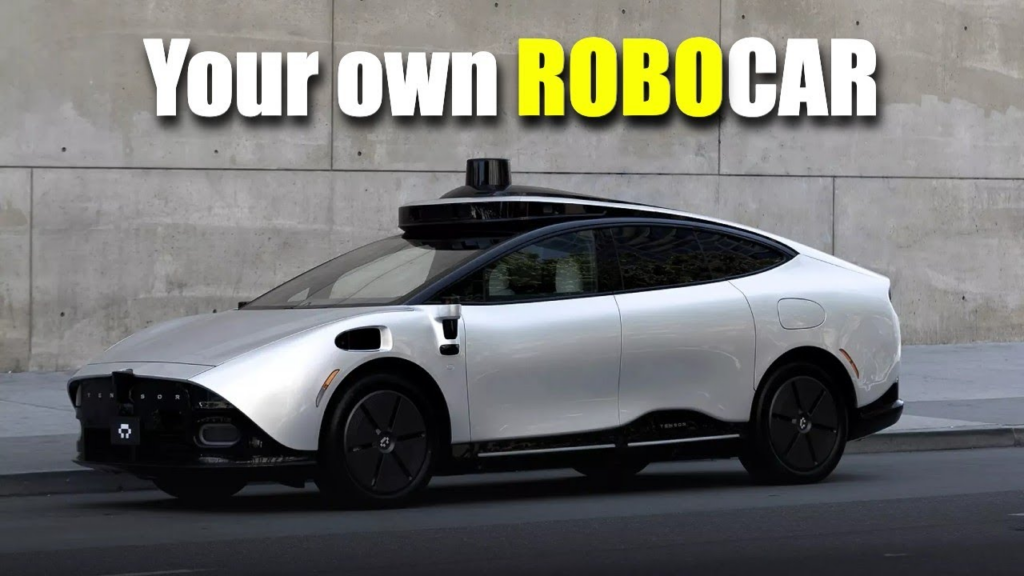
To truly appreciate the significance of the Tensor Robocar, we must look back at its roots. The company, originally founded as AutoX in Silicon Valley in 2016, began its journey much like many of its peers: focused on commercial autonomous fleets and robotaxis. Over nearly ten years, this focus led to significant advancements, particularly in China, where AutoX successfully deployed a fleet of over 1,000 autonomous taxis providing public rides across five major cities. This wasn’t merely testing; this was real-world, large-scale operation, generating an invaluable trove of data and operational expertise in diverse, complex urban environments.
However, the global landscape shifts rapidly. By 2024, the company made a strategic pivot, divesting entirely from its Chinese operations. This move, driven primarily by evolving global data privacy concerns and a refined vision for the future of autonomous technology, saw AutoX rebrand as Tensor and return its core R&D to San Jose, California. This wasn’t a retreat, but a calculated advancement. The decade of experience gained from managing a vast robotaxi fleet, navigating intricate regulatory frameworks, and perfecting complex AI-powered driving algorithms was now being singularly channeled into a new mission: creating the ultimate personal Level 4 autonomous vehicle. This deep institutional knowledge, forged in the crucible of real-world application, is a crucial differentiator for Tensor in a crowded field of future transportation contenders.
Engineering Tomorrow: Unpacking the Robocar’s Core
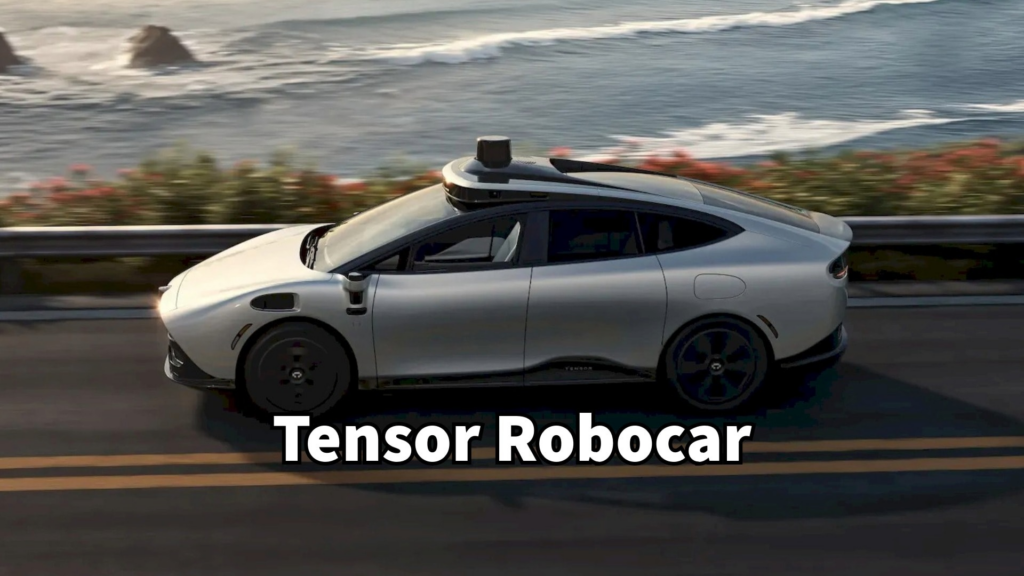
At its heart, the Robocar is a testament to cutting-edge electric vehicle innovation. It features a robust 112-kWh battery pack, providing an estimated 250 miles of range – a respectable figure that balances performance with efficiency for typical daily use in 2025. What truly stands out, however, is its 845-volt architecture, enabling blistering fast-charging capabilities. Tensor claims a 10 to 80 percent charge in just 20 minutes, leveraging advancements in electric vehicle charging solutions that are becoming increasingly vital for mass EV adoption. This means less downtime and more convenience, crucial for a vehicle designed to integrate seamlessly into a dynamic lifestyle.
Beyond the battery, the Robocar champions user-centric design and smart mobility solutions. Its coach-style, center-closing doors are fully powered and equipped with sensors, meticulously preventing bumps and scrapes in tight parking spots – a minor detail that speaks volumes about the thought put into daily usability. Looking ahead, Tensor is actively developing an automated charging system featuring a robotic arm, promising to handle the plug-in process for you upon arrival home. While still in development, this vision of a completely hands-off refueling experience highlights their commitment to a truly seamless personalized autonomous experience.
The vehicle’s fundamental architecture is also designed for unparalleled safety and reliability. Employing a fully by-wire system for steering, braking, and acceleration, the Robocar eliminates physical connections, allowing for precise electronic control and, critically, multiple layers of redundancy. Each critical system, from the drive-by-wire controls to the sensor arrays, is engineered with backups, ensuring continuous operation even in the unlikely event of a component failure. This robust approach is paramount for advanced vehicle safety in Level 4 autonomous operation. Furthermore, the inclusion of rear-wheel steering, allowing the rear tires to turn up to 7 degrees, grants the Robocar an impressive 37-foot turning circle – comparable to a much smaller Tesla Model Y, despite its larger footprint. This agility makes urban navigation and parking remarkably effortless.
The Brain and Senses: True Level 4 Autonomy in Detail
Achieving Level 4 autonomy – where the vehicle can perform all driving tasks under specific conditions without human intervention – is an monumental technical challenge. Tensor addresses this with a sensor suite that borders on overkill, a necessary extreme for robust, all-weather, all-condition operation. The Robocar integrates over 100 sensors, including five high-resolution LiDAR arrays strategically positioned on the roof and around the vehicle, 37 cameras offering a 360-degree visual panorama, 11 radars for long-range detection and adverse weather penetration, and 10 ultrasonic sensors for close-range obstacle detection. The rooftop LiDAR alone boasts a nearly 1,000-foot detection range, creating an incredibly detailed, real-time 3D map of the vehicle’s surroundings.
Maintaining the integrity of this sensory input is crucial. The Robocar features 30 washer nozzles and 13 mini-wipers, along with heating elements, to ensure sensors remain clear of dirt, rain, snow, and fog. Going a step further than even some leading robotaxi operators like Waymo, Tensor has incorporated physical covers that automatically seal over sensors when the vehicle is off, protecting them from environmental damage and grime – a detail that demonstrates their commitment to long-term reliability and reducing maintenance for the private owner.
All this raw data streams into a monumental onboard computing platform, powered by eight Nvidia Drive Thor-X chips. This powerhouse configuration delivers an astonishing 8,000 TOPS (trillion operations per second) of processing capability. This massive local processing power is a cornerstone of Tensor’s strategy, ensuring the vehicle can operate equally effectively whether it has a strong 5G signal or is navigating areas with limited connectivity. (Though, with three redundant communication channels, maximizing uptime is clearly a priority). The Tensor Foundation Model software, an AI in automotive marvel, utilizes parallel processing: one system rigorously trained on data from professional human drivers, and another, a Visual Language Model (VLM), designed to predict and navigate unusual and unexpected “edge cases” – those tricky, unpredictable real-world scenarios that often stump less sophisticated systems. This dual-pronged approach, coupled with rigorous testing, allows Tensor to confidently state the Robocar can operate reliably in diverse weather conditions, from heavy rain to snow, extending its practicality far beyond California’s sunny confines.
For public safety and societal integration, the Robocar also features innovative external displays on its lower corners. These displays broadcast simple messages and pictograms to pedestrians, clearly communicating the vehicle’s autonomous status and acknowledging their presence. This small but significant detail helps foster trust and predictability in shared urban spaces.
Your Data, Your Control: A New Paradigm for Privacy in AVs
In an era increasingly defined by data privacy concerns, Tensor is setting a new standard for data privacy in autonomous cars. Unlike many systems that rely heavily on cloud-based processing and continuous data uploads, the Robocar performs the vast majority of its computing onboard. This fundamental design choice means that Tensor doesn’t need to collect data from your car for its primary operation. While it is capable of sharing information with the cloud, owners must explicitly opt-in for this functionality. Otherwise, all your personal data, including biometric information used for vehicle access (like facial or palm recognition for theft prevention), remains securely within your vehicle.
Furthermore, owners have complete transparency and control. All data the car has collected about its owner and users can be accessed directly through the vehicle’s interface or a dedicated smartphone app, and critically, it can be deleted by the owner at any time. This commitment to data sovereignty is a powerful statement in 2025, empowering users with unprecedented control over their digital footprint. Even interior cameras and microphones, designed for driver monitoring during manual operation and voice assistant interaction, are equipped with physical covers and discrete off switches, offering ultimate peace of mind.
Conversational AI: Your Intelligent Co-Pilot and Concierge
The Robocar transcends traditional voice command systems by integrating an advanced Agentic AI backed by a sophisticated Large Language Model (LLM). This isn’t about barking instructions; it’s about having a natural, conversational interaction with your vehicle. Instead of rigid commands, you can converse with the car about your destination, your preferences, or even just general information. This connected car technology transforms the driving experience from passive command-response to an active, intelligent partnership.
Beyond in-car conversation, the Robocar can be summoned remotely via a simple call or text, instructing it to pick you up from any location. Moreover, the AI learns your habits, anticipating your needs. If linked to your digital calendar, it can proactively suggest routes, estimate required battery range, and even initiate charging cycles to ensure you’re always prepared for your next journey. This predictive, proactive intelligence embodies the true spirit of a personalized autonomous experience, making the Robocar feel less like a machine and more like a dedicated personal assistant.
The Best of Both Worlds: Manual Control and Adaptive Assistance
While the Robocar is designed for autonomous operation, Tensor understands that not every journey, or every driver, wants to be fully hands-off. Thus, the vehicle retains a steering wheel and pedals, providing the option for manual driving whenever desired. This flexibility is key for consumer comfort, particularly as the public acclimates to Level 4 systems, and offers a crucial fallback for situations where manual intervention might be preferred or legally required.
When a human takes the wheel, the Robocar acts as an intelligent co-pilot, offering a spectrum of assistance. From fundamental safety aids like automatic emergency braking to sophisticated hands-free, eyes-off-the-road Level 3 semi-automated driving capabilities, the vehicle adapts to the driver’s preferences. The transition between modes is seamless and elegant: when autonomous mode is engaged, the steering wheel retracts smoothly into the dashboard, and the center infotainment screen slides over to conceal it, creating an expansive, open cabin experience. The accelerator and brake pedals also retract discreetly. Should you wish to regain control, these elements swiftly reappear, ready for immediate input.
Tensor isn’t just focused on technological prowess; advanced vehicle safety is paramount. The company is actively targeting top crash safety scores from the most stringent global bodies: NHTSA in the U.S., IIHS, and European NCAP. This commitment underscores their dedication to protecting occupants regardless of whether the car is being driven by a human or its advanced AI.
Beyond Personal Use: The Economic Potential of Your Robocar
The Tensor Robocar isn’t just a luxury; it’s potentially a smart autonomous vehicle investment. Remember Elon Musk’s long-standing promise that your Tesla could earn money as a robotaxi while you’re working or asleep? Tensor is bringing that vision closer to reality, and potentially achieving it sooner for private owners. The company has already forged a strategic partnership with Lyft to integrate Robocars into their luxury rideshare offerings. This not only validates Tensor’s technology but also opens a significant avenue for owners.
While the exact operational and payment details for privately owned autonomous cars participating in a rideshare network are still being finalized, the precedent set by the Lyft deal suggests a viable path. Imagine your Robocar, during hours you don’t need it, seamlessly earning revenue by providing premium, driverless rides. This concept transcends mere convenience, introducing an entirely new dimension of economic utility to personal vehicle ownership, making the high initial cost a potentially amortized expense through autonomous fleet management principles applied to an individual asset.
The Road Ahead: Pricing, Production, and the 2027 Vision
When it comes to pricing, Tensor is clear: expect “luxury pricing.” Industry insights from Waymo’s CEO suggest their autonomous vehicles could be priced similarly to a well-optioned Mercedes-Benz S-Class, which currently hovers in the $150,000 to $200,000 range. Given the Robocar’s bespoke Level 4 architecture and sophisticated sensor and compute package, it’s reasonable to project Tensor’s offering will land on the higher end of this spectrum. This price point positions the Robocar as a premium product, appealing to early adopters and those seeking the ultimate in luxury autonomous vehicle experiences.
Production for the Tensor Robocar is a fascinating collaboration. Vietnamese automaker VinFast, known for its rapid expansion and growing manufacturing capabilities, will handle assembly at its state-of-the-art facility in Haiphong, Vietnam. While VinFast has faced some scrutiny regarding build quality in the U.S. market in its early days, it’s crucial to remember their extensive experience, including years of assembling BMWs under license. This expertise, combined with Tensor’s rigorous quality control and design oversight, suggests a robust production process for the Robocar.
Production is slated to commence in late 2026, with initial deliveries expected in the United Arab Emirates late in the fourth quarter of that same year. For the U.S. market, deliveries are projected to begin in early 2027, contingent on navigating and securing the necessary regulatory approvals for Level 4 private vehicle sales and operation. Tensor also has ambitious plans for expansion into the European Union and has already announced an agreement to supply vehicles to a rideshare service in Denmark, indicating a global vision for personal autonomy.
One final, perennial question for autonomous vehicles: who pays the ticket if the car commits an infraction while driving itself? The current legal landscape, and common sense, dictates that you, the owner, will be responsible. This underscores the ongoing evolution of legal frameworks surrounding autonomous vehicles, an area that will continue to develop rapidly as these advanced machines become more prevalent on our roads.
Seize the Future of Driving
The Tensor Robocar isn’t merely an incremental upgrade; it represents a profound leap forward, marking the true dawn of personal Level 4 autonomy. It’s an expertly engineered machine that promises unparalleled convenience, safety, and a transformative relationship with your vehicle. From its robust, privacy-centric design to its intuitive AI and potential for economic returns, the Robocar is setting a new benchmark for what’s possible in future transportation.
As we stand on the cusp of this exciting era, I invite you to delve deeper into the specifications, capabilities, and the overarching vision of Tensor. Explore how this pioneering vehicle could not only change how you commute but fundamentally redefine your entire concept of personal mobility. The future isn’t just coming; it’s being delivered, and it’s time to prepare for its arrival. Visit Tensor’s official channels and stay tuned for further updates as we approach the groundbreaking launch in 2027.