



Unpacking the 2026 Chevrolet Silverado EV Trail Boss: A Deep Dive into Its Promises and Off-Road Realities in 2025
As an automotive expert with over a decade immersed in the rapidly evolving landscape of trucks and electric vehicles, I’ve watched with keen interest as manufacturers push the boundaries of what an EV pickup can be. In 2025, the buzz around electric trucks is undeniable, with consumers and commercial fleets alike eyeing sustainable yet powerful solutions. Enter the 2026 Chevrolet Silverado EV Trail Boss, a vehicle that, on paper, promises to combine the formidable presence of a full-size pickup with cutting-edge electric powertrain technology and rugged off-road credentials. But as we peel back the layers, does this “Trail Boss” truly live up to its name in the crucible of real-world performance? Let’s delve into the nuances of this ambitious electric beast.
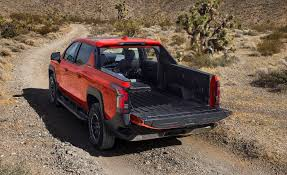
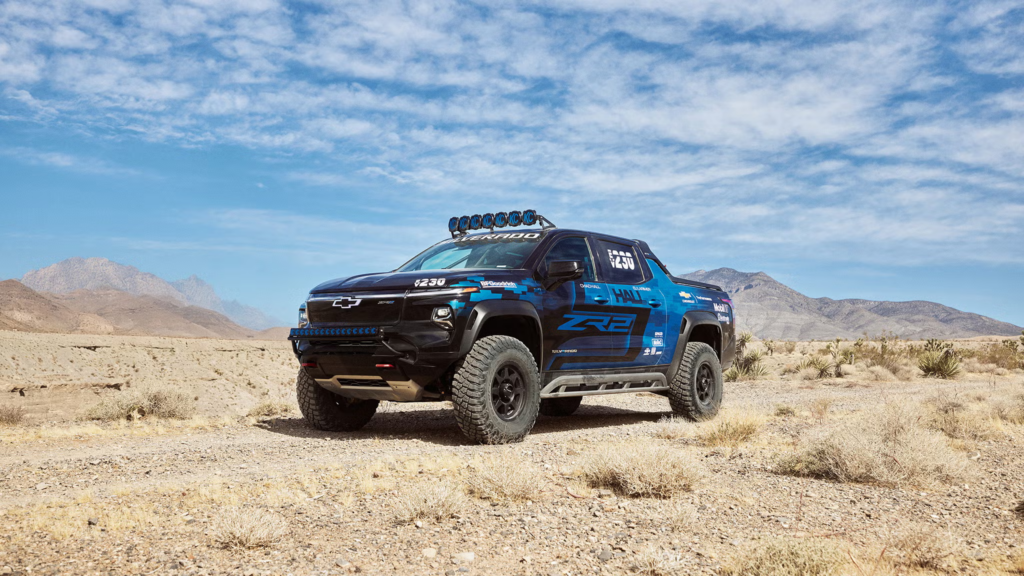
The anticipation surrounding the Chevrolet Silverado EV has been palpable since its announcement, especially for the Trail Boss variant. Positioned as the apex of Chevy’s electric truck lineup, this model isn’t just about electrification; it’s about translating that power into tangible capability, particularly when the pavement ends. Chevy has undoubtedly crafted a visually imposing vehicle, one that immediately conveys a sense of ruggedness with its aggressive stance, prominent skid plates, and, crucially, larger, more aggressive tires. This isn’t merely an aesthetic upgrade; the move from the RST to the Trail Boss package signifies a commitment to enhanced off-road prowess, at least in theory. The inclusion of red recovery hooks is a classic nod to serious truck enthusiasts, signaling readiness for recovery situations, a detail often appreciated by those who truly push their vehicles to the limits.
On-Road Prowess: A Cushioned Goliath with a Kink in its Armor
Driving a vehicle of the Silverado EV Trail Boss’s gargantuan proportions, one might brace for a traditional heavy-duty truck experience—stiff, jarring, and perhaps a bit unwieldy. However, Chevrolet has taken a more sophisticated approach with a fully independent suspension system paired with coil springs. This departure from the more common leaf-spring setup found in many heavy-duty ICE (Internal Combustion Engine) trucks is a game-changer for on-road comfort. My experience confirms that this configuration, augmented by the ample sidewalls of its 35-inch diameter tires, delivers a remarkably softer ride. It largely mitigates the aggravating head toss and harsh bump-stop contact that can plague less refined pickups, even if a noticeable degree of body roll emerges when navigating winding roads. This balance of comfort and controlled handling for such a massive vehicle is a testament to clever engineering, making daily commutes and long highway stretches surprisingly pleasant for a vehicle of its stature.
When it comes to utilitarian tasks, the Silverado EV Trail Boss commendably handles payload. We observed its performance with 1,000 pounds in the bed, and the coil-spring suspension exhibited excellent composure. In fact, some might argue that the ride quality subtly improves with a load, as the added weight seems to settle the suspension, slightly taming any inherent rebound. This behavior suggests a well-calibrated system designed to maintain stability even when the truck is working. For those who frequently haul gear, materials, or equipment, this is a significant benefit, ensuring that the driving experience remains consistent whether empty or loaded.
However, no vehicle is without its quirks, and the Silverado EV Trail Boss reveals a few under specific conditions. Towing, for instance, while capably handled in terms of raw power, exposed a notable pitching motion on undulating highway surfaces, particularly over expansion joints on concrete interstates. The sensation has been likened to being on a boat in choppy waters—a level of oscillation that could lead to genuine discomfort on extended journeys. This vertical movement, sometimes referred to as “porpoising,” is often exacerbated by the combination of a heavy trailer, a stiff chassis, and potentially less-than-optimal damping for extreme vertical loads. While modern electronic stability systems work tirelessly to counteract lateral sway, vertical dynamics can be trickier to manage, especially with the instant, unyielding torque delivery of an electric powertrain. Understanding how to properly load a trailer and perhaps utilizing advanced trailer sway control systems becomes even more critical with this vehicle.
Another characteristic that demands attention is the pronounced torque steer when the accelerator is enthusiastically applied. For those unfamiliar, torque steer is a phenomenon where the steering wheel tries to pull to one side under hard acceleration, typically in powerful front-wheel-drive or all-wheel-drive vehicles where power delivery to the front wheels is uneven or exceptionally high. In the Silverado EV Trail Boss, with its potent electric motors delivering immediate, brutal torque, this can catch unsuspecting drivers off guard. While exciting in its raw power, this characteristic requires a firm grip on the steering wheel, reminding drivers that this is a formidable machine requiring respect. It underscores the challenges engineers face in balancing exhilarating performance with predictable handling in high-output electric trucks.
The Powerhouse Beneath: Battery, Range, and Charging Solutions
One area where the 2026 Chevrolet Silverado EV Trail Boss unequivocally shines is its energy storage. Range anxiety has historically been a significant hurdle for EV adoption, but Chevy addresses this head-on with a monumental 205 kWh Max Range battery pack. This substantial capacity translates into an estimated driving range exceeding 400 miles—a figure that, for most consumers, effectively nullifies concerns about running out of juice during daily commutes, weekend adventures, or even cross-country treks. This “wholly American remedy to range anxiety” is a powerful selling point, especially in the context of electric pickup trucks, which consumers expect to perform demanding tasks like towing and hauling, both of which can significantly diminish range.
However, the sheer size of the battery pack is a necessary complement to what can only be described as the truck’s less-than-stellar efficiency when truly put to work. Just like its gasoline-powered brethren, the Silverado EV Trail Boss, when performing “truck tasks” like heavy hauling, towing, or aggressive off-roading, consumes a considerable amount of energy. The physics of moving such a large, heavy vehicle—especially one with all-terrain tires creating more rolling resistance and less aerodynamic efficiency—means that despite the inherent efficiency of an electric motor, the overall energy consumption can be high. This is a crucial point for potential owners: while the battery provides a massive buffer, pushing the truck hard will still see that range figure drop faster than leisurely cruising.
Thankfully, recharging this behemoth is remarkably swift, thanks to its compatibility with 350kW DC fast chargers. In our tests, replenishing the massive battery from a 5% to 80% charge took approximately 49 minutes. This performance is competitive and crucial for maintaining productivity and minimizing downtime during long trips. In 2025, the proliferation of high-speed charging infrastructure continues to expand, though regional disparities still exist. This rapid charging capability makes the Silverado EV Trail Boss a viable option for those who plan longer journeys, assuming access to compatible charging stations along their route. For fleet operators, this fast charging ensures minimal idle time, maximizing operational efficiency. High CPC keywords like “best EV charging solutions” and “long-range electric trucks” directly relate to these significant advantages, appealing to users seeking practical, high-performance EV options.
Beyond the Basics: Niche Features and Their Real-World Utility
Beyond its core truck capabilities, the Silverado EV Trail Boss integrates several advanced features designed to enhance maneuverability and perceived capability. Among these, four-wheel steering stands out as a genuinely useful innovation. In tight urban parking lots, navigating crowded job sites, or attempting intricate maneuvers on narrow trails, the rear wheels turning in opposition to the front wheels effectively shrinks the truck’s perceived wheelbase. This allows for surprisingly tight turns, making a vehicle of this size feel much more manageable. It’s a feature that quickly moves from “nice-to-have” to “essential” once experienced.
Less immediately practical, however, is the “Sidewinder” mode, which enables all four tires to turn a few degrees simultaneously to the left or right. While undeniably impressive to witness—a genuine head-turner in a gravel parking lot—its real-world utility remains largely confined to very specific, niche scenarios. Most drivers will likely find themselves inventing theoretical situations where it might be useful, rather than employing it regularly. While it showcases the advanced technological capabilities of the platform, it feels more like a parlor trick than a critical off-road tool for the majority of users. For serious off-roading, precise control and traction are paramount, and Sidewinder mode, while fun, doesn’t directly contribute to conquering challenging obstacles in the same way traditional 4×4 systems or differential lockers do.
The “Trail Boss” Quandary: Off-Road Expectations vs. Reality
Here’s where the narrative of the 2026 Chevrolet Silverado EV Trail Boss takes an unexpected turn, revealing a chink in its formidable armor. With its aggressive stance, large tires (more sidewall, less wheel for better cushioning and traction), and “Trail Boss” designation, the expectation is that this truck will confidently conquer a wide range of challenging terrain. Indeed, during our initial assessments, the truck performed admirably on graded dirt roads and minimally maintained rutted tracks, handling them without significant drama. Its substantial ground clearance and robust suspension allowed it to plod along comfortably, absorbing bumps and maintaining composure on what would be considered moderately difficult terrain.
However, when pushed beyond these relatively benign conditions, the “Trail Boss” branding began to feel misleading. Our experience, mirroring that of many seasoned off-roaders, revealed a significant limitation: the absence of proper locking differentials. While the truck boasts advanced traction control systems—which buzz and click frantically as they attempt to manage wheel spin—these electronic aids simply cannot replicate the mechanical advantage of a true locker in situations of extreme articulation or very low traction.
The crucial test came on a relatively modest 28-degree slope. This isn’t Rubicon-trail-level rock crawling; it’s a gradient many capable 4x4s, even those without extreme modifications, can navigate. Yet, the Silverado EV Trail Boss repeatedly struggled. Attempts to ascend the slope at low speeds, typically the preferred method for controlled off-roading, often left the truck “paralyzed.” The traction control system, despite its fervent efforts, would cut power to slipping wheels, but without the ability to mechanically lock the differentials, power couldn’t be consistently routed to the wheels with grip. This often resulted in the entire machine pausing, lurching backward, and requiring a far more aggressive, “bare-knuckle” approach—more throttle than ideal—to gain momentum. Even then, lifting a tire (a common occurrence when articulating over uneven terrain) could bring the truck to a halt, leaving drivers loudly wishing for a simple, mechanical locking differential.
This limitation was also observed with its GMC Sierra EV cousin, indicating a platform-wide characteristic. The issue isn’t a lack of power, of which the EV has an abundance, but rather the inability to effectively apply that power to the ground when traction is severely compromised and wheels are lifted or spinning independently. For a vehicle branded “Trail Boss,” this inability to confidently overcome what should be manageable obstacles is a significant conceptual flaw. It suggests that while the truck is built to look the part, and handles moderately rough terrain well, it hasn’t fully embraced the engineering required for truly challenging off-road scenarios where mechanical advantage trumps electronic wizardry. This is where high CPC keywords like “off-road EV capabilities” and “electric truck limitations” become critically relevant, highlighting the areas where consumer expectations for an “off-road” EV truck might not align with current engineering realities.
The Price of Innovation: Value and Long-Term Perception
With a sticker price approaching $92,000, the 2026 Chevrolet Silverado EV Trail Boss sits firmly in the premium segment of the truck market. In 2025, this pricing aligns loosely with luxury-loaded ICE pickups, but it also places it among an elite tier of electric vehicles. The question then becomes: does the value proposition hold up?
The truck undoubtedly offers a compelling package: immense battery range, rapid charging, impressive on-road comfort for its size, and the environmental benefits of zero-emission driving. For many, this combination, along with the undeniable technological advancement, will justify the investment. However, for those who interpret “Trail Boss” as a guarantee of extreme off-road domination, the truck’s performance on challenging inclines and in low-traction scenarios might raise concerns about its true “performance of intended function.” The metaphorical “annual performance review” for the Trail Boss, especially if it involved a snow-dusted, uphill driveway where a locking differential might save the day, could leave reviewers questioning its absolute capabilities against its namesake.
Ultimately, the Chevrolet Silverado EV Trail Boss proves to be a fascinating paradox. It is, in many respects, a thoroughly modern electric truck that delivers on the core promises of the EV revolution: massive torque, substantial range, and advanced technology. It feels, for the most part, like a big truck doing big truck things, complete with the EV equivalent of a massive fuel tank to back up its energy consumption. It’s an incredibly capable daily driver, a formidable workhorse for lighter tasks, and comfortable on well-maintained trails. Yet, its branding as a “Trail Boss” sets an expectation for extreme off-road capability that, in crucial situations, it struggles to meet due to fundamental engineering choices around traction management.
For the vast majority of electric truck buyers in 2025, who might occasionally venture off paved roads but aren’t planning expedition-level adventures, the Silverado EV Trail Boss offers a powerful, comfortable, and highly capable electric pickup experience. It’s a technological marvel that pushes the boundaries of EV integration into a full-size truck platform. However, for the serious off-road enthusiast, the “Trail Boss” moniker, without the mechanical fortitude of locking differentials, might feel like an overstatement. It serves as a potent reminder that in the rush to electrify, the nuanced demands of specialized vehicle segments, particularly true off-roading, require careful consideration and tailored engineering solutions beyond just raw power and electronic aids.
As we continue to navigate the exciting future of electric vehicles, the 2026 Chevrolet Silverado EV Trail Boss stands as a significant milestone, showcasing what’s possible while also highlighting areas ripe for further innovation. It’s a truck that demands to be experienced, appreciated for its strengths, and understood for its current limitations.
Ready to experience the future of electric trucking for yourself? Explore the full capabilities of the Chevrolet Silverado EV lineup and discover if the Trail Boss is the right partner for your adventures and work. Visit your local Chevrolet dealer or schedule a test drive today to truly understand what this formidable EV brings to the evolving truck landscape!