



The 2026 Chevrolet Silverado EV Trail Boss: A Deep Dive into GM’s Off-Road Electric Ambitions
As we stand in early 2025, the electric pickup truck market is no longer a nascent concept but a burgeoning battleground. Ford’s F-150 Lightning has established a strong foothold, Rivian’s R1T continues to impress with its blend of adventure and luxury, and a host of new contenders are either arriving or on the horizon. Chevrolet, a titan in the traditional truck segment, is making its grand statement with the Silverado EV, and at the apex of its launch lineup, we find the 2026 Silverado EV Trail Boss. Having spent countless hours behind the wheel of every major truck platform for the past decade, I’ve approached this electric behemoth with a blend of anticipation and seasoned skepticism. Is this merely a powerful electric workhorse dressed in off-road attire, or does it genuinely live up to its rugged moniker? Let’s peel back the layers and uncover the truth behind this highly anticipated electric truck.
The Colossus Arrives: Design & First Impressions
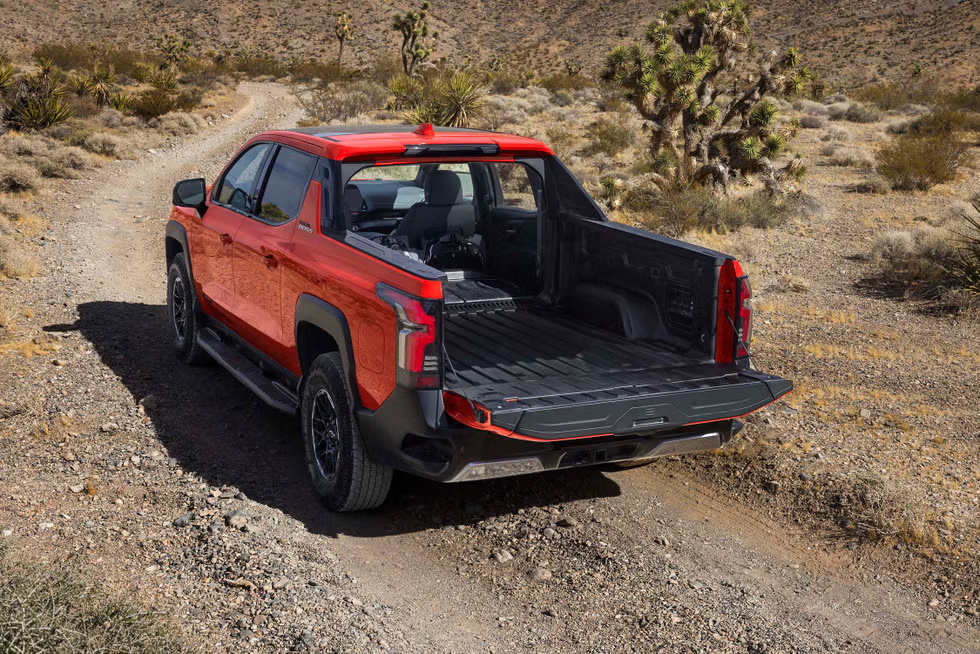
The moment you encounter the 2026 Chevrolet Silverado EV Trail Boss, its sheer scale is undeniable. This isn’t just a big truck; it’s a gargantuan presence, instantly commanding attention and reaffirming GM’s commitment to the full-size pickup aesthetic, even in an electric format. While the Silverado EV shares its Ultium platform with the GMC Hummer EV, its design language is distinctively Chevrolet, marrying familiar truck proportions with a futuristic, aerodynamic sensibility. The Trail Boss variant further distinguishes itself with its aggressive stance, courtesy of a factory lift, larger 35-inch all-terrain tires wrapped around unique wheels, and those signature red recovery hooks that scream “adventure-ready.”
Visually, the Trail Boss’s design successfully communicates its intent. The substantial sidewall on those 35-inch tires isn’t just for show; it hints at greater compliance and capability over varied terrain. Its robust cladding and assertive front fascia suggest a vehicle designed to take on challenges. For a driver accustomed to the heavy-duty diesel behemoths, the Silverado EV Trail Boss feels immediately familiar in its physical footprint, yet its sleek lines and integrated lighting elements clearly mark it as a product of the next generation. The cabin, too, reflects this duality, blending traditional truck ergonomics with expansive digital displays, offering a premium yet utilitarian feel that buyers in the high-end EV pickup segment expect.
On-Road Refinement Meets Raw Power: Driving Dynamics
Transitioning from its formidable visual presence to its on-road demeanor, the Silverado EV Trail Boss offers a remarkably refined experience, especially for a vehicle of its size and purpose. Chevrolet has opted for a fully independent suspension system paired with coil springs, a significant departure from the traditional leaf springs found on many heavy-duty ICE trucks. This configuration, complemented by the generous sidewalls of its 35-inch tires, contributes to an astonishingly soft and composed ride. Even over broken pavement and expansion joints, the Trail Boss manages to absorb impacts with a plushness that minimizes the dreaded “head toss” and bump-stop contact often associated with large pickups. There’s a noticeable reduction in harshness, making long highway journeys surprisingly comfortable.

However, this comfort isn’t without its trade-offs. While generally well-mannered, the Trail Boss exhibits a degree of body roll when pushed through spirited corners, reminding you of its substantial weight and elevated center of gravity. For a vehicle with an off-road designation, this is understandable, but it’s a detail worth noting for those expecting car-like handling.
When it comes to electric pickup towing capacity, the Trail Boss demonstrates impressive strength. We put it through its paces with a considerable load, and while the sheer power to pull was never in doubt, a peculiar characteristic emerged. Over undulating interstate concrete, the truck and its trailer exhibited a pronounced pitching motion, leading to a sensation akin to seasickness for one of our seasoned judges. This could be attributed to specific suspension tuning or the interplay of weight distribution, and while not a dealbreaker, it highlights the need for careful setup and potentially aftermarket adjustments for frequent heavy haulers.
The immediate, relentless surge of torque from the electric powertrain is exhilarating. Hammer the throttle from a standstill, and the Trail Boss lunges forward with surprising urgency for its mass. However, this immense power, coupled with the inherent characteristics of a front-heavy electric vehicle, can sometimes lead to noticeable torque steer under hard acceleration. Unsuspecting drivers might find the steering wheel tugging unexpectedly, a characteristic that requires a firm grip and awareness, particularly in a segment where such raw power delivery is still relatively new.
Electrifying Range & Rapid Recharge: The Ultium Advantage
One of the most significant anxieties surrounding electric truck adoption is range. Thankfully, the Silverado EV Trail Boss, particularly in its Max Range configuration, tackles this concern head-on. Powering this behemoth is a colossal 205-kWh Ultium battery pack, an engineering marvel that underpins GM’s future sustainable transportation solutions. This massive energy reservoir enables an estimated range of over 400 miles, a figure that elicits a collective sigh of relief from anyone contemplating long hauls or extended off-grid adventures. This impressive battery range EV is arguably the truck’s most compelling feature, mitigating the dreaded “range anxiety” that still plagues many potential EV buyers.
However, a battery of this size is a double-edged sword. While it provides exceptional range, it also comes with a significant weight penalty and, inevitably, a demand for considerable power to perform truck tasks. Just like its gasoline-guzzling siblings, the Trail Boss devours electrons when engaging in demanding activities like towing, hauling, or spirited off-roading. Its efficiency, while admirable for a vehicle of its class, isn’t groundbreaking in absolute terms, underscoring the fundamental physics of moving a large, heavy object.
The good news is that GM has equipped the Silverado EV Trail Boss with impressive DC fast charging capabilities. Hooking up to a 350kW DC fast charger, we observed the battery replenish from 5% to 80% in approximately 49 minutes. This sub-hour charge time is crucial, especially for a vehicle intended for work and long-distance travel, making it competitive within the rapidly evolving EV charging infrastructure landscape of 2025. The ability to quickly top up while grabbing a meal or making a quick stop significantly enhances the practicality of this long-range electric truck. For businesses considering commercial electric vehicles or individuals eyeing a primary daily driver, the blend of extensive range and rapid charging makes a strong case.
Innovation or Gimmick? Unpacking Specialized Features
Beyond its core truck capabilities, the Silverado EV Trail Boss introduces a few technological tricks, namely four-wheel steering and the intriguing “Sidewinder mode.”
Four-wheel steering is a genuinely useful innovation, especially on a vehicle of this scale. In parking lots, it significantly reduces the turning radius, making what should be an arduous maneuver feel surprisingly nimble. On tighter trails, the ability to articulate the rear wheels in the opposite direction of the front wheels allows the truck to pivot around obstacles with an agility that belies its extended wheelbase. It’s a feature that quickly moves from “nice-to-have” to “indispensable” once you experience the ease it brings to intricate maneuvers.
Then there’s Sidewinder mode. This feature allows all four tires to turn a few degrees in the same direction simultaneously, enabling the truck to “crab walk” diagonally. While it certainly elicits gasps and curiosity in a gravel parking lot, its practical applications are, admittedly, niche. One could imagine scenarios in highly confined construction sites, or perhaps for precise positioning when parallel parking a very long trailer, but for the average user, it feels more like a party trick than a genuinely essential off-road tool. It’s a showcase of the engineering flexibility afforded by the Ultium platform, but perhaps less of a game-changer than other features.
The Trail Boss Challenge: Where Expectations Diverge
Now, we arrive at the elephant in the room, or rather, the large electric pickup stuck on a gentle slope. The name “Trail Boss” evokes images of a truck that conquers, dominates, and leads the way over any terrain. With its imposing stance, large tires, and impressive ground clearance, our expectations for its off-road prowess were naturally high. The Trail Boss certainly handles minimally maintained dirt roads and rutted tracks with commendable ease, soaking up imperfections thanks to its generous suspension travel and compliant tires. It’s perfectly suited for accessing a remote cabin or navigating a moderately rough forest service road.
However, when confronted with what should be a relatively minor challenge for a vehicle bearing the “Trail Boss” moniker – a 28-degree uphill slope – the façade began to crack. Repeated attempts to ascend this incline at low speeds (less than 1 mph) resulted in the truck becoming completely paralyzed. The traction control system buzzed and clicked frantically, the wheels spun futilely, and forward momentum ceased. No amount of careful throttle modulation or intricate “trail footwork” could coax it up.
The fundamental issue, glaringly apparent, was the conspicuous absence of locking differentials. In scenarios where one or two wheels lose traction, a mechanical locker would ensure that power is routed to the wheels with grip, propelling the vehicle forward. Without this critical piece of hardware, the sophisticated electronic traction control system simply couldn’t compensate for the complete loss of friction on certain wheels, leaving the massive EV truck high and dry. The only way to eventually conquer such obstacles was with a “bareknuckle” approach – a forceful stab of the throttle, hoping sheer momentum and a burst of power would carry it over. Even then, lifting a tire could lead to the entire machine pausing and lurching backward, a disconcerting experience in an off-road setting.
This performance stands in stark contrast to other premium off-road EVs on the market, such as the Rivian R1T, which offers robust locking differential emulation or even physical lockers. For a truck marketed as a “Trail Boss,” this inability to handle a relatively mild technical climb without resorting to brute force is a significant weakness. It suggests a vehicle that is well-equipped for casual off-roading but falls short when faced with genuine obstacles that demand precise traction management. It’s an oversight that leaves many seasoned off-road enthusiasts scratching their heads, questioning whether the “Trail Boss” name truly reflects its capabilities.
Dollars and Sense: The Investment in an Electric Future
At an estimated sticker price of around $92,000, the 2026 Chevrolet Silverado EV Trail Boss positions itself firmly in the premium segment of the truck market. This pricing aligns loosely with heavily optioned, luxurious internal combustion engine (ICE) pickups, as well as with its direct luxury electric pickup competitors. When evaluating this investment, it’s important to look beyond the initial purchase price and consider the broader financial landscape.
In 2025, the conversation around electric truck incentives remains fluid but can significantly impact the total cost of ownership (TCO). Federal, state, and local incentives can reduce the effective price, making it a more attractive proposition. Furthermore, the inherent fuel savings from electricity versus gasoline, coupled with lower maintenance requirements typical of EVs (fewer moving parts, no oil changes, etc.), contribute to a more favorable long-term cost profile. For businesses, the potential for lower operational costs and the ability to project an environmentally conscious image with sustainable fleet management could make the Trail Boss a compelling choice.
However, buyers must weigh these benefits against the initial outlay and the specific use case. For those who genuinely need a hardcore off-roader, the Trail Boss’s premium price might feel less justified given its traction limitations. For individuals or businesses seeking a powerful, comfortable, long-range EV truck that handles light to moderate trails and excels at conventional truck duties, the value proposition holds strong.
Final Verdict: A Capable Contender with a Crucial Caveat
The 2026 Chevrolet Silverado EV Trail Boss is, without a doubt, an immensely capable and technologically advanced vehicle. It embodies the “big truck” ethos that Chevrolet has perfected for decades, translating that into an electric package with remarkable success. Its on-road comfort, colossal battery range, rapid charging capabilities, and sheer power are genuinely impressive, setting a high bar for the future of EV truck performance. It delivers on the promise of a long-range, comfortable electric workhorse that can tow and haul with confidence, while offering innovative features like four-wheel steering that enhance usability.
However, the “Trail Boss” name carries a heavy expectation, one that the truck, in its current iteration, struggles to consistently meet in truly challenging off-road scenarios. The absence of a locking differential proves to be its Achilles’ heel, leaving it vulnerable on inclines and technical terrain where a true “boss” would effortlessly prevail. It’s a powerful, comfortable, and efficient electric pickup for the vast majority of truck owners, but for the dedicated off-road enthusiast seeking genuine trail dominance, it feels like a missed opportunity – a resume that boasts big claims but stumbles on a key interview question.
In essence, the Silverado EV Trail Boss is an excellent electric truck that feels and acts like a powerful, modern pickup. It offers a compelling vision for the future of trucking, combining traditional utility with cutting-edge EV technology. Just don’t ask it to climb every single mountain without a little help from momentum.
Experience the future of trucking. Discover the 2026 Chevrolet Silverado EV Trail Boss for yourself and see how it fits into your adventures.