



The 2025 Chevrolet Silverado EV Trail Boss: An Expert’s Unvarnished Assessment of Chevy’s Flagship Electric Truck
The automotive landscape of 2025 is electric, dynamic, and fiercely competitive. As a veteran in this field, with over a decade spent dissecting everything from concept sketches to production lines, I’ve witnessed the monumental shift towards electrification firsthand. Automakers are scrambling to define their niche in this new era, and nowhere is this more evident than in the burgeoning electric truck segment. Enter the 2025 Chevrolet Silverado EV Trail Boss – a vehicle that promises rugged capability and electric innovation, positioned at the apex of Chevrolet’s electric truck offering. But does it truly live up to the “Trail Boss” moniker, or is there a subtle disconnect between its branding and its real-world prowess? Let’s dive deep into what makes this truck tick, and where it might stumble on its climb to the top.
From the moment Chevrolet announced its ambitious entry into the electric pickup market, the industry paid close attention. The Silverado EV, and particularly its more off-road-oriented Trail Boss trim, was slated to be a game-changer. In a market increasingly populated by formidable contenders, establishing genuine differentiation is paramount. The Trail Boss, with its imposing stance, chunky tires, and electric powertrain, certainly commands attention. It represents Chevy’s vision of a utilitarian, powerful, and sustainable workhorse for the future. But as we peel back the layers, an expert eye detects nuances that challenge the initial perception, particularly for those who genuinely push their vehicles beyond the pavement.
A Foundation of Power and Presence: On-Road Dynamics and Comfort
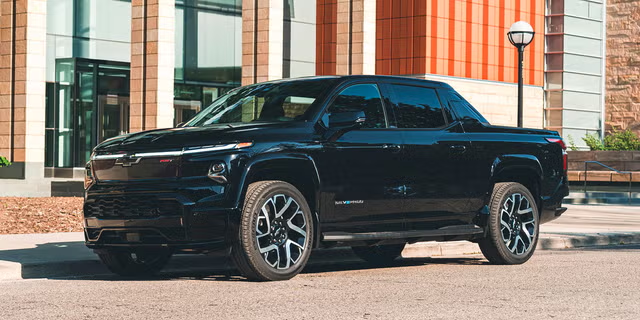
First impressions often dictate the narrative, and the 2025 Silverado EV Trail Boss makes a grand one. Its sheer scale is reminiscent of a heavy-duty pickup, an imposing presence that feels distinctly American. Yet, beneath this gargantuan exterior lies a modern, fully independent suspension system, a significant departure from the traditional leaf springs found on many ICE (Internal Combustion Engine) trucks. This engineering choice is immediately apparent on the road.
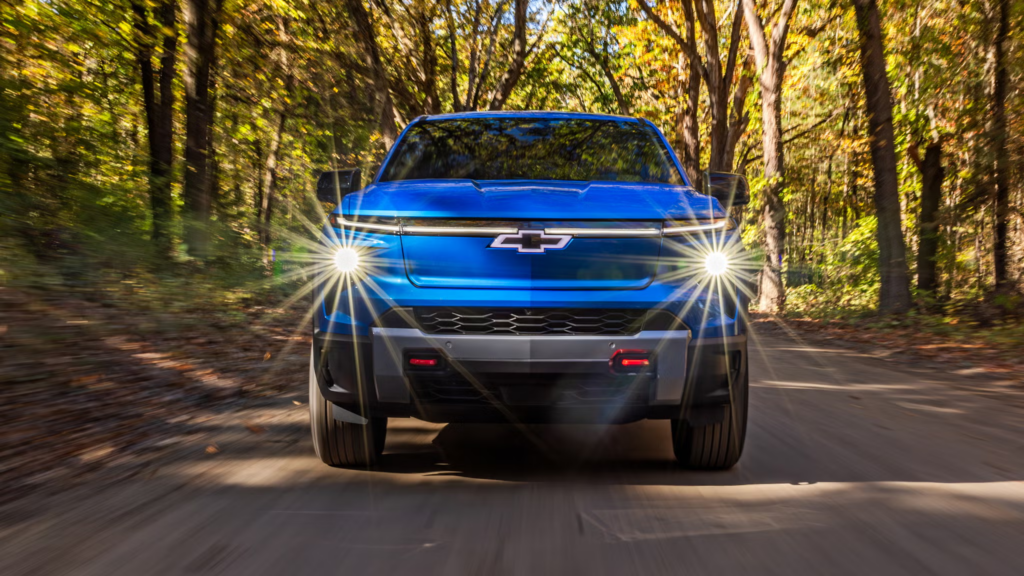
The ride quality, an area where electric trucks often shine due to lower centers of gravity and sophisticated dampening, is remarkably refined. The Trail Boss, riding on ample 35-inch diameter tires – a substantial sidewall coupled with a coil-spring setup – delivers a softer, more compliant on-road experience than one might expect from such a brute. Highway cruising is largely devoid of the jarring head toss and sharp impact harshness that can plague less composed trucks. This isn’t to say it’s a sports sedan; there’s an inherent bit of body roll when tackling sharper corners, a natural consequence of its mass and elevated stance. However, for a vehicle designed to handle rough terrain, its highway manners are surprisingly composed.
One often overlooked aspect of truck performance is how it handles a load. The Trail Boss, despite its EV architecture, is still very much a truck designed to work. During our evaluations, it commendably managed over a thousand pounds of payload. Interestingly, the ride quality seemed to improve slightly with weight in the bed, almost as if the load helped to temper the rebound characteristics of the coil springs, settling the chassis into a more planted rhythm. This suggests a well-tuned suspension designed to account for the variable demands of truck ownership.
However, the sheer torque of an electric powertrain, while exhilarating, can introduce unique challenges. Hammering the throttle from a standstill, or even at speed, sometimes produces a noticeable torque steer – a tendency for the steering wheel to pull to one side under aggressive acceleration. This phenomenon, while manageable, can catch unsuspecting drivers off guard and is a reminder of the immense, instantaneous power delivered by electric motors. For towing, the Silverado EV generally performs well, harnessing its prodigious torque to pull heavy loads with ease. Yet, one observation from our extensive testing highlighted a curious pitching motion, almost a “porpoising” effect, particularly over expansion joints on the interstate. This undulation, while not severe enough to compromise safety, suggested a tuning idiosyncrasy that could lead to discomfort over long hauls, demanding a more nuanced suspension calibration for optimal towing stability. This specific characteristic sets it apart from some rivals that have engineered more controlled towing platforms.
Unleashing the Electron Beast: Range, Battery, and Charging in 2025
In the 2025 electric truck market, range anxiety is rapidly becoming a relic of the past, thanks to continuous advancements in battery technology and charging infrastructure. The Silverado EV Trail Boss, equipped with its formidable 205-kWh “Max Range” battery pack, confidently strides into this new era. An estimated range exceeding 400 miles is not merely impressive; it’s a wholly American antidote to any lingering concerns about how far an electric truck can venture. This is a critical selling point, positioning the Trail Boss as a viable long-distance hauler or an adventurous overland companion.
However, a massive battery, while providing extensive range, also brings challenges, primarily concerning efficiency. Just like its gasoline-guzzling predecessors, the Trail Boss, by virtue of its size and power, consumes a significant amount of “juice” when performing typical truck tasks – hauling, towing, or simply moving its substantial mass. While the absolute range is excellent, the energy consumption per mile might not be segment-leading. This highlights a fundamental trade-off in heavy-duty EV design: to achieve big truck performance and range, you need a big battery, which in turn necessitates more energy. Understanding the electric truck efficiency metrics is paramount for buyers concerned with operational costs and environmental footprint.
The upside of such a capacious battery is its incredible charging speed potential. On a powerful 350kW DC fast charger, replenishing that immense 205-kWh pack from 5 to 80 percent takes approximately 49 minutes. This impressive DC fast charging capability is crucial in 2025, as public charging networks continue to expand and improve. Minimizing downtime is vital for commercial users and adventurers alike, making this a competitive advantage. Owners can realistically plan long journeys with confidence, knowing that high-speed charging stations can quickly get them back on the road.
Innovative Tech for the Modern Trail Boss: Four-Wheel Steering and Sidewinder Mode
The 2025 Chevrolet Silverado EV Trail Boss isn’t just about raw power and range; it also packs some intriguing technological innovations designed to enhance maneuverability and capability. Two stand out: four-wheel steering and the aptly named Sidewinder mode.
Four-wheel steering, while not entirely new to the automotive world, is particularly effective on a truck of this magnitude. It allows the rear wheels to turn in opposition to the front wheels at low speeds, effectively shrinking the truck’s turning radius. In practical terms, this feature shines in tight urban parking lots, making navigating crowded spaces feel less like piloting a battleship. More importantly for a “Trail Boss,” it proves invaluable on intricate off-road trails, enabling precise maneuvers around obstacles and through narrow passages as if the truck’s wheelbase were several feet shorter. This significantly enhances the truck’s agility in constrained environments, a definite advantage for an off-road electric vehicle.
Sidewinder mode, on the other hand, is a more niche, almost theatrical feature. It enables all four tires to turn a few degrees in the same direction simultaneously. While impressive to witness, akin to a crab walking, its practical utility remains somewhat limited. Beyond “peacocking” in local gravel parking lots or executing perfectly aligned parallel parking maneuvers, it’s challenging to conjure everyday scenarios where this feature becomes a genuine game-changer. It feels more like a technological flex than a critically useful off-road tool, especially when compared to more fundamental off-road enhancements. While it highlights the sophisticated EV suspension systems and electronic controls, its real-world benefits are debatable for the average user.
The Elephant in the Room: Off-Road Prowess or Pretense?
Now, we arrive at the core of the Trail Boss’s identity, and perhaps its most significant point of contention. When you brand a truck “Trail Boss,” you inherently set an expectation of dominance across all terrains, an unyielding capability in the face of natural obstacles. The moniker suggests a vehicle that leads the charge, effortlessly conquering challenging paths. While the Silverado EV Trail Boss, thanks to its meatier tires and generous sidewalls, competently handles minimally maintained dirt roads and rutted tracks, performing well within the bounds of a “soft-roader,” its true off-road mettle quickly came into question when faced with even moderately challenging conditions.
During our rigorous testing, we encountered situations that left the substantial EV paralyzed, situations that would be considered routine for a genuinely capable off-road vehicle. Attempting to ascend a relatively mild 28-degree slope at low speeds, a common scenario on many trails, repeatedly resulted in the truck halting. Its advanced traction control system would buzz and click frantically, desperately attempting to find grip, but without success. No amount of careful “trail footwork” – subtle throttle modulation, strategic steering inputs – could coax it forward.
This wasn’t an isolated incident involving Rubicon-level rock crawling or deep, sticky gumbo mud. These were mild-to-moderate obstacles that exposed a critical weakness in the Trail Boss’s off-road architecture: the absence of a mechanical locking differential. In such situations, where one or more wheels lose traction, an open differential (even with electronic assistance) directs power to the path of least resistance – the spinning wheel – leaving the truck motionless. The only recourse was a “bare-knuckle” approach: aggressively applying throttle and hoping momentum and brute force would carry it through. Even then, lifting a single wheel from the ground would sometimes cause the entire machine to pause, lurch backward, and lose all forward momentum, a concerning trait for a vehicle meant to tackle trails.
This struggle resonates deeply with a common critique leveled against its GMC Sierra EV cousin, which exhibited similar limitations during our Truck of the Year evaluations. The absence of crucial features like true locking differentials – front, rear, or even a robust limited-slip system – severely undermines the “Trail Boss” claim for serious off-road enthusiasts. While electronic traction control has advanced significantly, it simply cannot replicate the uncompromising power distribution of a mechanical locker in extreme low-traction scenarios. This disparity between branding and actual EV truck off-road performance is the “dirty little secret” the original article hinted at. For a vehicle with an otherwise impressive spec sheet and a premium price, this oversight feels like a significant misstep for its intended adventurous audience. It highlights that an electric truck designed for trails needs more than just big tires; it requires fundamental mechanical solutions for traction management.
Value Proposition in the 2025 Landscape: Is the Price Right?
In the dynamic 2025 automotive market, electric truck pricing is a constantly evolving discussion. The 2025 Chevrolet Silverado EV Trail Boss, with a sticker price hovering around $92,000, places it firmly in the premium segment, rubbing shoulders with luxury-loaded ICE pickups and other high-end electric truck contenders. The question then becomes: what value does that substantial investment deliver, and for whom?
On one hand, you’re getting a technologically advanced vehicle with a massive battery offering class-leading range, impressive charging speeds, and a comfortable, refined on-road experience. Its ability to haul and tow is respectable, and features like four-wheel steering add tangible benefits to maneuverability. It embodies the modern big truck aesthetic and delivers the familiar “big truck energy” that loyal Chevrolet customers appreciate, now with the added benefits of an electric powertrain. The overall package is undeniably robust and showcases significant engineering prowess.
However, the Achilles’ heel in its off-road capability, particularly for a trim explicitly named “Trail Boss,” complicates the value proposition for a specific segment of buyers. For someone seeking an everyday driver that can handle light duty off-roading, navigate snow-dusted driveways, and traverse maintained trails to a campsite, the Trail Boss is likely more than adequate. For the serious overlander, the weekend warrior who seeks out genuinely challenging terrain, or even just someone who wants the peace of mind that their “Trail Boss” can get them out of any reasonable bind, the lack of true locking differentials is a glaring omission. It means that while the truck looks the part, its fundamental ability to overcome certain obstacles might be compromised when compared to rivals that prioritize mechanical traction. This can lead to a perception that a significant portion of its premium price isn’t delivering on the implied promise of extreme capability.
In 2025, consumers are increasingly sophisticated, demanding that their vehicles perform as advertised. The Silverado EV Trail Boss certainly excels in many “big truck things,” providing a compelling alternative to traditional pickups. But for those who judge a “Trail Boss” by its ability to conquer the path less traveled without drama, this electric giant may occasionally leave them second-guessing its qualifications.
The Verdict and Your Next Journey
The 2025 Chevrolet Silverado EV Trail Boss is a vehicle of paradoxes. It’s a bold statement from Chevrolet, demonstrating their commitment to electrification with a truck that delivers exceptional range, robust on-road comfort, and impressive charging capabilities. It effectively addresses many of the common anxieties associated with electric vehicles, making it a highly attractive option for the modern truck buyer. Its imposing presence and general utility are undeniable, fitting seamlessly into the lives of those who demand a powerful, versatile workhorse or a comfortable, spacious family hauler.
Yet, its aspiration to be a true “Trail Boss” is where the narrative becomes nuanced. While competent on well-trodden paths, its limitations in more challenging, low-traction off-road scenarios – stemming from the absence of crucial mechanical locking differentials – reveal a gap between its adventurous branding and its practical capabilities. It’s a powerful, capable EV truck, but perhaps not the unyielding off-road titan its name suggests for serious enthusiasts. For those seeking an EV truck for urban and light-duty off-road adventure, it shines. For those demanding extreme off-road EV performance, a deeper look at its specifications against its competitors is warranted.
In essence, the 2025 Chevrolet Silverado EV Trail Boss is a great electric truck that performs big truck duties admirably. It’s a significant step forward for Chevrolet and a strong contender in the evolving electric pickup market. However, discerning buyers, particularly those whose adventures truly take them off the beaten path, should approach the “Trail Boss” moniker with a healthy dose of realism. It’s a formidable machine, but perhaps one that should be judged more by its impressive range and comfortable ride than by its perceived prowess over the most challenging trails.
Have you experienced the thrill of electric trucks firsthand, or are you considering making the switch? What features matter most to you in a heavy-duty electric vehicle? Join the conversation and share your insights. The future of trucking is here, and your perspective helps shape its path forward. Explore the possibilities, delve into the details, and discover how the next generation of electric vehicles can empower your adventures and work. Visit your local Chevrolet dealer or learn more about the latest innovations in sustainable trucking solutions.