



The Electrified Phoenix: Lexus LFA Concept Signals a New Era of Luxury Performance
The year is 2025, and the automotive landscape has undergone a seismic shift. Electrification isn’t just a trend; it’s the very foundation upon which future performance and luxury are being built. Amidst this transformative period, Lexus, long synonymous with refined luxury and unwavering reliability, has unveiled a statement so profound it reverberates through the industry: the LFA Concept. More than just a successor, this all-electric supercar is a redefinition, a bold declaration that the spirit of the iconic V10-powered LFA lives on, not despite, but because of its electric heart.
For a decade, I’ve navigated the intricate world of high-performance vehicles, witnessed countless concepts, and driven some of the most advanced machinery on the planet. Yet, the reveal of the LFA Concept, which began its journey as the “Lexus Sport Concept” at Monterey Car Week and the Japan Mobility Show in 2024, has me genuinely captivated. The formal renaming to LFA, coupled with the definitive confirmation of an all-electric powertrain, isn’t merely a rebranding; it’s the crystallization of Lexus’s ambitious future, meticulously crafted under the watchful eye of Toyota Motor Corporation Chairman Akio Toyoda. This isn’t just another luxury EV; it’s Lexus asserting its dominion in the burgeoning luxury electric supercar segment, a strategic move that acknowledges heritage while aggressively embracing innovation.
The Grand Vision: Crafting Tomorrow’s Automotive Legacy
Toyota’s directive from Chairman Toyoda to “preserve and evolve core vehicle-development skills for the next generation” is more than corporate jargon; it’s a profound philosophy at play with the LFA Concept. This isn’t about abandoning the past but using its lessons to forge an uncompromised future. The LFA Concept is positioned as the inheritor of a lineage that includes the legendary Toyota 2000GT and the original Lexus LFA – vehicles that pushed boundaries and captured the imagination. Its all-electric propulsion isn’t a compromise but an evolution, a testament to Lexus’s commitment to sustainable luxury vehicles and a zero-emission future without sacrificing exhilaration.
What makes this reveal particularly compelling for me as an industry veteran is the parallel development strategy. The LFA Concept isn’t an isolated project. It’s being meticulously crafted alongside Toyota Gazoo Racing’s formidable GR GT supercar and its GR GT3 race car programs. This shared development is a masterstroke. It signifies a direct infusion of genuine motorsport DNA into the LFA Concept, ensuring that its electric performance isn’t just quick, but dynamically brilliant and track-capable. Imagine the synergy: the GR GT3 pushing the limits of advanced chassis technology EV on the race circuit, feeding crucial data and insights directly into the LFA Concept’s road-going iteration. This cross-pollination ensures that when the LFA Concept eventually hits the tarmac, it will possess not just brute force, but the finely tuned balance and responsiveness born from competition. This collaborative approach promises to elevate the entire performance EV technology landscape, with Lexus positioned at the forefront.
Engineering Prowess: The Pillars of Electric Performance

At the heart of the LFA Concept’s engineering philosophy are three non-negotiable priorities: an ultra-low center of gravity, optimal low mass paired with exceptional body rigidity, and cutting-edge aerodynamic performance. These aren’t new principles in supercar design, but their application within an all-electric framework presents unique challenges and opportunities that Lexus appears to be seizing with both hands.
Let’s delve into the low center of gravity. For any performance vehicle, this is paramount, but in an EV where the battery pack is often the heaviest component, its strategic placement becomes critical. While many mass-market EVs opt for a “skateboard” chassis with batteries integrated uniformly into the floorpan, Lexus’s emphasis on optimizing the driving position and dynamic capability suggests a more nuanced approach. Standard skateboard designs can elevate the cabin floor, impacting seating ergonomics and the sensation of being ‘in’ the car rather than ‘on’ it. I suspect Lexus is employing innovative packaging – perhaps structural battery integration or a more compact, distributed battery architecture – to achieve both a remarkably low center of gravity and a driver-centric, low-slung seating position reminiscent of a purebred sports car. This is where true EV performance benchmarks are set, not just in straight-line speed, but in feel and driver connection.
The commitment to low mass paired with high body rigidity is evidenced by the adoption of Toyota’s first high-rigidity all-aluminum spaceframe. This isn’t merely a lightweighting exercise; it’s fundamental to handling precision and occupant safety. Aluminum offers an excellent strength-to-weight ratio and can be intricately formed to create exceptionally stiff structures. While some hypercars flirt with full carbon fiber monocoques, an advanced aluminum spaceframe, especially one shared with dedicated race cars like the GR GT3, indicates a sophisticated, cost-effective, and highly tunable solution. The integrity of this chassis will be crucial for managing the instantaneous torque delivery of electric motors, ensuring that every driver input translates directly into vehicle response, without flex or compromise. This foundational strength is key for any next-generation sports car aiming for supremacy.
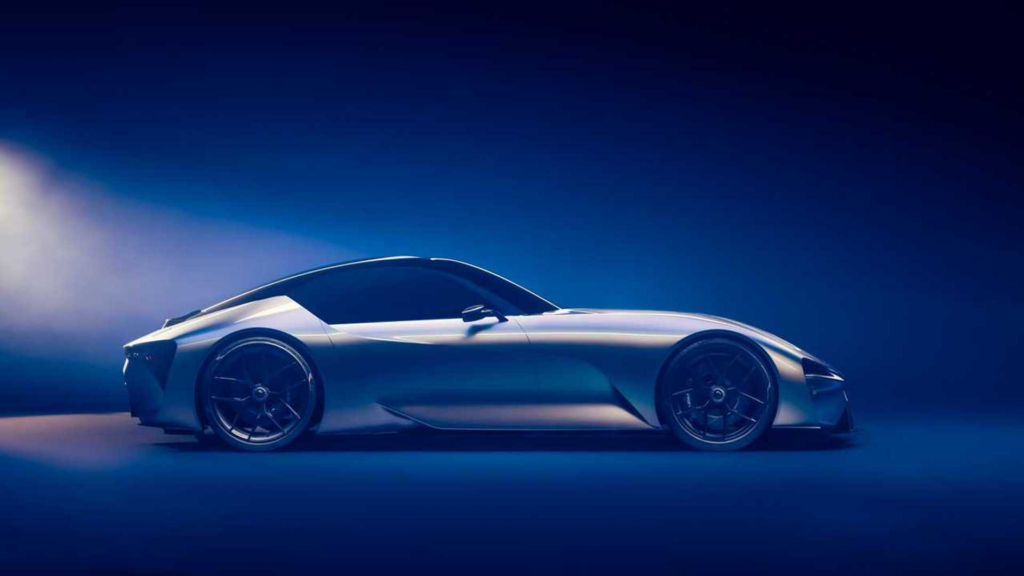
Finally, advanced aerodynamic performance is no longer just about cutting through the air; it’s about harnessing it. For an electric supercar, aero plays multiple roles: generating downforce for stability at high speeds, minimizing drag for optimal range and top speed, and crucial thermal management for the battery pack, motors, and power electronics. The LFA Concept’s “low, flowing silhouette” is not just aesthetically pleasing; it’s functionally driven. I anticipate sophisticated active aerodynamic elements – perhaps deployable wings, adaptive diffusers, and clever aero channels – that adjust on the fly to provide optimal downforce for cornering or minimal drag for outright speed, much like what we see in top-tier motorsport. This seamless integration of form and function will be critical for its position in the electric hypercar development space.
The Battery Revolution: Solid-State or Beyond?
One of the most tantalizing aspects of the LFA Concept, and indeed the future of Lexus and Toyota’s EV strategy, revolves around battery technology. While specific details remain elusive, the persistent rumors of significant advances in solid-state batteries within Toyota’s labs are too compelling to ignore. If there’s a platform perfect for launching such revolutionary technology, it is unequivocally the LFA.
Why solid-state? The potential advantages are monumental: significantly higher energy density (meaning smaller, lighter packs for the same range, or vastly extended range), dramatically faster charging times (potentially minutes instead of hours), enhanced safety (reduced risk of thermal runaway), and a longer lifecycle. The commercialization of solid-state battery commercialization has been the holy grail for years, and Toyota has long been a leader in this research. Imagine an LFA that can recharge 80% of its battery in under 10 minutes, or offers an unheard-of range for a supercar, all while weighing less than its competitors. This would fundamentally rewrite the rules of high-performance battery systems and elevate the LFA Concept from merely competitive to utterly groundbreaking.
Even if full solid-state isn’t ready for mass production in the LFA’s initial run, Lexus likely has other tricks up its sleeve. Perhaps advanced lithium-ion chemistries utilizing silicon anodes for increased energy density, or innovative cooling systems that allow for higher sustained power output. The integration of the battery within the vehicle’s structure could also contribute to both rigidity and thermal management, pushing the boundaries of automotive engineering breakthroughs. This focus on the fundamental power source underscores Lexus’s intent to lead, not just follow, in the Toyota EV advancements narrative.
Design Language: A Timeless Electric Sculpture
Stylistically, the LFA Concept is, as the original article noted, a “dead ringer” for the Sport Concept iterations we’ve seen. This consistency signals a clear vision, evolving the original LFA’s design DNA for the electric age. Lexus describes its proportions and sculptural cues as an inheritance, applying them to an EV-optimized package. This isn’t just about superficial resemblance; it’s about translating the spirit of the original into a form that’s inherently efficient and futuristic.
Its “low, flowing silhouette” stands in stark contrast to the harder, more aggressive edges of its GR GT siblings. This choice speaks volumes about Lexus’s brand identity: while performance is paramount, it’s delivered with an inherent elegance and sensuality. The concept’s classic coupe proportions – 184.6 inches long, 80.3 inches wide, and 47.0 inches tall, with a 107.3-inch wheelbase and a two-seat configuration – are meticulously calibrated. These dimensions suggest a compact, agile stance that promises razor-sharp handling, while the width hints at a broad, stable platform for immense grip. This is a design crafted to be a “universal sports-car shape,” transcending regional tastes and eras – a true testament to Lexus design philosophy. It’s instantly recognizable as a performance machine, yet possesses an understated sophistication that sets it apart in the often-over-the-top supercar world.
Inside the Cockpit: Discovering Immersion
The interior of the LFA Concept, centered around the theme of “Discover Immersion,” is where the driver’s connection to the machine becomes paramount. This isn’t merely about luxury; it’s about a symbiotic relationship between human and machine, facilitated by intelligent design and intuitive technology. The minimalist layout concentrates functional elements around the driver’s seat, eliminating unnecessary clutter and distractions. This approach is refreshing in an era where screens often dominate and overwhelm.
The “funky, yoke-style steering wheel” is perhaps the most divisive but also the most innovative interior feature. Designed to eliminate the need to re-grip while driving and strategically placing switches for touch-only operation, it’s a bold ergonomic statement. While similar designs from other manufacturers have faced criticism, Lexus’s execution, refined through years of human-centered design, could be a game-changer. Imagine a clear, unobstructed view of the road and instrumentation, with all critical controls falling naturally to hand or thumb. This design philosophy speaks to a focus on making the act of driving as pure and unadulterated as possible, minimizing cognitive load and maximizing sensory input – essential for a true driver-centric EV cockpit. The materials, I expect, will be of the highest caliber, combining traditional Japanese craftsmanship with futuristic textures and sustainable elements, creating an ambiance of sophisticated, understated luxury. Every detail, from the haptic feedback in controls to the digital display customization, will contribute to an exclusive EV models experience.
Performance Projections: The Electric Roar
While concrete specifications remain under wraps, drawing from Lexus’s reputation and the shared Gazoo Racing DNA, we can engage in some informed speculation regarding the LFA Concept’s performance. The original LFA’s V10 delivered 552 horsepower and a soul-stirring soundtrack. Its electric successor, without the constraints of engine size or complexity, is poised to shatter those figures.
Given the current trajectory of premium EV market performance, I would anticipate a multi-motor setup, likely dual or tri-motor, delivering upwards of 800 to 1,000+ horsepower. Instantaneous torque delivery from electric motors means blistering acceleration – think 0-60 mph times comfortably under 2.5 seconds, potentially even pushing into the sub-2-second hypercar territory. Torque vectoring, precisely managing power delivery to each wheel, will redefine handling dynamics, offering a level of agility and grip that even the V10 LFA couldn’t dream of.
Top speed will likely be electronically limited but still formidable, well north of 200 mph. Braking will almost certainly involve robust carbon-ceramic discs, augmented by powerful regenerative braking, which not only recoups energy but also enhances stopping power and balance. Suspension systems will undoubtedly feature advanced adaptive dampers, possibly even active anti-roll bars, allowing for both track-focused stiffness and surprisingly compliant road manners. The “LFA feel” – that tactile connection, that precision – will be reinterpreted through an electric lens, prioritizing instant response and unwavering control. This is the new frontier for electric vehicle chassis design and dynamic tuning.
Market Positioning and The Future of Lexus
The LFA Concept’s definitive reveal marks Lexus’s undeniable entry into the upper echelons of the electric performance world. Its rivals will be formidable: the Porsche Taycan Turbo S, the upcoming Ferrari and Lamborghini EVs, potentially Rimac Nevera, and other luxury electric supercar contenders. Lexus’s differentiator, beyond pure performance metrics, will be its unique blend of meticulous Japanese craftsmanship, legendary reliability, and a distinctive design language that prioritizes timeless elegance over aggressive ostentation.
This vehicle won’t be a mass-market offering; it will be an incredibly exclusive, likely multi-million dollar proposition, catering to discerning enthusiasts who demand the pinnacle of automotive innovation 2025. It serves as a halo car, a technological demonstrator for Lexus’s wider electrification efforts, showcasing the brand’s capabilities and setting the tone for future models. The LFA Concept isn’t just a car; it’s a profound statement about the future of Lexus – a future that is electric, exhilarating, and uncompromisingly luxurious. It tells the world that Lexus intends to be a leader, not a follower, in the evolving landscape of high-performance automobiles.
The Electric Dawn Has Arrived
The Lexus LFA Concept isn’t merely a glimpse into a potential future; it is the embodiment of Lexus’s present intent and formidable capabilities in the realm of electrification. By unequivocally affirming its all-electric nature and its LFA moniker, Lexus has drawn a clear line in the sand. This is not just an EV; it is a meticulously engineered, breathtakingly designed, and strategically positioned electric sports car Lexus that promises to redefine performance and luxury for the next generation. It’s a compelling vision of how a legendary nameplate can not only survive but thrive in the electric age, maintaining its core identity while embracing radical technological shifts.
What are your thoughts on this bold new direction for Lexus? Share your insights and join the conversation as we track the evolution of this groundbreaking electric supercar.