



The Dawn of Driverless Ownership: Tensor’s Vision for Your Private Level 4 Autonomous Vehicle in 2027
As we navigate the increasingly intelligent roadways of 2025, the dream of true personal autonomy—a car that drives itself, safely and reliably, without constant human supervision—is no longer a distant sci-fi fantasy. For years, the narrative around self-driving cars has largely centered on commercial robotaxi fleets: Waymo’s expanding presence across major U.S. cities, the nascent but ambitious Tesla Robotaxi trials, and the bustling autonomous services in various global hubs. Yet, amidst this evolution, a critical gap has persisted: the inability for private citizens to own a truly Level 4 (L4) autonomous vehicle. Enter Tensor.
Having meticulously observed and engaged with the autonomous vehicle (AV) industry for over a decade, I’ve witnessed countless promises and pivotal breakthroughs. Now, Tensor, a company with a rich heritage in pioneering robotaxi operations, is poised to redefine personal mobility. By January 2027, they aim to deliver the Tensor Robocar: a ground-up L4 autonomous vehicle designed not for a fleet, but for your driveway. This isn’t just another EV; it’s a meticulously engineered private self-driving car that promises to usher in a new era of personal transportation, merging cutting-edge AI automotive solutions with an unparalleled focus on user experience and data privacy.
A Decade in the Making: Tensor’s Strategic Evolution
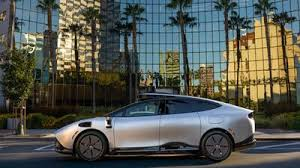
Tensor’s journey to this audacious vision is a compelling narrative of adaptation and resilience within the fiercely competitive autonomous driving landscape. Founded in Silicon Valley in 2016 as AutoX, the company initially set its sights on developing advanced autonomous commercial vehicles and scalable robotaxi services. Early successes saw them deploying and testing AVs across diverse environments in both California and China, quickly establishing a formidable presence. The challenges of the COVID-19 pandemic, surprisingly, spurred a period of rapid expansion in China, where AutoX successfully built and operated a fleet of over 1,000 autonomous taxis, providing public rides across five major cities. This period of intense real-world operation was invaluable, generating a treasure trove of data and operational experience crucial for refining their core AI and hardware stack.
However, the global landscape shifted. In a move reflecting foresight and strategic realignment, Tensor (then AutoX) made the significant decision over the past year to completely divest from its Chinese operations. This pivot was primarily driven by growing data privacy concerns—a sensitive and increasingly regulated aspect of autonomous technology, particularly for U.S. and European markets. Rebranding as Tensor, the company returned to its roots in San Jose, California, bringing with it a wealth of engineering talent and operational wisdom. This wasn’t merely a geographical shift; it marked a profound strategic reorientation: from mass-market robotaxi fleets to pioneering the high-end private autonomous vehicle market. This move positions Tensor uniquely to capitalize on the desire for luxurious, highly personalized smart mobility solutions.
Engineering the Future of Private L4 Driving: Beyond the Drivetrain
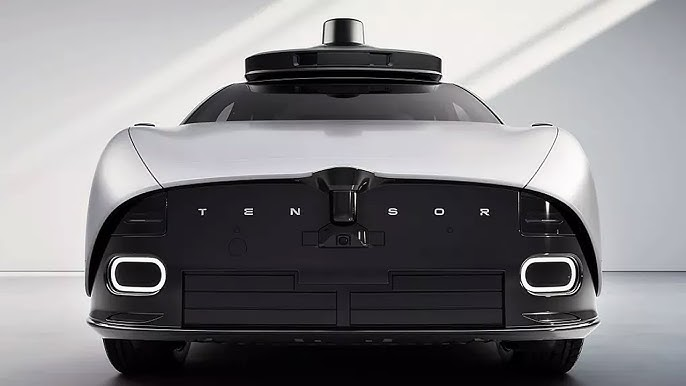
At its heart, the Tensor Robocar is built on a robust electric vehicle (EV) platform, yet it’s designed with autonomy as its fundamental purpose, not as an afterthought. Powering this advanced machine is a substantial 112-kWh battery pack, engineered to deliver an estimated 250 miles of range. In the context of 2027, where EV charging infrastructure will be significantly more ubiquitous and efficient, this range is perfectly adequate for daily commutes and most inter-city travel. What truly sets it apart, however, is the 845-volt architecture, enabling blistering fast-charging capabilities—a mere 20 minutes to replenish the battery from 10 to 80 percent. This dramatically reduces range anxiety and minimizes downtime, making the transition to autonomous electric driving seamless.
But Tensor’s innovation extends beyond mere power delivery. Imagine arriving home after a long day, exiting your vehicle, and having it autonomously park and then seamlessly connect to a charging station via a robotic arm. This automated charging solution, currently under development, epitomizes the “effortless luxury” Tensor aims to deliver. It’s about removing every minor friction point from the ownership experience, allowing the vehicle to truly serve you.
The physical design also speaks to this philosophy. The Robocar features sophisticated coach-style, center-closing doors—a hallmark of luxury and convenience. These powered doors are not just for show; they’re fitted with an array of sensors to meticulously detect and avoid obstacles, preventing accidental contact with other vehicles or stationary objects. This attention to detail in user interaction underscores Tensor’s commitment to an experience that is both sophisticated and secure, pushing the boundaries of human-machine interface evolution in luxury vehicles.
True Autonomy: A Private L4 Experience Without Compromise
The cornerstone of the Tensor Robocar’s appeal is its classification as an SAE Level 4 autonomous vehicle. For those intimately familiar with the intricacies of AV development, L4 signifies a monumental leap. Unlike Level 2 (e.g., Tesla’s Full Self-Driving Supervised, which still requires constant driver attention) or even Level 3 (which permits eyes-off in specific conditions but demands human takeover within seconds), L4 means the vehicle can operate completely autonomously under defined conditions (e.g., geo-fenced areas, specific weather) without any human intervention. While the Robocar retains a steering wheel and pedals for manual override—a crucial feature for those who still enjoy the act of driving—its primary mode of operation is designed to be fully self-sufficient.
This ground-up design approach is a critical differentiator. Many current AV efforts involve retrofitting existing vehicles, which often results in compromises in sensor integration, computing power, and safety redundancies. Tensor, having started development in 2020 shortly after launching its initial robotaxi services, meticulously engineered the Robocar from the chassis up to be an autonomous platform. This ensures optimal placement and integration of its vast sensor suite, a purpose-built computing architecture, and deeply embedded safety protocols. This strategy positions Tensor to deliver a level of reliability and safety that modified platforms struggle to match, offering a robust Waymo alternative for personal ownership.
The Sensory Network and the Brain: Unpacking Tensor’s Advanced Tech Stack
Achieving genuine L4 autonomy in diverse, real-world environments requires an extraordinary array of perception and processing capabilities. The Tensor Robocar is nothing short of a mobile supercomputer on wheels. It’s equipped with over 100 sensors, forming a comprehensive, redundant perception system designed to virtually eliminate blind spots and ensure unparalleled situational awareness. This includes:
Five Lidar Arrays: One centrally mounted on the roof providing a commanding 360-degree view up to 1,000 feet, complemented by four strategically placed around the front, sides, and rear. Lidar, critical for precise 3D mapping and object detection, forms the backbone of its spatial understanding.
37 Cameras: A dense network offering high-resolution visual data, crucial for object classification, traffic light detection, lane keeping, and understanding complex social cues from pedestrians and other drivers.
11 Radars: Providing robust performance in adverse weather conditions like heavy rain or fog, complementing lidar and cameras by detecting speed and distance of objects.
10 Ultrasonic Sensors: Essential for low-speed maneuvers, parking, and close-range obstacle detection.
This multi-modal sensor fusion architecture isn’t just about quantity; it’s about intelligent integration. The data from these disparate sensors are continuously processed and cross-referenced to create an incredibly rich and accurate real-time understanding of the vehicle’s surroundings, far exceeding human perceptual capabilities.
Recognizing that even the most advanced sensors are useless if obscured, Tensor has gone to extraordinary lengths to ensure their operational integrity. The Robocar features an impressive 30 washer nozzles and 13 mini wipers, strategically positioned to keep all critical sensors pristine in varying weather conditions. Furthermore, integrated heating elements prevent fogging and snow buildup. Taking a page from industrial robotics, Tensor has also developed physical covers that automatically deploy over the sensors when the vehicle is turned off. This ingenious solution protects the delicate optics and emitters from dirt, dust, and potential damage, a practical innovation addressing real-world operational challenges.
All this sensor data funnels into a monumental onboard computer, the “brain” of the Robocar, featuring eight NVIDIA Drive Thor-X chips. This powerhouse system boasts an aggregate processing capability of 8,000 TOPS (trillion operations per second)—a level of computational density that enables real-time, high-fidelity processing of the vast incoming data streams. While connected to the cloud for updates and high-level mapping, the vast majority of perception, planning, and control computations occur directly on the vehicle. This onboard processing capability ensures the Robocar can operate flawlessly even in areas with poor or no 5G connectivity, thanks to its three redundant communication channels for maximum network reliability.
The Tensor Foundation Model software, an AI-based system, employs a sophisticated dual-track approach. One system is meticulously trained on data from millions of miles driven by professional human drivers, capturing nuanced driving behaviors. The second system is trained on a Visual Language Model (VLM), designed to infer and solve unusual and unexpected “edge cases”—scenarios that defy pre-programmed rules. This dual-model approach enhances robustness and adaptability, allowing the Robocar to operate confidently in challenging conditions like rain and snow, breaking the stereotype that self-driving cars are only suitable for sunny California. The system even communicates its intentions to pedestrians via subtle, lower-exterior displays, fostering trust and clarity in public spaces.
Privacy at the Core: Your Data, Your Control
In an era increasingly conscious of digital footprints, Tensor’s approach to data privacy is a significant differentiator and a key selling point for the discerning private owner. Unlike many tech companies that rely heavily on continuous data collection for system improvement, Tensor has engineered the Robocar to perform most of its critical computations onboard. This means the default setting is for your data to remain your data.
Cloud sharing of vehicle information is strictly opt-in, giving owners complete control over what, if any, data leaves their vehicle. All data collected by the car—from driving patterns to biometric authentication data (such as facial and palm recognition, which are crucial for operating the vehicle and preventing unauthorized use)—is accessible to the owner via the vehicle interface or a dedicated smartphone app, and can be deleted at will. This commitment to data sovereignty is a powerful promise in the luxury self-driving car market.
Furthermore, acknowledging concerns about in-cabin monitoring, Tensor has equipped the interior cameras and microphones with physical covers and manual off switches. While these are necessary for functions like driver monitoring during manual operation and interacting with the voice assistant, the ability to physically disable them provides an unparalleled level of privacy and comfort for occupants.
Conversational AI: The Co-Pilot of Tomorrow
The interaction with the Tensor Robocar transcends typical voice command systems. It’s designed to be a true conversational partner, leveraging an advanced Agentic AI backed by a Large Language Model (LLM). Instead of rigid commands, you can engage in natural dialogue, expressing your destination and preferences in human-like language. “Hey Robocar, could you take me to the new art gallery downtown, the one with the coffee shop inside?” becomes a natural request, not a coded instruction.
This intelligent assistant learns your habits, preferences, and even anticipates your needs. Sync it with your calendar, and it might proactively suggest routes for upcoming appointments, ensure sufficient battery range, and even initiate automated charging if necessary. Imagine stepping out of your office and simply calling or texting your car, “Robocar, please come pick me up from the main entrance,” and having it arrive autonomously. This level of personalized, intuitive interaction transforms the vehicle from a mere mode of transport into an indispensable personal assistant, embodying the essence of smart mobility solutions.
The Hybrid Driver: When You Want to Take the Wheel
While the Robocar is built for autonomy, Tensor understands that the joy of driving remains for many enthusiasts. Therefore, the vehicle intelligently preserves the option for manual operation. When you desire to take control, the car can provide a customizable spectrum of assistance—from fundamental safety aids like automatic emergency braking (AEB) to sophisticated Level 3 semi-automated driving features, allowing for hands-free, eyes-off-the-road operation in suitable conditions.
The transition between modes is a feat of engineering elegance. When autonomous mode is engaged, the steering wheel smoothly retracts into the dashboard, and the center infotainment screen slides over to conceal it, creating an expansive, uncluttered passenger-centric cabin. Simultaneously, the accelerator and brake pedals retract, disappearing from view and reach. Should you wish to assume control, they reappear just as seamlessly.
This seamless transformation is enabled by an advanced by-wire system for steering, braking, and acceleration, eliminating physical connections and replacing them with electronic signals. Crucially, each of these by-wire systems, along with every sensor, incorporates multiple layers of redundancy. This ensures that even in the unlikely event of a component failure, the car maintains full operational capability, prioritizing safety above all else. Adding to its exceptional maneuverability, rear-wheel steering allows the back tires to pivot up to 7 degrees in either direction, granting the Robocar an astonishingly tight 37-foot turning circle—comparable to a compact SUV like a Tesla Model Y, despite its substantially larger footprint. This innovative design makes urban navigation and parking surprisingly agile for such a sophisticated vehicle.
Safety First: Engineering for Peace of Mind
Tensor’s commitment to passenger safety is paramount. The Robocar is being engineered to target the highest crash safety scores from leading regulatory bodies globally, including the NHTSA (National Highway Traffic Safety Administration) and IIHS (Insurance Institute for Highway Safety) in the United States, and the European NCAP (New Car Assessment Programme). This pursuit of top-tier safety certifications underscores the rigorous engineering and testing processes inherent in a ground-up L4 autonomous vehicle, reassuring consumers about their personal autonomous vehicle purchase. The comprehensive sensor suite, coupled with the redundant by-wire systems and advanced AI, are all designed to minimize the likelihood of incidents, and in the rare event of a collision, to provide optimal occupant protection.
Unlocking Economic Potential: Your Robocar, Your Asset
Beyond personal convenience and luxury, the Tensor Robocar presents an intriguing proposition for economic empowerment. The company has already forged a partnership with Lyft to integrate Robocars into its luxury rideshare tiers, signaling a clear path for commercialization.
This opens up a fascinating possibility for private owners: Elon Musk famously predicted that Tesla owners could put their vehicles to work as robotaxis while they were at the office or asleep, generating passive income. While Tesla’s robotaxi rollout has been a slow burn, Tensor appears poised to deliver on this vision in a tangible, privately-ownable form. While the specifics of how a privately owned Robocar might integrate into a rideshare network (likely through an existing platform like Lyft, or perhaps a dedicated Tensor ecosystem) are still emerging, the potential for owners to monetize their advanced transportation asset is a compelling investment in self-driving tech. Imagine your vehicle generating revenue while you’re not using it, effectively offsetting its ownership costs and transforming it from a mere expense into a smart investment.
The Investment: What Price for the Future of Personal Mobility?
As of 2025, Tensor is holding its price point close to the vest, hinting only at “luxury pricing.” However, drawing parallels to Waymo’s estimated vehicle costs—which industry insiders place in the realm of a well-optioned Mercedes-Benz S-Class, typically ranging from $150,000 to $200,000—we can reasonably anticipate the Tensor Robocar to fall on the higher end of this spectrum, potentially exceeding it.
This pricing reflects not just the vehicle’s inherent luxury but, more critically, the immense research, development, and groundbreaking technology packed into a ground-up L4 autonomous platform. Owners aren’t just buying a car; they’re investing in a future transportation technology that offers unparalleled convenience, safety, privacy, and potentially, a new stream of income. It’s a premium for being at the absolute forefront of personal mobility, for owning a piece of the future, today.
Charting Your Course to Autonomous Ownership
The Tensor Robocar isn’t just another entry in the burgeoning EV market; it represents a paradigm shift in how we conceive of personal transportation. By offering a Level 4 autonomous vehicle for private ownership by 2027, Tensor is addressing a profound desire for ultimate convenience, advanced safety, and unprecedented personal freedom on the road. From its meticulously engineered sensor suite and robust AI to its unwavering commitment to data privacy and intuitive human-machine interaction, the Robocar is designed to deliver an unparalleled luxury experience.
As the lines between driving and being driven increasingly blur, the Tensor Robocar offers a compelling vision for what personal mobility can truly become. This is not just about getting from point A to point B; it’s about reclaiming your time, enhancing your safety, and enjoying a truly effortless journey.
Are you ready to redefine your relationship with the road? To learn more about how the Tensor Robocar can transform your daily commute and weekend adventures, and to be among the first to receive updates on this groundbreaking autonomous vehicle, visit Tensor’s official website and sign up for their exclusive pre-order insights today. The future of driving, or rather, being driven, awaits.