



The Dawn of True Personal Autonomy: Tensor Robocar Redefines Luxury Self-Driving for 2025 and Beyond
For those of us who have spent the better part of a decade immersed in the pulsating heart of autonomous vehicle (AV) development, the year 2025 feels like a pivotal moment. The distant whispers of truly self-driving cars, once confined to science fiction and ambitious corporate presentations, are now a tangible reality, especially within the controlled environments of ride-hailing services. From Waymo’s expansive operations in major U.S. cities to the burgeoning fleets of autonomous taxis in China and even Tesla’s FSD (Supervised) pilot programs, the shared autonomous experience is here. But what about owning that future? What about the privacy, the personal touch, the sheer unadulterated freedom of a Level 4 self-driving vehicle parked in your own driveway?
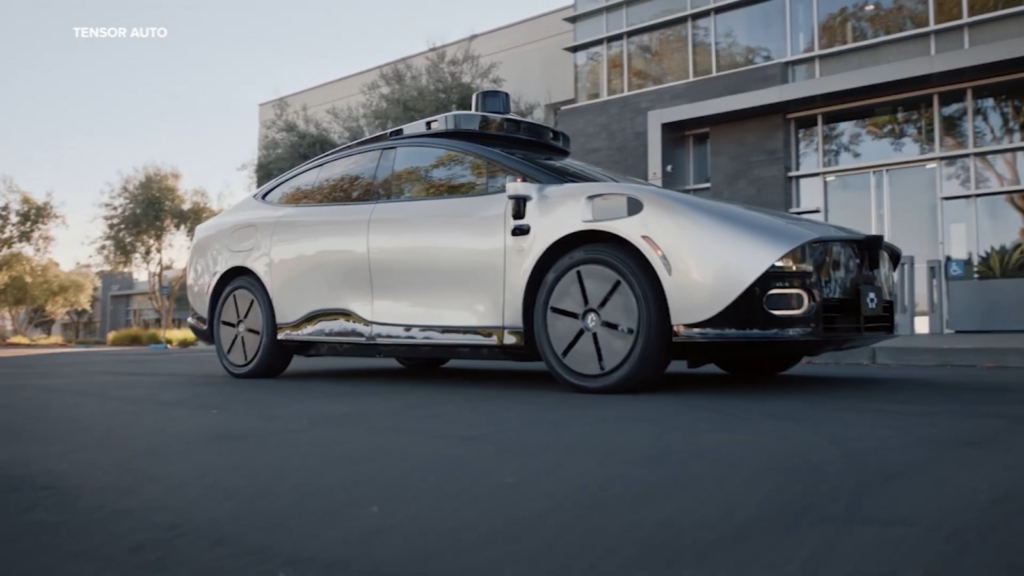
Enter the Tensor Robocar. This isn’t just another electric vehicle; it’s a meticulously engineered, ground-up Level 4 autonomous vehicle designed not for the masses of a robotaxi fleet, but for discerning private owners. It represents a monumental shift, bridging the gap between cutting-edge autonomous driving technology and the desire for individual ownership, promising to redefine the very concept of personal transportation by January 2027. After a decade of observing, analyzing, and even contributing to this revolutionary field, I can confidently say that Tensor is poised to deliver on a promise many thought was years, if not decades, away for the consumer market.
From Robotaxi Pioneer to Personal Autonomy Visionary: Tensor’s Odyssey
The story of Tensor is one of strategic evolution, deeply rooted in the crucible of real-world autonomous operations. Founded as AutoX in Silicon Valley in 2016, the company quickly established itself as a frontrunner in commercial autonomous vehicles and robotaxi services. Their pioneering spirit led to extensive testing across California and China, culminating in a formidable fleet of over 1,000 autonomous taxis providing rides to the public in five major Chinese cities during the height of the COVID-19 pandemic. This extensive operational experience, encompassing millions of miles driven and an unprecedented volume of data collection, forms the invaluable bedrock upon which the Tensor Robocar is built.
However, the global landscape of data privacy and geopolitical considerations has significantly shifted in recent years. Recognizing the growing concerns surrounding data sovereignty, AutoX made a bold and decisive move in the past year. The company completely divested from its Chinese operations, a strategic pivot driven by a commitment to privacy and a desire to serve the American and broader Western markets without compromise. Rebranding as Tensor and returning to its Silicon Valley roots in San Jose, California, marked not just a change of name, but a profound shift in focus: from corporate fleets to crafting the ultimate personal autonomous vehicle for discerning private customers. This journey, spanning nearly ten years of relentless innovation and learning, positions Tensor as a mature player ready to revolutionize automotive innovation 2025 and beyond.
Engineering the Future: The Robocar’s Foundation in Advanced EV Design
At its core, the Tensor Robocar is a sophisticated electric vehicle, but it’s an EV engineered from the ground up with autonomy as its guiding principle. This isn’t a conventional car retrofitted with autonomous capabilities; every aspect of its design, from its foundational architecture to its luxury appointments, serves the primary goal of delivering an unparalleled autonomous experience.
Powering this vision is a robust 112-kWh battery pack, providing an estimated range of 250 miles – a competitive and practical figure for a premium EV in the 2025 market. More impressively, the vehicle utilizes an advanced 845-volt battery architecture, enabling lightning-fast charging. Drivers can expect to power up from a 10% to 80% state of charge in a mere 20 minutes, effectively minimizing downtime and maximizing the utility of a self-driving car. While the specific output of its single rear motor remains undisclosed, the emphasis is clearly on efficiency, smooth power delivery, and an optimized driving dynamic rather than raw, neck-snapping acceleration.
Beyond its impressive powertrain, Tensor has infused the Robocar with touches of futuristic convenience that speak to a truly integrated smart ecosystem. Imagine arriving home, and without a second thought, the car autonomously positions itself for charging. Tensor is actively developing an automated charging solution featuring a robotic arm that will seamlessly plug into the vehicle, eliminating the last manual interaction of the daily charging routine. This level of thoughtful design extends to the Robocar’s exterior, featuring exquisite coach-style center-closing doors. These aren’t just for aesthetic appeal; they are fully powered and equipped with sophisticated sensors, ensuring they open and close safely without the risk of bumping into obstacles or neighboring vehicles – a subtle yet crucial detail that elevates the premium self-driving experience.
Decoding True Autonomy: The SAE Level 4 Difference
In the complex lexicon of autonomous driving, understanding the distinctions between levels is paramount. The Tensor Robocar is proudly billed as an SAE Level 4 autonomous vehicle, a classification that truly sets it apart. For us experts in the field, Level 4 represents a significant leap beyond the more common Level 2+ or even Level 3 systems available today. While Level 2+ (like many advanced driver-assistance systems, including Tesla’s FSD Supervised) requires continuous driver supervision, and Level 3 (seen in systems like Mercedes-Benz’s Drive Pilot) permits “eyes-off” operation only under very specific, limited conditions, Level 4 is transformative.
A Level 4 vehicle can truly drive itself, navigating complex environments without human intervention within its defined Operational Design Domain (ODD). This means hands-off, eyes-off, and crucially, mind-off. The Tensor Robocar is engineered to perform the entire dynamic driving task under specific conditions, operating equally well with or without a human occupant. The inclusion of a steering wheel and pedals is a concession to user preference and regulatory requirements, not a reflection of its need for human oversight during autonomous operation. In essence, it offers the capabilities of a Waymo robotaxi, but with the unparalleled freedom and privacy of personal ownership – a concept that has long been the holy grail for AI-powered cars.
This ambitious achievement stems directly from Tensor’s ground-up design philosophy. Rather than attempting to retrofit an existing vehicle platform, which inherently introduces compromises in sensor integration, computing power, and safety redundancies, Tensor started from a blank slate. Development commenced in 2020, even as their robotaxi service was flourishing, ensuring that every component, every line of code, and every structural element was optimized for Level 4 autonomy. This holistic approach is the only way to genuinely achieve the safety, reliability, and robustness required for such a sophisticated electric self-driving car.
A Symphony of Sensors: Perception Beyond Human Limits
Achieving genuine Level 4 autonomy demands an extraordinary level of environmental perception – far beyond what any human driver can achieve. The Tensor Robocar embodies this principle with a sensor suite that is nothing short of comprehensive. We’re talking about over 100 individual sensors working in concert, forming an all-encompassing digital awareness of its surroundings.
Central to this perception stack are five advanced lidar arrays: one strategically mounted on the roof for a panoramic, long-range view, and four others meticulously positioned around the front, sides, and rear of the vehicle. These lidar units are the eyes that see in 3D, capable of discerning objects nearly 1,000 feet away, providing a 360-degree, high-resolution map of the environment. Complementing these are 37 high-resolution cameras, offering a rich tapestry of visual data crucial for object classification and traffic light detection. Eleven sophisticated radar units provide robust long-range detection and velocity tracking, particularly effective in adverse weather, while ten ultrasonic sensors handle close-range obstacle detection, essential for precise maneuvering and parking. This multi-modal, redundant sensor fusion is the backbone of the Robocar’s unparalleled situational awareness, a cornerstone of safe autonomous driving technology.
Tensor hasn’t overlooked the practicalities of maintaining such a complex sensor array. Recognizing that dirty or obstructed sensors can cripple an autonomous system, the Robocar features an intricate network of 30 washer nozzles and 13 mini wipers, ensuring crystal-clear vision even in challenging conditions. Heating elements are integrated to prevent fogging and ice buildup, making the vehicle genuinely functional in diverse climates. Going a step further than current robotaxis like Waymo’s Zeekr-based vehicles, Tensor has incorporated physical covers that automatically deploy over the sensors when the vehicle is powered down. This ingenious design protects these critical components from dirt, debris, and potential damage, underscoring Tensor’s commitment to reliability and longevity in their smart car technology.
The Brains of the Operation: AI, Processing, and Connectivity at the Edge
The deluge of data generated by over 100 sensors would overwhelm conventional automotive computing platforms. The Tensor Robocar, however, is anything but conventional. At its heart lies a formidable onboard computer, powered by eight state-of-the-art Nvidia Drive Thor-X chips. This powerhouse setup delivers an astonishing 8,000 TOPS (trillion operations per second) of processing capability. This immense computational muscle is vital for real-time sensor fusion, environmental modeling, path planning, and decision-making – all executed within milliseconds, ensuring instantaneous and safe reactions on the road.
A critical design choice for Tensor, and one that resonates deeply with our understanding of modern sustainable mobility solutions, is the emphasis on edge computing. While the Robocar maintains triple-redundant communication channels for maximum connectivity to the cloud (for map updates, software downloads, and optional data sharing), the vast majority of its core autonomous processing happens directly within the vehicle. This onboard processing ensures that the Robocar can operate flawlessly even in areas with patchy or non-existent 5G signals, guaranteeing consistent performance and enhancing data privacy.
The software that orchestrates this complex symphony is the Tensor Foundation Model – an advanced, AI-based system. This unique architecture operates two parallel driving systems: one meticulously trained on the vast dataset of professional human driving behaviors, and another leveraging a Visual Language Model (VLM) specifically designed to address unusual and unexpected “edge cases.” This dual-pronged approach allows the Robocar to not only navigate predictable scenarios with human-like proficiency but also to reason about novel situations and make intelligent decisions when facing the truly unforeseen. Tensor’s confidence in this system extends to its ability to operate reliably in adverse weather conditions like rain and snow, breaking the stereotype that Level 4 autonomy is only viable in sun-drenched California. Furthermore, the Robocar features intelligent exterior displays on its lower corners, broadcasting simple messages and pictograms to pedestrians. This crucial feature fosters trust and clarity, letting those outside the vehicle know it’s operating autonomously and that it perceives them – a key component of public acceptance for future of transportation solutions.
Your Car, Your Data: Prioritizing Privacy in the Autonomous Era
In an age where data is often viewed as the new oil, Tensor has taken a refreshingly principled stand on user privacy – a stance undoubtedly influenced by their previous operational experiences. One of the most compelling features of the Robocar, especially for privacy-conscious consumers, is its commitment to data sovereignty. Because virtually all processing is done onboard the vehicle, Tensor does not need to indiscriminately collect and upload your personal driving data to the cloud.
The power of choice rests firmly with the owner. While the vehicle is capable of sharing anonymized or aggregated information with the cloud for system improvements, this is strictly an opt-in feature. Unless explicit permission is granted, all your data – from travel logs to driving habits – remains securely within your vehicle. Owners are provided with full access to any data the car has collected about them or its users, accessible via the vehicle’s interface or a dedicated smartphone app, with the unequivocal right to review and delete this information at any time. This includes sensitive biometric data, such as facial and palm recognition, which are utilized for secure vehicle operation and theft prevention but remain under the owner’s direct control.
Tensor extends this commitment to privacy to the vehicle’s interior. While interior cameras and microphones are present to enable driver monitoring during manual operation (should you choose to use its advanced ADAS features) and facilitate interaction with the voice assistant, each of these features is equipped with physical covers and dedicated off switches. This thoughtful design ensures that users have absolute control over their personal space and data, a significant differentiator in the emerging landscape of data privacy self-driving vehicles.
The Conversational Co-Pilot: Intelligent Interaction for the Modern Driver
Beyond its driving capabilities, the Tensor Robocar redefines the human-vehicle interface through its sophisticated Agentic AI. This isn’t your average, command-response voice assistant. Backed by a powerful Large Language Model (LLM), the Robocar is designed to engage in natural, human-like conversations. Instead of rigid commands like “Navigate to home,” you can simply chat with your car: “Hey Tensor, I’m thinking of heading to that new restaurant downtown, you know, the one with the great fusion cuisine. Can you take me there?” The AI will understand the context, suggest options, and seamlessly initiate the journey.
This level of intelligent interaction extends beyond navigation. Imagine summoning your car from anywhere with a simple text message or a phone call – the Robocar will arrive at your requested location, ready to pick you up. Furthermore, the Agentic AI learns your habits and preferences over time. When integrated with your digital calendar, it can anticipate upcoming trips, intelligently pre-condition the cabin, and even proactively manage its battery charge, ensuring it always has the necessary range for your next journey. This transformative conversational capability elevates the driving experience from a utilitarian task to a truly personalized and intuitive partnership, showcasing the immense potential of LLM in automotive applications.
The Best of Both Worlds: Autonomy with a Human Touch
While the Tensor Robocar is engineered for full Level 4 autonomous operation, Tensor understands that many enthusiasts will still desire the option to drive themselves. Thus, the vehicle thoughtfully retains a traditional steering wheel and pedals, offering the best of both worlds. When a human chooses to take the helm, the Robocar transforms into an incredibly capable advanced driver-assistance system (ADAS) platform. It can provide as much or as little assistance as the driver desires, from fundamental safety aids like automatic emergency braking and lane-keeping assistance all the way up to advanced Level 3 semi-automated driving, allowing for hands-free and eyes-off operation under specific conditions.
The transition between manual and autonomous modes is a testament to the Robocar’s sophisticated design. When you switch to autonomous mode, the steering wheel gracefully retracts into the dashboard, and the central infotainment screen slides over to conceal it, creating an expansive, uncluttered cabin environment. Simultaneously, the accelerator and brake pedals retract, disappearing from view and maximizing passenger comfort. Should you wish to regain control, these elements seamlessly reappear, allowing for an intuitive and immediate takeover.
Underpinning both manual and autonomous driving are advanced steer-by-wire, brake-by-wire, and accelerate-by-wire systems. These electronic controls eliminate physical linkages, offering precise control and, more importantly, multiple redundancies. Should any single sensor or drive system encounter a failure, redundant systems ensure continuous, safe operation – a critical safety feature for any Level 4 autonomous vehicle. The Robocar’s handling is further enhanced by four-wheel steering, with the rear tires capable of turning up to 7 degrees in either direction. This engineering marvel grants the vehicle an astonishingly tight 37-foot turning circle – a maneuverability comparable to a much smaller Tesla Model Y, despite the Robocar’s substantial size.
Safety remains paramount for Tensor. The company is actively targeting the highest crash safety scores from the NHTSA (National Highway Traffic Safety Administration) in the U.S., the IIHS (Insurance Institute for Highway Safety), and the European NCAP (New Car Assessment Programme). These certifications will be crucial for establishing consumer confidence and solidifying the Robocar’s position as a leader in sustainable mobility solutions.
Monetizing Mobility: Your Autonomous Asset
The vision for the Tensor Robocar extends beyond personal use. The company has already forged a strategic alliance with Lyft, positioning the Robocar to be introduced as a luxury rideshare vehicle within their network. This collaboration hints at a broader future where personal autonomy can also translate into passive income. Many of us remember Elon Musk’s long-standing promise that Tesla owners could put their vehicles to work as autonomous rideshare taxis while they were at the office or asleep. While that vision has seen a slower rollout for private owners, Tensor is now making a similar, compelling proposition.
Given Tensor’s advanced Level 4 capabilities and their explicit partnership, they are exceptionally well-positioned to potentially deliver on this promise sooner for a wider consumer base. While the exact details on how private owners can hail and get paid for their autonomous car’s rideshare services are still being finalized, it’s highly probable that this integration will occur through established platforms like Lyft. This potential for rideshare monetization adds an intriguing dimension to owning a Robocar, transforming it from merely a high-value asset into a revenue-generating investment in the future of transportation.
The Price of Progress: Investing in Your Autonomous Future
Undoubtedly, such a groundbreaking vehicle, built on a decade of autonomous driving technology and designed from the ground up for Level 4 autonomy, will command a premium price. While Tensor isn’t ready to release specific figures, they have indicated “luxury pricing.” Drawing parallels with the current market for high-end autonomous services, the CEO of Waymo has previously suggested that their specialized vehicles cost roughly as much as a well-optioned Mercedes-Benz S-Class. This places the estimated cost for a fully capable personal autonomous vehicle in the range of $150,000 to $200,000, potentially even higher given the Tensor Robocar’s bespoke design, extensive sensor suite, and advanced computing power.
This investment, however, is not merely for a car; it’s for a profound paradigm shift. It’s for the freedom to reclaim your commute, the security of unparalleled safety features, the convenience of a truly intelligent co-pilot, and the potential to generate income from your asset. For early adopters and tech enthusiasts who have long awaited the arrival of genuine personal autonomy, the Tensor Robocar represents the ultimate fulfillment of that promise.
Are You Ready to Drive the Future?
The Tensor Robocar is more than just a vehicle; it’s a statement about the future of independent mobility. It’s the culmination of years of relentless innovation, a testament to what’s possible when cutting-edge AI-powered cars meet a vision for true personal freedom and privacy. As we stand in 2025, looking forward to its launch by January 2027, the Robocar isn’t just entering the market – it’s defining a new era of premium self-driving experience.
Are you prepared to redefine your relationship with the road? To experience Level 4 autonomy not as a shared service, but as a deeply personal journey? Explore the future of independent mobility. Visit Tensor’s official site today to learn more about upcoming demonstrations, secure exclusive updates, and discover how you can be among the first to experience the dawn of true personal autonomy.