



The Dawn of Driverless Ownership: Tensor’s Robocar Redefines Personal Autonomy for 2027
For years, the promise of a truly self-driving car has hovered on the horizon, a tantalizing vision of effortless commutes and reclaimed time. While robotaxi services like Waymo and increasingly sophisticated ADAS (Advanced Driver-Assistance Systems) from various automakers have given us glimpses, the holy grail – a fully autonomous vehicle designed for private ownership, ready for your driveway – has remained just out of reach. Until now.
Enter the Tensor Robocar, a groundbreaking initiative poised to redefine personal transportation as we know it. Slated for delivery by January 2027, this isn’t merely an upgraded car with advanced features; it’s a Level 4 autonomous vehicle engineered from the ground up for the discerning consumer, offering an unparalleled blend of cutting-edge autonomous vehicle technology, unparalleled privacy, and sheer convenience. As someone deeply embedded in the future of transportation for the past decade, I can tell you this is the leap we’ve been waiting for. This isn’t just another EV; it’s a personal mobility revolution.
From Robotaxi Pioneer to Personal Autonomy Visionary: Tensor’s Evolution
The story of Tensor is one of remarkable evolution, reflecting the dynamic shifts within the autonomous driving landscape. Born in the heart of Silicon Valley in 2016 as AutoX, the company initially focused its formidable engineering prowess on building autonomous commercial vehicles and, notably, robotaxi fleets. Their journey began with rigorous testing across California and China, quickly escalating during the pandemic to deploying over 1,000 autonomous taxis in five major Chinese cities, providing real-world rides to the public. This extensive operational experience in complex urban environments cemented AutoX’s reputation as a pioneer in AI-powered autonomous driving.
However, the global landscape changed, and with it, AutoX’s strategic direction. Citing growing concerns around data privacy and international operational complexities, the company made a decisive move, divesting entirely from its Chinese operations. Rebranding as Tensor, the company returned to its Californian roots in San Jose, embarking on a bold pivot. The new mission: to channel their decade of expertise in L4 autonomous systems directly into a product for the individual consumer, not just corporate fleets.
This strategic reorientation wasn’t merely a geographical shift; it was a philosophical one. Tensor recognized a significant, underserved market segment: individuals who desire the absolute freedom and convenience of a truly self-driving car, without the complexities or restrictions inherent in shared robotaxi models. Their extensive experience operating Level 4 self-driving cars in demanding real-world scenarios provided an invaluable foundation, allowing them to fast-track development of a consumer-ready autonomous platform that addresses the nuances of personal ownership – from garage integration to personalized preferences. This pivot underscores a mature understanding of market demand and the evolving regulatory environment surrounding consumer autonomous vehicles.
Engineering Freedom: The Tensor Robocar’s Groundbreaking Design
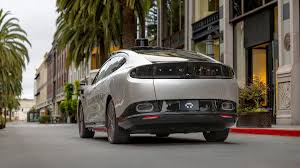
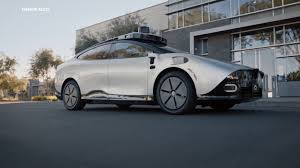
At its core, the Tensor Robocar represents the pinnacle of contemporary automotive engineering, marrying a bespoke electric vehicle platform with an unparalleled autonomous driving stack. This isn’t an existing car retrofitted with sensors; it’s a purpose-built machine, conceived with autonomy as its fundamental operating principle.
The Electric Foundation: Powering Autonomy
The Robocar is, first and foremost, a state-of-the-art electric vehicle (EV). It houses a substantial 112-kWh battery pack, targeting an estimated range of 250 miles – more than ample for daily commutes and urban excursions. What truly sets its EV architecture apart is the high-voltage 845-volt system, enabling lightning-fast charging. Tensor claims a remarkable 10 to 80 percent charge in just 20 minutes, a crucial factor for convenience and reducing range anxiety. This rapid charging capability is a significant competitive advantage, placing it at the forefront of next-generation EV technology.
Further enhancing the ownership experience, Tensor is actively developing an automated charging solution featuring a robotic arm. Imagine arriving home, parking, and having your car automatically plug itself in – a seamless integration of smart home and smart mobility. While details on the single rear motor’s output and vehicle curb weight are still under wraps, the focus is clearly on optimized efficiency and smart power delivery, rather than raw, unnecessary horsepower.
Beyond the powertrain, the physical design reflects its autonomous intent. The elegant, coach-style, center-closing doors are fully powered and equipped with an array of sensors, preventing accidental collisions with obstacles or other vehicles. This sophisticated door mechanism, combined with a sleek exterior, hints at the luxury pricing one might expect for such an advanced vehicle.
True Level 4 Autonomy: Beyond Supervised Driving
Tensor bills the Robocar as an SAE Level 4 autonomous vehicle, a classification that carries profound implications for the driver (or rather, non-driver). Unlike Level 2 or Level 2+ systems – even those as advanced as Tesla’s Full Self-Driving (Supervised) – a Level 4 vehicle can operate entirely on its own within a defined operational design domain (ODD) without human intervention. This means no hands on the wheel, no eyes on the road, and critically, no requirement for the human occupant to be ready to take over at any moment.
This is the fundamental distinction: current leading consumer systems demand human vigilance, acting as advanced driver-assistance systems (ADAS). The Robocar, in contrast, is designed for the absence of human attention in autonomous mode. This capability stems from its “ground-up” design philosophy, where every component, every line of code, and every sensor integration has been optimized for full autonomy from the outset. This wasn’t an aftermarket addition or a software patch; it was the core vision since development began in 2020. This uncompromising approach is vital for achieving the safety and reliability required for SAE Level 4 autonomous operation.
The Sensory Cortex and AI Brain: Unpacking Robocar’s Intelligence
Achieving true Level 4 autonomy is an astronomical computational and sensing challenge. Tensor has met this challenge head-on, outfitting the Robocar with an array of sensors that redefine comprehensive environmental awareness.
The All-Seeing Eye: A Symphony of Sensors
The Robocar integrates over 100 sensors, creating a 360-degree, multi-layered perception system:
Lidar Arrays: Five distinct lidar units – one prominently mounted on the roof, flanked by four strategically placed around the front, sides, and rear – provide unparalleled 3D spatial mapping. The rooftop lidar boasts an impressive range of nearly 1,000 feet, crucial for long-range object detection and predicting traffic flow. Lidar’s resilience to lighting conditions makes it an indispensable component for robust autonomous driving solutions.
Cameras: A staggering 37 cameras offer high-resolution visual data, processing everything from lane markings and traffic signals to the subtle nuances of human gestures.
Radar: Eleven radar units excel in adverse weather conditions (rain, fog, snow) and accurately measure velocity and distance, complementing lidar and camera data.
Ultrasonic Sensors: Ten ultrasonic sensors provide precise close-range detection, essential for low-speed maneuvers, parking, and navigating tight urban spaces.
Maintaining the clarity of these sensors is paramount. Tensor has engineered a sophisticated cleaning system featuring 30 washer nozzles and 13 mini wipers, complemented by heating elements to prevent fogging and snow buildup – ensuring reliable operation even in challenging climates, not just the sunny confines of California. A unique feature that significantly enhances durability and reliability are the physical covers that automatically close over the sensors when the vehicle is turned off, protecting them from dirt, debris, and potential damage, a clear step beyond current competitor offerings.
The Quantum Leap in Processing: Nvidia Drive Thor-X
All this sensor data is meaningless without the computational muscle to process it in real-time. The Robocar’s onboard computer is a powerhouse, featuring eight Nvidia Drive Thor-X chips, collectively capable of an astonishing 8,000 TOPS (trillion operations per second). To put this into perspective, this level of edge computing power allows the vehicle to process vast amounts of complex data locally, ensuring it can make instantaneous, safety-critical decisions even when cloud connectivity is compromised. While the car features three redundant communication channels for maximum connectivity, the emphasis on in-vehicle processing ensures robust performance independent of network availability. This commitment to onboard intelligence is a cornerstone of reliable AI in autonomous cars.
The Brain: Tensor Foundation Model Software
The software orchestrating this complex system is Tensor’s AI-based Foundation Model. This advanced platform employs a dual-system approach: one trained extensively by professional human drivers, capturing nuanced driving behaviors and decision-making; the other, a Visual Language Model (VLM), designed to address unusual and unexpected “edge cases” – those rare, unpredictable scenarios that often trip up less sophisticated systems. This comprehensive training regimen allows the Robocar to operate confidently and safely in diverse conditions, including rain and snow, broadening its appeal far beyond fair-weather regions. The system’s ability to communicate with the outside world is also critical: subtle displays on the lower exterior corners broadcast simple messages and pictograms to pedestrians, signaling the car’s autonomous status and acknowledging their presence, fostering trust and safety in urban environments.
Redefining Ownership: Privacy, Personalization, and Power
The Tensor Robocar isn’t just about driving itself; it’s about a complete re-imagination of the ownership experience, placing privacy, user control, and seamless interaction at its forefront.
Your Car, Your Data: The Privacy Paradigm
In an era increasingly concerned with digital privacy, Tensor takes a principled stance. A significant advantage of its robust onboard computing power is that the Robocar does not need to constantly collect and transmit data to the cloud. While it’s capable of sharing information for system improvements, owners must explicitly opt-in. Without this consent, all data – including sensitive biometric information like facial and palm recognition used for vehicle operation and theft prevention – remains securely within the vehicle.
Furthermore, owners have full transparency and control. All data collected by the car about its owner and users can be accessed through the vehicle’s interface or the companion phone app, and critically, can be deleted at the owner’s discretion. Even the interior cameras and microphones, used for driver monitoring during manual operation and voice assistant interaction, are equipped with physical covers and hardware off-switches, empowering owners to disable them for ultimate privacy. This commitment to self-driving car data privacy is a significant differentiator and a key selling point for a discerning public.
Conversational AI: Your Personal Mobility Agent
Moving beyond the rigid command structures of typical voice assistants, the Robocar integrates an Agentic AI backed by a Large Language Model (LLM). This isn’t just a voice recognition system; it’s designed for natural, human-like conversation. Instead of “Navigate to 123 Main Street,” you can simply say, “Take me to that new cafe we talked about last week.” The LLM’s ability to understand context, intent, and even learn your preferences transforms the vehicle into a true personal mobility assistant.
This intelligent assistant can be summoned from anywhere via call or text, anticipating your needs and picking you up. When connected to your calendar, it can learn your habits, anticipate upcoming trips, and even manage its own charging schedule to ensure it always has the necessary range. This personalized, predictive capability is a defining feature of smart mobility solutions and a game-changer for daily convenience.
The Choice to Drive: When You Want To
While designed for autonomy, the Robocar respects the human desire for control. It retains a steering wheel and pedals, allowing for manual operation whenever an owner wishes to drive. In manual mode, the vehicle offers a spectrum of assistance, from fundamental safety features like automatic emergency braking to sophisticated hands-free, eyes-off-the-road Level 3 semi-automated driving. This flexibility ensures that the owner always has the option to engage with the driving experience.
When the choice is made for autonomous operation, the transformation is seamless. The steering wheel gracefully retracts into the dashboard, and the center infotainment screen slides over to conceal it, creating an expansive, uncluttered interior. The accelerator and brake pedals similarly retract, maximizing passenger comfort and space. Should the driver wish to resume control, all elements pop back into place instantly.
The underlying autonomous car safety features are paramount. Steering, braking, and acceleration are all executed via by-wire systems, eliminating physical linkages and enhancing precision. Crucially, each of these systems, along with all the critical sensors, features multiple redundancies, ensuring the vehicle can continue to operate safely even in the unlikely event of a component failure. Additionally, rear-wheel steering allows the back tires to turn up to 7 degrees, granting the physically substantial Robocar an impressive 37-foot turning circle – comparable to a much smaller Tesla Model Y, vastly improving maneuverability in urban settings. Tensor is also rigorously targeting top crash safety scores from NHTSA, IIHS, and European NCAP, reinforcing its commitment to occupant protection.
Beyond Ownership: The Autonomous Rideshare Economy and Investment Value
Tensor’s vision extends beyond private ownership, offering intriguing possibilities for leveraging your personal autonomous transportation investment. The company has already forged a significant partnership with Lyft, planning to integrate Robocars into their luxury rideshare segment. This commercial validation underscores the platform’s robustness and scalability.
This also rekindles a long-standing promise from industry leaders: the ability for private owners to monetize their autonomous vehicles. Tensor envisions a future where Robocar owners can put their vehicle to work as an autonomous rideshare while they’re at the office, asleep, or on vacation. While the specific mechanics of hailing and payment for privately owned autonomous cars haven’t been fully detailed, integration with existing platforms like Lyft is a likely pathway. This potential for passive income generation adds a compelling dimension to the Robocar’s value proposition, transforming it from a mere expense into a potential asset. This could be a significant development in the electric autonomous vehicle market, offering a new economic model for vehicle ownership.
The Cost of Future Freedom: An Investment in Mobility
Naturally, such a revolutionary vehicle will command a premium. While Tensor has yet to disclose an official price, Head of Marketing Amy Luca has indicated “luxury pricing.” Drawing parallels to the estimated cost of a Waymo vehicle, which sits in the range of a well-optioned Mercedes-Benz S-Class (between $150,000 and $200,000), we can anticipate the Tensor Robocar, with its bespoke L4 hardware, advanced AI, comprehensive sensor suite, and privacy-first design, to reside on the higher end of this spectrum.
This isn’t merely the price of a car; it’s the cost of entry into an entirely new paradigm of personal mobility. It’s an investment in unparalleled convenience, reclaimed time, enhanced safety, and the potential for a new economic model of ownership. For early adopters and forward-thinkers, the Tensor Robocar represents not just a purchase, but a tangible stake in the investment in autonomous vehicles and the future of personal freedom.
Embrace the Future of Personal Mobility
The Tensor Robocar isn’t just a concept; it’s a meticulously engineered reality slated for our roads by early 2027. It represents the culmination of a decade of expertise, a strategic pivot towards consumer needs, and an unwavering commitment to safety, privacy, and an unmatched user experience. This is the future of personal mobility arriving in your driveway, offering a level of freedom and convenience previously unimaginable.
Are you ready to transcend the limitations of traditional driving and step into an era where your vehicle serves as your ultimate personal mobility agent? We invite you to explore Tensor’s vision further and join the conversation that will shape our autonomous future. Discover how the Robocar will transform your daily life and become an integral part of the next generation of transportation.