



Unlocking True Autonomy: Tensor Robocar Redefines Personal Mobility for 2027
The dream of a truly self-driving car – one that handles the complexities of the road without human intervention – has long captivated our collective imagination. For years, this vision manifested primarily in commercial robotaxi fleets, with services like Waymo and Cruise (prior to recent operational pauses) offering glimpses of an autonomous future in select urban centers. Tesla’s bold promises of Full Self-Driving have continually pushed the envelope, yet still require human supervision. But what if you could own that future? What if the pinnacle of autonomous driving wasn’t just a service, but a personal vehicle parked in your driveway?
Enter the Tensor Robocar. Poised for a 2027 launch, this ambitious vehicle emerges from the strategic pivot of what was once a prominent robotaxi operator, now squarely focused on bringing SAE Level 4 autonomy directly to the consumer. As an industry veteran who has watched the autonomous vehicle (AV) space evolve over the past decade, I can attest that this isn’t just another concept; it’s a meticulously engineered, ground-up solution that promises to redefine personal transportation.
From Fleet to Freedom: Tensor’s Strategic Evolution
Tensor’s journey is a compelling narrative of adaptation and ambition, mirroring the dynamic shifts within the AV industry itself. Tracing its roots back to 2016 as AutoX in Silicon Valley, the company initially carved out its niche in the burgeoning autonomous commercial vehicle and robotaxi sector. By 2017, its autonomous vehicles were navigating the intricate urban landscapes of both California and China. The pandemic era saw AutoX double down on its Chinese operations, amassing a formidable fleet of over a thousand robotaxis providing public rides across five major cities – a testament to their early technological prowess and operational scalability.
However, the global landscape of data governance and geopolitical realities brought about a pivotal strategic redirection. Within the last year, Tensor made the difficult but decisive choice to divest entirely from its Chinese ventures, citing burgeoning data privacy concerns as a primary motivator. This wasn’t merely a geographical shift; it was a fundamental recalibration of its core business model. Rebranding as Tensor and returning its headquarters to San Jose, California, the company embarked on a bold new mission: to engineer and sell truly autonomous vehicles directly to private customers, bypassing the fleet-centric model entirely. This pivot demonstrates not only agility but a keen understanding of a nascent, yet potentially lucrative, consumer demand for personal, fully autonomous mobility solutions in the Western market.
Engineering the Future: The Robocar’s Foundational Design
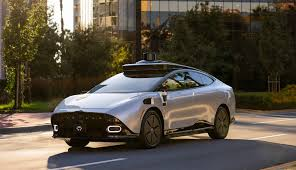
At its core, the Tensor Robocar is a state-of-the-art electric vehicle (EV), but one that has been holistically engineered from the ground up with Level 4 autonomy as its primary directive, not an afterthought. This isn’t a conventional car retrofitted with sensors; it’s a purpose-built autonomous platform designed for unparalleled safety, efficiency, and intelligence.
The vehicle boasts a robust 112-kWh battery pack, providing an estimated 250 miles of range – a practical figure for daily use and even longer excursions, especially when coupled with its advanced charging capabilities. Powering the Robocar is a single rear motor, whose output, while currently unspecified, will undoubtedly be optimized for smooth, predictable autonomous operation and responsive manual driving. Crucially, its 845-volt architecture enables lightning-fast charging, propelling the battery from 10 to 80 percent in a mere 20 minutes. This high-voltage system is a critical differentiator, mitigating range anxiety and ensuring the vehicle spends more time on the road and less time tethered to a charger. Tensor is also pushing the boundaries of convenience by developing an automated charging system featuring a robotic arm, promising a future where your Robocar plugs itself in upon arrival – a small but significant leap in autonomous functionality.
Beyond the powertrain, the physical design reflects an uncompromising commitment to the autonomous experience. The coach-style, center-closing doors are fully powered and equipped with an array of sensors. This thoughtful design ensures obstacle avoidance, preventing accidental bumps and scrapes in tight parking spots or crowded urban environments. It’s these subtle yet impactful design choices that underscore Tensor’s user-centric approach, making the transition to autonomous ownership feel seamless and intuitive.
The Apex of Autonomy: SAE Level 4 Capabilities Unleashed
Tensor positions the Robocar as an SAE Level 4 autonomous vehicle, a critical distinction in the current AV landscape. For the uninitiated, Level 4 signifies that the vehicle can perform all driving tasks and monitor the driving environment under specific conditions without human intervention. Crucially, it means the car can drive itself without a human aboard, though for safety and convenience, Tensor has opted to retain a steering wheel and pedals for manual override. This capability stands in stark contrast to even the most advanced Level 2+ systems available today, such such as Tesla’s FSD (Supervised), which, while impressive, still demands constant human attention and readiness to intervene. The Robocar aims to free the driver from these responsibilities entirely within its operational design domain.
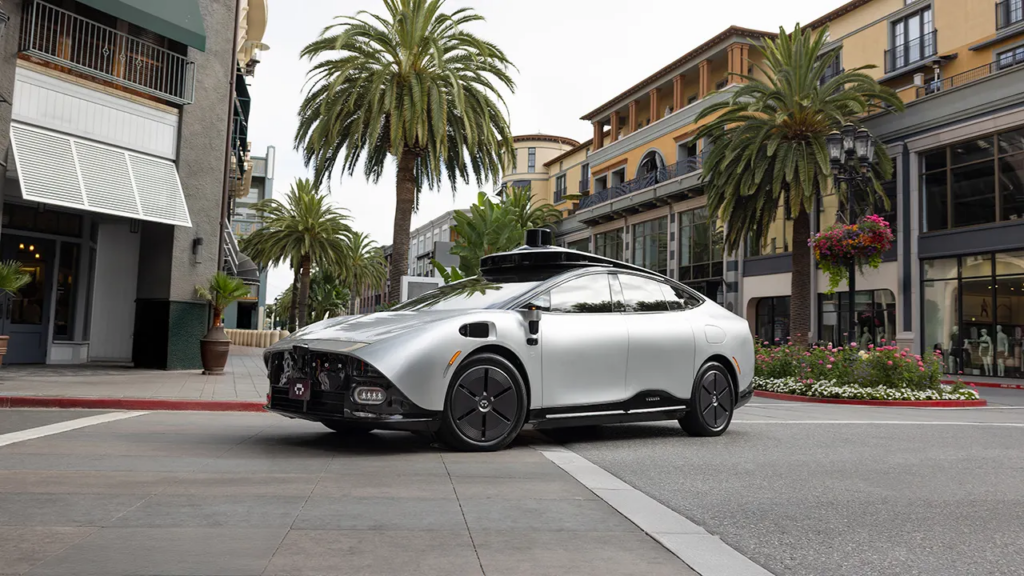
Achieving this pinnacle of autonomy isn’t a simple feat; it requires an intricate symphony of hardware and software working in perfect harmony. Tensor’s engineering team embarked on this ambitious project in 2020, leveraging insights gleaned from their extensive robotaxi operations.
The Robocar’s perception stack is nothing short of extraordinary. It’s outfitted with over 100 sensors, a testament to the robust redundancy and comprehensive environmental awareness required for Level 4. This includes five lidar arrays – a commanding rooftop unit offering a 360-degree, nearly 1,000-foot detection range, complemented by four strategically placed units around the vehicle’s periphery. Supplementing these are 37 high-resolution cameras, 11 radars providing all-weather detection, and 10 ultrasonic sensors for close-range object detection. This multi-modal sensor fusion ensures that the vehicle maintains an unparalleled understanding of its surroundings, even in adverse conditions.
Maintaining the integrity of this perception suite is equally critical. Tensor has integrated 30 washer nozzles and 13 mini wipers, alongside heating elements, to combat fogging, rain, and snow accumulation – a pragmatic design choice that expands the vehicle’s operational domain beyond perpetually sunny climates. Furthermore, Tensor goes a step beyond current robotaxi designs by incorporating physical covers that automatically deploy over the sensors when the vehicle is off, protecting these vital components from dirt, debris, and potential damage – a small detail that speaks volumes about long-term reliability and sensor longevity.
Powering this data-intensive operation is a monstrous onboard computing platform featuring eight Nvidia Drive Thor-X chips. This formidable array delivers an astonishing 8,000 TOPS (trillion operations per second) of processing power, enabling real-time, ultra-low-latency decision-making. While the Robocar maintains triple-redundant communication channels for maximum cloud connectivity, the vast majority of its computing is performed locally on the vehicle. This crucial design choice ensures robust operation even in areas with spotty 5G signals, guaranteeing consistent and reliable autonomous performance regardless of network availability.
The intelligence driving the Robocar is Tensor’s Foundation Model software, an advanced AI-based system. This model operates two parallel perception and decision-making systems: one meticulously trained on vast datasets of professional human driving behavior, and the other leveraging a Visual Language Model (VLM) specifically designed to address and solve novel, unexpected “edge cases” – those rare, unpredictable scenarios that often challenge autonomous systems. This dual-pronged AI approach is key to achieving the robust safety and reliability demanded of Level 4 autonomy, empowering the Robocar to operate confidently in diverse weather conditions, from heavy rain to snowfall.
To further enhance safety and facilitate seamless integration into mixed traffic environments, the Robocar features discreet displays on its lower exterior corners. These provide simple, intuitive messages and pictograms to pedestrians, communicating the vehicle’s autonomous status and confirming that it has detected them – a vital step in building trust and fostering safer interactions between AVs and vulnerable road users.
Your Car, Your Data: A Paradigm Shift in Privacy
In an era increasingly defined by data privacy concerns, Tensor has made a bold statement with the Robocar: your data, your control. A significant differentiator for the Robocar lies in its onboard computing architecture. Since the vast majority of processing occurs within the vehicle itself, Tensor minimizes the need for continuous data collection and transmission to the cloud. While the vehicle is capable of sharing information for system improvements or mapping updates, owners must explicitly opt-in for any cloud data sharing. Otherwise, all personal and operational data remains securely stored within the vehicle.
This commitment extends to granular control over all collected data, including sensitive biometric information like facial and palm recognition – which is used for vehicle access and theft prevention. Owners can access, review, and delete all their data directly through the vehicle’s infotainment system or a dedicated mobile application.
Furthermore, acknowledging concerns about constant surveillance, the Robocar’s interior cameras and microphones – used for driver monitoring during manual operation and voice assistant interaction – are equipped with physical covers and discrete off switches. This empowers owners with the complete autonomy to disable these features at will, ensuring their privacy is paramount, not an afterthought. This transparent approach to data handling is a significant value proposition in the 2025 market, appealing to privacy-conscious consumers who are wary of omnipresent data harvesting.
The Conversational Cockpit: Beyond Commands
The traditional vehicle interface, often reliant on button presses or rigid voice commands, is rapidly being rendered obsolete. The Tensor Robocar embodies the next evolution of human-machine interaction through its sophisticated Agentic AI, powered by a cutting-edge Large Language Model (LLM). This isn’t merely a voice assistant; it’s designed for natural, conversational dialogue.
Instead of barking commands like “Navigate to Main Street,” you can engage in a fluid conversation: “Hey Robocar, I’m thinking of grabbing some coffee before heading to the office. What’s the fastest route to my usual spot, and can you check if I have enough charge for my evening meeting afterward?” The Agentic AI intelligently processes context, anticipates needs, and responds in a human-like manner.
This intelligent assistant extends its capabilities beyond in-car interaction. You can summon your Robocar from anywhere with a simple call or text, asking it to pick you up. Over time, the system learns your habits, preferences, and even anticipates your needs. By connecting to your digital calendar, the Robocar can proactively suggest routes, prepare for upcoming trips, and manage its charging schedule to ensure optimal battery range for your day – transforming the car from a mere mode of transport into an intelligent, proactive personal assistant.
Embracing the Drive: When You Want Control
While the Robocar’s primary design intent is fully autonomous operation, Tensor understands that the joy of driving, for many, remains an integral part of the automotive experience. Thus, the vehicle thoughtfully retains a steering wheel and pedals, providing owners with the flexibility to take manual control whenever desired.
When driven by a human, the Robocar acts as a highly advanced co-pilot, offering a spectrum of assistance. This ranges from foundational safety features like automatic emergency braking and lane-keeping assistance, all the way up to advanced hands-free, eyes-off-the-road Level 3 semi-automated driving – allowing the driver to disengage from the physical act of driving under specific highway conditions, while still requiring readiness to intervene. This layered approach ensures that whether you prefer full autonomy or an engaged driving experience, the Robocar adapts to your preference.
The transition between modes is a testament to clever engineering. When you opt for autonomous mode, the steering wheel gracefully retracts into the dashboard, and the central infotainment screen slides to conceal it, creating an expansive, uncluttered passenger-centric space. Simultaneously, the accelerator and brake pedals retract, disappearing from view and eliminating any potential interference. Should you wish to regain control, these elements seamlessly reappear, ready for immediate engagement. This fluid transition highlights the thoughtfulness of Tensor’s design, prioritizing both convenience and safety.
The Bedrock of Safety: Redundancy and Resilience
Safety, particularly in Level 4 autonomous vehicles, is paramount. The Tensor Robocar is built upon a foundation of multi-layered redundancy across all critical systems, ensuring continuous operation even in the unlikely event of a component failure. Steering, braking, and acceleration are all executed via sophisticated by-wire systems, eliminating physical linkages in favor of electronic control. Each of these critical systems, along with every sensor in the extensive suite, features multiple redundancies. This means that if a single sensor or an entire control module were to malfunction, backup systems immediately take over, preventing any degradation in the vehicle’s autonomous capabilities or safety performance.
Further enhancing maneuverability and safety, the Robocar incorporates rear-wheel steering, allowing the rear tires to pivot up to 7 degrees in either direction. This engineering marvel grants the vehicle an incredibly tight 37-foot turning circle – comparable to a much smaller Tesla Model Y, despite the Robocar’s likely substantial footprint. This agility is invaluable for navigating congested urban environments and executing precise parking maneuvers.
Tensor’s commitment to passenger protection extends to rigorous crash safety. The company is actively targeting top crash safety scores from leading regulatory bodies, including the National Highway Traffic Safety Administration (NHTSA) and the Insurance Institute for Highway Safety (IIHS) in the U.S., as well as the European New Car Assessment Programme (Euro NCAP). This dedication to stringent safety standards underscores their holistic approach to building trust in autonomous technology.
Your Car, Your Business: Monetizing Autonomy
Beyond personal transportation, the Tensor Robocar opens up intriguing possibilities for income generation – a concept that has been widely discussed but rarely realized for private AV owners. Tensor has already secured a significant partnership with Lyft, planning to integrate Robocars into their luxury rideshare segment. This strategic alliance not only validates Tensor’s technology but also offers a potential blueprint for private owners to leverage their autonomous asset.
Recall the long-held promise by visionaries like Elon Musk: that you could send your car out as an autonomous rideshare while you’re at work or asleep, effectively turning a depreciating asset into an earning one. Tensor is actively pursuing this vision, and given the measured rollout of Tesla’s own Robotaxi service, Tensor might indeed be among the first to bring this concept to tangible reality for private ownership. While specific details on the hailing, payment, and operational logistics for privately owned autonomous cars are still under wraps, it’s highly probable that such services would integrate seamlessly through existing, trusted platforms like Lyft, providing owners with a ready-made ecosystem to monetize their Robocar’s downtime.
The Investment in Future Mobility: Pricing and Value
The question on everyone’s mind, of course, is “What will this unparalleled technology cost?” While Tensor has yet to release official pricing, their head of marketing, Amy Luca, has indicated that prospective buyers should anticipate “luxury pricing.” Drawing parallels to the estimated cost of a Waymo autonomous vehicle – which the Waymo CEO has suggested falls in the range of a well-optioned Mercedes-Benz S-Class (between $150,000 and $200,000) – it’s reasonable to project that the Tensor Robocar, with its ground-up Level 4 autonomy and advanced feature set, will likely command a price point at the higher end of this luxury spectrum.
This investment, however, must be viewed not merely as the purchase of a vehicle, but as an early adoption of a transformative personal mobility solution. For discerning individuals who prioritize safety, cutting-edge technology, and the ultimate in convenience and privacy, the Tensor Robocar represents a compelling value proposition. It’s an investment in the future of transportation, offering an unprecedented level of autonomy that promises to free up valuable time and redefine the very nature of travel.
Embrace the Autonomous Era
The Tensor Robocar isn’t just another vehicle; it’s a testament to a decade of relentless innovation, a strategic pivot, and a bold vision for personal freedom in the autonomous age. By addressing critical considerations like data privacy, delivering robust Level 4 autonomy, and integrating a truly intelligent user interface, Tensor is poised to deliver a game-changing product by 2027. This vehicle stands ready to usher in an era where the pinnacle of self-driving technology is not just accessible but owned.
Are you ready to redefine your relationship with personal transportation? To be among the first to experience the profound liberation of true Level 4 autonomy in your own driveway?
Join the movement shaping the future of individual mobility. Visit Tensor’s official website today to learn more about the Robocar and register for exclusive updates as we approach the dawn of personal autonomous ownership.