



The Dawn of Personal Autonomy: Tensor Robocar Redefines Luxury Self-Driving Car Ownership
As we navigate the ever-accelerating currents of the 21st century, the concept of a truly self-driving vehicle has consistently shifted from science fiction to imminent reality. In 2025, the automotive landscape is a thrilling tapestry woven with advancements in electrification, artificial intelligence, and sophisticated sensor technology. While autonomous robotaxi services like Waymo and increasingly advanced ADAS (Advanced Driver Assistance Systems) from Tesla and others mark significant progress, the dream of owning a private, completely autonomous Level 4 vehicle has remained just beyond the horizon for most consumers. That is, until now. Enter the Tensor Robocar, a bold declaration from a seasoned player in the autonomous vehicle space, poised to revolutionize personal mobility by offering a ground-up Level 4 autonomous vehicle directly to private customers by January 2027.
From my decade of immersion in the autonomous vehicle technology sector, I’ve witnessed countless promises and painstaking developments. What Tensor is proposing is not merely an incremental upgrade but a fundamental shift in how we conceive of personal transportation. This isn’t just another electric vehicle; it’s a meticulously engineered private self-driving car designed for an owner who values ultimate convenience, cutting-edge technology, and unparalleled data privacy.
The Genesis of True Autonomy: A Decade in the Making
The journey of Tensor, much like the evolution of autonomous driving itself, is one of adaptation and strategic pivots. The company began its life in Silicon Valley back in 2016 as AutoX, initially focusing its considerable engineering prowess on developing autonomous commercial vehicles and robust robotaxi fleets. From the outset, their ambition was clear: to master the complexities of self-driving in diverse, real-world environments. Testing commenced in both California and bustling urban centers across China a year later, quickly establishing AutoX as a serious contender in the burgeoning AV industry.
The crucible of the COVID pandemic saw AutoX double down on its Chinese operations, successfully building and deploying a formidable fleet of over 1,000 autonomous taxis. These vehicles provided public rides across five major cities, accumulating invaluable operational data and refining their autonomous driving software in some of the world’s most challenging traffic conditions. This extensive real-world exposure is a critical differentiator, providing a bedrock of experience that many newer players lack.
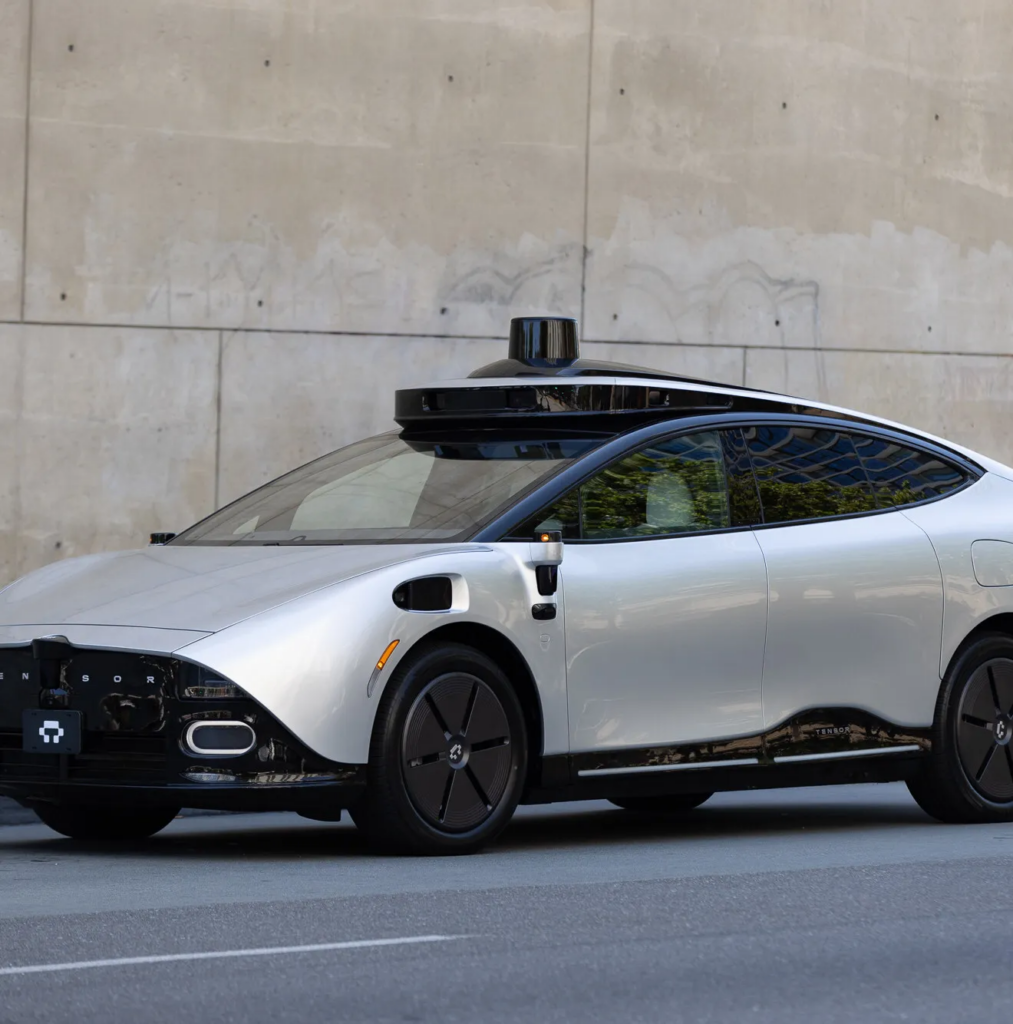
However, the global landscape shifted, bringing increased scrutiny on data governance and privacy, particularly concerning vehicle operational data gathered in international territories. Recognizing these evolving geopolitical and consumer concerns, the company made a strategic, and frankly, courageous decision. Within the last year, they completely divested from their Chinese operations, an unprecedented move for a company of their scale. Rebranding as Tensor, they returned to their roots in San Jose, California, and executed a profound pivot: shifting their entire focus from corporate fleets and robotaxis to designing and selling a truly autonomous vehicle for private customers. This strategic repositioning, driven by a deep understanding of market needs and regulatory realities, highlights Tensor’s agility and foresight in the competitive arena of next-generation electric cars.
Engineering a Vision: The Robocar’s Core Technology
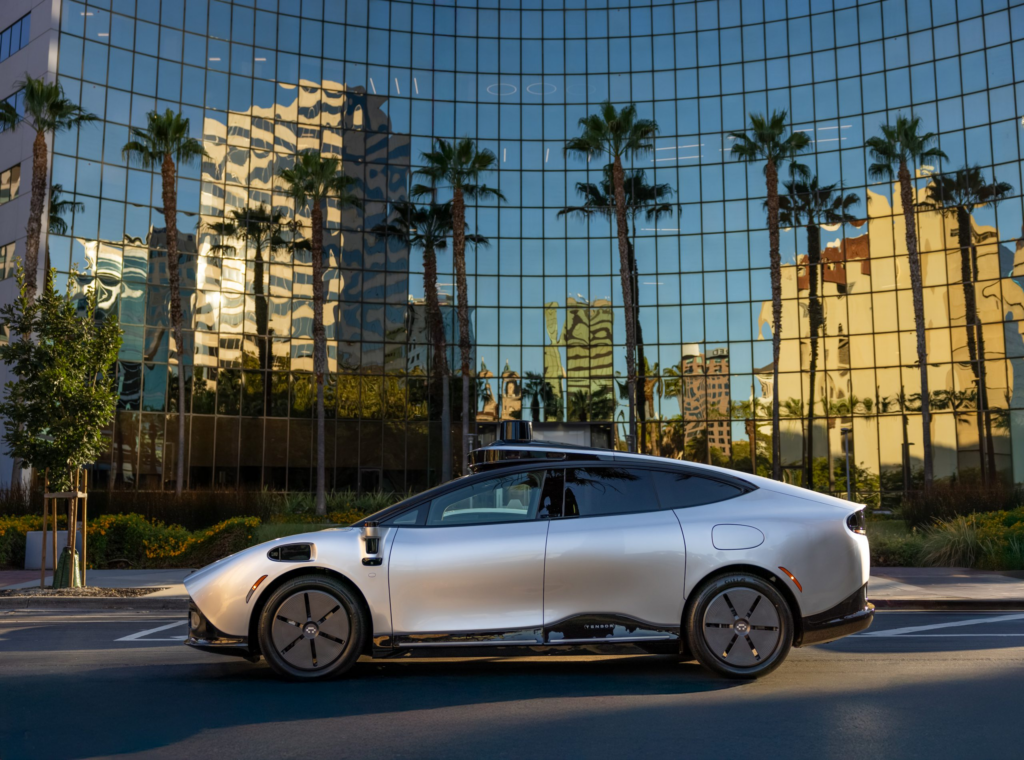
At the heart of the Tensor Robocar lies a philosophy of purpose-built autonomy. Unlike many current “self-driving” offerings that retrofit existing vehicle architectures with autonomous capabilities, Tensor embarked on a clean-sheet design in 2020. This ground-up approach allows for seamless integration of hardware and software, optimizing every component for autonomous operation and creating a more reliable and safer platform. This commitment to fundamental design is crucial for achieving Level 4 autonomy, where the vehicle can handle all driving tasks under specific conditions without human intervention.
Achieving this level of autonomy demands an extraordinary perception system and immense computational power. The Tensor Robocar is outfitted with an arsenal of over 100 sensors, meticulously placed to provide a redundant, 360-degree view of its surroundings. This includes five high-resolution LiDAR arrays – one prominently mounted on the roof for expansive long-range detection, complemented by four strategically positioned around the front, sides, and rear for robust close-range perception. LiDAR technology in self-driving vehicles is paramount for generating precise 3D maps of the environment, crucial for navigating complex scenarios.
Supplementing LiDAR are 37 cameras, offering rich visual data for object classification, traffic light detection, and lane keeping; 11 radars, excelling in adverse weather conditions and measuring object velocity; and 10 ultrasonic sensors, vital for low-speed maneuvers and parking. The rooftop LiDAR alone boasts an impressive nearly 1,000-foot detection range, providing an unparalleled understanding of the vehicle’s environment at all times. This comprehensive sensor suite ensures robust perception even in challenging situations, significantly enhancing automotive safety innovations.
But what good are sensors if they’re obstructed? Tensor has addressed a common Achilles’ heel of autonomous vehicles: sensor cleanliness. The Robocar features an ingenious system comprising 30 washer nozzles and 13 mini wipers, strategically positioned to keep all critical sensors crystal clear. Furthermore, integrated heating elements prevent fogging and snow buildup, ensuring consistent performance in diverse climates – a critical distinction from systems primarily designed for sunny California. Taking this a step further, the sensors are protected by physical covers that automatically close when the vehicle is off, safeguarding them from dirt, dust, and potential damage, a thoughtful design improvement over many existing autonomous platforms.
All this raw sensor data is processed by a formidable onboard computer. The Robocar houses eight Nvidia Drive Thor-X chips, collectively boasting an astounding 8,000 TOPS (trillion operations per second). This colossal processing capability allows for real-time data fusion and decision-making, even in the most complex urban environments. While the vehicle maintains redundant communication channels for cloud connectivity, the bulk of its computing power resides onboard. This local processing ensures consistent and reliable operation even in areas with poor 5G signals, directly addressing connectivity concerns that have plagued other autonomous efforts. The Tensor Foundation Model software, an AI-based system, employs a dual-system approach: one trained by millions of miles of professional human driving data, and the other honed on a Visual Language Model (VLM) to effectively tackle unusual “edge cases” – those rare, unpredictable scenarios that often challenge even the most advanced AI. This innovative approach promises unparalleled adaptability and robustness, making it a true leader in AI-powered driving.
Another thoughtful touch for urban navigation is the integration of external displays on the lower exterior corners of the vehicle. These screens broadcast simple messages and pictograms to pedestrians, clearly communicating the vehicle’s autonomous status and confirming that it “sees” them. This human-centric design fosters trust and improves safety in shared spaces, contributing to a truly smart car technology experience.
Powering the Journey: Electric Prowess for the Future
As a premier entrant in the next-generation electric cars market, the Tensor Robocar is built upon a high-performance electric platform. It features a substantial 112-kWh battery pack, providing an estimated driving range of 250 miles. In 2025, while some EVs push beyond this, 250 miles remains a highly practical range for daily use, striking a balance between capacity and vehicle weight.
What truly distinguishes its power delivery is the advanced 845-volt battery architecture. This high-voltage system enables ultra-rapid charging, allowing the Robocar to replenish its battery from 10 to 80 percent in a remarkable 20 minutes. This significantly reduces downtime and enhances convenience, mitigating range anxiety and making long-distance travel more feasible for private self-driving car owners. Tensor is also pioneering a fascinating home charging solution: an automated charger with a robotic arm that will seamlessly plug the car in for you upon arrival, further enhancing the autonomous luxury experience. This focus on seamless integration of charging with autonomy marks a new benchmark in electric vehicle innovation.
The Intelligent Interior: Personalized & Secure
Beyond its external capabilities, the Tensor Robocar redefines the in-cabin experience, blending advanced AI with a steadfast commitment to user privacy – a critical differentiator in today’s data-conscious world. At its core, the vehicle is designed to be a conversational companion, not just a responsive machine. Equipped with an Agentic AI powered by a sophisticated Large Language Model (LLM), the Robocar interacts with occupants in a truly human-like manner. Instead of rigid voice commands, you can engage in natural conversation, articulating your destination and preferences intuitively. This advanced AI in automotive applications allows for contextual understanding and proactive assistance, marking a significant leap in high-tech vehicle features.
Imagine calling or texting your car from anywhere, asking it to pick you up, and it simply arrives. The Robocar also learns your habits, anticipating frequent destinations, optimizing routes, and even integrating with your digital calendar to predict upcoming trips, ensuring optimal battery range and pre-empting charging needs. This level of personalized intelligence transforms the vehicle from a mere conveyance into a truly proactive assistant.
Crucially, Tensor places data privacy at the forefront of its design. Because the majority of computing is handled onboard the vehicle, Tensor significantly reduces its reliance on cloud-based data collection. While the car is capable of sharing information with the cloud for services like traffic updates or map improvements, owners retain complete control, with a clear opt-in system. If you choose not to opt in, all your personal data, including biometric information like facial and palm recognition (used for vehicle operation and theft prevention), remains securely within your car. Furthermore, owners can access and delete all collected data via the vehicle’s interface or a dedicated smartphone app, empowering individuals with unprecedented control over their digital footprint in the era of connected car technology.
Even interior cameras and microphones, essential for driver monitoring during manual operation and enabling the voice assistant, are designed with privacy in mind. Each has a physical cover and a dedicated off switch, ensuring that you dictate when and how your personal space is monitored. This level of transparency and user control directly addresses prevalent data security autonomous vehicles concerns, fostering trust in a privacy-sensitive market.
Beyond Autonomy: The Driver’s Choice & Uncompromised Safety
While the Robocar is engineered for full Level 4 autonomy, Tensor understands the lingering desire for human control. Thus, it thoughtfully retains a steering wheel and pedals, allowing you to take the helm whenever the mood strikes. When operating manually, the vehicle offers a spectrum of advanced driver assistance systems (ADAS), from fundamental automatic emergency braking to sophisticated Level 3 semi-automated driving, where you can take your hands off the wheel and eyes off the road under specific conditions.
However, the magic truly unfolds when you surrender control. With a simple command, the Robocar seamlessly transitions to autonomous mode. The steering wheel gracefully retracts into the dashboard, while the center infotainment screen slides over to conceal its recess. Simultaneously, the accelerator and brake pedals retract, creating an expansive, lounge-like interior space. The identical passenger screen remains in place, allowing occupants to enjoy their journey uninterrupted. Should you wish to resume manual driving, a quick gesture brings all controls back into position. This fluid transition between autonomous and manual driving modes exemplifies the premium autonomous vehicles experience.
Underpinning both autonomous and manual operation are sophisticated by-wire systems for steering, braking, and acceleration, eliminating traditional mechanical linkages. Each of these critical systems, along with the entire sensor array, incorporates multiple redundancies. This means that even in the unlikely event of a component failure, the vehicle’s core driving functions remain operational, a testament to its robust design and commitment to safety. Adding to its exceptional maneuverability, the Robocar features rear-wheel steering, allowing the back tires to turn up to 7 degrees in either direction. This engineering feat grants the vehicle a remarkable 37-foot turning circle – comparable to a Tesla Model Y, despite the Robocar’s likely larger footprint – making it surprisingly agile in urban environments.
Tensor’s commitment to safety extends to crash performance. The company is actively targeting top-tier crash safety scores from leading regulatory bodies, including the NHTSA (National Highway Traffic Safety Administration), IIHS (Insurance Institute for Highway Safety) in the U.S., and the European NCAP (New Car Assessment Programme). This dedication underscores their intent to deliver not just an autonomous vehicle, but one that sets a benchmark for occupant protection.
The Business of Autonomy: New Economic Models for Private Ownership
Beyond personal use, the Tensor Robocar is poised to unlock novel economic opportunities for its owners, a vision long articulated by innovators like Elon Musk but yet to be fully realized for private vehicles. Tensor has already forged a strategic alliance with Lyft, indicating that the Robocar will be integrated into their platform as a luxury rideshare option. This partnership provides a clear pathway for owners to generate passive income by allowing their vehicles to operate autonomously as high-end taxis when not in personal use.
Imagine sending your luxury self-driving car to pick up passengers while you’re at the office or even asleep. Tensor is making this futuristic scenario a tangible reality. While the precise mechanisms for hailing and compensating privately owned autonomous cars within the Lyft ecosystem are still being detailed, the framework is robust, suggesting seamless integration and robust earning potential. This hybrid model not only justifies the significant initial investment but also transforms the vehicle from a depreciating asset into a productive one, ushering in new future mobility solutions.
As for the cost, Tensor remains tight-lipped about the exact pricing, but indications point towards a “luxury pricing” tier. Drawing parallels with Waymo’s CEO, who has suggested their autonomous vehicles cost as much as a well-appointed Mercedes-Benz S-Class, we can anticipate the Tensor Robocar to fall within the $150,000 to $200,000 range. Given its sophisticated, ground-up Level 4 autonomous architecture, its comprehensive sensor suite, and its cutting-edge AI, it’s reasonable to expect it to lean towards the higher end of this estimate. This pricing strategy targets a discerning clientele eager to be at the forefront of sustainable transportation solutions and personal technological adoption.
The Horizon: A Look Ahead
The Tensor Robocar represents a significant inflection point in the automotive industry. It’s not just another EV; it’s a testament to how far autonomous vehicle technology has evolved and a glimpse into the future of transportation. While challenges remain – regulatory frameworks continue to adapt, and public trust, though growing, needs nurturing – Tensor’s focused approach, backed by years of real-world experience and a strong emphasis on data privacy, positions it uniquely.
From my perspective, this venture holds the potential to redefine luxury, convenience, and even car ownership itself. It’s about reclaiming time, reducing driving stress, and offering a personal mobility experience that is both supremely intelligent and intimately private. As we stand on the cusp of this transformative era, the Tensor Robocar represents more than just a vehicle; it’s a statement about our future. To truly grasp the implications of such groundbreaking innovation, we invite you to delve deeper into the evolving world of personal autonomy and consider what this next generation of mobility could mean for you.