


The Private Revolution: Unlocking True Level 4 Autonomy for Your Driveway in 2027
For over a decade, we’ve been promised the autonomous vehicle – a car that drives itself, freeing us from the daily grind of traffic and giving us back invaluable time. While robotaxi services like Waymo and increasingly sophisticated ADAS (Advanced Driver-Assistance Systems) from industry giants have shown glimpses of this future, the true holy grail for many has remained out of reach: a personal, privately-owned vehicle capable of full Level 4 autonomy. In the rapidly evolving landscape of 2025, with technology hurtling forward at an unprecedented pace, a groundbreaking contender is emerging to finally deliver on this promise: the Tensor Robocar.
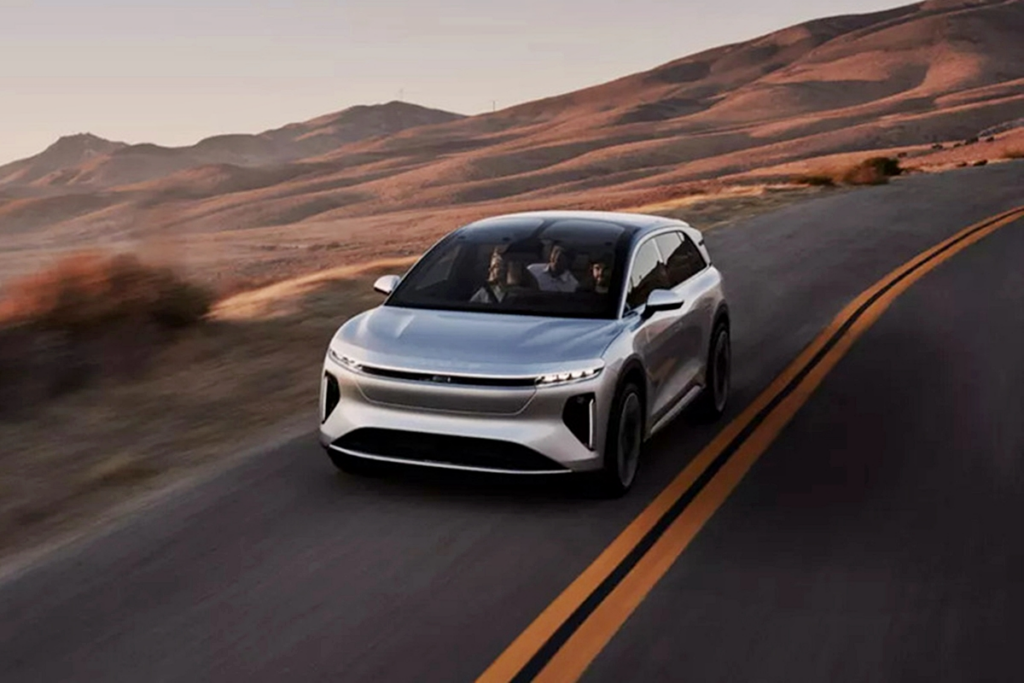
Having navigated the intricate world of autonomous driving technology for the past ten years, from early sensor fusion experiments to the complex regulatory frameworks of today, I can confidently say that what Tensor is bringing to market in January 2027 isn’t just another EV with advanced features; it’s a paradigm shift. This isn’t a modified sedan with bolt-on sensors; it’s a meticulously engineered, ground-up Level 4 autonomous electric vehicle designed from its very inception to redefine personal transportation.
A Decade of Dedication: From Robotaxis to Private Autonomy
Tensor’s journey to this pivotal moment is as fascinating as the technology itself. Originally founded as AutoX in Silicon Valley in 2016, the company initially set its sights on the burgeoning commercial autonomous vehicle and robotaxi sector. My peers and I watched closely as they deployed test fleets in California and China, quickly becoming a significant player in the latter, operating over a thousand autonomous taxis across five major cities during the demanding COVID-19 era. This extensive real-world experience, accruing millions of miles in diverse and challenging urban environments, laid an invaluable foundation of data and operational expertise.
However, the winds of strategic focus shifted. In a move that surprised some but, in hindsight, makes perfect sense for capitalizing on the emerging desire for personal control and data privacy, Tensor completely divested from its Chinese operations. Head of Marketing, Amy Luca, highlighted data privacy concerns as a primary driver for this strategic pivot. Re-establishing its headquarters in San Jose, California, the company rebranded as Tensor and recalibrated its mission: to bring an unparalleled level of autonomous capability directly to the private consumer market, moving beyond the fleet-centric model. This strategic re-focus, informed by nearly a decade of deep immersion in the AV space, positions them uniquely to address what many discerning consumers genuinely want.
Engineering Excellence: The Tensor Robocar’s Core Design
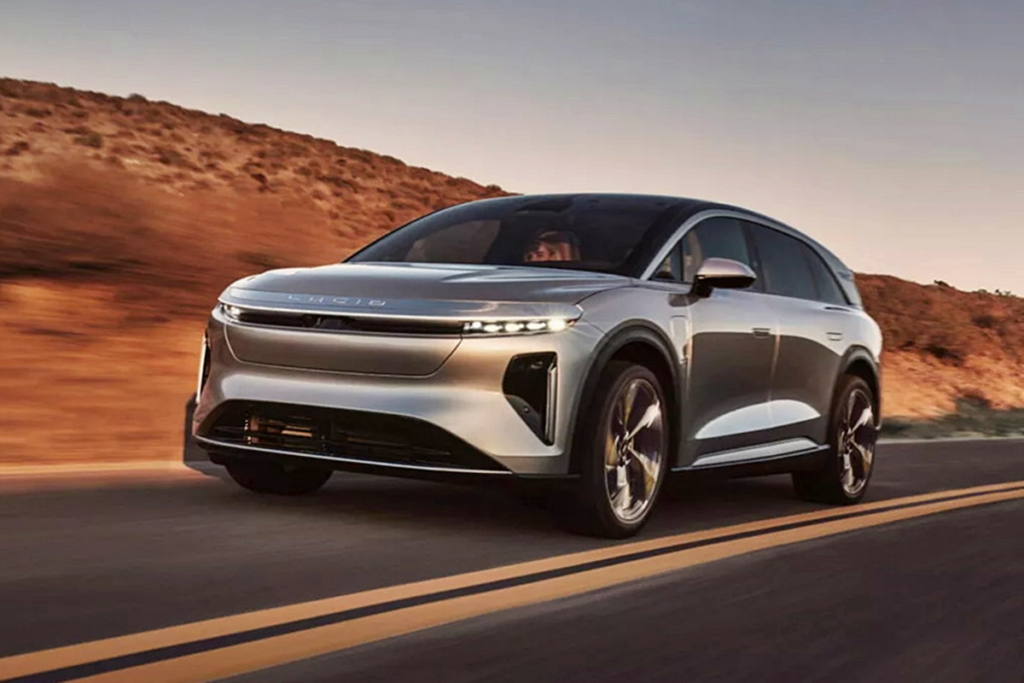
At its heart, the Tensor Robocar embodies a sophisticated synthesis of electric vehicle performance and autonomous intelligence. It’s built around a robust 112-kWh battery pack, designed to provide an estimated 250 miles of range – a practical figure for daily commuting and weekend excursions in a Level 4 autonomous vehicle. Crucially, Tensor is incorporating an 845-volt architecture, enabling blistering fast-charging capabilities that can take the battery from 10 to 80 percent in a mere 20 minutes. This focus on rapid replenishment is a critical element for user convenience, minimizing downtime and maximizing the utility of a truly self-driving car.
While initial details on motor output and curb weight remain under wraps, the philosophy here is clear: build a highly efficient and responsive EV platform capable of seamlessly integrating its autonomous hardware and software. Beyond the propulsion, Tensor has innovated with a number of luxurious and practical features. The coach-style, center-closing doors, for instance, are fully powered and equipped with an array of sensors, intelligently preventing accidental collisions with obstacles or other vehicles – a small but significant detail that elevates the user experience. They’re even exploring automated charging solutions featuring robotic arms, eliminating the last manual step of plugging in your car upon arrival home. This level of foresight into the holistic user journey is what differentiates cutting-edge automotive innovation.
The Pinnacle of Autonomy: True Level 4 Capability
This is where the Tensor Robocar truly stands apart in the crowded market of 2025. Tensor isn’t just claiming Level 4 autonomy; they’ve engineered the vehicle from the ground up to achieve it. This means the car is designed to handle all aspects of driving under specific conditions, without human intervention or supervision, though it retains traditional controls for optional manual operation. This foundational design philosophy is a critical distinction, setting it apart from systems like Tesla’s Full Self-Driving (Supervised), which, while impressive, fundamentally remains a Level 2 system demanding constant human vigilance.
The decision to design the entire vehicle around its autonomous function, rather than retrofitting existing platforms, is a testament to Tensor’s commitment to safety, reliability, and performance. Development commenced in 2020, even as their robotaxi service gained traction, signifying a long-term vision for private autonomous car ownership. This dedication to native integration means every component, from the chassis to the wiring harnesses, is optimized for autonomous operation, leading to superior robustness and a truly integrated user experience. This ground-up approach is what enables a private Level 4 vehicle that instills genuine confidence.
A Symphony of Sensors and AI: Navigating the World
Achieving true Level 4 autonomy, especially for private consumer use across diverse environments, demands an unparalleled sensor suite and immense computational horsepower. The Tensor Robocar is a technological marvel in this regard, boasting over 100 sensors strategically placed around its exterior. This includes five high-resolution lidar arrays (one prominently on the roof for 360-degree long-range perception up to 1,000 feet, and four distributed for close-range object detection), a staggering 37 cameras offering comprehensive visual context, 11 radars for all-weather ranging, and 10 ultrasonic sensors for low-speed maneuvering and parking. This multi-modal sensor fusion is the backbone of robust environmental perception, critical for safe operation in complex urban and suburban settings.
Maintaining the integrity of these vital sensors is equally critical, especially when targeting wider geographical adoption beyond perpetually sunny California. Tensor has incorporated 30 washer nozzles, 13 mini wipers, and integrated heating elements to combat fogging, rain, and snow buildup – a vital detail often overlooked in less mature systems. Furthermore, they’ve taken a significant step beyond existing autonomous vehicles, including Waymo’s Zeekr-based platform, by adding physical covers that automatically close over the sensors when the vehicle is off. This innovative feature protects sensitive hardware from dirt, debris, and potential damage, ensuring optimal performance every time you embark on a journey.
All this raw sensor data is fed into a colossal onboard computer, powered by eight Nvidia Drive Thor-X chips. This powerhouse is capable of an astonishing 8,000 TOPS (trillion operations per second) – a figure that underscores the sheer scale of real-time processing required for truly autonomous operation. While cloud connectivity is a feature, Tensor has prioritized on-vehicle processing, ensuring the Robocar can operate flawlessly even in areas with limited or no 5G signal, a common challenge in many regions. The system employs three redundant communication channels for maximum connectivity, reflecting a deeply ingrained philosophy of resilience.
The intelligence driving this hardware is the Tensor Foundation Model software, an AI-based system that operates two parallel processing streams. The first is meticulously trained on data from professional human drivers, capturing nuanced driving behaviors and decision-making. The second leverages a Visual Language Model (VLM), enabling it to interpret and react to unusual, unexpected, or “edge case” scenarios that might baffle traditional rules-based systems. This dual-model approach, combined with the extensive sensor data, is what gives the Robocar its claimed ability to operate reliably in challenging conditions like rain and snow – a game-changer for mass market adoption beyond fair-weather regions. Beyond the vehicle occupants, Tensor has even integrated exterior displays on the lower corners of the vehicle to broadcast simple messages and pictograms to pedestrians, clearly communicating its autonomous status and intent – a crucial element for safe human-machine interaction in public spaces.
Your Car, Your Control: Prioritizing Data Privacy
One of the most compelling differentiators, particularly relevant in 2025 where digital privacy is a paramount concern for consumers, is Tensor’s unwavering commitment to data privacy. Because the vast majority of computing and decision-making happens onboard, the Tensor Robocar minimizes the need to collect or transmit personal driving data to the cloud. Owners have explicit control: sharing information with the cloud is strictly an opt-in feature. Otherwise, all your data, from driving habits to route preferences, remains securely within your vehicle. This includes sensitive biometric data like facial and palm recognition, which are utilized for vehicle operation and theft prevention. Tensor empowers owners to access and delete all personal data collected by the car or its companion app at any time – a level of user control over personal data that sets a new industry standard.
Even the interior cameras and microphones, designed for driver monitoring during manual operation and voice assistant interaction, are equipped with physical covers and manual off switches. This thoughtful design ensures that users can maintain absolute control over their privacy, activating these features only when desired. In an era where data exploitation is a growing concern, Tensor’s approach to vehicle data privacy is a significant competitive advantage and a powerful selling point for the discerning luxury autonomous vehicle buyer.
Conversational AI: Talking to Your Robocar
The Tensor Robocar isn’t just a highly capable driver; it’s designed to be an intelligent companion. Leveraging an advanced Agentic AI backed by a sophisticated Large Language Model (LLM), the car offers a truly conversational interface. Gone are the days of rigid voice commands; instead, you can engage in natural dialogue with your car, expressing destinations, preferences, and even asking questions in a fluid, human-like manner. This is more than just a voice assistant; it’s an intuitive co-pilot, designed to understand context and intent.
The integration of this LLM-powered AI extends beyond in-car interaction. Imagine summoning your Robocar from anywhere with a simple phone call or text message, directing it to your exact location. Furthermore, the system is designed to learn your routines and habits over time. When linked to your digital calendar, it can anticipate upcoming trips, proactively calculate necessary battery range, and even suggest optimal charging times, ensuring your vehicle is always ready when you need it. This level of personalized, predictive intelligence truly elevates the user experience of private autonomous car ownership.
The Best of Both Worlds: Drive When You Desire
While the primary intention of the Tensor Robocar is autonomous operation, Tensor understands that the joy of driving hasn’t completely faded. The vehicle retains a fully functional steering wheel and pedals, allowing owners to take manual control whenever the mood strikes. When driven by a human, the Robocar transforms into an incredibly advanced driver-assistance system, offering a spectrum of support from fundamental automatic emergency braking to sophisticated Level 3 semi-automated driving, where the vehicle handles steering, acceleration, and braking, allowing the driver to be disengaged but still ready to intervene.
The transition between autonomous and manual modes is seamless and elegant. When autonomous mode is engaged, the steering wheel gracefully retracts into the dashboard, and the central infotainment screen slides to conceal it, creating an expansive, uncluttered passenger cabin. Similarly, the accelerator and brake pedals retract out of the way. Should you wish to resume manual control, a simple command or touch brings all controls smoothly back into position.
This “drive-by-wire” system for steering, braking, and acceleration is a hallmark of modern advanced vehicles, and in the Robocar, it’s engineered with multiple layers of redundancy. This means that if a failure occurs in any single sensor or drive system, backup systems immediately take over, ensuring continuous safe operation – a critical feature for both autonomous and manual driving confidence. Further enhancing maneuverability, rear-wheel steering allows the back tires to turn up to 7 degrees, giving the substantially sized Robocar an impressive 37-foot turning circle, comparable to much smaller vehicles like a Tesla Model Y.
Safety, paramount in the autonomous revolution, is also a top priority. Tensor is actively targeting the highest crash safety ratings from leading organizations such as NHTSA, IIHS, and European NCAP, reinforcing its commitment to passenger protection in both autonomous and manual driving scenarios.
Unlocking New Revenue Streams: Your Robocar as an Asset
Beyond personal transportation, Tensor is envisioning a future where your Robocar can also be a significant asset. The company has already forged a strategic partnership with Lyft to integrate Robocars into their luxury rideshare offerings. This opens up an intriguing possibility for private owners: putting your personal autonomous vehicle to work.
Recall the ambitious vision once articulated by Elon Musk about monetizing your Tesla as a robotaxi while you’re at work or asleep. Tensor is articulating a similar, and potentially more immediate, proposition. Given the cautious, phased rollout of Tesla’s robotaxi service, Tensor’s ground-up Level 4 capability and established partnership with Lyft could position them to lead in this space. While specific details on how private owners would hail and receive payment for their autonomous rideshare services are still emerging, it’s highly probable that this will be seamlessly integrated through existing, trusted platforms like Lyft, offering a genuine pathway for owners to offset their investment or even generate passive income. This potential for an “autonomous asset” adds another layer of financial appeal to private Level 4 vehicle ownership.
The Investment in Future Mobility: Pricing and Market Position
As we approach the 2027 launch, the question on many minds is, “What will this unparalleled level of luxury and autonomy cost?” While Tensor hasn’t yet released definitive pricing, Amy Luca indicated that prospective buyers should anticipate “luxury pricing.” Drawing parallels with high-end autonomous systems, Waymo’s CEO has previously suggested their advanced vehicles are priced similarly to a well-optioned Mercedes-Benz S-Class, which currently ranges between $150,000 and $200,000. Given the sheer complexity, ground-up design, and cutting-edge technology integrated into the Tensor Robocar, it’s reasonable to expect its final pricing to reside at the upper end of, or potentially even exceed, this estimate.
This positions the Tensor Robocar firmly within the premium segment of the automotive market, targeting early adopters and affluent consumers who prioritize cutting-edge innovation, unparalleled convenience, advanced data privacy, and a truly transformative personal transportation experience. It represents an investment in the future of personal mobility, offering a distinct blend of luxury, technology, and autonomy that currently has no direct private-ownership competitor in the market.
Join the Future of Personal Transportation
The Tensor Robocar isn’t just another car; it’s a testament to a decade of relentless innovation, a clear vision for the future of private transportation, and a commitment to putting true Level 4 autonomy directly into the hands of consumers. With its ground-up design, unparalleled sensor and AI capabilities, unwavering focus on data privacy, and the option for passive income generation, it stands poised to redefine what a personal vehicle can be in 2027 and beyond.
Are you ready to experience the next evolution of personal mobility? To embrace a future where your vehicle is not just a mode of transport but an intelligent, secure, and incredibly convenient companion? Discover more about the Tensor Robocar and register for exclusive updates on its impending launch. Your autonomous future awaits.