



The 2026 Toyota RAV4 Hybrid: Decoding the Value Proposition in a Shifting Automotive Landscape
As a seasoned automotive analyst with a decade entrenched in tracking market dynamics and technological shifts, I’ve witnessed the slow, then sudden, pivot towards electrification. For years, the Toyota RAV4 has been an undisputed titan in the compact SUV segment, consistently setting benchmarks for reliability, practicality, and resale value. Now, as we navigate the rapidly evolving automotive landscape of 2025, Toyota is making a bold, definitive statement for the 2026 model year: the RAV4 is going all-hybrid. This isn’t merely an incremental update; it’s a strategic realignment that fundamentally alters its value proposition, sparking a crucial conversation about initial investment versus long-term economic and environmental benefits.
The move to a fully hybridized lineup for the 2026 RAV4 has, as expected, brought an uptick in sticker price. Integrating advanced hybrid powertrains – batteries, electric motors, power control units – inherently adds complexity and cost compared to traditional internal combustion engines. However, to simply focus on the higher upfront cost would be to miss the forest for the trees. In an era marked by fluctuating fuel prices, heightened environmental consciousness, and increasing demand for sustainable vehicle solutions, the 2026 RAV4’s hybrid premium transforms from an expenditure into a calculated, forward-thinking investment. This article aims to dissect this shift, offering an expert’s perspective on how the new RAV4 truly stacks up against its predecessors and formidable rivals in the highly competitive hybrid SUV market.
The Inevitable Evolution: Deconstructing the 2026 RAV4’s Hybrid Premium
The narrative around the 2026 Toyota RAV4’s pricing is complex, mirroring the intricate balance of innovation, market demand, and manufacturing costs in the 2025 automotive sector. When an entire product line transitions to a more advanced, fuel-efficient technology, an initial price adjustment is a given. For the entry-level 2026 Toyota RAV4 FWD, the base price sees an increase of $2,100 over its non-hybrid 2025 counterpart, now starting at $33,350. This increment might seem significant to budget-conscious buyers initially scanning for the lowest point of entry into the compact SUV segment.
However, the real story unfolds when we look beyond the absolute increase and consider the value infused by the standard hybrid powertrain. Toyota’s hybrid system isn’t just an add-on; it’s a meticulously engineered core component that delivers superior fuel economy, reduced emissions, and often a more refined driving experience. For the discerning buyer in 2025, the “hybrid premium” is increasingly viewed as a “hybrid necessity,” especially with the rising cost of living and a global push towards cleaner transportation.
Consider the outgoing 2025 RAV4 Hybrid AWD LE. The 2026 model of similar specification incurs only a modest $450 price bump. This is a testament to Toyota’s ability to leverage economies of scale and advanced manufacturing processes, making sophisticated hybrid technology more accessible than ever before. This subtle increase for existing hybrid enthusiasts underscores Toyota’s commitment to maintaining competitive pricing even as they standardize a more advanced powertrain across the board.
The larger price shifts are observed when comparing direct jumps from non-hybrid 2025 trims to their new hybrid-only 2026 equivalents. For instance, the transition from the non-hybrid XLE Premium FWD to its new hybrid iteration brings a $4,790 increase, landing at a sticker price of $37,550. Similarly, the popular Woodland trim, which was already a hybrid, sees a significant $3,830 increase to $41,350. These larger adjustments reflect not only the standardization of the hybrid system but also potential enhancements in standard features, safety technology, and overall refinement across the lineup, justifying a higher price point for premium compact SUVs.
The crucial takeaway here for any potential buyer in 2025 is to evaluate the 2026 RAV4 not just on its initial MSRP, but on the enhanced technology, superior fuel efficiency, and the long-term cost savings it promises. The investment upfront translates into tangible benefits over the vehicle’s lifespan, a perspective I always advise my clients to prioritize.
Beyond the Sticker Price: The Total Cost of Ownership (TCO) Advantage
In the realm of automotive economics, the purchase price is merely the opening chapter. The true financial narrative of a vehicle unfolds over its entire ownership cycle, encapsulated by the concept of Total Cost of Ownership (TCO). For the 2026 Toyota RAV4 Hybrid, its inherent fuel efficiency stands as a powerful argument for a lower TCO, especially when juxtaposed against its non-hybrid predecessors or less efficient competitors.
Let’s talk numbers. Even with gasoline prices exhibiting volatility in 2025, consistently superior miles per gallon (MPG) translates directly into substantial savings at the pump. Over 100,000 miles of driving, a vehicle getting, say, 40 MPG will save its owner thousands of dollars in fuel costs compared to one achieving 28 MPG. This isn’t theoretical; it’s a proven, measurable advantage that compounds over years of ownership. For a typical driver, these savings can easily offset the initial hybrid premium within a few years, making the 2026 RAV4 an economically prudent choice for the long haul.
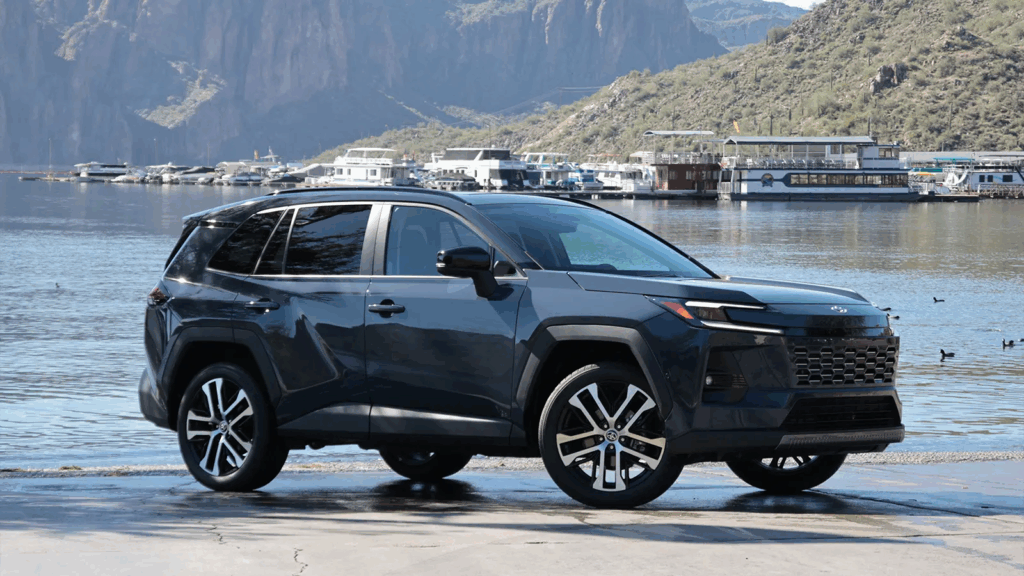
Furthermore, Toyota’s reputation for legendary reliability, especially within its hybrid platforms, translates into generally lower maintenance costs. The eCVT transmission, fewer moving parts in certain aspects of the hybrid system, and regenerative braking that extends brake pad life often mean less wear and tear compared to traditional powertrains. This contributes to fewer unscheduled repairs and lower routine service expenses over time, solidifying the RAV4’s position as a low-cost-to-own vehicle.
Another often overlooked aspect of TCO is resale value. Toyota vehicles, particularly their hybrids, consistently command strong resale values in the used car market. As the demand for fuel-efficient and environmentally friendly vehicles continues to grow through 2025 and beyond, a 2026 RAV4 Hybrid is highly likely to retain a significant portion of its original value, offering a strong return on investment when it’s time to upgrade. This robust depreciation schedule means that while the upfront cost might be a point of consideration, the financial elasticity of owning a RAV4 Hybrid significantly cushions that initial investment. Potential tax incentives for green vehicles or certain hybrid purchases, depending on regional policies in 2025, could further sweeten the deal, effectively reducing the net purchase price.
The Competitive Arena: 2026 RAV4 Against the Best in Class
The compact hybrid SUV segment in 2025 is a battleground of innovation, value, and brand loyalty. The 2026 RAV4 Hybrid enters this fray with a unique proposition, and a detailed comparison against its key rivals is essential for any informed decision.
Vs. Japanese Rivals: Honda CR-V Hybrid and Subaru Forester Hybrid
Historically, the Honda CR-V Hybrid has been the RAV4’s most direct and formidable competitor. For 2026, if you’re looking for an entry-level hybrid SUV with AWD, the RAV4 LE AWD emerges as a clear financial winner. Priced at $3,000 less than the Honda CR-V Hybrid AWD Sport (which carries an MSRP of $38,580) and up to $3,265 cheaper than the Subaru Forester Hybrid Premium (at $38,015), the Toyota offers significant upfront savings without compromising on core hybrid functionality or all-weather capability.
The RAV4 also showcases a distinct advantage in the FWD hybrid compact SUV space, where options are scarcer. The entry-level CR-V Hybrid Sport FWD is a hefty $3,730 more expensive than the RAV4 LE FWD, and the Sport L, the highest FWD trim for the CR-V Hybrid, commands a colossal $4,025 premium over the RAV4 SE FWD. This makes the RAV4 an incredibly compelling choice for buyers prioritizing fuel efficiency and affordability in a front-wheel-drive configuration. Toyota’s strategy here is evident: democratize hybrid technology and make it the accessible standard.
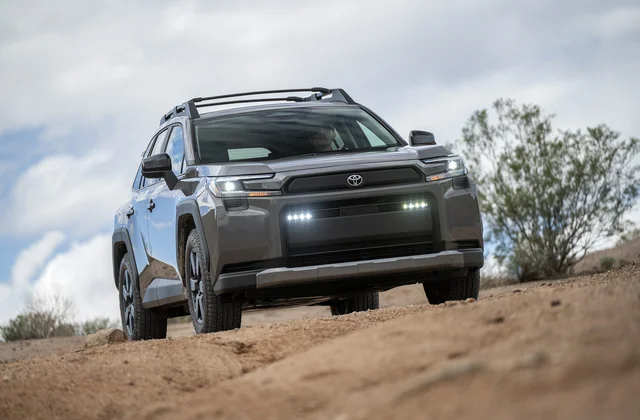
While the CR-V Hybrid offers a refined interior and a comfortable ride, the RAV4 counters with a reputation for unwavering durability, a slightly more rugged aesthetic, and a robust off-road-oriented Woodland trim (even in hybrid form). Subaru, with its symmetrical all-wheel-drive system, appeals to a niche of outdoor enthusiasts, but the Forester Hybrid’s efficiency and overall package often fall slightly behind the RAV4 in head-to-head comparisons, especially on price and sometimes power delivery. For top trims, the RAV4 Limited AWD at $43,700 is slightly pricier than the CR-V Hybrid AWD Sport Touring by $1,050, but it’s nearly a wash with the Forester Hybrid Touring, showing a competitive stance at the upper echelons of the market. The difference in features, materials, and specific technology offerings at this price point becomes a matter of individual preference, but the RAV4 consistently provides a compelling blend of value and capability.
Vs. Korean Contenders: Kia Sportage Hybrid and Hyundai Tucson Hybrid
The Korean automotive powerhouses, Kia and Hyundai, have rapidly advanced their hybrid offerings, presenting increasingly attractive alternatives. When pitting the 2026 RAV4 against these “cousins,” the competitive landscape shifts slightly.
The Kia Sportage AWD Hybrid S, priced at $34,035, comes in $715 less than the RAV4 LE AWD. At the higher end, the Sportage Hybrid AWD SX Prestige is $2,915 cheaper than the equivalent RAV4 Limited AWD, with an MSRP of $41,835. Similarly, the Hyundai Tucson Hybrid AWD Blue SE, starting at $33,800, is more affordable than the base AWD RAV4. Even the fully loaded Tucson Limited AWD trim at $43,425 is $1,325 less than the equivalent Toyota.
These Korean rivals often excel in offering a high degree of standard technology, bold styling, and impressive warranty packages at a more aggressive price point. They represent strong value plays, particularly for buyers who prioritize cutting-edge infotainment and a slightly different aesthetic. However, what Toyota brings to the table, especially with the RAV4, is decades of proven hybrid technology, a sterling reputation for long-term reliability that is arguably unmatched, and a vast, well-established service network. The peace of mind that comes with Toyota’s hybrid system, refined over generations, is a significant intangible asset that many buyers are willing to pay a slight premium for. The decision here often boils down to a balance between perceived upfront value (Korean brands) and proven long-term dependability and retained value (Toyota).
The Prime Advantage: Unlocking Greater Savings with the PHEV
While the core lineup of the 2026 RAV4 goes all-hybrid, it’s crucial not to overlook the formidable RAV4 Prime, Toyota’s plug-in hybrid electric vehicle (PHEV) variant. Although carrying an even higher initial sticker price, the Prime offers an unparalleled opportunity for substantial long-term savings and a truly versatile driving experience. With an estimated electric-only range of 50+ miles, the RAV4 Prime allows most commuters to complete their daily drives entirely on electric power, significantly reducing gasoline consumption.
This extended electric range drastically lowers the cost of daily operation, effectively transforming the vehicle into an EV for routine tasks, with the flexibility of a hybrid for longer journeys. For those with access to charging infrastructure at home or work, the Prime’s appeal is immense. Over the course of a year, the fuel savings from minimizing gasoline use can be truly staggering, easily eclipsing the initial price difference compared to the standard RAV4 Hybrid. The RAV4 Prime isn’t just a car; it’s a strategic energy management tool for the modern driver.
Why the 2026 RAV4 is a Smart Investment in 2025 and Beyond
The 2026 Toyota RAV4’s transition to an all-hybrid lineup represents more than just a model update; it signifies a strategic pivot reflecting the evolving demands of the 2025 automotive market. In a world increasingly focused on sustainability, fuel efficiency, and long-term value, the RAV4 Hybrid stands as a powerful testament to Toyota’s vision.
While the initial price tags may appear higher, especially for those accustomed to non-hybrid options, the comprehensive analysis reveals a compelling total cost of ownership advantage. Superior fuel economy, Toyota’s legendary reliability, and strong resale values collectively position the 2026 RAV4 as a prudent financial decision. Furthermore, its competitive positioning against rivals from both Japan and Korea underscores its intrinsic value, offering a blend of proven technology, practicality, and efficiency that few can match. The optional RAV4 Prime amplifies these benefits, providing an even greater pathway to reduced running costs and a minimized carbon footprint.
Ultimately, the 2026 RAV4 Hybrid isn’t just a vehicle for today; it’s an investment in the driving experience of tomorrow. It delivers the versatility and capability expected of a compact SUV, infused with advanced hybrid technology that prioritizes your wallet and the planet.
Ready to Experience the Future of Compact SUVs?
The numbers speak for themselves, but there’s nothing quite like feeling the smooth, efficient power of a Toyota hybrid firsthand. We invite you to visit your local Toyota dealership today to explore the full lineup of the 2026 Toyota RAV4 Hybrid. Discover the trim that perfectly aligns with your lifestyle and experience the smart investment that awaits you. Take a test drive and truly understand why the 2026 RAV4 is poised to redefine value in the compact SUV segment.