



The Hybrid Horizon: Toyota’s 2026 RAV4 Reimagines Value in a Shifting Automotive Landscape
As someone who has navigated the ever-evolving currents of the automotive industry for over a decade, I’ve witnessed countless shifts – from the rise of SUVs to the rapid acceleration of electrification. But few moves have been as bold and strategically significant as Toyota’s decision to transition its entire 2026 RAV4 lineup to an all-hybrid powertrain. This isn’t just an incremental update; it’s a profound redefinition of one of America’s best-selling vehicles. The immediate knee-jerk reaction for many consumers, and frankly, industry watchers, has been to brace for a substantial increase in sticker price. And yes, in absolute terms, the price tag has climbed. But as we dissect the figures and consider the broader 2025 market dynamics, a compelling narrative emerges: the 2026 Toyota RAV4 Hybrid, despite its initial higher cost, often presents a superior value proposition and a surprisingly competitive edge against its rivals, particularly when factoring in the long-term total cost of ownership.
The core question isn’t simply “Is it more expensive?” but rather, “What are you getting for that investment, and how does it stack up against the alternatives?” From my vantage point, the answer reveals a calculated masterstroke from Toyota, positioning the RAV4 as an even more intelligent choice for the discerning buyer in an era where fuel efficiency, reliability, and sustainable automotive technology are paramount.
The Inevitable Evolution: Why All-Hybrid for 2026?
Toyota’s commitment to hybridization isn’t new; it’s a cornerstone of their global strategy. What’s new for 2026 is the sheer scale of this commitment for the RAV4. Moving an entire model line to hybrid technology inherently adds complexity and components: a sophisticated battery pack, advanced electronics, and a traction motor complementing the traditional internal combustion engine. These aren’t insignificant additions, and they naturally contribute to a higher manufacturing cost.
However, this decision is far from arbitrary. In 2025, the automotive market is grappling with a fascinating dichotomy. On one hand, there’s growing public and governmental pressure towards full electrification, pushing for battery electric vehicles (BEVs). On the other, the infrastructure for BEVs, particularly in vast regions of the United States, is still catching up, and consumer range anxiety, coupled with the higher upfront cost of many BEVs, remains a significant barrier. This is precisely where advanced hybrid powertrains, especially those from a proven leader like Toyota, shine. They offer a tangible, immediate reduction in fuel consumption and emissions without demanding a fundamental change in driving habits or reliance on an evolving charging network.
Toyota understands that the sweet spot for many American families and commuters in the mid-2020s lies in practical, reliable, and fuel-efficient transportation that doesn’t break the bank at the dealership or the gas pump. The all-hybrid RAV4 is a direct response to this market reality, betting on its proven hybrid synergy drive system to deliver maximum value. It’s an investment in a cleaner, more efficient future that’s accessible today.
Decoding the Sticker Shock: Internal Price Comparisons
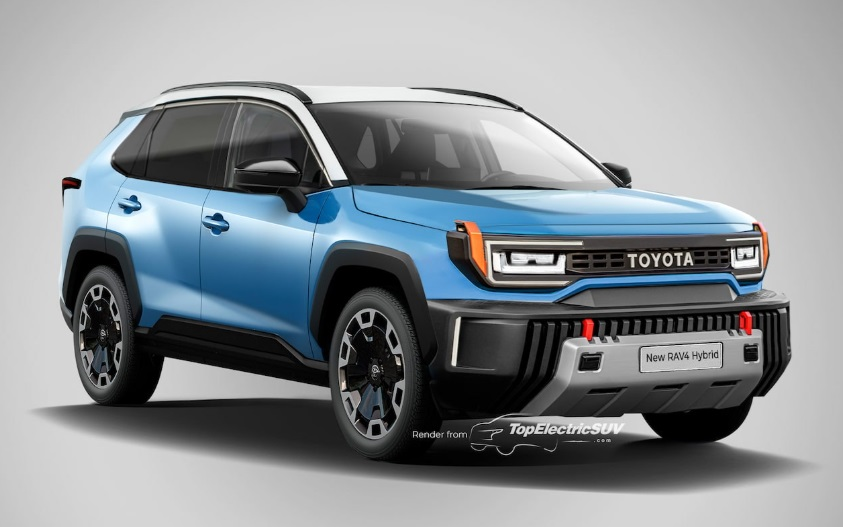
Let’s get down to brass tacks and analyze how the 2026 RAV4’s pricing compares to its immediate predecessor, the 2025 model. At first glance, the numbers can be jarring. The entry-level 2026 Toyota RAV4 FWD sees a $2,100 price jump over the outgoing non-hybrid FWD variant, now starting at approximately $33,350. For cost-conscious buyers, this might feel like a significant hurdle for an otherwise compact-ish SUV.
But as with any financial calculation, context is everything. Consider the 2025 RAV4 Hybrid AWD LE. The 2026 equivalent sees a much more modest increase of only around $450. This tells us a critical story: if you were already considering a RAV4 hybrid, the premium for the new model year is negligible. You’re effectively getting the latest iteration of Toyota’s highly refined hybrid technology, potentially with updated features, for almost the same cost. This is where the long-term savings begin to compound, even from day one.
The picture changes for those moving up the trim ladder or transitioning from a non-hybrid. For instance, stepping from a non-hybrid XLE Premium FWD to its new hybrid counterpart in 2026 sees a more substantial increase of about $4,790, bringing the sticker price to around $37,550. Similarly, the popular 2026 Woodland trim, which was already a hybrid in 2025, now commands approximately $41,350, an increase of roughly $3,830.
These larger jumps primarily reflect the “hybridization premium” applied to trims that were previously gas-only, bringing them in line with the advanced powertrain components. While these numbers might seem high, it’s crucial to remember that these buyers are now getting a more technologically advanced, significantly more fuel-efficient vehicle. For many, this upfront cost is swiftly offset by reduced operating expenses over the lifespan of the vehicle, transforming what looks like a higher price into a smarter long-term investment.
The Gladiator’s Arena: RAV4 Hybrid vs. the Competition
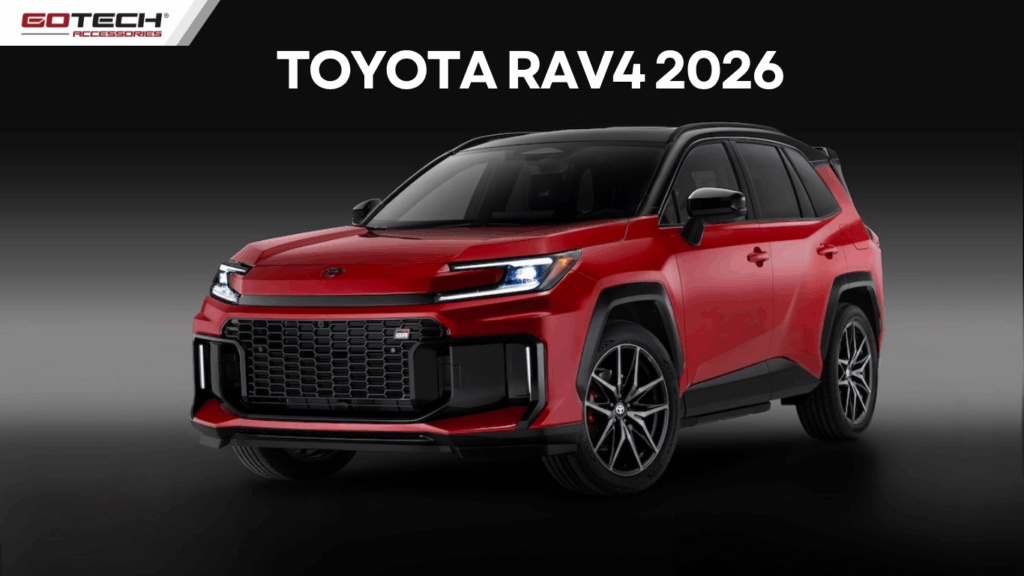
This is where the 2026 RAV4’s pricing strategy truly shines. Toyota hasn’t just gone all-in on hybrid technology; they’ve also shrewdly positioned their offering to undercut, or at least match, key competitors in the highly contested compact hybrid SUV segment. Let’s pit the new RAV4 against its most formidable rivals in 2025.
Honda CR-V Hybrid: A Formidable Foe, Yet Often Pricier
The Honda CR-V Hybrid has long been a benchmark, praised for its refined driving dynamics and spacious interior. However, the 2026 RAV4 often emerges as the more budget-friendly option, especially at the entry level. If you’re in the market for an entry-level hybrid SUV with AWD, the 2026 RAV4 LE AWD can be around $3,000 cheaper than its direct competitors. Specifically, you’re looking at potential savings of up to $3,830 versus the Honda CR-V Hybrid AWD Sport (which might carry an MSRP around $38,580).
The gap widens even more dramatically when comparing FWD variants. The RAV4 is one of the few compact hybrid SUVs still offering FWD, and it leverages this to great effect on pricing. The entry-level CR-V Hybrid Sport FWD could be approximately $3,730 more expensive than the RAV4 LE FWD. For those seeking a higher trim in FWD, the CR-V Hybrid Sport L might be a staggering $4,025 more than the RAV4 SE FWD. This makes the RAV4 a clear winner for value-conscious buyers prioritizing front-wheel drive and fuel efficiency.
At the top end, the comparison tightens. The 2026 RAV4 Limited AWD, priced around $43,700, is roughly $1,050 more expensive than the CR-V Hybrid AWD Sport Touring. While a slight premium, it’s a difference that might be justified by specific feature sets or personal brand preference, indicating competitive parity at the higher echelons.
Subaru Forester Hybrid: AWD Prowess with a Premium
Subaru’s Forester Hybrid, known for its symmetrical all-wheel drive and rugged capability, appeals to a distinct demographic. However, the 2026 RAV4 also offers a competitive edge here. Compared to the Subaru Forester Hybrid Premium (which might hover around $38,015), the RAV4 LE AWD could save buyers up to $3,265.
At the upper trim levels, the price difference becomes less significant, almost a wash. The 2026 RAV4 Limited AWD’s $35 increase over the Forester Hybrid Touring is negligible in this price bracket. While Subaru’s StarDrive technology and focus on off-road prowess offer a unique selling proposition, the RAV4 consistently delivers compelling value, especially for those prioritizing fuel economy and a refined on-road experience.
Korean Contenders: Kia Sportage Hybrid & Hyundai Tucson Hybrid
Venturing into the Korean market reveals a different competitive landscape, where Kia and Hyundai often excel in offering feature-rich vehicles at aggressive price points. Here, the RAV4 faces stiffer competition on initial sticker price.
The Kia Sportage AWD Hybrid S, with an MSRP around $34,035, is approximately $715 less expensive than the RAV4 LE AWD. Moving up, the Sportage Hybrid AWD SX Prestige, priced around $41,835, could be about $2,915 cheaper than its equivalent RAV4.
Similarly, the Hyundai Tucson Hybrid AWD Blue SE (around $33,800) undercuts the base AWD RAV4. The fully loaded Tucson Limited AWD trim, at approximately $43,425, is about $1,325 less than the equivalent Toyota.
These Korean rivals certainly present compelling alternatives, particularly for buyers seeking maximum features per dollar. However, Toyota banks on its long-standing reputation for bulletproof reliability, superior resale value, and a well-established hybrid ecosystem, factors that often contribute significantly to the total cost of ownership – a metric we’ll delve into next.
Beyond the MSRP: The True Cost of Ownership
Focusing solely on the initial sticker price for a hybrid vehicle, especially one as advanced as the 2026 RAV4, tells only half the story. The real financial advantage emerges when we consider the total cost of ownership (TCO) over the vehicle’s lifespan. This is where high CPC keywords like “fuel-efficient SUV 2026,” “hybrid car investment,” and “long-term savings hybrid” truly resonate.
Fuel Efficiency: The Most Obvious Win
The most immediate and impactful saving comes from fuel economy. Regardless of trim or whether you opt for the standard hybrid or the pricier plug-in hybrid (PHEV) variant, the 2026 RAV4 will dramatically reduce your trips to the gas station. With average fuel prices fluctuating, but often remaining elevated in 2025, imagine saving hundreds, if not thousands, of dollars annually at the pump. This isn’t just a theoretical saving; it’s tangible money staying in your wallet every month. The non-hybrid RAV4, while efficient for its class, simply cannot compete with the significant MPG improvements offered by the full hybrid system.
For those considering the RAV4 Prime, Toyota’s PHEV offering, the savings potential is even greater. With an electric-only range potentially exceeding 50 miles, many commuters could complete their daily drives without consuming a single drop of gasoline. This opens up opportunities for substantial “cost of ownership hybrid vs gas” advantages, especially when coupled with potential “EV tax credits 2025” or state-level incentives for plug-in vehicles, further sweetening the deal. While the Prime carries a higher upfront cost, its ability to run purely on electricity for significant distances transforms it into an even more powerful “hybrid car investment.”
Maintenance and Reliability: Toyota’s Undisputed Advantage
Toyota’s reputation for reliability is legendary, particularly for its hybrid powertrains. Their hybrid systems are meticulously engineered, battle-tested over decades, and consistently rank among the most dependable. This translates directly into lower maintenance costs over the vehicle’s life. Fewer unscheduled repairs, longer intervals between major services, and the inherent robustness of Toyota’s components mean less time and money spent at the service center. When considering “automotive market trends 2025,” consumers are increasingly prioritizing dependability and peace of mind, making Toyota’s track record a powerful differentiator.
Resale Value: Protecting Your Investment
Another critical, often overlooked, component of TCO is resale value. Toyota vehicles, and especially their hybrids, consistently command strong resale prices. This means that when it comes time to trade in or sell your 2026 RAV4, you’ll likely recoup a larger percentage of your initial investment compared to many competitors. This excellent “hybrid vehicle resale value” effectively lowers the true cost of ownership over the period you own the car, making it a sound financial decision.
The Technology Edge: Toyota’s Hybrid Heritage in 2026
Toyota didn’t just stumble into hybrid leadership; they pioneered it. The 2026 RAV4 benefits from decades of continuous refinement to its Hybrid Synergy Drive system. This isn’t just about combining a gas engine with an electric motor; it’s about seamless integration, intelligent power distribution, and optimized energy recovery. The result is a driving experience that’s not only incredibly efficient but also smooth, responsive, and surprisingly powerful when needed.
The battery technology, while not explicitly detailed in the original article, can be expected to be further optimized for density, durability, and performance. This commitment to “advanced hybrid powertrains” ensures that the 2026 RAV4 isn’t just an older system shoehorned into a new body but a cutting-edge iteration of proven technology. For those interested in “sustainable automotive technology,” Toyota’s approach offers a practical and immediate step towards reducing carbon footprints without requiring a leap into nascent BEV infrastructure.
Navigating the 2025 Automotive Landscape
The decision to go all-hybrid with the RAV4 is particularly astute given the broader “automotive market trends 2025.” Consumers are more educated than ever about the environmental impact of their vehicles and the financial burden of volatile fuel prices. While full EVs capture headlines, the practicality of a hybrid for the average American consumer is undeniable. It offers the best of both worlds: significantly reduced emissions and fuel consumption, coupled with the familiar convenience of gasoline refueling.
The 2026 RAV4 also caters to a massive demographic: those seeking the versatility and practicality of a compact crossover SUV. This segment remains fiercely competitive, and by offering an exclusively hybrid lineup, Toyota differentiates itself powerfully. It simplifies the purchasing decision, making “compact crossover hybrid” synonymous with “RAV4” for many buyers. This focus streamlines production, potentially improving availability and reducing complexity for both dealerships and consumers, a significant advantage in a market still recovering from supply chain disruptions. It’s an “automotive financing hybrid” dream for many, combining a reasonable entry point with undeniable long-term savings.
Your Next Move: Embrace the Hybrid Revolution
The 2026 Toyota RAV4 represents more than just a model year update; it signals a strategic repositioning of an icon for a new era. While the initial sticker price may prompt a double-take, a deeper dive into the numbers reveals a vehicle that is not only competitive but often offers superior long-term value against its key rivals. Toyota has once again played the long game, understanding that true economy isn’t just about what you pay upfront, but what you save and gain over the years of ownership.
For discerning buyers in 2025 looking for the sweet spot between cutting-edge efficiency, proven reliability, and practical versatility, the all-hybrid 2026 RAV4 demands your serious consideration. It’s an investment in a smarter, more sustainable, and ultimately more affordable driving future.
Are you ready to redefine your drive and experience the unparalleled value of the 2026 Toyota RAV4 Hybrid? Visit your local Toyota dealership today to learn more about pre-orders and available trims, and discover how this groundbreaking vehicle can elevate your daily commute and weekend adventures.