



The All-Hybrid 2026 Toyota RAV4: Decoding Value in the 2025 Automotive Landscape
As someone who’s navigated the currents of the automotive industry for over a decade, I’ve witnessed firsthand the seismic shifts driving vehicle innovation. Few segments exemplify this evolution more vividly than the compact SUV market, where hybrids have transformed from niche options to mainstream powerhouses. And now, as we stand in 2025, looking ahead to the imminent arrival of the all-hybrid 2026 Toyota RAV4, we’re confronted with a pivotal moment for one of America’s best-selling vehicles. The question on every buyer’s mind: Is this new, pricier, all-hybrid iteration truly a smarter investment?
The immediate reaction to a price increase is often apprehension. Yes, the 2026 Toyota RAV4, by embracing an exclusively hybrid powertrain, does come with a higher sticker price than its non-hybrid ancestors. But to truly understand its value proposition, we need to peel back the layers and analyze it through the lens of total cost of ownership, market competitiveness, and the evolving demands of the modern driver. This isn’t just about MSRP; it’s about what you get for your money, both today and years down the road.
The Inevitable Evolution: Pricing the All-Hybrid RAV4 in 2025
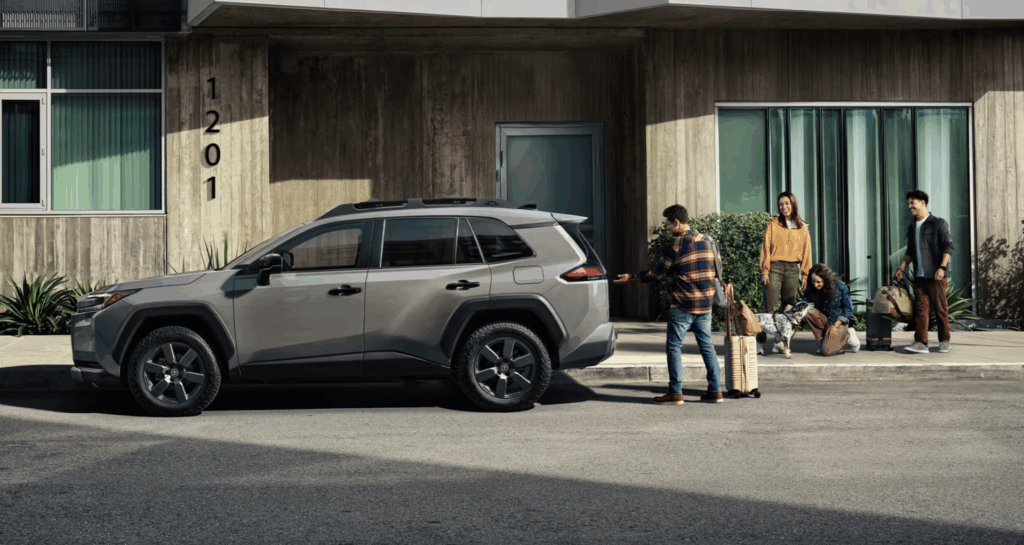
Let’s address the elephant in the showroom: the initial cost. Shifting an entire lineup to hybrid-only configurations inherently introduces higher manufacturing costs. Integrating sophisticated hybrid powertrains, robust battery packs, and advanced power electronics means a more complex vehicle from an engineering standpoint. This investment in efficiency and technology is naturally reflected in the sticker price.
For instance, the entry-level 2026 Toyota RAV4 FWD is now priced at $33,350. This represents a roughly $2,100 jump compared to the outgoing non-hybrid FWD base model. For many budget-conscious buyers, this initial premium might feel like a significant hurdle, potentially pushing the beloved RAV4 into a slightly higher price bracket than they’ve historically associated with it.
However, the picture becomes far more nuanced when we compare apples to apples within Toyota’s own lineage. Take the 2025 RAV4 Hybrid AWD LE. The transition to its 2026 equivalent sees a much smaller increase, often around $450. This subtle difference highlights that for buyers already considering a hybrid, the leap isn’t nearly as dramatic. It suggests that much of the cost increment is absorbed by the technological upgrade of a previously non-hybrid model becoming hybridized.
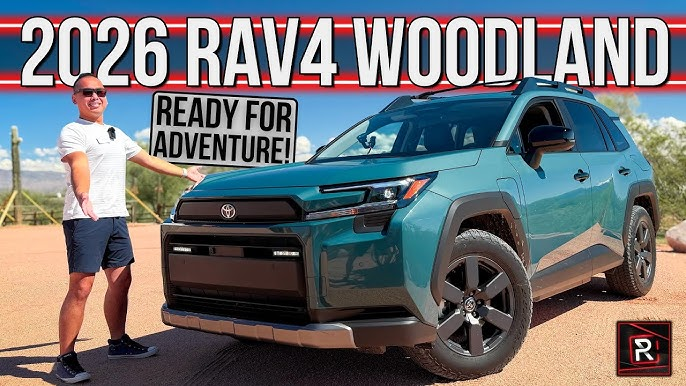
Where the financial stretch becomes more pronounced is when comparing a higher-tier non-hybrid 2025 model to its 2026 all-hybrid counterpart. For example, moving from a non-hybrid XLE Premium FWD to the now-hybrid version for 2026 could see an increase nearing $4,790, pushing its MSRP to $37,550. Similarly, the popular Woodland trim, which was already a hybrid, sees an increase of around $3,830, reaching $41,350 for 2026. These figures demonstrate that the integration of hybrid components into previously conventional trims, alongside general inflationary pressures and feature enhancements for the 2026 model year, certainly adds to the bottom line. As a seasoned analyst, I view these adjustments as a strategic recalibration by Toyota, aligning its flagship compact SUV with the prevailing demand for fuel efficiency and sustainable driving, even if it means a higher entry point. This move also reflects consumer willingness to invest more upfront for long-term operational savings and reduced environmental impact.
Head-to-Head: RAV4 Versus the Domestic and Japanese Contenders
Understanding the RAV4’s pricing isn’t complete without juxtaposing it against its fiercest competitors in the burgeoning 2025 hybrid SUV market. This is where the narrative around its “pricier” label truly begins to unravel, revealing unexpected pockets of value.
Let’s start with the traditional Japanese rivals: the Honda CR-V Hybrid and the Subaru Forester Hybrid. These vehicles consistently vie for the same consumer demographic, emphasizing reliability, practicality, and, increasingly, efficiency.
For the cost-aware buyer seeking an entry-level AWD hybrid SUV, the 2026 RAV4 LE AWD emerges as a compelling proposition. Its starting price can be approximately $3,000 less than direct competitors. For instance, you might save up to $3,830 compared to the Honda CR-V Hybrid AWD Sport, which could approach an MSRP of $38,580. Similarly, against the Subaru Forester Hybrid Premium, the RAV4 could offer savings upwards of $3,265 compared to its estimated $38,015. These are not insignificant differences. For a buyer stretching their budget, a $3,000-plus saving can mean the difference between getting into a new, capable hybrid SUV or having to compromise. Toyota’s strategic pricing here allows it to capture a crucial segment of the market where initial affordability is paramount, without sacrificing its renowned hybrid technology.
The advantage becomes even starker when considering front-wheel drive (FWD) hybrid compact SUVs – a segment where the RAV4 stands out for its accessibility. While the CR-V Hybrid offers FWD options, its entry-level Sport FWD typically starts around $3,730 more than the RAV4 LE FWD. The gap widens even further with higher trims; the CR-V Hybrid Sport L, often the highest FWD hybrid trim available, could be a staggering $4,025 more than a comparable RAV4 SE FWD. This makes the FWD RAV4 an undeniable winner in terms of pure sticker price, offering exceptional value for urban commuters or those in milder climates where AWD isn’t a necessity. Toyota clearly understands the diverse needs of the American market, ensuring that efficient hybrid technology is accessible across various price points.
However, as we ascend the trim ladder, the competitive landscape shifts slightly. For top-tier trims, like the 2026 RAV4 Limited AWD, priced around $43,700, the gap narrows. It might be approximately $1,050 more expensive than a Honda CR-V Hybrid AWD Sport Touring. Against a Subaru Forester Hybrid Touring, the price difference might be negligible, a mere $35 – essentially a wash. This indicates that at the premium end, while still competitive, Toyota’s focus is on delivering a fully-featured experience that aligns with, or slightly exceeds, its rivals, rather than undercutting them on price. Buyers at this level are often looking for the full suite of advanced features, luxury touches, and robust performance, where a small price difference is less of a deterrent.
The Korean Challenge: Kia and Hyundai Hybrids
The automotive market of 2025 wouldn’t be complete without acknowledging the formidable presence of the Korean contenders: Kia and Hyundai. These brands have consistently pushed the envelope with aggressive pricing, compelling design, and feature-rich offerings, often setting a high bar for value. Their hybrid SUVs, like the Kia Sportage Hybrid and Hyundai Tucson Hybrid, present a genuine challenge to the RAV4.
Taking the Kia Sportage AWD Hybrid S, with an estimated MSRP of $34,035, it comes in about $715 less than the RAV4 LE AWD. Moving up to the Sportage Hybrid AWD SX Prestige, buyers could find themselves saving close to $2,915 with its $41,835 MSRP compared to a similarly equipped RAV4. This is a significant advantage for Kia, appealing directly to buyers who prioritize initial cost savings without sacrificing modern features and a comprehensive warranty.
The Hyundai Tucson Hybrid follows a similar trajectory. The entry-level Tucson Hybrid AWD Blue SE, at around $33,800, is noticeably cheaper than the base AWD RAV4. Even the fully loaded Tucson Limited AWD trim, at approximately $43,425, undercuts the equivalent RAV4 by roughly $1,325.
From an expert’s standpoint, these Korean rivals present a compelling value proposition upfront. They often pack a plethora of standard features, cutting-edge infotainment, and bold styling that resonates with a younger demographic. However, the perceived long-term reliability and proven hybrid system longevity of Toyota often hold sway for many American consumers. While Kia and Hyundai have made tremendous strides in quality and reliability, Toyota’s reputation in hybrid technology is unparalleled, built over decades. Buyers often weigh these factors – initial savings versus established, long-term peace of mind – when making their final decision. The choice here often comes down to whether a buyer prioritizes immediate cost savings and fresh design or leans towards a brand with a decades-long track record in hybrid powertrain excellence and potentially higher resale values.
Beyond the Sticker: The True Cost of Ownership (TCO) in 2025
This is where the expert perspective truly comes into play. The sticker price is just the entry fee; the true financial narrative of a vehicle unfolds over its entire lifespan – what we call the Total Cost of Ownership (TCO). In 2025, with increasing economic volatility and the ongoing push for sustainability, TCO has never been more critical for the American consumer.
The 2026 all-hybrid Toyota RAV4 is designed to shine in this regard. The most obvious benefit is fuel economy. By completely eliminating the conventional gasoline-only options, every 2026 RAV4 owner will immediately benefit from significantly reduced trips to the pump. Compared to a non-hybrid SUV, even a modest 10-15 MPG improvement translates to hundreds, if not thousands, of dollars saved annually, particularly with fluctuating gasoline prices that remain a concern for most households. Over a typical 5-7 year ownership period, these savings can easily offset the initial price premium, especially for those with longer commutes.
Furthermore, the RAV4 Prime, Toyota’s plug-in hybrid electric vehicle (PHEV) variant, takes these savings to an entirely new level. With an impressive electric-only range exceeding 50 miles, many drivers can complete their daily commutes, errands, and school runs without consuming a drop of gasoline. For those with access to home charging or readily available public EV charging infrastructure, the Prime effectively becomes an electric vehicle for much of its daily use. In 2025, with potential federal tax credits and state-level incentives for PHEVs still available, the Prime’s value proposition strengthens considerably, making it an incredibly attractive option for environmentally conscious drivers looking to maximize fuel savings and reduce their carbon footprint.
Maintenance costs are another factor. Toyota hybrids are renowned for their reliability and lower maintenance requirements compared to complex turbocharged gasoline engines or even some European luxury models. The regenerative braking system, a hallmark of hybrid technology, significantly reduces wear on brake pads and rotors, leading to less frequent replacements. While battery replacement is a common concern for potential hybrid buyers, Toyota’s track record for battery longevity is exceptional, often outlasting the vehicle itself, with robust warranty coverage providing additional peace of mind.
Finally, consider resale value. Toyota vehicles, and particularly their hybrids, consistently command strong resale values in the used car market. As the demand for fuel-efficient vehicles continues to climb in 2025 and beyond, a well-maintained 2026 RAV4 Hybrid or Prime is highly likely to retain a significant portion of its original value, further lowering the effective TCO for its owner. This robust resale performance makes the RAV4 not just a vehicle, but a sound financial investment.
Navigating the 2025 Hybrid Landscape: Is the 2026 RAV4 the Right Fit?
So, in the vibrant and competitive hybrid SUV landscape of 2025, how should a discerning buyer view the all-hybrid 2026 Toyota RAV4? From my decade-plus vantage point, it’s clear that while the initial sticker price might be higher in some configurations, the long-term value proposition is stronger than ever.
The 2026 RAV4 is more than just an incrementally updated model; it represents Toyota’s unwavering commitment to an electrified future. It embodies a strategy that prioritizes fuel efficiency, reduced emissions, and proven hybrid reliability across its entire range. For buyers who prioritize long-term savings at the pump, unwavering reliability, strong resale value, and a responsible approach to personal transportation, the RAV4 remains an exceptionally strong contender.
It may not always be the absolute cheapest option on day one, especially against some of the aggressively priced Korean competitors. However, where it truly shines is in its ability to offer competitive pricing at critical entry-level hybrid trims against its closest Japanese rivals, and an unparalleled total cost of ownership over the lifespan of the vehicle. The added benefits of the RAV4 Prime’s extended electric range further cement its position as a forward-thinking choice for those ready to embrace the plug-in lifestyle.
In an era defined by evolving consumer values, environmental consciousness, and economic prudence, the 2026 Toyota RAV4 Hybrid doesn’t just adapt—it leads. It’s a statement that practical, capable, and efficient driving can also be incredibly smart and rewarding.
Embrace the Future of Driving
The automotive world is accelerating towards a more sustainable future, and the 2026 Toyota RAV4 is at the forefront of this revolution. If you’re ready to experience the blend of legendary Toyota reliability, cutting-edge hybrid efficiency, and intelligent value that truly pays off, we invite you to explore the all-hybrid 2026 RAV4. Visit your local Toyota dealership today to discover the perfect trim for your lifestyle and take the first step towards smarter, more sustainable driving. The road ahead is electric, and the RAV4 is ready to lead the way.