



2026 Honda Prelude: A Nostalgic Return With a $43,000 Question Mark
For seasoned automotive enthusiasts and industry observers, the return of the Honda Prelude nameplate for 2026 was met with a mix of genuine excitement and cautious optimism. It represented a glimmer of hope for the traditional sports coupe in a market utterly dominated by utility vehicles. A sleek, two-door hybrid from a brand synonymous with engineering excellence and driver engagement? On paper, it sounded like a dream. But now, with the official pricing announced, starting north of $43,000, that dream has encountered a rather stark reality check. As someone who’s navigated the automotive landscape for over a decade, witnessing countless model launches and market shifts, my immediate reaction isn’t anger, but a profound sense of disappointment and a flurry of strategic questions about Honda’s positioning of this crucial revival.
The anticipation surrounding the 2026 Honda Prelude has been palpable. Whispers of its development, glimpses of prototypes, and the sheer nostalgia associated with the nameplate have fueled countless forum discussions and automotive news cycles. In an era where coupes are becoming an endangered species, the Prelude’s commitment to the classic two-door silhouette immediately sets it apart. It’s undeniably handsome, with clean lines that hint at both modernity and a respectful nod to its heritage. During our brief, albeit thrilling, prototype drive, the chassis immediately impressed. Honda’s engineering prowess was evident, delivering that dialed-in feel we’ve come to expect from their sportier offerings. The S+ Shift system, while a digital simulation, delivered engaging “shifts” that added a layer of fun to the hybrid experience. It’s a car that, from a dynamic standpoint, feels inherently Honda – balanced, responsive, and eager to carve corners.
However, the unveiling of the price tag casts a long shadow over these positive first impressions. A starting MSRP exceeding $43,000 puts the Prelude in a highly competitive, and frankly, precarious position within the 2025 automotive market. This isn’t just a number; it’s a strategic decision that pits the Prelude against some formidable adversaries, many of which offer different, yet compelling, value propositions.
Let’s dissect this pricing strategy in the context of what else $40,000-$45,000 can buy you in today’s performance car segments.
The Traditional Performance Stalwarts: RWD and Manuals Reign Supreme
For many performance buyers, particularly the enthusiasts Honda aims to court, rear-wheel drive (RWD) and the option of a manual transmission are non-negotiables. In this arena, the Prelude faces a brutal reality:
Ford Mustang EcoBoost Premium: Starting around $38,430 (2025 projections), the EcoBoost Mustang offers undeniable American muscle car presence, strong turbo-four performance, and critically, RWD. It may not be a hybrid, but its performance credentials and iconic status are well-established. For many, it represents a more “authentic” performance experience.
Subaru BRZ tS / Toyota GR86 Premium: The dynamic duo, priced around $39,530 for the BRZ tS. These cars are purpose-built, lightweight, RWD sports cars that come standard with a true six-speed manual transmission. Their focus is pure driving engagement, a direct lineage to the “driver’s car” philosophy that Honda itself championed for decades. For enthusiasts prioritizing raw feel and interaction, the BRZ/GR86 twins represent an almost unbeatable value proposition.
BMW 230i Coupe: Surprisingly, a premium German badge, the BMW 230i Coupe, can be had for around $42,875. This is a RWD luxury-sport coupe with a sophisticated powertrain, a more upscale interior, and the undeniable prestige of the BMW roundel. While it might not match the Prelude’s hybrid efficiency, it significantly raises the bar in terms of brand perception and driving dynamics for a similar investment.
When you stack the FWD, hybrid-only Prelude against these RWD, often manual-equipped competitors at a lower or equivalent price point, its value proposition for the pure performance buyer becomes incredibly challenging. The lack of a manual transmission, in particular, will be a significant deterrent for many loyal Honda performance enthusiasts who remember the brand’s legendary stick shifts.
Honda’s Own Shadow: The Internal Competition
Adding another layer of complexity, the Prelude also finds itself in an awkward position when compared to other offerings within Honda’s own stable, particularly for buyers considering a hybrid or a sporty daily driver:
Honda Civic Hybrid (Sedan/Hatchback): The excellent Civic Hybrid, even in its highest Sport Touring trim (under $35,000), offers exceptional efficiency, a well-tuned chassis, and the practicality of a four-door or hatchback. If efficiency and a pleasant driving experience are priorities, the Civic Hybrid presents a far more pragmatic and budget-friendly choice. The Prelude, for all its style, is essentially a less practical, more expensive derivative of the same fundamental hybrid powertrain concept.
Acura Integra: While typically priced higher, the Integra, especially the Type S, offers a more premium, enthusiast-focused FWD experience, complete with a manual transmission option and significant performance upgrades. For those willing to spend a bit more, the Integra Type S, while not a coupe, delivers a much stronger performance statement and greater practicality. The standard Integra also offers a compelling blend of sportiness and refinement at a lower price point.
The Hybrid Conundrum: A Niche Too Narrow?
The Prelude’s hybrid powertrain is its most distinguishing feature, setting it apart from its primary performance competitors. It promises a blend of sporty driving and superior fuel economy. However, at the $43,000 price point, this uniqueness becomes a double-edged sword.
Performance Buyers: Many performance buyers are not prioritizing hybrid efficiency at this price point. They are looking for maximum driver engagement, raw power, and proven performance heritage, areas where the RWD manual options often win. They might see the hybrid system as an added complexity or weight rather than a benefit.
Hybrid Buyers: Conversely, buyers specifically seeking hybrid efficiency typically prioritize practicality, cargo space, and a lower total cost of ownership. They are more likely to gravitate towards well-established, practical hybrid options like the aforementioned Civic Hybrid, the Toyota Prius (even a fully loaded Prius Limited AWD still leaves significant cash in your pocket compared to the Prelude), or even hybrid SUVs like the Toyota RAV4 Hybrid Limited AWD ($42,605). These vehicles offer far greater utility and often better overall value for money when efficiency is the primary driver.
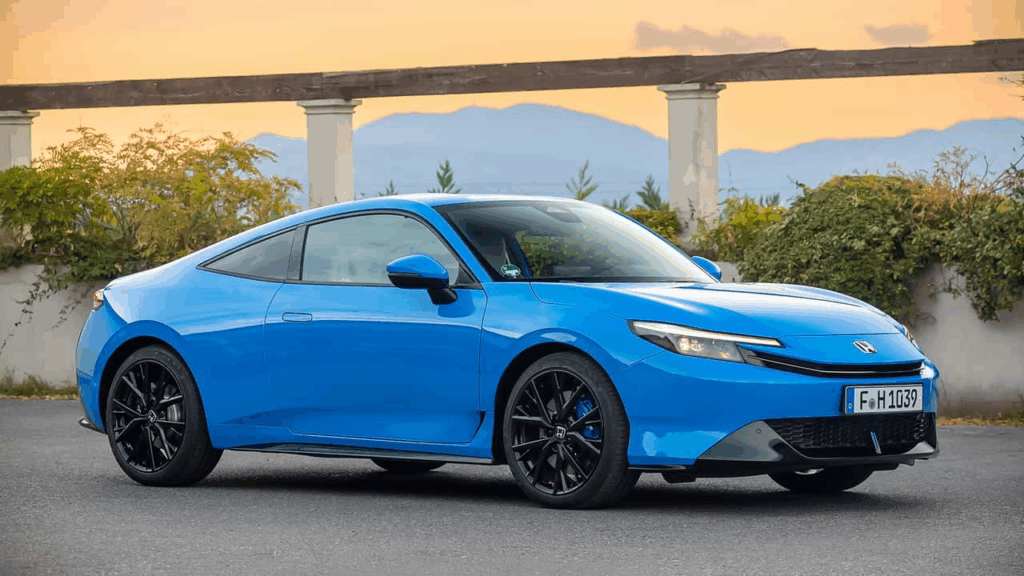
The Prelude, therefore, risks falling into a peculiar gap: not quite a hardcore performance car for enthusiasts, and not quite a practical, budget-friendly hybrid for efficiency-minded consumers. It’s an interesting concept, but its market segment at this price point appears to be a very narrow sliver.
Learning from History: The CR-Z Parallel Revisited
This situation draws immediate parallels to Honda’s previous hybrid coupe experiment, the CR-Z. The CR-Z was praised for its sharp handling, unique styling, and innovative hybrid powertrain, but ultimately it struggled in the market. As we noted upon its discontinuation, “The CR-Z never really had a direct competitor, and it filled a niche no one even knew existed.” It was a fun, forward-thinking car that simply failed to find a broad audience willing to pay its price for its specific combination of attributes.
The 2026 Prelude, despite its increased power and more mature design, risks treading a similar path. It’s a capable, stylish, and genuinely enjoyable car to drive for its intended purpose. But without a manual option, and with a price tag that places it squarely against established performance icons and more practical, efficient hybrids, it faces the risk of being admired by many but purchased by few. History is indeed littered with great cars whose pricing and market positioning missed the mark, regardless of their inherent quality.
The Value Proposition in the 2025 Automotive Landscape
The automotive market in 2025 is hyper-competitive and increasingly value-conscious, even in the enthusiast segments. Consumers are savvy; they cross-shop extensively and consider every aspect of a vehicle’s value proposition: performance, efficiency, features, brand prestige, future-proofing (e.g., resale value, electrification), and emotional appeal.
For $43,000+, buyers expect either:
Uncompromising Performance: RWD, high horsepower, track capability, or a manual transmission for maximum engagement.
Premium Experience: Luxury materials, advanced technology, brand prestige.
Exceptional Efficiency & Practicality: Class-leading MPG, ample cargo, comfortable for daily use.
The Prelude, while delivering on style and a pleasant driving experience, doesn’t definitively lead in any of these categories at its current price. Its hybrid system offers a compelling blend, but that blend doesn’t necessarily resonate with enough buyers at this specific financial threshold. The market’s shift towards electrification also introduces new considerations; while the Prelude is a hybrid, it’s not a full EV, and some buyers might be looking further ahead for their “future-proof” performance car.
Honda’s Strategic Crossroads
The 2026 Prelude represents a significant moment for Honda. It’s a statement that the brand still believes in enthusiast cars and wants to inject excitement into its hybrid lineup. However, the pricing suggests a disconnect between this admirable intent and the realities of the market. Is the Prelude intended to be a halo car, showcasing Honda’s hybrid performance capabilities, regardless of sales volume? Or is it genuinely meant to carve out a significant share in the sporty coupe segment? Given the competitive landscape, the latter seems unlikely at this price point.
Perhaps Honda is banking on brand loyalty, the appeal of a unique FWD hybrid coupe, and the distinct styling to attract a specific buyer who doesn’t fit into the typical RWD or practical hybrid camps. But even for a loyal Honda enthusiast, the absence of a manual transmission, a hallmark of Honda’s sporty heritage, makes it a tougher sell, especially when more engaging options exist for less money.
The Road Ahead for the Prelude
The 2026 Honda Prelude is, in many ways, an admirable effort. It’s a beautiful car, it drives well, and it represents a bold move to keep the coupe alive. However, its pricing strategy presents a formidable challenge. In a market where every dollar is scrutinized, and compelling alternatives abound across various performance and efficiency spectrums, the Prelude’s niche seems incredibly tight. It’s a car that generates excitement, but the price point forces a critical re-evaluation of its true market potential.
What are your thoughts on the 2026 Honda Prelude’s pricing and its position in the evolving automotive landscape? Will its unique hybrid proposition be enough to sway buyers, or will it struggle to find its footing amidst fierce competition? Share your perspective and let’s discuss how Honda can best navigate this challenging segment.