



The 2026 Honda Prelude: A Deep Dive into Honda’s Ambitious Return – And Its Controversial Price Tag
As an automotive expert with a decade embedded in the industry, few new car announcements spark the kind of fervent discussion and anticipation that the 2026 Honda Prelude has generated. This isn’t just another model year refresh; it’s the resurrection of a beloved nameplate, a defiant stand for the coupe body style in a world dominated by SUVs, and a bold statement about Honda’s commitment to injecting sportiness back into its hybrid lineup. Yet, as the official price tag for this highly anticipated performance hybrid emerges, a collective gasp of disappointment is palpable, and I find myself, along with many enthusiasts and industry observers, pumping the brakes on that initial excitement. The 2026 Prelude, with a starting MSRP north of $43,000, has undeniably landed in a price bracket that forces a hard look at its value proposition, its intended audience, and ultimately, its chances of success in the highly competitive 2025 automotive landscape.
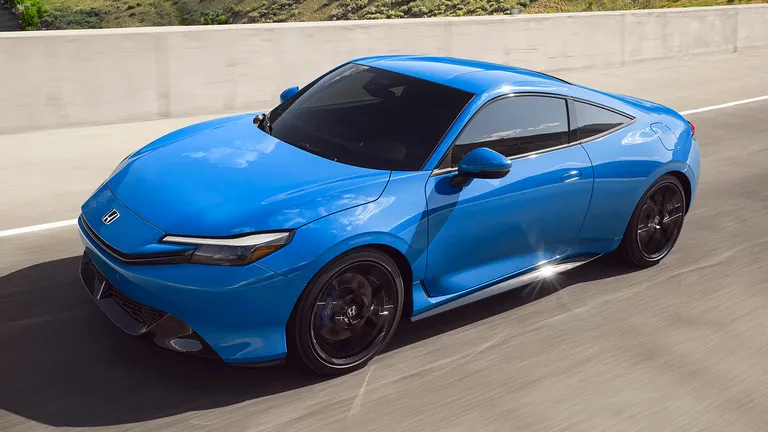
The Rebirth of a Legend: High Hopes for a Hybrid Sports Coupe
The original Honda Prelude holds a special place in the hearts of driving enthusiasts. It was a car that blended Honda’s renowned engineering prowess with an emphasis on driver engagement, innovative technology (like four-wheel steering), and a sleek, sophisticated design that felt a cut above its Civic brethren. Its return in 2026, especially as a dedicated hybrid, signals Honda’s intent to bridge the gap between exhilarating performance and environmental consciousness. In a market awash with appliance-like SUVs and a growing shift towards pure electric vehicles, the Prelude promised to be a beacon for those who still crave the visceral connection of a well-engineered sports coupe.
From the initial teasers and concept reveals, the new Prelude captivated. Its silhouette is undeniably sharp, modern yet with clear nods to its heritage. The fact that Honda chose to revive it as a hybrid aligns perfectly with the current automotive zeitgeist of efficiency and electrification. This isn’t just any hybrid; it’s positioned as a performance hybrid, a segment still relatively nascent but poised for growth. The idea of Honda’s legendary chassis tuning applied to a modern, electrified powertrain was, and still is, a tantalizing prospect. For many, it represented a hope that manufacturers wouldn’t abandon the art of the driver-focused car entirely. This anticipation was a significant factor in driving early interest and speculation, making its eventual pricing all the more critical.
First Impressions: A Glimpse Behind the Wheel and Honda’s Engineering Prowess
While the sticker shock is real, it’s crucial to remember that the 2026 Honda Prelude is more than just a price tag; it’s a driving experience. My brief time behind the wheel of a prototype confirmed that Honda’s chassis engineers have not lost their touch. The car felt incredibly dialed-in, demonstrating that characteristic Honda precision and responsiveness. The steering was crisp, offering satisfying feedback, and the suspension, though firm, managed to absorb road imperfections with a sophisticated dampening that promised both agility on winding roads and reasonable comfort for daily commutes.
The hybrid powertrain, while not a manual, delivered instant torque, a hallmark of electric assistance, allowing for brisk acceleration off the line. Honda’s S+ Shift system, while perhaps a touch gimmicky in its simulated gear changes, genuinely added to the engaging experience. It provided a sense of control and involvement that can sometimes be absent in continuously variable transmissions (CVTs) or traditional automatics. For a front-wheel-drive platform, the grip and handling through corners were commendable, exhibiting minimal understeer and a surprising eagerness to change direction. The brakes felt confident and linear, inspiring trust even during spirited driving. This is, undoubtedly, a car that handles like a Honda, and for enthusiasts, that’s high praise. The core driving dynamics suggest a genuinely fun and capable machine, perfectly suited for carving canyons or simply enjoying a spirited Sunday drive.
The Elephant in the Room: The $43,000+ Question and Market Realities
Now, we must address the colossal hurdle: the price. Starting above $43,000, the 2026 Honda Prelude enters a highly contested arena, one where established performance credentials, premium badges, and even greater practicality often come at a lower cost. As an automotive investment in 2025, a prospective buyer must critically evaluate where their dollars are best spent.
Let’s dissect the competition:
Direct Performance Rivals (Often Cheaper, RWD, Manual Options):
Ford Mustang EcoBoost Premium: Starting around $38,430, the EcoBoost Mustang offers rear-wheel drive, classic muscle car styling, and the option for a performance package that significantly enhances its track capabilities. It’s a proven performer, widely available, and carries the iconic Mustang legacy. For many looking for an affordable sports car experience, the Mustang remains a compelling choice.
Subaru BRZ tS / Toyota GR86 Premium: These twins, priced around $39,530 for the BRZ tS, are the purist’s choice. They offer a lightweight, naturally aspirated boxer engine, a low center of gravity, and crucially, an available six-speed manual transmission. Their rear-wheel-drive layout provides an unfiltered, engaging driving experience that’s hard to beat for the money. They represent the pinnacle of driver-focused sports coupe design, prioritizing balance and feel over brute force.
BMW 230i Coupe: With a starting price around $42,875, the BMW 230i Coupe undercuts the Prelude while offering a premium badge, a refined inline-four engine, and a rear-wheel-drive platform. It provides a blend of luxury, performance, and everyday usability that a segment of buyers actively seeks. For those considering a luxury sports coupe, the BMW badge itself holds significant cachet.
The glaring contrast here isn’t just the price, but the powertrain layout. The Prelude is front-wheel drive. While Honda has proven it can make FWD cars handle exceptionally well, the enthusiast market still largely equates “sports car” with rear-wheel drive. The absence of a manual transmission option further exacerbates this issue for a significant portion of the purist audience who value direct mechanical engagement above all else. This raises a critical question: is a hybrid sports coupe with FWD and no manual truly what the enthusiast base craves when cheaper, RWD alternatives with manuals are readily available?
Indirect Hybrid/Value Rivals (Often More Practical, Significantly Cheaper):
Honda Civic Hybrid (Sedan/Hatchback): The very platform on which the Prelude is likely based, the Civic Hybrid sedan starts just over $30,000, while the top-tier Sport Touring hatchback stays under $35,000. These cars offer excellent fuel efficiency, Honda’s reliability, and significantly more practicality with four doors and ample cargo space. For buyers primarily seeking a fuel-efficient hybrid, the Civic Hybrid offers compelling value.
Toyota Prius Limited AWD: Even a fully loaded Prius Limited AWD, packed with technology and impressive efficiency, leaves a substantial chunk of change in your pocket compared to the Prelude. The Prius, particularly in its latest iterations, has shed its uninspired image and now offers surprisingly sleek styling and competent driving dynamics.
Toyota RAV4 Hybrid Limited AWD: At $42,605, the RAV4 Hybrid Limited AWD comes eerily close to the Prelude’s price. However, it offers all-wheel drive, vastly superior cargo capacity, and a commanding driving position, making it a far more practical choice for families or those needing utility.
This comparison highlights the Prelude’s precarious positioning. It’s too expensive and perhaps too niche for the typical hybrid buyer who prioritizes economy and practicality. And for the performance buyer, it’s arguably outclassed in terms of traditional sports car attributes (RWD, manual option) by cheaper alternatives. This creates a significant challenge for Honda in defining the Prelude’s market segment and convincing consumers of its unique value proposition.
The Hybrid Conundrum: A Niche Too Niche? Echoes of the CR-Z
The 2026 Honda Prelude’s hybrid setup is both its defining characteristic and its biggest gamble. While the integration of electrification for performance is a growing trend, few models have successfully blended performance hybrid technology into an attainable two-door coupe package. Honda’s own history offers a cautionary tale: the CR-Z.
The Honda CR-Z, a compact hybrid coupe introduced in the early 2010s, was ahead of its time. It was fun, efficient, and forward-thinking, even offering a manual transmission. Yet, as we reflected when it bowed out, the CR-Z never found its audience. It “filled a niche no one even knew existed.” It wasn’t quite sporty enough for purists, and not quite efficient/practical enough for hybrid buyers. It existed in a limbo, admired by a few but purchased by even fewer.
The Prelude risks a similar fate. While it offers a more sophisticated powertrain and undoubtedly superior dynamics than the CR-Z, its high price and specific configuration might once again make it a car that enthusiasts admire from afar rather than buy. Without the raw engagement of a manual or the inherent balance of RWD, and lacking the practicality of other hybrids, the Prelude struggles to carve out a clear identity in the 2025 market. Is the allure of a “Honda sports coupe” enough to overcome these perceived shortcomings, especially when a consumer’s new car financing options are carefully considered?
Beyond the Price Tag: What the Prelude Could Be
Despite the justified concerns surrounding its pricing and positioning, it’s important not to overlook the inherent strengths of the 2026 Honda Prelude. This is, after all, a Honda. It will likely boast impeccable build quality, legendary reliability, and excellent resale value – factors that weigh heavily on any significant automotive investment. The hybrid powertrain, while a point of contention for some, could also be a significant draw for a new generation of enthusiasts who prioritize cutting-edge technology and environmental responsibility alongside spirited driving. The instant torque delivery of electric motors provides a unique performance characteristic that purely gasoline-powered engines struggle to match at lower RPMs.
Furthermore, the Prelude represents Honda’s willingness to experiment and invest in the dwindling coupe segment. In a world where every manufacturer seems to be churning out another SUV, Honda is making a bold statement. Perhaps the Prelude isn’t just a singular model but a testbed for future Honda performance hybrids, pushing the boundaries of what’s possible with electrified front-wheel-drive platforms. Its advanced driver-assistance systems and connectivity features, expected to be top-tier, could appeal to tech-savvy buyers looking for a modern driving experience. If Honda can communicate the unique blend of performance, efficiency, and cutting-edge design more effectively, and perhaps, crucially, offer more competitive pricing or additional variants in the future, the Prelude’s story could still shift to one of success.
The Road Ahead for Honda and the Future of Coupes
The 2026 Honda Prelude arrives at a pivotal moment for the automotive industry. As electrification accelerates, traditional segments like the sports coupe face existential questions. Honda’s decision to bring back the Prelude, and to do so as a hybrid, showcases a desire to innovate and adapt. It’s a risk, certainly, but one that could pay dividends if the market evolves to embrace performance hybrids more fully. This car, for better or worse, will be a bellwether for the viability of niche performance models in an increasingly practical and electrified world. It also represents Honda’s strategy for maintaining a sporty image as its core lineup leans heavily into efficiency and utility.
Ultimately, the 2026 Honda Prelude stands as a testament to Honda’s engineering capabilities and its enduring passion for creating engaging driver’s cars. It has the chassis, the styling, and the advanced powertrain to be truly great. However, its pricing and positioning in the crowded and complex 2025 market present a formidable challenge. It’s a car that evokes both admiration and frustration, a blend of brilliant engineering and questionable market strategy.
What are your thoughts on the 2026 Honda Prelude’s ambitious return and its eyebrow-raising price tag? Do you believe it offers enough unique value as a hybrid sports coupe to carve out its own successful niche, or is it destined to be an admired but ultimately overlooked entry in the performance segment? Share your insights and join the ongoing discussion – your perspective is invaluable as we navigate the evolving landscape of new car deals 2025 and beyond.