



The All-Electric F-150 Lightning Era Concludes: A New Hybrid Dawn for Ford Trucks with Unprecedented Range
For seasoned observers of the automotive industry, the recent pronouncements from Ford regarding the future of its iconic F-150 pickup truck signal a significant, albeit predictable, strategic pivot. After a considerable investment in its all-electric F-150 Lightning, the company is now shifting gears, embracing a hybrid powertrain strategy for the next generation of this legendary vehicle. This move, while potentially jarring for early adopters of pure electric trucks, reflects a pragmatic response to evolving market demands and a shrewd recalibration of Ford’s electrification roadmap. This isn’t merely an update; it’s a fundamental redefinition of what an electrified F-150 will represent for American consumers and commercial users alike.
The pure battery-electric F-150 Lightning, as many envisioned it, has effectively run its course. Production has ceased, with the Rouge plant, once earmarked for a battery-electric future, now dedicated to internal combustion engine (ICE) F-Series production. This isn’t a temporary pause; it’s a permanent redirection. The future F-150, rather than being a zero-emission electric vehicle, will adopt an Extended-Range Electric Vehicle (EREV) architecture. In this setup, a gasoline engine will serve not to directly power the wheels, but as a generator, replenishing the battery pack and significantly extending the vehicle’s operational range. While the exact timeline for its market debut remains under wraps, the intent is clear: to deliver a truck that meets the practical needs of a broader segment of the market, particularly those who rely on their pickups for demanding tasks and extended journeys.
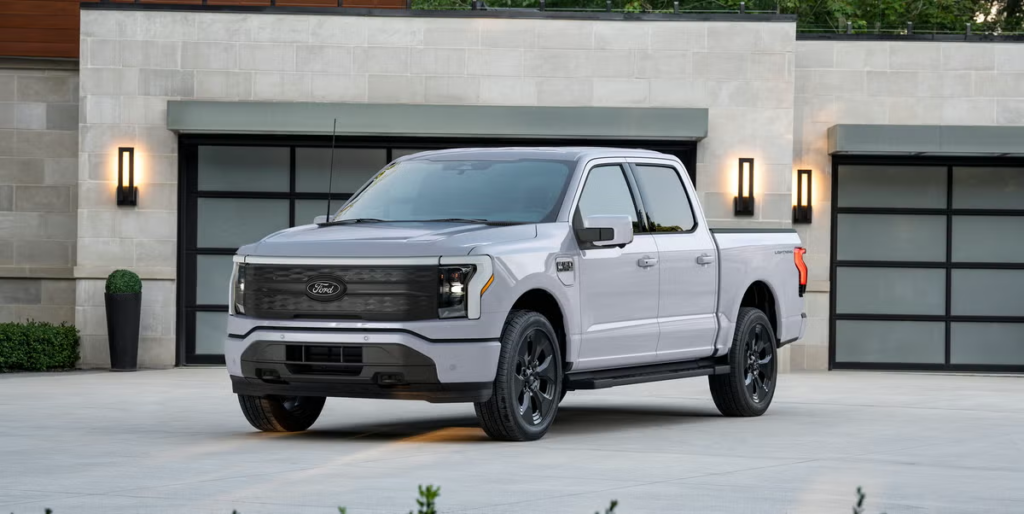
This strategic shift bears a striking resemblance to maneuvers undertaken by other major automotive players. Stellantis, Ford’s crosstown rival, experienced a similar recalibration with its Ram brand. Initially, Ram had ambitious plans for both a pure electric truck, the REV, and an EREV variant, the Ramcharger. However, the market reception to purely electric trucks, as evidenced by the sales figures for models like the F-150 Lightning, proved less robust than anticipated. Consequently, Ram scaled back its all-electric ambitions, consolidating its efforts behind the EREV Ramcharger. Ford’s current trajectory mirrors this pragmatic approach, placing its bets on a technology that offers a bridge between traditional ICE powertrains and the full electrification that still faces significant adoption hurdles.
The magnitude of Ford’s pivot is substantial, particularly considering the considerable financial and developmental resources already poured into the all-electric Lightning. The company has acknowledged a significant financial hit associated with this strategic adjustment, underscoring the inherent risks and complexities of navigating a rapidly evolving automotive landscape. This isn’t a minor tweak; it’s a multi-billion-dollar recalibration designed to align product development with immediate consumer desires and economic realities. The industry is witnessing a growing trend where established manufacturers are demonstrating a remarkable agility in adapting their long-term strategies to the prevailing market conditions, rather than adhering rigidly to initial, perhaps overly optimistic, electrification timelines.
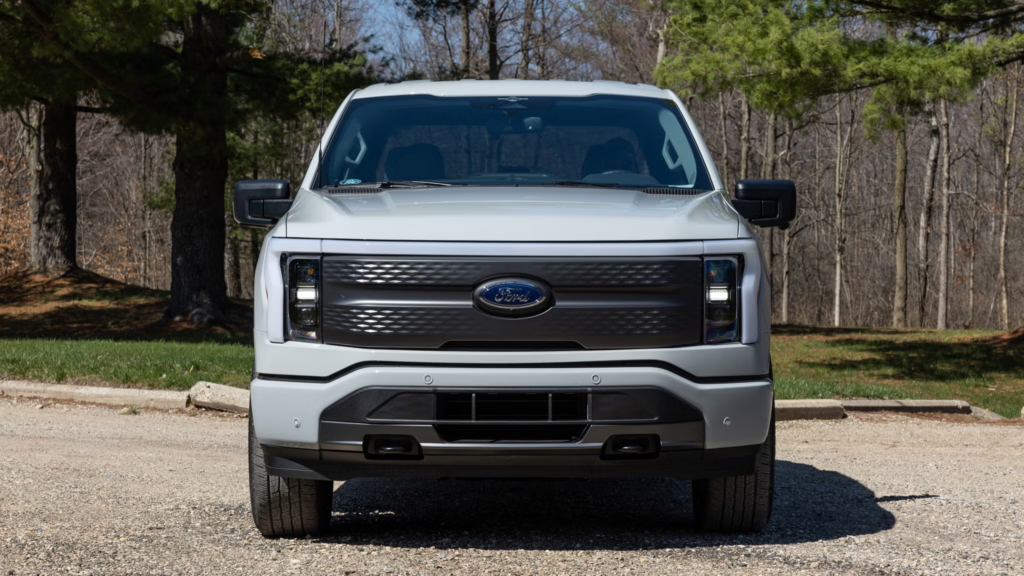
The implications of this EREV approach extend beyond Ford. Competitors and emerging players are also exploring similar hybrid and extended-range electric architectures. Volkswagen’s Scout brand, for instance, is reportedly developing extended-range electric SUVs and trucks, indicating a broader industry recognition of the practical advantages offered by such powertrains in specific vehicle segments. This convergence of strategies suggests a shared understanding within the industry that a one-size-fits-all electrification approach may not be optimal for every vehicle type or every consumer demographic.
Andrew Frick, president of Ford Blue and Ford Model e, has articulated the rationale behind this strategic redirection, emphasizing that the decision is fundamentally customer-driven. The current market, he asserts, is not a reflection of predictions made years ago. Instead, it’s shaped by today’s consumers who prioritize vehicles that are both affordable and capable of meeting their diverse lifestyles and needs. This customer-centric approach is the bedrock upon which the next-generation F-150 EREV is being built. The headline figure that underscores this commitment is the projected range of over 700 miles for the F-150 EREV. This represents a significant leap in range capabilities for electrified trucks, directly addressing the perennial concerns of range anxiety and operational limitations that have hampered the widespread adoption of pure electric trucks, particularly for those who depend on their vehicles for heavy-duty work or long-haul transportation.
Looking further ahead, Ford is signaling its intent to introduce a family of more affordable electric vehicles beginning in 2027, with a compact pickup truck slated to be the inaugural model. This suggests a phased approach to electrification, where the immediate focus is on leveraging hybrid and EREV technologies for high-volume, demanding segments like the F-150, while simultaneously developing more accessible and potentially purely electric options for other market segments. By 2030, Ford anticipates a substantial shift in its global sales mix, with hybrids, EREVs, and EVs collectively accounting for approximately half of its total volume, a significant increase from the current 17 percent. Crucially, this projected future lineup is expected to be profitable, indicating a more sustainable and financially viable path to electrification than the initial all-electric push might have promised.
A noteworthy aspect of Ford’s revised strategy is its foray into the battery storage business. Rather than allowing its joint-venture battery plants in Kentucky and Michigan to lie idle, Ford plans to repurpose these facilities. Leveraging existing licenses, the company will produce Lithium Iron Phosphate (LFP) batteries, not just for its vehicles, but also for the burgeoning energy storage market. This strategic move capitalizes on the growing demand for grid-scale energy storage solutions, driven by factors such as renewable energy integration and the increasing needs of data centers. These same plants were initially intended to produce batteries for the next generation of large electric vehicles, codenamed T3, a program that has now been shelved.
This strategic pivot will inevitably lead to workforce adjustments. Employees at the joint-venture battery plants will face layoffs, including a significant number at the Kentucky battery plant. However, Ford intends to rehire a substantial workforce, estimated to be around 2,100 individuals, to initiate the production and shipping of 20-gigawatt-hour (GWh) storage systems by 2027. Similar plans are in motion for the Marshall, Michigan, plant, highlighting Ford’s multifaceted approach to leveraging its existing infrastructure and expertise in new, potentially more lucrative, market areas. This proactive engagement in the energy storage sector demonstrates a holistic view of electrification, extending beyond vehicle manufacturing to encompass the broader energy ecosystem.
The future Ford lineup will also see an expansion of truck, SUV, and van offerings. The company plans to create additional jobs at its Ohio plant, which currently manufactures commercial vans. This expansion will include the introduction of new gasoline and hybrid van models, catering to the diverse needs of commercial fleets. Furthermore, at its Blue Oval plant in Kentucky, Ford’s revised strategy involves producing gasoline-powered F-Series trucks and introducing a new, smaller, and more affordable pickup truck. This multifaceted approach underscores Ford’s commitment to serving a wide spectrum of the truck market, from its established, high-volume ICE offerings to its next-generation electrified variants.
The decision to transition the F-150 Lightning to an EREV platform, offering an extended range of over 700 miles, is a pragmatic response to the current realities of the electric vehicle market. While it may represent a departure from the initial vision of a fully electric flagship, it aligns with consumer preferences for affordability, utility, and range, particularly within the competitive pickup truck segment. This strategic recalibration, coupled with Ford’s entry into the battery storage business and its commitment to a broader range of electrified and ICE vehicles, paints a picture of a company adapting intelligently to a complex and rapidly evolving automotive landscape. For consumers in the market for a new Ford F-150, the upcoming EREV offers a compelling blend of familiar capability with enhanced efficiency and an extended operational reach, promising to redefine what an electrified pickup can achieve.
The automotive industry is in constant flux, and understanding these shifts is crucial for anyone making a vehicle purchase or investment. Ford’s decision to pivot the F-150 Lightning strategy is a testament to the dynamic nature of consumer demand and technological progression. If you’re considering a new Ford truck or are curious about the future of electrified vehicles, understanding these strategic moves can empower you to make informed decisions. Explore the latest offerings from Ford and other manufacturers, and see how these industry trends are shaping the vehicles that drive our lives and livelihoods.