



Revolutionizing Automotive Architecture: How Drako’s DriveOS is Ushering in an Era of Smarter, More Accessible Vehicles
The automotive landscape of 2025 is undeniably at a crossroads. We are witnessing an unprecedented surge in vehicle complexity and, consequently, escalating price tags. The very essence of modern car manufacturing, once a symphony of mechanical engineering, is now increasingly dictated by intricate software architectures. For a decade, a visionary duo, Dean Drako and Shiv Sikand, veterans of the silicon industry and founders of IC Manage, a leading design-data management platform for chipmakers, have been meticulously cultivating a radical solution. Their brainchild, Drako Motors, has emerged from the shadows with a revolutionary operating system – Drako DriveOS – born from a decade-long pursuit of automotive perfection, exemplified by their own groundbreaking hypercar. This isn’t merely an incremental upgrade; it’s a paradigm shift poised to democratize high-performance automotive features, making them accessible even in more affordable vehicle segments.
From Silicon Valley Acumen to Automotive Innovation: The Genesis of Drako DriveOS
The genesis of Drako DriveOS is rooted in a familiar, yet profoundly significant, premise: the centralization of computational power. Drako and Sikand envisioned a single, potent computing platform that could directly interface with a vehicle’s sensors and actuators, thereby dramatically minimizing data latency. This reduction in response time is not merely an academic pursuit; it translates directly into tangible benefits: enhanced performance, bolstered safety, and fortified cybersecurity. Their ambition echoes the burgeoning trend of centralized computing architectures in mainstream vehicles, such as the acclaimed “Heart of Joy” in the 2026 BMW iX3, but amplified to an entirely new level. The core concept is elegant: a singular “brain” orchestrating every facet of the vehicle’s operation, eliminating the sluggishness inherent in traditional distributed electronic control units (ECUs).
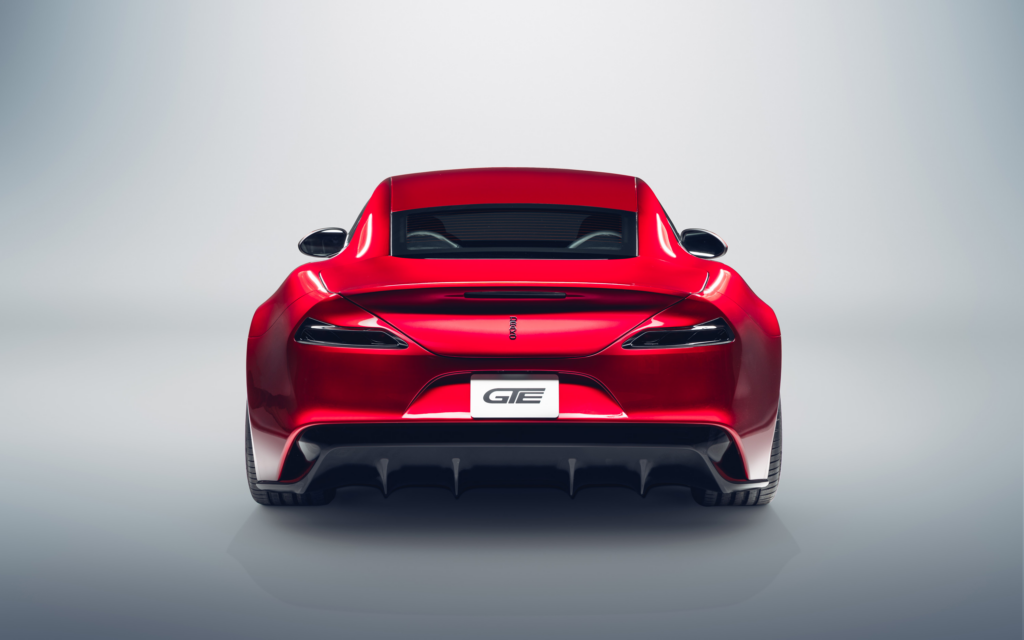
The most compelling demonstration of Drako DriveOS’s capabilities, they reasoned, would be within a high-performance electric vehicle. Specifically, a four-motor electric vehicle capable of delivering an astounding 1,200 horsepower. This platform would not only allow for unparalleled precision in torque-vectoring control at each individual wheel but also serve as the central nervous system for all safety systems, infotainment, and dynamic driving functions. However, in the nascent stages of their development back in 2014, purpose-built four-motor EVs were virtually nonexistent. Undeterred, Drako Motors embarked on the ambitious task of building their own proof-of-concept: the Drako GTE. It’s worth noting the industry impact of this endeavor; Drako Motors collaborated with Pankl Racing Systems to engineer ultra-high-strength half-shafts for the GTE, a testament to their engineering prowess. Today, Pankl is a key supplier of similar critical components to leading electric hypercar manufacturers, a direct legacy of the GTE’s development.
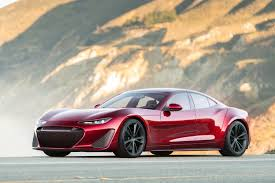
The Drako GTE and Dragon: Showcasing a Future of Automotive Control
To accelerate the development of less technologically intensive components like glass, hinges, and interior appointments, the GTE’s chassis is ingeniously adapted from the Fisker Karma. However, beneath the familiar silhouette lies a completely reimagined and electrified powertrain. A substantial 90 kWh battery pack is strategically integrated within the car’s tunnel and beneath a re-engineered floor. This potent energy source fuels a combined output of 1,200 horsepower. Initially slated for a limited production run of 25 units with a price tag of $1.25 million, the first GTE is currently under construction.
Beyond the GTE, Drako Motors is also developing the Dragon, a five-seat SUV that promises a breathtaking 2,000 horsepower and a more accessible $300,000 price point, complete with striking gullwing doors. While these halo vehicles are impressive in their own right, their primary purpose is to serve as a powerful showcase for the transformative potential of Drako DriveOS.
The Alarming Ascent of Automotive Software Costs
The financial implications of increasingly complex vehicle software are stark. In 1980, software constituted a mere 10 percent of a vehicle’s total cost. Fast forward to the present decade, and that figure has ballooned to an astonishing 30-40 percent. The relentless pursuit of advanced safety features and autonomous driving capabilities is projected to push this percentage even higher, potentially reaching 50 percent by 2030. This exponential growth in software expenditure is a significant contributor to the soaring prices of new vehicles, placing them beyond the reach of many consumers. This is where the innovation of Drako DriveOS becomes particularly relevant, offering a pathway to both greater capability and affordable car technology.
Deconstructing Traditional Automotive Electronic Architectures: A Legacy of Complexity
The automotive industry, historically, has been remarkably resistant to the fundamental shift towards centralized computing that has long been the norm in consumer electronics. While every desktop computer, gaming console, and smartphone relies on a handful of powerful, general-purpose processors, the automotive world has remained tethered to a sprawling network of dozens, if not hundreds, of specialized, bespoke Electronic Control Units (ECUs). This reliance on dedicated controllers, each running its own miniature real-time operating system, is a significant factor contributing to the escalating cost and complexity of modern vehicles.
A primary driver behind this inertia is a perceived gap in software expertise within traditional automotive manufacturers. Industry suppliers have often argued that widely used operating systems like Windows or Linux are inherently unsuitable for the safety-critical, real-time data processing demands of automotive applications. They contend that these general-purpose OSes cannot guarantee the deterministic, interrupt-free performance required for functions like braking or airbag deployment, as they might be inadvertently delayed by less critical inputs, such as those from a tire pressure monitoring system or even a cabin scent dispenser. Consequently, the “safest” and most expedient approach has been to delegate these functions to specialized ECUs, each meticulously designed and programmed by suppliers.
This distributed approach, while seemingly robust, has spawned a nightmarish tangle of “spaghetti wiring” – miles upon miles of interconnected cables that create an overwhelming number of potential vulnerabilities, or “attack surfaces.” Hackers have demonstrated the alarming ease with which they can infiltrate vehicle communication networks through seemingly innocuous pathways, such as car radios or even taillight assemblies. This pervasive cybersecurity risk, coupled with the sheer cost and logistical challenges of managing such a complex electronic ecosystem, underscores the urgent need for a radical reimagining of automotive software architecture.
The Drako DriveOS Paradigm: A Symphony of Efficiency and Security
Drako DriveOS offers a compelling alternative to this entrenched complexity. While widely adopted operating systems like Linux are ubiquitous in the digital world, their inherent lack of real-time determinism has been a stumbling block for safety-critical applications. The Linux kernel, by its nature, can be interrupted by less time-sensitive processes, making it unsuitable for applications where milliseconds matter – applications like those governing vehicle safety.
This is where Drako DriveOS, in collaboration with research led by Boston University’s Richard West, introduces a groundbreaking solution. At its core lies Quest V, a novel kernel architecture specifically designed to address the real-time processing challenge. Kernels, the fundamental bridge between a computer’s hardware and its software applications, are responsible for managing system resources. The Drako kernel, however, incorporates a revolutionary concept: a “data pipe.” This intelligent data conduit directly links the safety-critical processor with the hardware responsible for receiving safety-critical data, all through memory. This effectively creates a secure, isolated “walled garden” for safety-related tasks, ensuring they remain the absolute priority, free from the distractions of non-critical system operations. By achieving this level of deterministic performance, Drako DriveOS empowers the use of a robust Linux backbone for the overall vehicle operation while guaranteeing the unwavering reliability of its safety systems. This innovation is a key differentiator in the pursuit of next-generation automotive software.
Streamlining Communication and Unlocking Savings: The USB Advantage
Beyond its core processing capabilities, Drako DriveOS fundamentally rethinks vehicle communication protocols, offering a significant advantage in both efficiency and cost reduction. While DriveOS can seamlessly interface with existing automotive communication standards like Ethernet, CAN, Flexray, and LIN, many of these protocols come with inherent limitations. They often necessitate complex translation and conversion processes by the central processor before commands can be sent and after data is received, introducing detrimental latency. Furthermore, their maximum data transmission rates are often considerably slower than modern computing demands. Shiv Sikand points out that the fastest response time for Ethernet is approximately 514 microseconds, while USB currently achieves a remarkable 108 microseconds. This reduction in automotive latency is crucial for real-time control.
The true innovation lies in Drako DriveOS’s embrace of the USB protocol, a standard integrated into virtually every Intel chip manufactured today – the very protocol that allows your PC to recognize your mouse. By leveraging USB, the central processor can communicate directly with sensors and actuators, eliminating the need for intermediary translation. At the sensor and actuator end, only a simple, inexpensive pin connector is required to direct these USB signals, drastically reducing the cost associated with the specialized silicon typically required for other network types. Sikand estimates this can yield savings of $4 to $10 per connection. Moreover, as autonomous driving technology advances, the immense bandwidth requirements will likely necessitate a shift to USB. USB 5, for instance, is projected to handle 80 gigabits per second, dwarfing the capabilities of CAN XL’s maximum of 20 megabits per second, even after compression. Commodity cameras, essential for advanced driver-assistance systems (ADAS) and autonomous driving, already natively communicate over USB, further simplifying integration and reducing costs. This focus on automotive system simplification is a cornerstone of Drako’s approach.
Fortifying Vehicle Defenses: Enhanced Cybersecurity Through DriveOS
In today’s increasingly connected world, cybersecurity is no longer an afterthought; it’s a paramount concern. Drako DriveOS significantly bolsters a vehicle’s defenses by presenting a dramatically reduced attack surface. Operating on a centralized PC core, the system consolidates potential vulnerabilities. Crucially, because USB is designed as an infrastructure for device control rather than solely a communication protocol, Drako DriveOS can implement its own proprietary communication protocols. This custom approach creates a far more challenging environment for hackers to exploit compared to widely adopted industry-standard protocols like CAN or Ethernet, which are more easily understood and targeted. This enhanced automotive cybersecurity is a critical benefit for both manufacturers and consumers.
The Vision for Widespread Adoption: Making Advanced Features Accessible
Dean Drako and Shiv Sikand’s vision extends far beyond the realm of hypercars. Their ambition is to democratize the transformative benefits of advanced automotive technology. Shiv Sikand eloquently summarizes their mission: “Bill Gates put a PC on everyone’s desk, and everyone’s still got one on their desk. We want to put another one in their car.” Drako Motors is not motivated by exclusivity; they are keen to license their performance-enhancing and cost-saving software solution broadly. They estimate that a modest licensing fee of a few hundred dollars per vehicle, scaled across the tens of millions of cars produced annually, would represent a substantial return on their multi-million dollar investment in DriveOS development. This strategy has the potential to significantly lower electric vehicle costs and make advanced features more attainable.
Having experienced firsthand the palpable improvements in cornering, acceleration, and braking delivered by reduced latency in vehicles like the BMW iX3, and knowing the discerning automotive taste of Shiv and Dean, evidenced by their passion for driving exceptional vehicles on California’s scenic routes, including the iconic Ferrari 288 GTO, we can confidently attest to their intuitive understanding of how silicon innovation can elevate vehicle performance. For true car enthusiasts, the promise of Drako DriveOS is not just about technology; it’s about a more engaging, safer, and ultimately more accessible driving future for everyone.
Discover how Drako DriveOS can transform your next automotive project. Contact us today to explore partnership opportunities and pave the way for smarter, more affordable vehicles.