



Revolutionizing Automotive Architecture: How Centralized Compute is Redefining the Modern Vehicle
The automotive industry, a sector historically characterized by robust engineering and incremental innovation, is currently navigating a seismic shift. The complexity and escalating cost of modern vehicles, particularly in the realm of electronics and software, are becoming increasingly prohibitive for consumers. Enter Drako Motors, a company founded by Silicon Valley veterans Dean Drako and Shiv Sikand, whose decade-long endeavor has culminated in a groundbreaking operating system that promises to democratize advanced automotive features, potentially transforming how even entry-level vehicles are constructed.
The Genesis of Drako DriveOS: From Silicon Success to Supercar Synthesis
Drako Motors’ origin story is deeply rooted in the semiconductor industry. Co-founders Dean Drako and Shiv Sikand achieved significant success with IC Manage, a sophisticated design-data management platform indispensable for silicon chip manufacturers. The immense capital generated from this venture has been strategically reinvested into their ambitious passion project: Drako Motors, dedicated to developing a radically new automotive operating system.
Their initial proposition for Drako DriveOS echoes a familiar refrain in the automotive tech space: a centralized computing platform designed to communicate directly with an array of sensors and actuators. The purported benefits are profound – drastically reduced latency, leading to enhanced performance, superior safety, and fortified cybersecurity. This concept bears a striking resemblance to the “Heart of Joy” initiative seen in the 2026 BMW iX3, but Drako’s vision amplifies it considerably, aiming for a singular “brain” that orchestrates all functions with imperceptible lag.
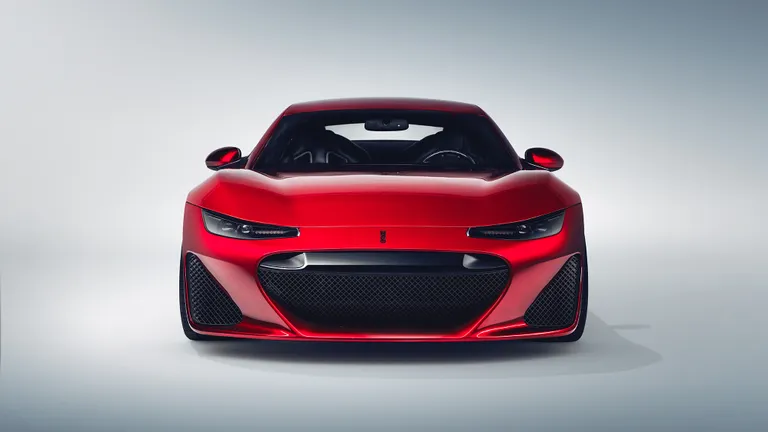
Recognizing that the most compelling demonstration of their operating system’s capabilities would be within an environment demanding peak performance, Drako Motors embarked on creating a hypercar. This vehicle, designed from the ground up, would not only showcase the precise torque-vectoring control afforded by their system on each wheel but also manage all safety, infotainment, and driving dynamics functions. However, in 2014, the automotive landscape lacked readily available four-motor electric vehicles suitable for such a complex retrofit. Consequently, they opted to build their own proving ground: the Drako GTE. As a testament to their engineering prowess, Drako Motors partnered with Pankl Racing Systems to develop ultra-high-strength half-shafts for the GTE. This collaboration proved prescient, as Pankl now supplies similar components to several leading electric hypercar manufacturers in the current automotive market.
The Drako GTE Sedan and the Visionary Dragon SUV
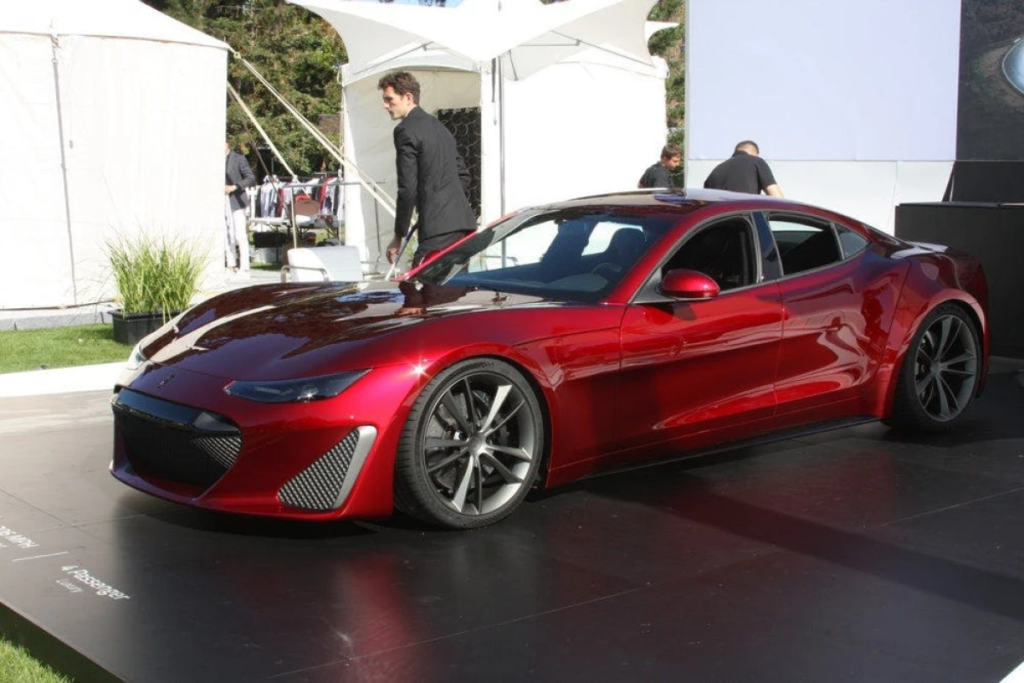
To streamline the development of myriad components such as glass, hinges, gauges, and switches, the GTE was built upon the foundation of the Fisker Karma. This chassis underwent a complete redesign and electrification, incorporating 90 kWh of battery capacity ingeniously integrated within the vehicle’s tunnel and beneath a raised floor. The GTE boasts an astounding combined output of 1,200 horsepower. Initially, a price tag of $1.25 million was announced, with plans to produce a limited run of 25 units, the first of which is currently under construction. Following the GTE, Drako Motors has revealed plans for a five-seat SUV, the Drako Dragon. This ambitious vehicle features striking gullwing doors, projected 2,000-hp performance, and a more accessible price point of $300,000. However, the primary objective of these halo vehicles is to serve as powerful demonstrations of the transformative potential of Drako DriveOS.
The Alarming Trajectory of Automotive Software Costs
The escalating complexity of modern vehicles is starkly reflected in the cost of their software. As recently as 1980, software constituted a mere 10 percent of a vehicle’s total manufacturing cost. This figure has experienced exponential growth, reaching an estimated 30 to 40 percent in the current decade. Projections indicate that the integration of additional advanced safety and autonomous driving systems will further push this percentage to a staggering 50 percent by 2030. This rapid escalation underscores the urgent need for more efficient and cost-effective software architectures, a challenge that Drako DriveOS directly addresses. The quest for affordable electric vehicles with advanced features is a key market driver, and technologies that reduce the cost of sophisticated electronics are paramount.
Drako DriveOS vs. Traditional Electronic Architectures: A Paradigm Shift
The automotive industry has, for the most part, resisted the fundamental shift from a decentralized architecture comprising dozens, if not hundreds, of bespoke Electronic Control Units (ECUs) to a more integrated system leveraging fewer, more powerful commodity PC-core processors. This is a trend that has long been the norm in computing, with devices like personal computers, gaming consoles, and smartphones relying on these versatile processing units.
Several factors contribute to this automotive inertia. A primary impediment is the relative scarcity of software-savvy engineers within traditional automotive manufacturing environments. Furthermore, industry suppliers have historically pointed to the limitations of ubiquitous operating systems such as Windows and Linux, asserting their inability to handle the real-time, safety-critical data processing demands inherent in automotive applications. The perceived safest and most expeditious solution, therefore, has been to delegate specific functions to dedicated controllers, each developed by specialized suppliers. This approach covers everything from anti-lock braking systems and airbags to less critical features like seat massagers and scent dispensers.
The consequence of this fragmented approach is a complex web of hundreds of dedicated ECUs, each running its own rudimentary real-time operating system. These are interconnected by miles of intricate wiring, often referred to as “spaghetti wiring.” This intricate network presents a multitude of “attack surfaces,” providing potential entry points for hackers to compromise vehicle communication networks, as demonstrated in past incidents involving compromised radio systems (Jeep) or even lighting components (Porsche). The rising tide of automotive cybersecurity threats further amplifies the need for a more robust and streamlined architecture.
The Drako DriveOS Alternative: Streamlined, Secure, and Scalable
The global digital infrastructure relies heavily on Linux, a versatile and powerful operating system. However, its inherent lack of real-time deterministic capabilities makes it unsuitable for prioritizing safety-critical sensor inputs without the risk of interruption from less critical data, such as that from a tire pressure monitoring system or a rain sensor.
This is where Drako DriveOS introduces a groundbreaking innovation. Developed in collaboration with Richard West of Boston University, the system leverages novel kernel and pipe architecture to overcome the real-time processing challenge. Kernels, the fundamental components of an operating system, act as crucial intermediaries between a computer’s hardware (CPU, memory, devices) and its software applications, managing essential system resources. In the context of Drako DriveOS, these kernels function akin to hypervisors, establishing a secure and consistent environment for applications to access hardware.
Central to Drako DriveOS is its proprietary “data pipe” mechanism. This innovative feature establishes a direct, memory-based connection between the safety-critical processor and the silicon dedicated to receiving and processing this vital data. This effectively creates a secure partition, isolating safety-critical tasks and ensuring they remain unhindered by non-essential system operations. This allows Drako DriveOS to confidently operate safety-critical systems atop a Linux foundation, merging the flexibility and ubiquity of Linux with the stringent real-time performance required for automotive safety. This approach to system architecture is a significant step towards the concept of software-defined vehicles.
Enhanced Communication: Simplification, Savings, and Speed
Drako DriveOS possesses the capability to interface with actuators and sensors using the diverse array of protocols prevalent in today’s automotive landscape, including Ethernet, CAN, Flexray, and LIN. However, many of these legacy protocols suffer from inherent drawbacks. Typically, the central processor must undergo a translation or conversion process for commands both before sending and after receiving them. Furthermore, their data transmission rates are often sluggish, introducing latency. As Shiv Sikand notes, the fastest response time achievable with Ethernet is approximately 514 microseconds, while USB currently offers a faster response of around 108 microseconds.
A key advantage of Drako DriveOS lies in its native integration with the Universal Serial Bus (USB) communication and control protocol, a standard feature on virtually every Intel processor. This allows the central processor to transmit commands directly without the need for intermediary translation layers. At the sensor and actuator level, only a simple pin connector is required to route these USB signals to the intended components, such as lights or seats. This eliminates the need for custom silicon, which Shiv estimates can save between $4 and $10 per connection compared to other network architectures.
The increasing demands of autonomous driving necessitate higher bandwidth. USB 5, capable of transmitting 80 gigabits per second, significantly outpaces the maximum rate of CAN XL (a mere 20 megabits per second, even after compression), making USB a critical protocol for future autonomy applications due to its superior bandwidth and reduced latency. Moreover, commodity cameras, widely used in automotive systems, natively communicate over USB, further simplifying integration and reducing costs. The pursuit of advanced driver-assistance systems (ADAS) and full self-driving capabilities hinges on such efficient data handling.
Fortified Cybersecurity: A Unified Front Against Threats
The traditional ECU-based architecture presents a sprawling attack surface, offering numerous vulnerabilities for malicious actors. Drako DriveOS, by contrast, consolidates the vehicle’s electronic functions onto a PC-core processor, effectively presenting a single, more manageable attack surface. Because USB is fundamentally an infrastructure for device control rather than solely a communication protocol, the Drako DriveOS software can establish its own proprietary communication protocol. This custom protocol is significantly more challenging for hackers to compromise compared to industry-standard communication protocols like CAN or Ethernet, enhancing the overall cybersecurity posture of the vehicle. The reduction in interconnected ECUs directly translates to a reduction in potential intrusion points.
The Rollout Strategy: Democratizing Advanced Automotive Technology
Shiv Sikand eloquently articulates the overarching mission of Drako Motors: “Bill Gates put a PC on everyone’s desk, and everyone’s still got one on their desk. We want to put another one in their car.” Drako Motors is not pursuing an exclusive licensing model for its performance-enhancing and cost-saving software solution. The company envisions a broad adoption, believing that a modest licensing fee of a few hundred dollars per vehicle, distributed across tens of millions of cars, would represent a justifiable return on the substantial investment capital poured into the development of DriveOS. This scalable licensing model has the potential to drive down the cost of advanced features for a wide range of vehicles, from premium sedans to more affordable compact cars.
Having experienced firsthand the tangible benefits of reduced latency, such as improved cornering, acceleration, and braking, as demonstrated in the BMW iX3, and with a deep appreciation for vehicle dynamics honed by driving a pristine Ferrari 288 GTO on the scenic roads of California’s central coast, the team at Drako Motors possesses an intuitive understanding of how silicon-based innovation can elevate automotive performance. Their deep expertise in both the hardware and software domains, coupled with a clear vision for the future of automotive electronics, positions Drako DriveOS as a truly transformative force in the industry.
For automotive manufacturers seeking to integrate cutting-edge performance, safety, and cybersecurity features without the prohibitive costs and complexities of traditional architectures, the advent of Drako DriveOS presents an unparalleled opportunity. Embracing this centralized computing paradigm isn’t just about staying ahead of the curve; it’s about fundamentally redefining what’s possible in automotive engineering and making advanced technology accessible to a broader market.
Are you ready to explore how Drako DriveOS can empower your next vehicle platform and usher in a new era of automotive innovation? Contact us today to learn more about integrating this revolutionary technology and unlock unparalleled performance, safety, and cost efficiencies.