



Hyundai Crater Concept: Forging the Future of Electric Off-Road Dominance
The year 2025 marks a pivotal moment in automotive evolution, a confluence of electrification and rugged adventure. As the global landscape shifts towards sustainable mobility, the demand for vehicles that can conquer both the urban jungle and untamed wilderness has surged. Enter the Hyundai Crater Concept, a visionary vehicle unveiled at the Los Angeles Auto Show that isn’t just a design study, but a bold manifesto for the future of Hyundai’s burgeoning XRT subbrand. This isn’t merely an upgrade; it’s a complete reimagining, showcasing an electric off-road prowess wrapped in a shell of industrial artistry and packed with digital innovation. The Crater Concept isn’t just gazing into the future; it’s actively shaping it, promising a new era for electric off-road vehicles that blend extreme capability with cutting-edge technology and a deeply immersive user experience.
For years, the XRT badge has adorned Hyundai SUVs, signaling an intent for adventure. What began as appearance packages on models like the Santa Fe and Tucson has steadily evolved, with recent iterations like the Palisade XRT Pro hinting at more substantial upgrades. But the Crater Concept transcends these predecessors entirely, representing a quantum leap. This adventure-ready SUV concept rides high on formidable 33-inch tires, boasts an integrated roll cage for uncompromised safety, and pushes the boundaries of in-cabin technology with a groundbreaking head-up display that transforms the entire windshield into an interactive canvas. It’s a testament to Hyundai’s aggressive strategy to carve out a significant share in the rapidly expanding premium electric SUV market, particularly within the specialized off-road EV segment.
Sculpted for the Wild: A Design Language Beyond Aggression
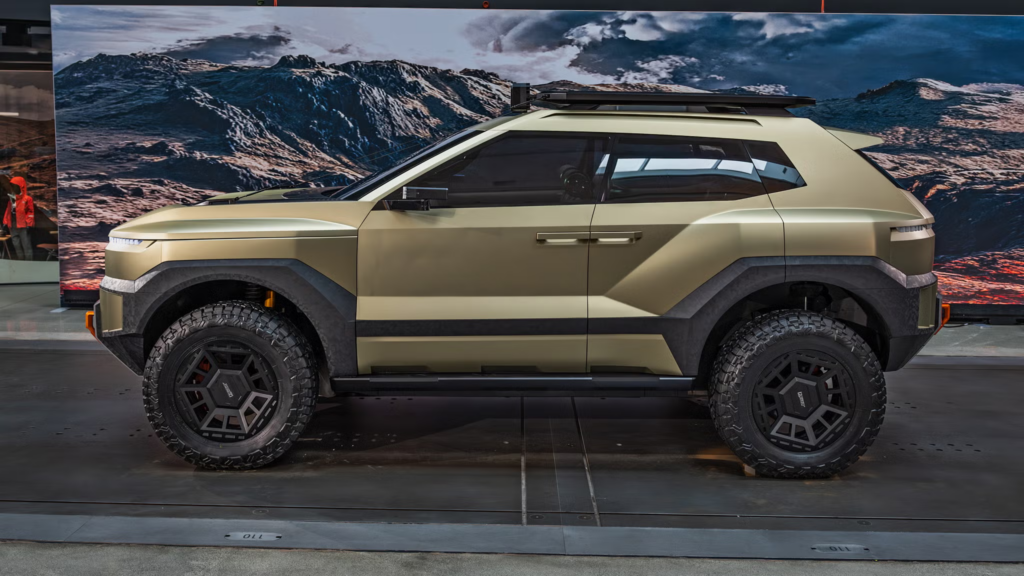
The Hyundai Crater Concept immediately commands attention with its “Art of Steel” design language, a philosophy first glimpsed on the Initium concept that prefigured the second-generation Nexo. This isn’t just a styling exercise; it’s a functional aesthetic that screams durability and purpose. The industrial, expressive look perfectly suits a vehicle designed to thrive where asphalt ends. Every line, every panel, every dimension of the Crater speaks to its innate ability to tackle challenging terrain.
A true off-roader prioritizes functionality, and the Crater delivers. Its critically short overhangs and steeply angled bumpers are not mere cosmetic choices; they are engineered to provide exceptional approach and departure angles, allowing the vehicle to climb and descend obstacles without snagging. Integrated metal skid plates underscore its commitment to protection, safeguarding vital undercarriage components from rocks and debris. Adding a touch of playful utility, vibrant orange tow hooks are seamlessly incorporated into the bumpers—one of which ingeniously doubles as a bottle opener. This thoughtful detail, complete with a small, robotic face known as “Crater Man” (the concept’s charming mascot), speaks volumes about the lifestyle the Crater envisions: a blend of serious capability and relaxed, social adventure once the campsite is reached. This attention to detail in sustainable automotive design is exactly what modern consumers expect from their high-tech electric vehicles.
The Crater’s impressive ground clearance is a direct result of its robust, raised suspension system, perfectly complemented by those imposing 33-inch all-terrain tires. These chunky tires wrap around uniquely designed 18-inch wheels, which Hyundai designers describe as being inspired by “a hexagonal asteroid impacting a sheer metal landscape,” leaving a metaphorical crater in its wake. This imaginative narrative reinforces the vehicle’s rugged persona. The black wheel arches and body trim further enhance its tough exterior, featuring the distinctive “pixel camo” finish that eagle-eyed enthusiasts might recognize from the Ioniq 5 XRT’s bumper accents. This blend of futuristic pixelation with raw, utilitarian design is a hallmark of Hyundai’s current design direction for its next generation EV platforms.
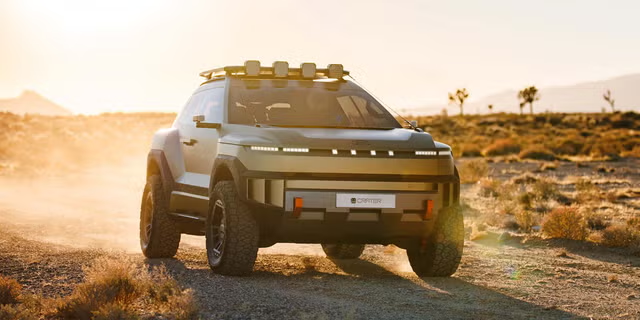
Beyond the foundational elements, the Crater is replete with features tailored for the demanding off-road environment. Limb risers, those crucial cables stretching from the hood to the roof, are elegantly integrated to deflect low-hanging branches, protecting the windshield and bodywork on tight trails. A sleek, low-profile roof rack isn’t just for aesthetics; it’s a practical platform for carrying gear, while a bank of auxiliary lights provides superior illumination, piercing through the darkest nights. These lights, along with the main headlights and taillights, continue the retro-futuristic pixelated motif that has become an iconic signature of Hyundai’s electric vehicle lineup. The incorporation of advanced lighting systems highlights Hyundai’s focus on automotive technology innovations that enhance both safety and capability.
Perhaps one of the most intriguing design choices—and one that highlights the disparity between global regulations and forward-thinking design—are the camera-based side-view mirrors. While already implemented in markets like Hyundai’s home country on models such as the Nexo, US legislation still prevents their widespread adoption. On the Crater Concept, these digital mirrors are not only compact and aerodynamic but are also detachable, serving a dual purpose as powerful flashlights or high-definition action cameras to document every thrilling moment of an adventure. This demonstrates Hyundai’s ambition to equip its future mobility solutions with versatile, multi-functional components.
Electrifying the Trail: Power and Precision
While Hyundai remained somewhat coy on the granular specifics of the Crater’s powertrain, what they did confirm speaks volumes: it’s an all-electric vehicle featuring an advanced all-wheel-drive (AWD) system complemented by front and rear locking differentials. This is a critical combination for serious off-road capability, allowing for precise power distribution and maximizing traction in slippery or uneven conditions. The inherent advantages of an electric powertrain for off-roading are numerous and truly transformative. Electric motors deliver instant torque from zero RPM, providing unparalleled control and responsiveness when crawling over rocks or navigating steep inclines. This precision power delivery, devoid of traditional gear shifts, makes the Crater inherently adept at handling muddy, undulating trails with a finesse that internal combustion engines often struggle to match.
Beyond raw power, the Crater Concept integrates intelligent off-road aids like hill descent control and trailer brake control, underscoring its commitment to comprehensive capability. While power output and battery range remain speculative, we can infer that Hyundai would leverage its cutting-edge EV technology to provide competitive figures suitable for extended excursions. Imagine the potential for Vehicle-to-Load (V2L) or even Vehicle-to-Everything (V2X) capabilities, turning the Crater into a mobile power station for campsite appliances, tools, or even another EV in distress. This aspect of the advanced EV powertrains Hyundai is developing signifies a deeper integration of the vehicle into the adventurer’s lifestyle, pushing the boundaries of off-grid capabilities electric vehicles can offer.
The XRT subbrand’s evolution, now fully embracing electrification, positions Hyundai to directly challenge emerging off-road EV competitors like the Jeep Recon and the Rivian R1S. The Crater Concept isn’t just about showing what’s possible; it’s about signaling Hyundai’s intent to be a leader in this high-growth, high-profit segment. The emphasis on robust EV powertrain capabilities off-road demonstrates a profound understanding of what enthusiasts demand, marrying the environmental benefits of electric drive with uncompromising ruggedness.
A Sanctuary of Adventure: Interior Innovation and Digital Immersion
Step inside the Crater Concept, and you’re greeted by a cabin that expertly blends rugged utility with surprising comfort and groundbreaking technology. The most striking feature is the integrated roll cage, not merely an afterthought but a foundational element of the interior structure. This doesn’t just provide enhanced safety; it also serves as a robust framework for various interior elements, including built-in grab handles to aid entry and exit, especially into the rear seats. Each seating position is equipped with four-point harnesses, reinforcing the Crater’s extreme adventure credentials.
Despite its tough demeanor, the cabin feels inviting. The seats, upholstered in a sophisticated mix of black leather and Alcantara, feature a unique cylindrical element design inspired by sleeping bags – a subtle nod to its overlanding aspirations. The focus here is on soft-yet-durable materials, designed to withstand the rigors of off-road use while maintaining a high level of comfort for long journeys. Throughout the cabin, ambient lighting casts a warm, orange glow from the doors and dashboard, creating a welcoming and modern atmosphere. This thoughtful approach to innovative automotive interiors elevates the user experience.
The most revolutionary aspect of the Crater’s cabin, however, is its approach to driver information and infotainment. Hyundai has eschewed the traditional large central touchscreen in favor of a quartet of smaller, strategically placed displays, with the lion’s share of critical information projected onto a head-up display (HUD) that spans the entire width of the windshield. This expansive HUD creates an incredibly immersive experience, delivering crisp, easy-to-read data directly into the driver’s line of sight. While some may ponder the potential for information overload, the execution on the Crater suggests a carefully curated flow designed to minimize distraction while maximizing awareness. This innovative digital cockpit design represents a radical departure from conventional layouts, hinting at the future of automotive infotainment.
Crucially, the Crater maintains a balance between digital innovation and tactile control. Below the main displays, a series of physical buttons handle essential climate functions, while cylindrical, gear-like elements allow drivers to intuitively adjust the all-wheel-drive system and differentials. The squarish steering wheel, a contemporary touch, houses additional controls for switching between various drive modes: Snow, Sand, Mud, Auto, and a dedicated XRT mode, presumably optimizing the vehicle for its most aggressive off-road capabilities. This harmonious integration of physical and digital controls is a key aspect of designing intuitive digital user experience in cars.
Beyond the core driving functions, the Crater Concept’s cabin is designed as a true basecamp on wheels. Thoughtful adventure-ready provisions are scattered throughout, including an easily accessible first aid kit and a fire extinguisher. One particularly clever feature is the removable Bluetooth speaker integrated into the center console, a concept we’ve seen successfully deployed in models like the Toyota Tacoma and 4Runner. This allows adventurers to bring their music or communication devices from the vehicle directly to their campsite.
Crater Man, the concept’s endearing mascot, plays a pivotal role in the vehicle’s unique digital ecosystem. Not confined to external details, his animated presence appears throughout the cabin, interacting with occupants via interactive modes. One such mode transforms the expansive HUD into a retro-style platform video game, with Crater Man jumping across platforms controlled by presses on one of the smaller displays. Another mode allows for musical creativity, turning the four auxiliary screens into different drum sounds that can be mixed into an electronic song. This novel integration of gamification and entertainment speaks to a desire to make the vehicle an extension of the user’s leisure and creative pursuits.
Perhaps the most evocative digital feature is the “Camp Mode.” This innovative setting can transform the HUD into a simulated campfire, complete with the soothing crackle of burning logs played through the vehicle’s speakers. Alternatively, it can depict a calming rainfall, accompanied by the realistic roar of precipitation, or switch to a night vision trail cam view, providing a live feed of the environment surrounding the camp. These immersive sensory experiences demonstrate a holistic approach to vehicle ownership, turning the Crater into a dynamic, multi-sensory retreat that enhances the adventure even when stationary. This focus on experiential technology will define advanced safety features automotive in the future, extending to driver comfort and psychological well-being.
The XRT Subbrand’s Trajectory: Beyond the Beaten Path
The Hyundai Crater Concept is undeniably a “crystal ball” for the XRT subbrand, offering a tantalizing glimpse into the features, styling, and philosophy that will define Hyundai’s future adventure vehicles. It confirms that Hyundai is serious about evolving XRT from a lifestyle trim to a powerhouse of genuine off-road capability, and crucially, an electrified one.
The market for electric off-road vehicles is burgeoning, driven by a growing desire for sustainable adventure and unparalleled performance benefits. With the Crater, Hyundai is not just catching up to competitors; it’s pushing the boundaries of what’s possible in this segment. Whether a direct production model of the Crater materializes or its elements are distilled into a dedicated XRT-specific EV platform, one thing is clear: Hyundai is committed to taking the XRT subbrand far beyond the beaten path. This strategic investment in EV technology underscores a vision where Hyundai becomes synonymous with rugged, eco-conscious exploration. The Crater is more than a concept; it’s a declaration of intent, signaling Hyundai’s ambition to be a leader in the next generation of adventurous, sustainable mobility.
The 2025 automotive landscape is dynamic, and Hyundai’s Crater Concept demonstrates a keen understanding of its direction. It’s a powerful statement about electrification, design, technology, and the enduring human spirit of adventure.
The Hyundai Crater Concept stands as a monumental declaration of intent, redefining what an electric off-road vehicle can be in 2025 and beyond. From its “Art of Steel” exterior and formidable 33-inch tires to its revolutionary cabin with a full-windshield HUD and immersive digital experiences, it represents a pivotal shift for the XRT subbrand. This isn’t just about conquering trails; it’s about pioneering an entirely new way to experience adventure, seamlessly blending rugged capability with cutting-edge technology and environmental consciousness.
What are your thoughts on Hyundai’s bold vision for electric off-roading? Share your predictions for the XRT subbrand’s future, and stay tuned as we continue to track Hyundai’s journey into this thrilling new frontier!