



The 1971 Mustang Mach 1: Reclaiming Its Throne in the 2025 Collector Market
When you’ve spent a decade immersed in the roar of classic engines, the scent of vintage leather, and the ever-shifting currents of the collector car market, you learn to spot a trend before it becomes a tidal wave. For years, the early 1970s Ford Mustangs, particularly the grander, more audacious ’71-’73 models, lingered in the shadows of their svelte ’60s predecessors. But as we navigate the vibrant automotive landscape of 2025, it’s unmistakably clear: these magnificent machines are finally, emphatically, stepping into the spotlight they’ve always deserved. And none embodies this resurgence quite like a pristine 1971 Mustang Mach 1, especially one that carries a story and mileage akin to a forgotten treasure.
It’s easy to understand why the earlier Mustangs garnered more immediate adoration. They were smaller, lighter, and epitomized the “pony car” ideal established by Lee Iacocca’s stroke of genius. But as the 1970s dawned, a new aesthetic emerged. Cars, like fashion, embraced a bolder, more substantial silhouette. The ’71 Mustang was longer, wider, and heavier—a true muscle car that fully shed its pony car skin. While some purists initially balked, dismissing them as “too big” or “too heavy,” time, as it often does, has proven to be the ultimate arbiter of taste and value.
A Deeper Look: The Anatomy of a Desirable Mach 1
To truly appreciate the gravitas of a 1971 Mach 1, especially one that transcends mere ownership to become a cultural artifact, you need to understand its DNA. The fastback body style, for instance, isn’t just a design choice; it’s a declaration. It’s an aggressive, flowing line that speaks volumes about performance and presence. This particular generation perfected that muscular, predatory stance, making it a compelling visual statement even when static.
Then there’s the beating heart: the engine. While many variations existed, the 351-cubic-inch “Cleveland” V8 stands out as a jewel of Ford engineering from that era. Not just any Cleveland, mind you, but often the four-barrel carburetor version, capable of unleashing a factory-rated 285 horsepower in an age where power was still king, albeit facing increasing regulatory pressures. Paired with a four-speed manual gearbox, as the truly discerning original owners often specified, it transforms the driving experience from a mundane commute into an engaging dialogue between man and machine. This manual transmission isn’t just a desirable option; it’s a critical component for maximizing driver involvement and significantly boosting the car’s collector car value in today’s market. A limited-slip differential further ensured that all those ponies found their way to the tarmac, an essential detail for any serious performance enthusiast.
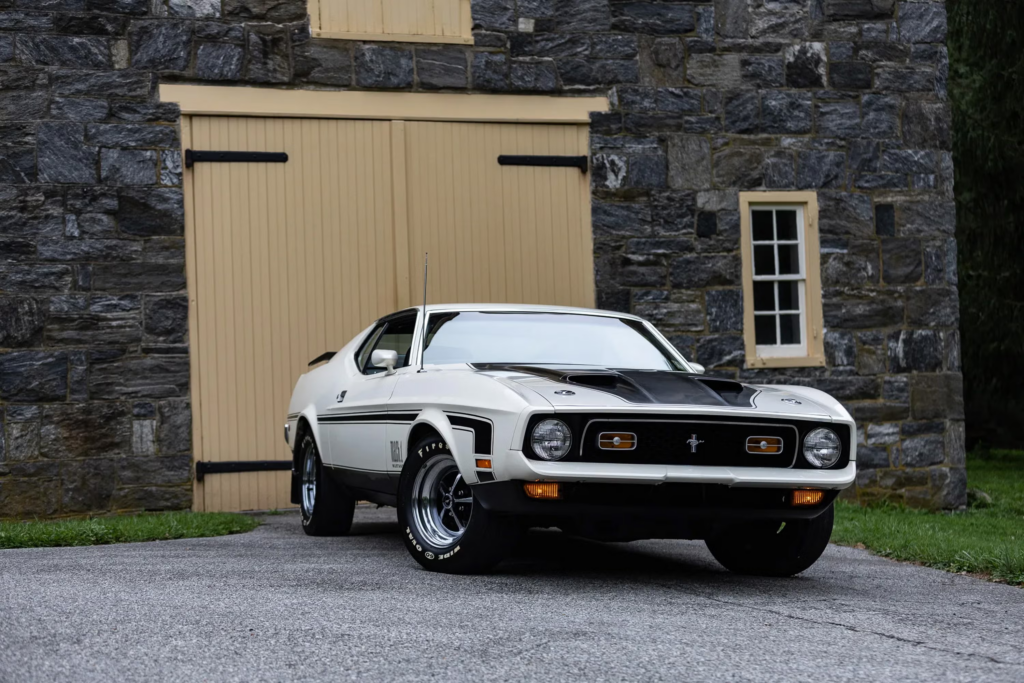
Inside, the sport interior was another testament to the Mach 1’s ambition. High-back bucket seats with distinctive stripes weren’t merely comfortable; they were a stylistic flourish, firmly planting the driver and passenger in a cockpit designed for spirited driving. The option sheet often included crucial performance and convenience items: power disc brakes up front for confident stopping, power steering to manage the car’s heft, and an AM/FM stereo for cruising soundtracks. Visually, the twin-scoop hood, especially with the functional ram-air setup, wasn’t just for show; it was a potent visual cue of the power lurking beneath, instantly signaling the car’s performance pedigree. And those chrome-finished 15-inch wheels, often shod with white-letter Firestone Wide Oval tires, completed a look that was pure, unadulterated early ’70s cool.
The “Time Capsule” Phenomenon: Why Low Mileage Matters More Than Ever
In the rarefied air of the classic car investment world, a low-mileage vehicle isn’t just a rarity; it’s practically a holy grail. Imagine finding a 1971 Mach 1 today with a mere 5,000 miles on the odometer. This isn’t just a car; it’s a portal to the past, a pristine artifact from an era that many now view through a rose-tinted lens. When a car has been driven so sparingly, it retains an almost factory-fresh aura. The original finishes, the interior fabrics, the engine bay components – they all tell a story of careful preservation rather than hard living.
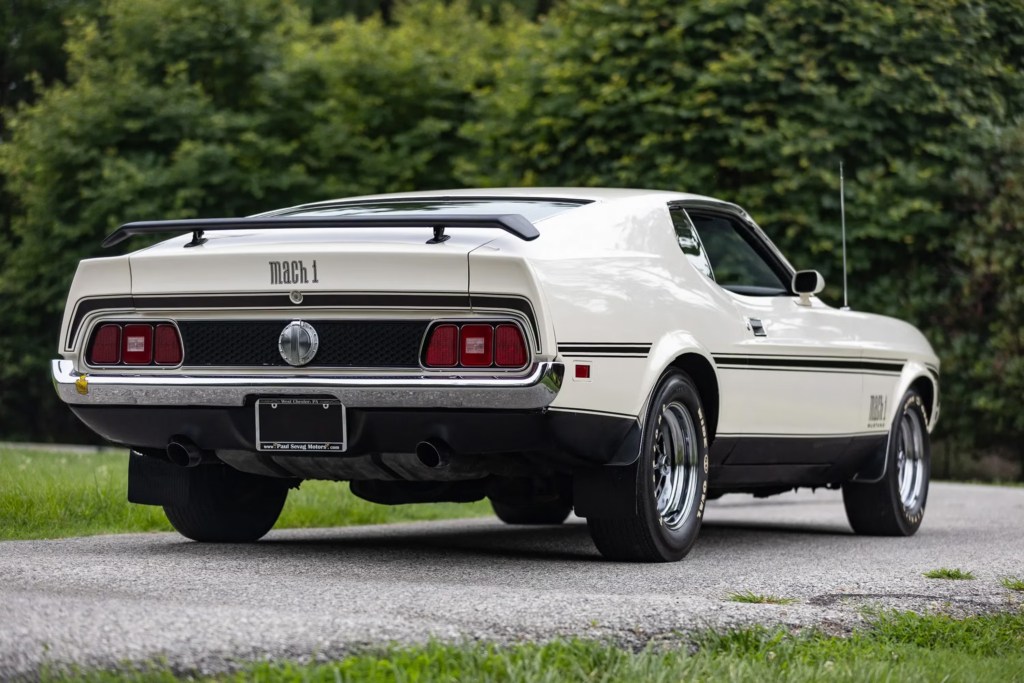
This “time capsule” quality is precisely what elevates such a vehicle from a mere classic to an exceptional one. For collectors, it represents a chance to experience what it was like to walk into a Ford showroom in 1971 and take delivery of a brand-new Mach 1. The minimal wear means fewer repairs, fewer replaced parts, and a higher degree of originality, all factors that contribute significantly to its vintage muscle car value. It’s not just about the monetary worth; it’s about the historical integrity, the tangible connection to its genesis. The documentation accompanying such a vehicle, detailing its initial purchase, its life story, and the care it received, only amplifies its allure and historical significance. A handwritten note from an owner to a sweetheart, cherishing his birthday present, transforms it into an intensely personal piece of history.
The 2025 Collector Market: A Bullish Outlook for ’70s Muscle
Fast forward to 2025, and the landscape for American muscle car collecting has undergone a fascinating evolution. The relentless appreciation for the iconic ’60s models has priced many enthusiasts out of the market. This has naturally led to a re-evaluation of the subsequent generations. We’re witnessing a demographic shift among collectors. Younger generations, many of whom grew up with parents or grandparents who owned these ’70s behemoths, are now reaching an age of disposable income and a nostalgic desire to reclaim a piece of their past. This “generational nostalgia” is a powerful force driving market trends.
The ’71-’73 Mustangs, once overshadowed, are now being appreciated for their unique blend of muscle car power, bold styling, and relative scarcity of truly pristine examples. The best examples, those that combine desirable options with minimal mileage and impeccable provenance, are seeing substantial price jumps. Platforms like Bring a Trailer (BaT), which have revolutionized the automotive auction trends landscape, provide a transparent, competitive environment where such rare gems can achieve their true market potential. The curated selection and passionate community on BaT ensure that exceptional vehicles receive the attention they deserve, often resulting in record-breaking sales.
Moreover, the investment thesis for these cars is strong. With interest rates fluctuating and traditional investments offering varied returns, tangible assets like appreciating classic cars offer an alternative portfolio diversification. A well-chosen, expertly preserved classic car like a Mach 1 can offer both emotional gratification and solid financial returns. We’re seeing increasing interest from sophisticated investors who view luxury classic car market acquisitions as viable assets.
Under the Hood: The Enduring Legacy of the 351 Cleveland
Let’s dive deeper into the engine that powers many of these legends: the 351 Cleveland. Ford’s decision to develop the Cleveland engine in the late 1960s was a response to the need for a modern, high-performance small block V8. Unlike the Windsor, the Cleveland boasted large, canted-valve cylinder heads that significantly improved airflow, especially at higher RPMs. This design gave it an incredible high-performance potential, becoming a favorite for racers and street enthusiasts alike.
The “M-code” 351-4V (four-barrel carburetor) Cleveland, as found in top-tier Mach 1s, was a formidable powerplant. With its robust block, large ports, and high-flow heads, it could churn out impressive power and torque, delivering that quintessential muscle car thrust. While the gross horsepower ratings of the early ’70s might seem high compared to today’s net ratings, the raw capability of the Cleveland was undeniable. It offered a fantastic balance of streetability and power, making the Mach 1 a genuinely exciting car to drive.
Today, the 351 Cleveland benefits from a robust aftermarket, ensuring that parts and expertise are available for maintenance, rebuilds, and even performance upgrades should an owner choose that path. However, for a low-mileage original like the one discussed, the emphasis is almost entirely on careful preservation, ensuring that every component, from the carburetor to the fuel lines, functions as intended, maintaining its historical integrity and high-performance V8 engine provenance. The original documentation often includes factory specifications and service records, invaluable for preserving its authenticity.
Driving the Dream: Experience and Responsibility
Owning a pristine 1971 Mach 1 with minimal mileage isn’t just about possession; it’s about stewardship. While the urge to hit the open road and unleash the Cleveland V8 is potent, the true value of such a “time capsule” lies in its preserved state. This isn’t a daily driver; it’s a weekend show car, a museum piece you can take out for a gentle cruise on sunny days.
The sensation of driving it, even briefly, is unlike anything modern. The unassisted steering, while heavy at low speeds, comes alive with feedback as speed increases. The manual gearbox provides a tactile connection to the drivetrain, demanding active participation from the driver. The exhaust note, a deep, resonant rumble, is pure auditory nostalgia, a symphony of internal combustion that speaks to a bygone era. It’s an experience that connects you directly to the driving passion of the early ’70s, before emissions regulations and safety standards softened the edges of raw automotive power.
Maintenance for such a vehicle shifts from repair to preservation. It’s about meticulously checking fluids, ensuring seals are pliable, and keeping all systems in peak original operating condition. Classic car specialists, often with decades of experience, become invaluable partners in this endeavor. Securing appropriate classic car insurance that understands the unique value of such a low-mileage artifact is also paramount, protecting this substantial Ford Mustang collector asset.
The Road Ahead: What 2025 and Beyond Holds
As we move deeper into the 2020s, the appeal of the 1971 Mustang Mach 1 will only continue to grow. Its position as a bridge between the classic pony car and the full-blown muscle car ensures its unique place in automotive history. The bold styling, the powerful Cleveland engine, and the sheer presence of these cars resonate deeply with a new generation of enthusiasts and seasoned collectors alike.
The ongoing narrative surrounding these cars, from the personal stories of original owners to their performance heritage, contributes to their enduring charm. We’re not just collecting metal; we’re collecting memories, engineering marvels, and cultural touchstones. The limited availability of truly unmolested, low-mileage examples ensures that those fortunate enough to acquire one are holding onto a piece of history that is increasingly rare and coveted.
The market for future classic cars is always looking for the next big thing, and the ’71-’73 Mustangs have officially arrived. They offer an enticing blend of American ingenuity, muscular aesthetics, and an driving experience that is becoming harder and harder to replicate. For anyone considering an entry into the high-end classic car market, or looking to expand an existing collection, the ’71 Mach 1 presents a compelling and increasingly valuable proposition.
Don’t Miss Your Chance to Own a Piece of American Muscle History
The opportunity to acquire a pristine, low-mileage 1971 Ford Mustang Mach 1 is more than a transaction; it’s an investment in passion, a connection to a pivotal era of automotive design, and a testament to enduring American muscle. These cars are not merely appreciating assets; they are a legacy. As the market continues to recognize the profound significance of these powerful machines, securing an exceptional example now is a decision you’ll cherish for decades. Explore the market, connect with experts, and find the Mach 1 that speaks to your soul. Your journey into owning a piece of this roaring history starts today.