



The Ghost in the Machine: How a 1953 Cisitalia Concept Nearly Rewrote Ford’s Sports Car Legacy
For automotive enthusiasts and historians, few narratives captivate quite like the “what if” scenarios that pepper the industry’s storied past. In an era often dominated by relentless innovation and an eye firmly fixed on the future, it’s easy to overlook the pivotal forks in the road – the prototypes that almost were, the partnerships that nearly redefined a brand. As we navigate the complexities of the 2025 automotive landscape, with its electric revolutions and autonomous ambitions, reflecting on these historical turning points offers invaluable perspective. One such mesmerizing tale revolves around a breathtaking piece of Italian-American ingenuity: the 1953 Cisitalia 808XF Coupe Prototype, a vehicle that, if fate had taken a slightly different turn, might have become Ford’s inaugural foray into the burgeoning sports car market, predating even the iconic Thunderbird.
Having spent over a decade immersed in the nuanced world of automotive development, design history, and the intricate dance of market forces, I can attest that the story of the 808XF is more than just a footnote; it’s a testament to the bold visionaries of the post-war era and a potent reminder of the incredible value that unique prototypes hold in the modern classic car investment climate. This isn’t merely a vintage car; it’s a tangible piece of unfulfilled destiny, an alluring blend of European artistry and American power that continues to fascinate collectors and connoisseurs worldwide.
The Post-War American Dream Meets European Flair: A Crucible of Innovation
To truly appreciate the Cisitalia 808XF, we must first transport ourselves back to the early 1950s, a vibrant period of post-war reconstruction and burgeoning consumerism. America was roaring back to life, and its automotive industry, traditionally focused on large, practical sedans and powerful workhorses, began to notice a new trend emerging from across the Atlantic. Small, nimble, and undeniably stylish European sports cars – MGs, Jaguars, and the like – were gaining traction, particularly among a youthful, affluent demographic yearning for something beyond the conventional. Detroit, ever the giant, could not ignore this shifting tide.
Ford, under the astute leadership of Henry Ford II, affectionately known as “The Deuce,” was particularly attuned to these market signals. The Deuce was not just a corporate titan; he was a man of refined tastes, a connoisseur who personally appreciated the elegance and performance of European design. He owned a Cisitalia 202, a masterpiece of Italian coachbuilding, and understood intrinsically the allure it held. This personal experience fueled a strategic directive within Ford: to explore the creation of a “personal car” that combined sporting aspirations with American comfort and reliability. The ultimate result of this pursuit would famously be the Thunderbird, a uniquely American interpretation of the two-seater concept. However, before the Thunderbird took flight, Ford considered a more audacious, perhaps even visionary, path – a transatlantic collaboration that promised to merge Italian design prowess with Detroit’s industrial might.
This era was ripe for such cross-pollination. The success of Volkswagen’s Karmann Ghia, a charming vehicle pairing everyday VW underpinnings with exquisite Italian coachwork, had demonstrated the viability of such a formula. Ford, too, contemplated farming out the design and even production of a sophisticated sports coupe body, which would then be married to a robust Ford powertrain. This approach, while seemingly exotic for an American giant, represented an agile strategy to quickly enter a new market segment without completely retooling internal design and manufacturing processes for a specialized niche. It’s a precursor to today’s modular platforms and global design studios, where components and expertise are sourced worldwide to create a final product.
Cisitalia: A Legacy Beyond the Household Name
While names like Pininfarina, Ghia, and Italdesign resonate deeply within automotive lore, Cisitalia often occupies a slightly more niche, albeit equally fascinating, corner. Yet, the impact of Cisitalia, an acronym for “Compagnia Industriale Sportiva Italia,” was profound, especially in the immediate post-war period. Founded by wealthy industrialist Piero Dusio, Cisitalia quickly carved a reputation for innovative engineering and breathtaking design, particularly in the realm of racing. Legends like Tazio Nuvolari graced the cockpits of Cisitalia racing cars, etching the marque into the annals of motorsports history.
Perhaps most notably, the brilliant Austrian engineer Ferry Porsche, son of Ferdinand Porsche, lent his genius to Cisitalia, designing the revolutionary Type 360 Grand Prix car. This project wasn’t just a technical marvel; its commission fee famously helped secure Ferdinand Porsche’s bail after his post-WWII imprisonment. Such was the caliber of talent and innovation associated with this relatively small Italian outfit.
It was Cisitalia’s Pinin Farina-designed 202 coupe that truly captured Henry Ford II’s imagination. A triumph of form and function, the 202 was so elegant it earned a place in the Museum of Modern Art’s permanent collection in 1951 as an example of automotive art. Its delicate aluminum bodywork, flowing lines, and luxurious appointments made it a jewel, albeit one that came with an astronomical price tag, accessible only to the truly well-heeled. The Deuce’s contemplation was simple yet revolutionary: could this level of exquisite Italian design be brought, in some form, to the masses, or at least to a broader, aspirational American audience?
The Genesis of the 808XF: Italian Elegance, American Muscle
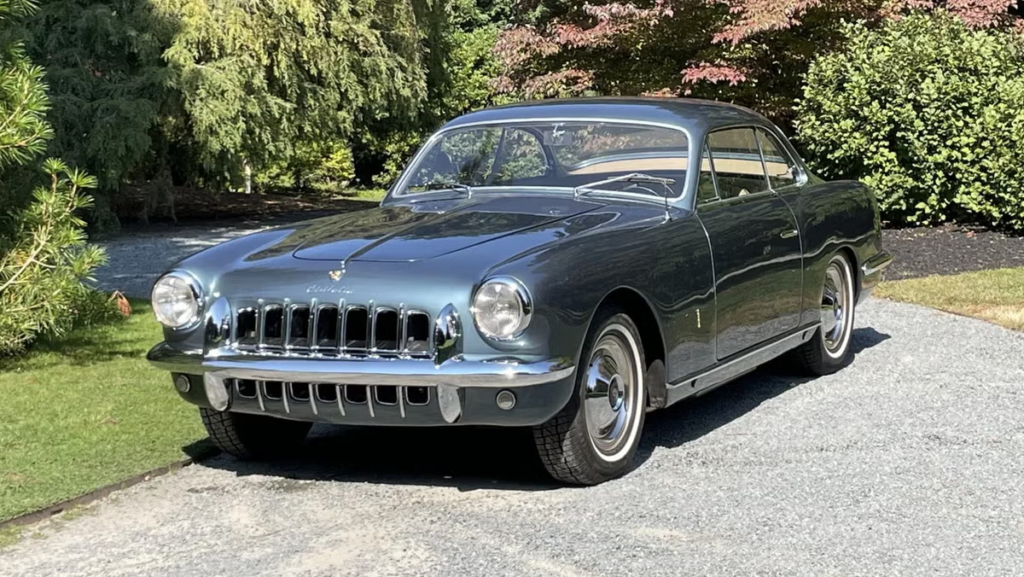
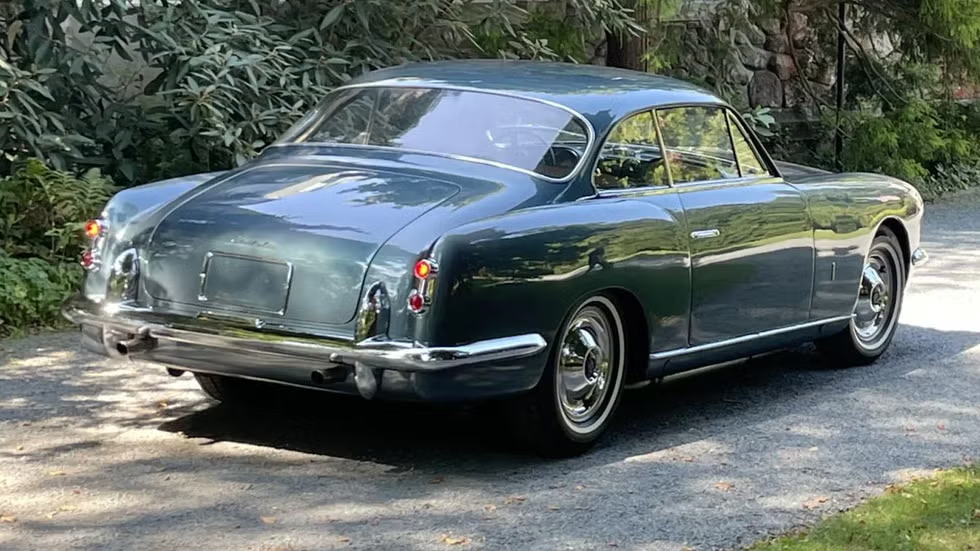
This audacious vision coalesced into the 1953 Cisitalia 808XF Coupe Prototype. The project was a testament to cross-cultural collaboration, a design dialogue between Turin and Dearborn. The styling itself was an in-house creation by Cisitalia’s own Giovanni Savonuzzi, a master who understood how to imbue sheet metal with grace and dynamism. The actual construction of the body fell to the renowned Italian coachbuilder Ghia, celebrated for its craftsmanship and ability to translate visionary designs into tangible metalwork. The crucial American contribution was the motive power: a robust, reliable Ford-sourced powertrain.
The heart of the 808XF was unmistakably American: a twin-carb 256-cubic-inch Mercury flathead V-8. For contemporary enthusiasts in 2025, accustomed to turbochargers and electric motors, the allure of the flathead might seem antiquated. Yet, in the 1950s, the Mercury flathead was a powerhouse, known for its torque, durability, and a distinctive, guttural roar that defined American performance. Pairing this iconic V-8 with a three-speed column-shift manual transmission, the prototype was envisioned as more of a grand tourer than an outright sports car – a comfortable, stylish cruiser capable of covering long distances with ease, a direct competitor to the luxury GTs emerging from Europe. The original design even flirted with an automatic transmission, further emphasizing its grand touring intentions.
Beyond the engine, the 808XF showcased a blend of existing Ford Group components to manage costs and ensure serviceability. It featured drum brakes at all four corners, a standard of the era. Upfront, a Mercury double-wishbone suspension system promised a smooth ride and predictable handling. At the rear, a De Dion axle, incorporating Lincoln bits, offered a sophisticated solution for improved road holding, particularly beneficial for a car designed for touring. This engineering amalgamation highlighted Ford’s pragmatic approach: leverage proven components while wrapping them in aspirational, world-class design. It was a strategy that offered both innovation and practicality.
The Fork in the Road: Evaluation and Its Unsung Demise
The fully realized 808XF prototype arrived on American shores in 1952 for rigorous evaluation by Ford’s engineering and executive teams. It was a moment laden with potential. Imagine the excitement within the design studios, the anticipation among the engineers as this sleek Italian-bodied, American-hearted machine was put through its paces. Its lines certainly suggested a future icon, bearing a familial resemblance to some of the era’s emerging classics, even sharing a certain mid-century optimism with early Corvette hardtops.
However, the cold hard realities of mass production and market economics ultimately proved to be the project’s undoing. Ford’s engineers, presumably with keen foresight into their existing infrastructure and supply chains, concluded that a production model of the Cisitalia 808XF would simply be too expensive to build profitably. The exquisite Italian coachwork, the specialized construction methods, and the inherent complexities of a transatlantic partnership added layers of cost that would push the retail price beyond Ford’s target for a volume “personal car.”
The decision was made to pivot. Instead of outsourcing, Ford chose an entirely domestic product, leveraging its vast internal resources and established manufacturing capabilities. That product, of course, was the Thunderbird, a resounding success that defined American luxury-personal motoring for decades. The Thunderbird, while initially a two-seater, was a wholly Dearborn creation, built on familiar platforms, and produced with an efficiency that the bespoke Cisitalia 808XF simply couldn’t match. The 808XF, therefore, became a magnificent “what might have been,” a compelling testament to a road not taken.
A Survivor’s Tale: From Obscurity to Concours d’Elegance Star
Rejected but not forgotten, the 808XF prototype embarked on a quieter, yet equally remarkable journey. In the mid-1950s, it was offered for sale in Road & Track magazine for a staggering $7,500 – a princely sum at the time, indicative of its unique provenance and premium build. It even graced a display in New York City, a fleeting public appearance for a car destined for private stewardship. It eventually found a loving home with the current seller’s uncle, remaining in the same family for well over half a century. This unbroken chain of ownership speaks volumes about the car’s inherent appeal and historical significance to those fortunate enough to be its custodians.
In recent years, the 808XF underwent a comprehensive, no-expense-spared restoration, returning it to its original glory. The meticulous craftsmanship involved in revitalizing such a unique prototype is a testament to the dedication of its caretakers and the specialized skills required for vintage automobile investment-grade restorations. This painstaking effort paid off handsomely, as the car swiftly garnered multiple awards at prestigious events like the Greenwich Concours d’Elegance, where it captivated judges and spectators alike. Its presence on the concours lawn serves as a vibrant bridge between the optimistic design philosophy of the 1950s and the sophisticated appreciation for automotive heritage prevalent in 2025.
The 2025 Perspective: Why Prototypes Matter More Than Ever
In today’s automotive landscape, defined by rapid technological shifts and global collaboration, the story of the 1953 Cisitalia 808XF Coupe Prototype resonates with renewed significance. For the discerning collector and the savvy investor, rare prototypes like the 808XF represent more than just beautiful machines; they are irreplaceable artifacts, embodying the creative spirit and strategic gambles of their era.
The classic car market of 2025 is increasingly sophisticated, with a premium placed on originality, provenance, and rarity. Investment-grade automobiles, particularly those with unique historical narratives and an undisputed “one-off” status, consistently outperform many traditional asset classes. The 808XF, as a tangible piece of Ford’s pre-Thunderbird aspirations and a pinnacle of Italian-American design synergy, fits perfectly into this highly sought-after category of luxury classic cars. Online platforms like Bring a Trailer have revolutionized access to such historically significant vehicles, connecting a global network of buyers and sellers and democratizing the auction experience. These digital marketplaces amplify the visibility and market value of unique pieces of automotive history, making it easier than ever to acquire truly special cars.
Beyond financial considerations, the 808XF offers invaluable lessons for modern industry. It underscores the perpetual tension between visionary design and the pragmatism of mass production. It highlights the potential, and the pitfalls, of cross-cultural automotive collaboration – a concept more relevant than ever in our interconnected world. As manufacturers grapple with rapid prototyping, global design teams, and the exploration of niche markets (like hyper-luxury EVs or highly specialized performance vehicles), the historical precedent set by ventures like the Cisitalia-Ford project provides rich context.
The enduring appeal of the 808XF lies in its “what if” narrative. It’s a compelling reminder that the path of progress is rarely linear, often winding through fascinating detours and unfulfilled visions. It challenges us to imagine an alternate timeline where Ford embraced Italian coachbuilding as a cornerstone of its sports car identity. This car isn’t just a relic; it’s a conversation starter, a design benchmark, and a powerful symbol of the limitless possibilities that defined an era of automotive optimism.
In an age where the roar of a V-8 might soon be a distant memory, the 1953 Cisitalia 808XF Coupe Prototype stands as a magnificent tribute to a different kind of innovation, a different kind of dream. It’s a testament to the power of design, the allure of performance, and the enduring mystique of automotive history.
Seize a Piece of Automotive History
Don’t let these incredible stories remain just tales from the past. Explore the captivating world of rare prototypes and investment-grade classic cars. Discover how these automotive masterpieces are not just vehicles, but tangible investments and profound statements of passion. Visit our curated collection of vintage automobile investment opportunities and connect with experts who can guide you through the exciting market trends of 2025. Your next piece of automotive history awaits.