



The Electric Phoenix Rises: Deconstructing the Lexus LFA Concept’s 2025 Impact
The automotive landscape, as anyone immersed in it for the past decade knows, has undergone a seismic shift. We’ve witnessed the industry pivot with astonishing speed towards electrification, transforming everything from daily commuters to apex predators of the track. Yet, amidst this revolution, one name has consistently echoed through the halls of supercar legend: LFA. For years, the original Lexus LFA stood as a magnificent, V10-powered anomaly – a testament to a pursuit of perfection that transcended mere numbers. Now, in a move that signals Lexus’s unwavering commitment to an electrified future, we are confronted with its spiritual successor: the Lexus LFA Concept, unveiled not merely as an electric sports car, but as a statement, a philosophy, and a harbinger of the brand’s next-generation performance.
As of late 2025, the dust has settled somewhat since its initial appearances as the “Lexus Sport Concept” at events like Monterey Car Week and the Japan Mobility Show. The definitive re-christening as the “LFA Concept” wasn’t just a marketing ploy; it was a powerful declaration. This isn’t just a new electric vehicle (EV) from Lexus; it is the new LFA, tasked with carrying a weighty legacy while forging an entirely new path. Having spent a decade analyzing powertrain evolution and chassis dynamics, I can say with conviction that this machine represents a critical juncture for Lexus, asserting its place in the burgeoning market of luxury electric supercars and high-performance EVs.
Resurrecting a Legend: More Than Just a Name
To truly appreciate the gravitas of the LFA Concept, one must first recall its predecessor. The original LFA wasn’t about raw horsepower figures; it was about an unparalleled driving experience. Its naturally aspirated 4.8-liter V10 engine, co-developed with Yamaha, produced a symphony of sound that remains etched in the memory of every enthusiast. Its carbon fiber reinforced polymer (CFRP) chassis, meticulous craftsmanship, and limited production run made it an instant collectible and a benchmark for exclusive performance vehicles. To attach the LFA badge to an electric vehicle, then, is to make an audacious promise: that the spirit of exhilarating performance, driver engagement, and engineering artistry can not only survive but thrive in an all-electric paradigm.
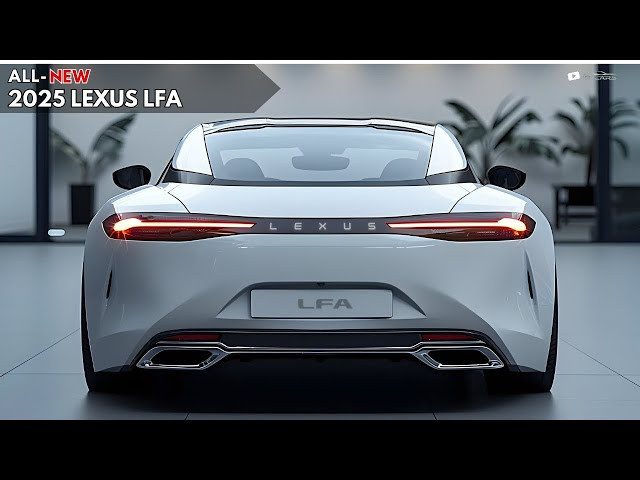
Toyota Motor Corporation Chairman Akio Toyoda’s directive to “preserve and evolve core vehicle-development skills for the next generation” resonates deeply with the LFA Concept. This isn’t just about building an EV; it’s about translating the essence of speed, handling, and driver connection into a new medium. The LFA Concept is positioned as the zenith of this evolutionary process, directly inheriting the lineage that began with the Toyota 2000GT and was redefined by the original LFA. It’s the clearest statement yet that Lexus is not just dipping its toes into electrification but is diving headfirst, with a halo car designed to push the boundaries of electric powertrain innovation.
Engineering Prowess: The Foundation of Future Performance
From an engineering standpoint, what truly intrigues an industry veteran is the foundation upon which the LFA Concept is built. Lexus has articulated three shared development priorities that form its core: an ultra-low center of gravity, a meticulously optimized low mass paired with exceptional body rigidity, and advanced aerodynamic performance. These aren’t buzzwords; they are fundamental principles for any cutting-edge automotive engineering project, especially one aiming for supercar status in the electric era.
The LFA Concept leverages Toyota’s inaugural high-rigidity all-aluminum spaceframe. This platform, notably shared with Toyota Gazoo Racing’s GR GT supercar and the GR GT3 race car programs, speaks volumes about the performance aspirations. Sharing components with dedicated race machinery immediately signals a no-compromise approach to dynamics. An all-aluminum spaceframe offers a fantastic balance of strength and weight, crucial for an EV where the battery pack inherently adds significant mass. For decades, engineers have chased rigidity to ensure precise handling and responsiveness, and this architecture promises to deliver just that.
The Battery Breakthrough: Solid-State Speculation
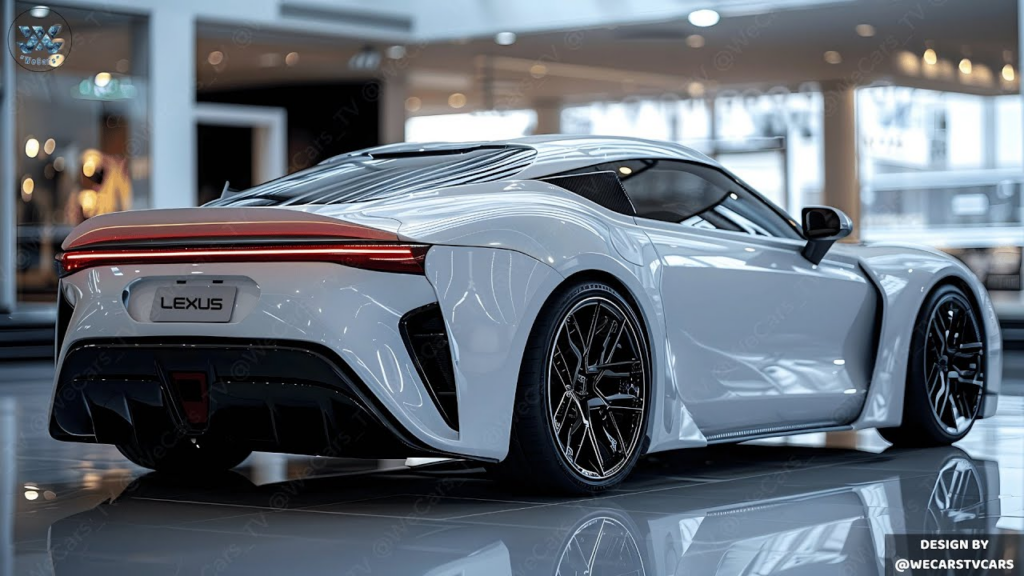
While specific details regarding battery pack size or chemistry remain under wraps, the industry chatter around Toyota’s purported breakthroughs in solid-state battery technology is deafening. If any platform were to launch such a revolutionary technology, a halo car like the LFA Concept would be the ideal stage. Solid-state batteries promise higher energy density, faster charging times, enhanced safety, and potentially lighter overall weight compared to current lithium-ion technology – all critical advantages for a high-performance EV.
The placement of these advanced batteries is equally vital. Given the relentless emphasis on a low center of gravity, it’s logical to assume the batteries are integrated into the floorpan, a common EV standard. However, this often presents a challenge: the “skateboard chassis” typically elevates the floor and seating positions, potentially compromising the idealized, low-slung driving posture crucial for a sports car. Lexus, however, claims its packaging approach masterfully combines the dynamic capability of its race-influenced GR twins with a “distinctly sensual, yet timeless design,” suggesting ingenious solutions to these packaging dilemmas. This will be fascinating to observe as more technical specifications emerge, perhaps hinting at innovative cell-to-chassis integration or novel structural battery designs that truly optimize both performance and ergonomics.
Aerodynamics and Thermal Management: Unseen Forces
Beyond the visible structure, the “advanced aerodynamic performance” objective is paramount for an electric supercar. Without the guttural roar of a V10, the conversation shifts to efficient airflow management, not just for downforce but also for cooling the power electronics and batteries, and crucially, for extending range. I expect to see active aerodynamic elements – deployable spoilers, adaptive diffusers, and perhaps even active vents – working in concert to balance drag reduction with cornering stability. The sleek, flowing silhouette hints at a meticulous approach to cutting through the air, which contributes significantly to both efficiency and the sensory experience of seamless, silent speed. For sustainable high-performance vehicles, every watt saved from overcoming air resistance translates to more exhilarating acceleration or greater touring potential.
Design Philosophy: Sculpting the Future of Speed
Stylistically, the LFA Concept is an evolution of what we first saw as the Sport Concept. It’s a striking machine that, as Lexus accurately describes, inherits the proportions and sculptural cues of the original LFA but reinterprets them for an EV-optimized package. The original LFA was angular and purposeful; this new concept is characterized by a low, flowing silhouette that marks a distinct departure from the harder edges seen on its GR GT and GR GT3 brethren. This choice of a “universal” sports-car shape is an intriguing strategic move, aiming for broad appeal across regions and eras, suggesting a design that transcends fleeting trends.
The concept measures 184.6 inches long, 80.3 inches wide, and 47.0 inches tall, with a 107.3-inch wheelbase and a two-seat configuration. These dimensions place it squarely in the supercar territory, emphasizing its compact, athletic stance. The emphasis on “sensual proportions” is not merely aesthetic; it’s part of the overarching theme of “Discover Immersion,” designed to foster a deeper emotional and physical connection between driver and machine. In an age where digital interfaces can sometimes distance us from the raw act of driving, Lexus seems intent on leveraging design to re-establish that fundamental bond.
The Driver’s Sanctuary: Immersion Beyond Expectation
The interior of the LFA Concept is where the “Discover Immersion” theme truly comes to life. Lexus designers have clearly focused on concentrating functional elements around the driver’s seat, adhering to a minimalist layout intended to enable intuitive operation. This isn’t just about reducing clutter; it’s about reducing cognitive load, allowing the driver to focus on the road, the car’s responses, and the pure exhilaration of the drive.
A particularly eye-catching feature is the “funky, yoke-style steering wheel.” While such designs have been met with mixed reactions in other vehicles, Lexus states it’s engineered to eliminate the need for re-gripping during spirited driving and places essential switches within intuitive reach by touch alone. This suggests a sophisticated steer-by-wire system, allowing for variable steering ratios and precise control, potentially enhancing agility and reducing driver fatigue. For a driver-focused electric sports car, the interface with the vehicle is paramount, and Lexus is clearly experimenting with radical solutions to optimize this. The minimalist approach likely extends to the digital displays, presenting only crucial information and allowing the driver to customize the level of data presented, further enhancing the immersive experience without distraction.
The Road Ahead: Impact and Invitation
The LFA Concept is more than just a glimpse into Lexus’s electrified future; it’s a bold declaration of intent. It positions Lexus as a serious contender in the top echelons of premium performance electric vehicles, directly challenging established European players and emerging hypercar manufacturers. This vehicle will serve as a technological testbed and a brand flagship, influencing future Lexus models with its innovations in chassis design, battery technology, and aerodynamic efficiency. It demonstrates that the soul of performance doesn’t diminish with the absence of fossil fuels; it merely evolves, driven by silent power and cutting-edge engineering.
For enthusiasts and industry watchers alike, the LFA Concept opens a fascinating chapter. Will it retain the original LFA’s sense of handcrafted exclusivity? Can an electric powertrain truly replicate, or even surpass, the visceral thrill of a V10? My ten years in this space tell me that if any company has the meticulous engineering prowess and an unwavering commitment to the driver’s experience, it’s Lexus. This concept is a testament to that dedication. It’s an exciting promise of a future where sustainability meets unbridled exhilaration.
The journey for the Lexus LFA Concept has just begun, and the details that will emerge over the coming months and years will undoubtedly shape our understanding of next-generation EV batteries and electric supercar technology. We are at the precipice of a new era for luxury mobility, and the LFA Concept is leading the charge.
What are your initial thoughts on this audacious return for the LFA? Do you believe Lexus can replicate the magic of its iconic V10 in an all-electric package, or are you skeptical of the silent revolution? Join the conversation and share your perspectives on the future of performance and luxury.