


The Dawn of Personal Autonomy: Tensor’s Robocar Redefines Luxury Self-Driving for 2027
The year 2025 stands as a pivotal moment, marking an acceleration in the race towards truly autonomous vehicles. For years, the promise of self-driving cars has tantalized, moving from speculative sci-fi to a tangible reality on our city streets, primarily within the realm of robotaxis. Companies like Waymo have cemented their presence, offering glimpses into a future where personal transportation is revolutionized. Yet, the holy grail for many has always been the personal, privately-owned autonomous vehicle – a future that, until now, felt distant for Level 4 capabilities. Enter Tensor, a name poised to redefine personal mobility by offering a ground-up Level 4 autonomous vehicle, the “Robocar,” directly to consumers by January 2027.
As someone who has navigated the intricate landscape of automotive technology and autonomous systems for over a decade, I can attest that this isn’t merely another iteration of advanced driver-assistance. This is a fundamental shift, a bold proposition that moves beyond the supervised self-driving experiences currently dominating the market, promising a truly independent co-pilot that parks in your driveway.
A Decade of Evolution: From Robotaxis to Revolutionizing Personal Transportation
The story of Tensor is one of strategic evolution, a testament to the dynamic and often challenging environment of high-tech innovation. Tracing its roots back to 2016 in Silicon Valley as AutoX, the company initially plunged headfirst into the burgeoning sector of commercial autonomous vehicles and robotaxi fleets. Their early years were characterized by rigorous testing across California and China, quickly culminating in an impressive fleet of over 1,000 autonomous taxis serving the public in five major Chinese cities during the height of the pandemic.
However, the global landscape of data governance and technological sovereignty presented formidable hurdles. In a decisive move over the past year, AutoX completely divested from its extensive Chinese operations, citing critical data privacy concerns. This strategic pivot wasn’t a retreat but a recalibration. Rebranding as Tensor, the company returned to its Californian roots in San Jose with a renewed, sharpened focus: to engineer a truly autonomous vehicle for the discerning private customer, moving beyond the fleet-centric model that defined its past. This shift signals a deeper understanding of the market’s evolving demands, recognizing that while robotaxis lay the groundwork, the ultimate aspiration for many remains a private Level 4 self-driving car.
The Tensor Robocar: Engineered from the Ground Up for Autonomous Excellence
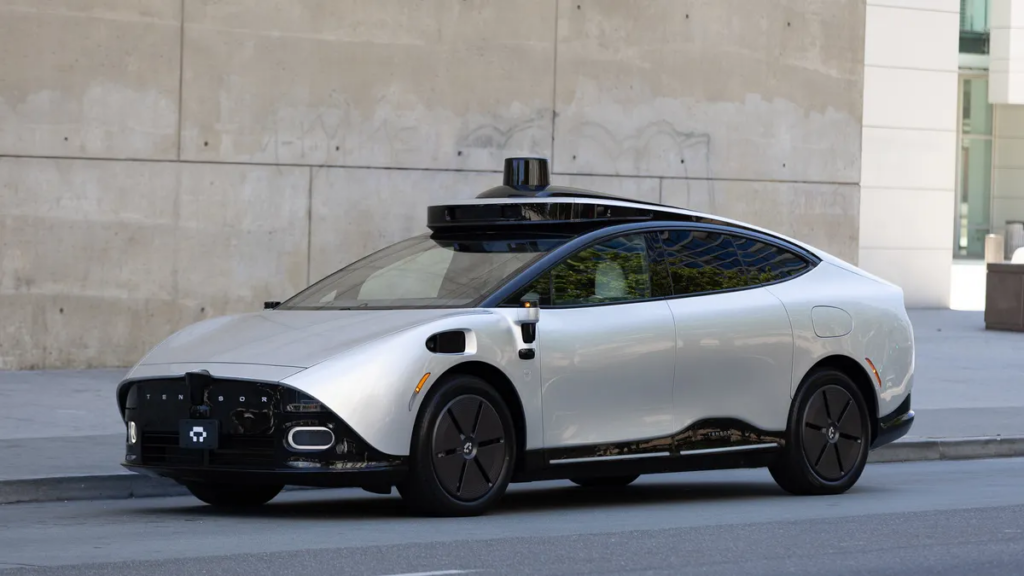
At its core, the Robocar represents a clean-sheet approach to autonomous vehicle design. Unlike many current offerings that retrofit existing vehicle architectures with autonomous capabilities, Tensor embarked on a journey in 2020 to design the entire platform from scratch, with Level 4 autonomy as its intrinsic blueprint. This fundamental design philosophy is critical, as it allows for optimal integration of sensors, computing power, and safety redundancies that are often compromised when adapting conventional vehicle structures.
Powertrain and Performance: An EV Foundation for the Future
As expected from a next-generation vehicle launching in 2027, the Robocar is built on an advanced electric vehicle (EV) platform. It features a robust 112-kWh battery pack, projecting an estimated range of 250 miles – a practical figure for daily commuting and even longer excursions. What truly sets its power delivery apart is the high-voltage 845-volt architecture. This isn’t just a number; it’s a critical enabler for ultra-fast charging, allowing the Robocar to replenish its battery from 10% to 80% in a mere 20 minutes. This significantly reduces range anxiety and minimizes downtime, making the autonomous experience even more seamless.
Tensor isn’t stopping there. The vision extends to a fully automated charging experience, with plans for a robotic arm that will autonomously plug the vehicle in upon arrival at home. This attention to detail in the charging ecosystem underscores a commitment to a truly hands-off ownership experience, reducing friction points and enhancing convenience – a key differentiator for luxury autonomous vehicles.
A New Dimension of Automotive Design: Intuitive and Inclusive
Beyond the powertrain, the physical design of the Robocar speaks volumes about its autonomous intent. The coach-style, center-closing doors, all powered and equipped with an array of sensors, are not just a stylistic choice. They enhance accessibility and safety, preventing accidental collisions with obstacles or other vehicles in tight spaces. This meticulous engineering ensures that the vehicle interaction is as fluid and effortless as the autonomous driving itself. The external aesthetics are designed to communicate, with integrated displays on the lower corners that broadcast simple messages and pictograms to pedestrians, clearly indicating its autonomous operation and acknowledging their presence. This vital visual communication builds trust and enhances safety in urban environments, a critical aspect often overlooked in current ADAS implementations.
The Autonomous Brain: Unrivaled Sensor Fusion and AI Prowess
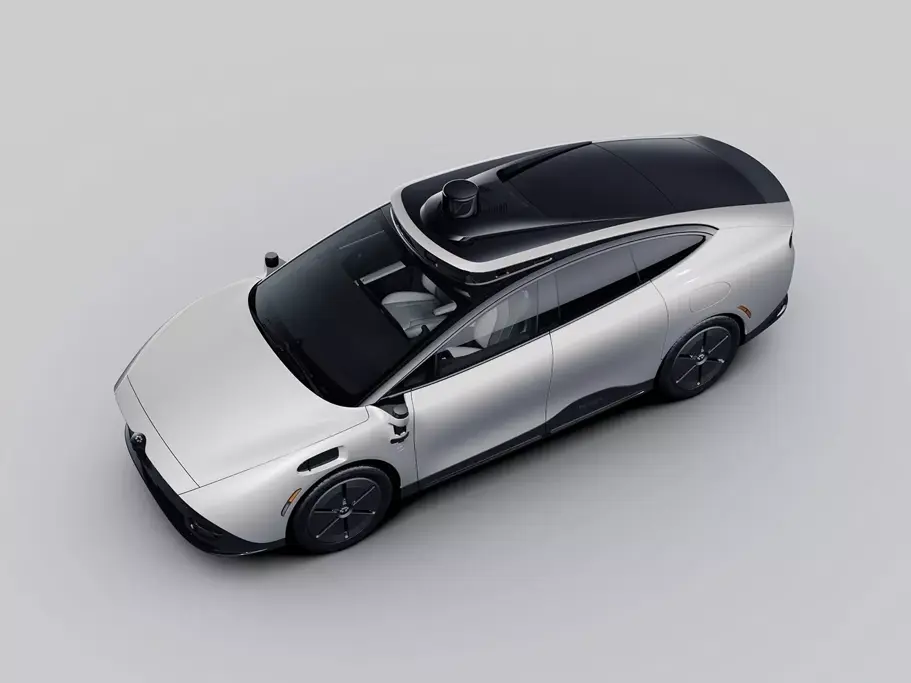
Achieving true Level 4 autonomy – where the vehicle can handle all driving tasks under specific conditions without human intervention – demands an extraordinary blend of sensor technology and computational might. The Tensor Robocar pushes the boundaries in this regard, integrating a staggering array of over 100 sensors. This isn’t just about quantity; it’s about the synergistic interplay of diverse data streams.
A Panoramic View of Reality: The Sensor Suite
The Robocar’s perception system includes:
Five Lidar Arrays: One strategically mounted on the roof for a comprehensive 360-degree, nearly 1,000-foot range, complemented by four additional lidars positioned around the front, sides, and rear. Lidar, critical for precise 3D mapping and object detection, forms the backbone of the vehicle’s spatial understanding.
37 Cameras: Providing high-resolution visual data, essential for object classification, lane keeping, traffic sign recognition, and understanding complex environmental nuances.
11 Radars: Offering robust performance in adverse weather conditions, providing accurate speed and distance measurements for dynamic object tracking.
10 Ultrasonic Sensors: For close-range obstacle detection, crucial for low-speed maneuvers, parking, and navigating crowded urban areas.
Maintaining the integrity of this sophisticated sensor array is paramount. Tensor has engineered a comprehensive cleaning and protection system, featuring 30 washer nozzles, 13 mini wipers, and integrated heating elements to prevent fogging and ice accumulation. Crucially, the Robocar incorporates physical covers that automatically retract over the sensors when the vehicle is off, shielding them from dirt, debris, and potential damage – a significant improvement over many current designs, which leaves sensors exposed.
The Supercomputing Core: Nvidia Drive Thor-X
All this sensor data converges into a colossal onboard computer, powered by eight Nvidia Drive Thor-X chips. This powerhouse boasts an astounding 8,000 TOPS (trillion operations per second) of processing capability. To put this in perspective, this is the kind of computational muscle typically found in high-performance data centers, now miniaturized and hardened for automotive application. The emphasis on robust onboard processing is a deliberate choice, allowing the Robocar to operate with exceptional reliability even in areas with inconsistent or absent 5G connectivity. While the vehicle does maintain redundant communication channels for maximum cloud connectivity, the primary decision-making and perception processing occur locally, ensuring resilience and immediate responsiveness. This architecture is vital for AI-powered autonomous driving in diverse operational design domains (ODDs).
The Tensor Foundation Model: AI for Every Scenario
At the heart of the Robocar’s intelligence is the Tensor Foundation Model software, an advanced AI system that operates two parallel cognitive frameworks. The first is meticulously trained on vast datasets derived from professional human drivers, capturing nuanced driving behaviors and decision-making processes. The second leverages a Visual Language Model (VLM), designed to comprehend and respond to unusual and unexpected “edge cases” – those rare, often unpredictable scenarios that challenge even the most sophisticated AI. This dual-pronged approach, drawing on both empirical human experience and generative AI’s contextual understanding, is what allows Tensor to confidently assert the Robocar’s capability to operate reliably in challenging conditions like rain and snow, extending its utility far beyond the sunny climes of California.
A New Covenant: Data Privacy, Intuitive Interaction, and Hybrid Control
In an era increasingly concerned with digital footprints and personal information, Tensor’s approach to data privacy is a standout feature, differentiating it significantly in the emerging market of connected and self-driving cars.
Your Car, Your Data: A Commitment to Privacy
A cornerstone of the Robocar’s design is its commitment to data sovereignty. Because the majority of computational processing occurs onboard, Tensor has engineered a system where the vehicle does not inherently collect and transmit user data to the cloud without explicit owner consent. Owners retain full control, with the option to access and delete all data accumulated by the car – including biometric data like facial and palm recognition, which is used for secure vehicle operation and theft prevention – directly from the vehicle or its companion smartphone application. This radical transparency and control over personal data sets a new standard, addressing a critical concern for many prospective owners of advanced driver-assistance systems (ADAS) and autonomous vehicles.
Furthermore, interior cameras and microphones, while present for driver monitoring during manual operation and voice assistant interaction, are equipped with physical covers and dedicated off switches. This empowers owners to disable these features at will, ensuring privacy when desired.
The Agentic AI: Conversational Autonomy
Beyond mere command-and-control, the Robocar introduces an “Agentic AI” backed by a Large Language Model (LLM). This sophisticated system is designed to facilitate natural, conversational interactions, allowing users to communicate with their vehicle as they would a human co-pilot. Instead of rigid commands, you can discuss your destination or preferences. This extends to summoning the vehicle remotely via call or text, transforming it from a static machine into a responsive, intelligent assistant. The AI also learns user habits and, when connected to personal calendars, can anticipate upcoming trips, manage charging schedules, and ensure optimal battery range. This level of personalized, proactive intelligence truly defines the next generation of automotive AI solutions.
The Best of Both Worlds: Autonomous Freedom & Manual Control
While the Robocar is fundamentally designed for autonomous operation, Tensor understands the lingering desire for human control. Thus, the vehicle retains a steering wheel and pedals. When autonomy is engaged, these controls elegantly retract into the dash and floor respectively, creating an expansive, lounge-like interior. However, the option to take over is always present, with the controls seamlessly reappearing at the touch of a button.
During manual driving, the Robocar acts as a highly advanced co-pilot, offering a spectrum of assistance, from fundamental safety features like automatic emergency braking to sophisticated Level 3 semi-automated driving (hands-free, eyes-off-the-road in designated conditions). The entire control system—steering, braking, and acceleration—is fully by-wire, meaning no physical linkages exist. This digital control architecture enables rapid, precise responses and, more importantly, facilitates multiple redundancies across all critical systems. Should a sensor or drive system component fail, redundant systems ensure continuous, safe operation. Rear-wheel steering, allowing the back tires to pivot up to 7 degrees, provides an exceptionally tight 37-foot turning circle – comparable to a Tesla Model Y despite the Robocar’s potentially larger footprint, enhancing maneuverability in urban settings. Safety remains paramount, with Tensor targeting top crash safety ratings from global authorities like NHTSA, IIHS, and European NCAP.
Beyond Ownership: The Future of Autonomous Mobility Ecosystems
Tensor’s vision extends beyond individual ownership. The company has already forged a significant partnership with Lyft, planning to integrate Robocars into their luxury rideshare offerings. This is where the long-held promise of monetizing your personal autonomous vehicle truly takes shape. Much like Elon Musk’s early vision for Tesla, Tensor suggests that Robocar owners could deploy their vehicles for ridesharing while they are at work, asleep, or otherwise occupied. While specific details on the platform for privately-owned autonomous rideshare services are still emerging, the partnership with an established player like Lyft indicates a viable path forward. This could unlock a new economic model for vehicle ownership, turning a significant investment into a revenue-generating asset and fundamentally reshaping personal mobility for 2025 and beyond.
This dual-use capability – personal luxury transport and on-demand income generator – positions the Robocar not just as a vehicle, but as a versatile asset within a burgeoning high-end autonomous car market. It promises reduced congestion, optimized parking, and enhanced accessibility for those unable or unwilling to drive, contributing to a more sustainable and efficient urban future.
The Investment in Innovation: Anticipating the Cost of Tomorrow’s Mobility
While Tensor has not yet revealed the definitive pricing for the Robocar, their head of marketing, Amy Luca, has indicated that prospective buyers should anticipate “luxury pricing.” Drawing parallels with high-end autonomous systems and luxury vehicles, Waymo’s CEO has previously suggested their advanced autonomous cars fall into the $150,000 to $200,000 range, akin to a well-optioned Mercedes-Benz S-Class. Given the Robocar’s sophisticated, ground-up Level 4 design, its extensive sensor suite, and its cutting-edge AI, it’s reasonable to project that the Tensor Robocar will likely sit at the higher end of this spectrum, potentially exceeding it.
This investment isn’t just for a car; it’s for an unprecedented level of convenience, safety, and a future-proof personal mobility solution that integrates seamlessly into your life. It’s the cost of being an early adopter of a technology that promises to transform daily commutes, leisure travel, and even personal economics.
The Road Ahead: A Call to Embrace the Future
As we stand in 2025, on the cusp of this transformative era, the Tensor Robocar represents more than just an engineering marvel; it signifies a profound shift in our relationship with transportation. It’s a testament to a decade of relentless innovation, bringing Level 4 autonomy from the restricted confines of robotaxi fleets into the personal garage. For those who yearn for the ultimate in convenience, safety, and technological sophistication, this private Level 4 self-driving car embodies the future.
The landscape of personal mobility is about to change forever. Are you ready to claim your place in the autonomous revolution? We invite you to stay informed, explore the potential, and prepare for a future where your car is not just a mode of transport, but an intelligent, trusted, and fully autonomous partner on the open road. The future of driving, or rather, not driving, is almost here.