



The Dawn of Driverless Ownership: Tensor Robocar Redefines Personal Autonomy in 2027
For years, the promise of a truly self-driving car has been dangled tantalizingly close, yet always just out of reach for the private consumer. While robotaxi fleets like Waymo and Cruise navigate urban centers, offering glimpses into a driverless future, the idea of owning a personal vehicle capable of Level 4 autonomy felt like science fiction. Until now. Enter the Tensor Robocar, a groundbreaking electric autonomous vehicle poised to revolutionize personal transportation by offering ground-up Level 4 self-driving capabilities to individual owners as early as January 2027.
As a seasoned expert in autonomous driving technology with a decade entrenched in the automotive innovation landscape, I’ve witnessed the cycles of hype and disappointment surrounding self-driving cars. But Tensor’s approach, with its deep roots in commercial autonomy and a renewed focus on individual ownership, feels different. It’s not just an incremental step in ADAS; it’s a fundamental rethinking of what a personal vehicle can be, pushing the boundaries of smart mobility solutions and laying the groundwork for the future of transportation.
From Robotaxi Pioneer to Personal Autonomy Visionary: Tensor’s Evolution
The journey of Tensor began in 2016 in Silicon Valley under the name AutoX. Their initial ambition was to master commercial autonomous vehicles and deploy robust robotaxi services. For several years, AutoX was a significant player, particularly in China, where they successfully launched and scaled a fleet of over 1,000 autonomous taxis across five major cities. This period wasn’t just about ride-hailing; it was a crucible for real-world data collection, algorithm refinement, and overcoming the immense operational challenges of deploying driverless car ownership on a commercial scale.
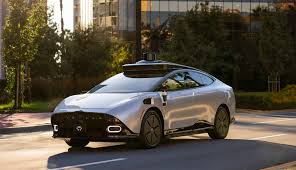
However, the global landscape for AI in vehicles and data privacy began to shift dramatically in the mid-2020s. Recognizing evolving regulatory complexities and heightened consumer concerns regarding personal data sovereignty, AutoX made a strategic and bold pivot. The company divested entirely from its Chinese operations, rebranded as Tensor, and relocated its headquarters back to San Jose, California. This wasn’t merely a change of name; it was a complete recalibration of their mission. Instead of serving corporate fleets, Tensor set its sights on designing a truly autonomous vehicle specifically for private customers, addressing a void that no other manufacturer has truly filled. This decisive move positions Tensor uniquely in the competitive arena of next-generation automotive solutions.
Engineering Autonomy from the Ground Up: The Robocar’s Core
At its heart, the Tensor Robocar is an impeccably engineered electric vehicle. It features a robust 112-kWh battery pack, providing an estimated range of 250 miles – more than sufficient for most daily commutes and even longer excursions within its operational design domain. The vehicle also boasts an 845-volt architecture, enabling ultra-fast charging from 10 to 80 percent in a mere 20 minutes. This commitment to efficiency and convenience extends to its design, with coach-style, center-closing powered doors equipped with sensors to prevent accidental collisions, offering a taste of the luxury and futuristic practicality that defines the Robocar experience.
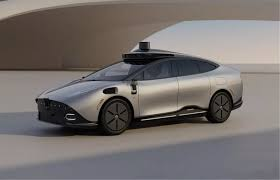
But the real marvel lies in its Level 4 autonomous vehicle capabilities. Unlike systems that add autonomous features to existing car platforms, the Robocar was conceived and designed from the ground up to be fully autonomous. Development commenced in 2020, leveraging the vast experience gained from their robotaxi service. This foundational approach is critical. It means every aspect of the vehicle, from its chassis to its electrical systems, is optimized for driverless operation, resulting in unparalleled integration, redundancy, and performance. This is a stark contrast to many of the advanced driver-assistance systems (ADAS) currently on the market, which, while impressive, still require constant human supervision and ultimately fall short of true Level 4 autonomy. Tensor is building a vehicle that fundamentally operates itself, without the need for human intervention in defined conditions.
A Sensory Superpower: Navigating the World with Unprecedented Acuity
Achieving true Level 4 autonomy in diverse environments demands an extraordinary array of sensors and immense computational power. The Tensor Robocar is equipped with over 100 sensors, a testament to its sophisticated perception stack. This includes five high-resolution lidar arrays – one strategically mounted on the roof for panoramic 360-degree vision up to 1,000 feet, and four distributed around the front, sides, and rear for precise near-field detection. Complementing these are 37 cameras offering visual input from every angle, 11 radars for all-weather object detection and velocity measurement, and 10 ultrasonic sensors for close-range obstacle avoidance. This multi-modal sensor fusion creates a comprehensive and highly redundant environmental model, crucial for safe and reliable autonomous operation.
Maintaining the integrity of these critical sensors is paramount. Tensor has engineered a sophisticated system of 30 washer nozzles, 13 mini wipers, and integrated heating elements to prevent fogging, icing, and snow buildup, ensuring optimal sensor performance even in challenging weather conditions – a significant advantage over many existing systems limited to fair-weather operation. Taking this a step further, the Robocar incorporates physical covers that automatically close over the sensors when the vehicle is powered down, protecting them from dirt, dust, and potential damage, enhancing longevity and reliability. This meticulous attention to detail underscores Tensor’s commitment to real-world robustness.
Processing this torrent of real-time data requires monumental computing power. The Robocar features a massive onboard computer powered by eight Nvidia Drive Thor-X chips, collectively capable of an astonishing 8,000 TOPS (trillion operations per second). While the vehicle can connect to the cloud for updates and additional services, the vast majority of its decision-making and perception processing occurs locally. This edge computing capability is vital, ensuring the Robocar can operate flawlessly even in areas with patchy or nonexistent 5G connectivity. To further guarantee uninterrupted communication, the car incorporates three redundant communication channels, maximizing uptime and data flow.
At the core of its intelligence is the AI-based Tensor Foundation Model software. This sophisticated system employs a dual-parallel processing approach: one system is rigorously trained on data from professional human drivers, replicating expert driving behaviors, while the second leverages a Visual Language Model (VLM) to interpret and respond to novel or unexpected “edge cases.” This dual strategy allows the Robocar to not only perform reliably in common scenarios but also intelligently navigate unusual and unpredictable situations, significantly enhancing its safety and adaptability in the complex real world. The ability to operate confidently in adverse conditions like rain and snow means this isn’t a California-only dream; it’s a truly national, potentially global, vehicle automation solution.
Beyond its internal operations, the Robocar is designed to communicate its intentions to the outside world. Discreet displays embedded in the lower exterior corners of the vehicle broadcast simple messages and pictograms to pedestrians and other road users, indicating that the car is operating autonomously and has acknowledged their presence. This vital external communication builds trust and enhances safety in shared urban environments.
Privacy-First Autonomy: Your Data, Your Control
In an era where data privacy concerns are at an all-time high, Tensor has made user control and data sovereignty a cornerstone of the Robocar experience. Because the primary computing and decision-making happen onboard the vehicle, Tensor significantly reduces its reliance on cloud-based data collection. While the vehicle is capable of sharing anonymized operational data with the cloud for fleet improvement, owners have the explicit option to opt-in or opt-out. If an owner chooses not to share, all data generated by the car – including biometric data like facial and palm recognition used for vehicle access and theft prevention – remains securely within the vehicle.
Furthermore, owners have complete transparency and control over their data. All information collected on the owner and users is accessible through the vehicle’s interface or a dedicated smartphone application, and can be easily reviewed and deleted by the owner at any time. This stands in stark contrast to many connected vehicles that continuously upload vast amounts of data without explicit, granular user control.
Even internal cameras and microphones, which facilitate driver monitoring during manual operation and enable interaction with the voice assistant, come with physical covers and dedicated off switches. This thoughtful design ensures that privacy is not an afterthought but an integrated feature, empowering owners to decide precisely what information their vehicle collects and transmits. This commitment to data privacy in autonomous vehicles will be a key differentiator for discerning luxury consumers.
Conversational AI: Your Car, Your Intelligent Co-Pilot
The Robocar transcends traditional voice command systems with its sophisticated Agentic AI, backed by an advanced Large Language Model (LLM). This isn’t about barking predefined instructions; it’s about having a natural, human-like conversation with your vehicle. You can articulate complex requests, discuss your preferences, and expect the car to understand context and nuance, becoming a truly intelligent co-pilot. Want to go to your favorite coffee shop but take the scenic route? Just tell it.
This intelligent assistant extends beyond the vehicle itself. Owners can summon their Robocar from anywhere with a simple phone call or text message, directing it to pick them up autonomously. Over time, the system will learn your habits, preferences, and even anticipate your needs. When connected to your calendar, it can proactively suggest upcoming trips, ensure sufficient battery range, and manage charging schedules, seamlessly integrating with your daily life and offering unparalleled convenience in intelligent transportation systems.
The Best of Both Worlds: Autonomy with the Option to Drive
While the primary design intent of the Robocar is autonomous operation, Tensor understands that some owners will still desire the thrill and engagement of driving. Therefore, the vehicle retains a conventional steering wheel and pedals, allowing for manual operation whenever desired. When a human takes the wheel, the Robocar transforms into an advanced, semi-autonomous experience, offering a full spectrum of assistance. This ranges from essential safety features like automatic emergency braking to sophisticated hands-free, eyes-off-the-road Level 3 semi-automated driving, providing a luxurious and stress-free experience for those times you choose to be in control.
The transition between modes is seamless and elegant. In autonomous mode, the steering wheel gracefully retracts into the dashboard, and the central infotainment screen slides over to conceal it, creating an expansive, uncluttered interior space. The accelerator and brake pedals also retract out of the way. Should you decide to take over, a simple command brings all controls smoothly back into position, ready for manual operation.
This sophisticated control system is entirely by-wire, meaning steering, braking, and acceleration are all electronically controlled without physical linkages. Crucially, each of these by-wire systems, along with all the sensors, is designed with multiple redundancies. This ensures that the vehicle can continue to operate safely even in the unlikely event of a component failure in any of its sensor or drive systems, epitomizing the robust engineering required for high-reliability autonomous vehicles. Adding to its agility, rear-wheel steering allows the back tires to turn up to 7 degrees in either direction, granting the Robocar an impressive 37-foot turning circle – comparable to a much smaller Tesla Model Y, despite its larger footprint.
Safety remains paramount. Tensor is aggressively targeting the highest crash safety scores from leading regulatory bodies, including the NHTSA and IIHS in the United States, and European NCAP, reinforcing its commitment to passenger protection in the event of an unavoidable collision.
Monetizing Mobility: Your Car, Your Robotaxi
Tensor isn’t just selling you a car; they’re offering a platform for a new ownership model. The company has already forged a significant partnership with Lyft, planning to integrate Robocars into their luxury rideshare offerings. But the vision extends beyond corporate fleets. Echoing previous aspirations from other automotive giants, Tensor is actively exploring how private Robocar owners can monetize their vehicles by allowing them to operate as autonomous rideshare vehicles when not in personal use. Imagine your car earning revenue while you’re at the office or asleep.
While the specifics of how a privately owned autonomous vehicle could be hailed and compensated are still being ironed out – likely through established platforms like Lyft or a dedicated Tensor-managed service – the potential is transformative. This model promises to offset ownership costs, generate passive income, and maximize the utilization of a high-value asset, fundamentally altering the economics of driverless car ownership and creating new avenues for smart mobility solutions. Given the measured rollout of similar services by other players, Tensor, with its dedicated platform and strategic partnerships, might indeed be poised to deliver on this long-held promise sooner than anticipated.
The Price of Progression: Luxury Autonomy
As an expert, I’ve often been asked about the cost of truly groundbreaking technology. Tensor hasn’t publicly disclosed the exact price of the Robocar, but their indication of “luxury pricing” is entirely consistent with the technological sophistication and unprecedented capabilities on offer. Considering the complexity, the sheer volume of advanced sensors, the formidable onboard computing power, and the Level 4 autonomy capabilities, it’s reasonable to estimate the Tensor Robocar will command a premium price.
Drawing parallels to the high-end luxury market and previous estimations for similar luxury autonomous vehicles, we can anticipate the Robocar’s pricing to fall within the range of $150,000 to $200,000, aligning with a fully optioned Mercedes-Benz S-Class or high-performance electric luxury SUVs. This price point reflects not just a vehicle, but an investment in the cutting-edge of automotive innovation and a lifestyle defined by convenience, safety, and personal autonomy.
Embrace the Future of Driving
The Tensor Robocar isn’t merely another electric car; it’s a paradigm shift in personal mobility. It’s the culmination of years of dedicated research, real-world deployment, and a visionary pivot towards empowering individual owners with true Level 4 autonomy. As we stand on the cusp of 2027, the prospect of a private, Waymo-style self-driving car in your driveway is no longer a distant dream but a tangible reality, spearheaded by Tensor.
Are you ready to redefine your relationship with personal transportation? Explore the Tensor Robocar and discover how true Level 4 autonomous vehicle ownership can transform your daily life, offering unparalleled freedom, convenience, and a glimpse into the exciting future of smart mobility.