



2026 Honda Prelude: The Steep Price of Nostalgia and a Niche Too Narrow for 2025’s Performance Market
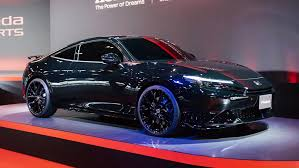
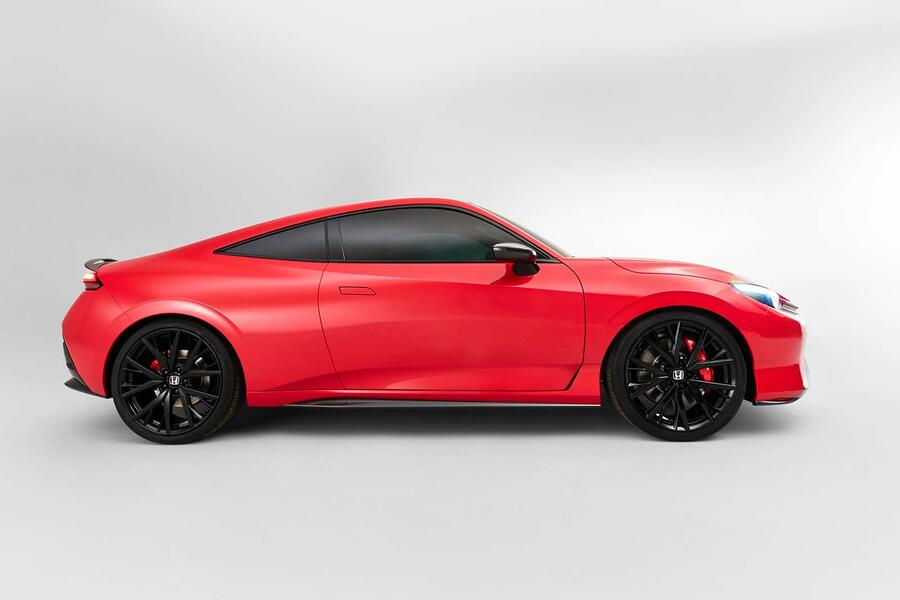
The automotive world thrives on anticipation, and few reveals in recent memory have generated as much buzz as the return of the Honda Prelude. For enthusiasts who grew up with the iconic front-wheel-drive coupe, the announcement promised a much-needed shot of adrenaline in an increasingly SUV-dominated landscape. A sleek two-door, carrying a beloved nameplate, and embracing hybrid technology – on paper, the 2026 Honda Prelude seemed like a dream reborn. Yet, as a veteran observer of this industry for over a decade, I find myself in a familiar position: admiring the engineering prowess but deeply concerned about the market strategy. Now that the official pricing has been released, starting north of $43,000, that initial excitement has been tempered, replaced by a sense of profound disappointment and a critical examination of its precarious market positioning.
Honda’s decision to resurrect the Prelude as a hybrid performance coupe, especially one that leverages the highly capable underpinnings of the Civic, was initially met with optimism. Our brief prototype drive painted a picture of a well-sorted chassis, demonstrating that quintessential Honda DNA of precision and engagement. The S+ Shift system, while a simulated experience, offered a surprisingly satisfying dynamic, creating an illusion of geared shifts that added to the sporty feel. It’s undeniably a sharp-looking car, a refreshing anomaly in a sea of crossovers, promising efficiency alongside spirited driving. However, the cold, hard reality of its sticker price fundamentally alters the conversation. Over $43,000 is not just a number; it’s a direct challenge to established players and an unspoken question about the Prelude’s true identity and value proposition in the fiercely competitive 2025 automotive landscape.
Let’s dissect this pricing dilemma. In a market where every dollar is scrutinized, the 2026 Honda Prelude steps into a segment populated by formidable, often rear-wheel-drive, performance machines. Consider the immediate benchmarks:
Ford Mustang EcoBoost Premium: Kicking off at around $38,430, the Mustang offers undeniable American muscle car heritage, rear-wheel drive thrills, and significant customization options. For many performance buyers, the badge alone carries more weight, and the driving dynamics are unequivocally geared towards enthusiast engagement. The difference in base price, though seemingly small, represents a chasm in perceived value and driving philosophy.
Subaru BRZ tS / Toyota GR86 Premium: These twins, priced in the high $30,000s (the BRZ tS specifically around $39,530), are paragons of pure, unadulterated driving pleasure. They offer a proper six-speed manual transmission, a naturally aspirated boxer engine, and a perfectly balanced rear-wheel-drive chassis. For the hardcore enthusiast, the BRZ/GR86 represent the quintessential affordable sports car, a segment where the Prelude’s lack of a manual and FWD platform immediately puts it at a disadvantage, especially at a higher price.
BMW 230i Coupe: This is perhaps the most direct and uncomfortable comparison. At just under $43,000, the 230i offers a premium badge, sophisticated German engineering, a potent turbocharged engine, and, critically, rear-wheel drive. It provides a level of luxury and prestige that the Prelude, for all its charm, cannot match. The buyer looking at a $43,000 performance coupe will undoubtedly cross-shop the entry-level premium brands, and BMW’s offering is a compelling alternative.
Nissan Z (Base): While typically a step up in power and price, the base Nissan Z can also be considered by buyers looking for traditional RWD performance, further illustrating the fierce competition around this price point.
Hyundai Elantra N / Kona N: While these are sedans and SUVs, respectively, their front-wheel-drive performance is lauded, and they come in significantly cheaper, offering incredible performance-per-dollar. They represent the high-water mark for FWD fun, making the Prelude’s FWD hybrid proposition at a premium price even more questionable.
The core challenge for the 2026 Honda Prelude lies in its identity as a premium-priced hybrid performance coupe. The hybrid powertrain, while offering admirable efficiency and instant torque, doesn’t necessarily translate into the kind of raw, visceral driving experience that traditional sports coupe buyers prioritize. Performance car enthusiasts often seek maximum power, minimal weight, and, crucially, a manual transmission – all areas where the Prelude, as a hybrid with an automatic-only transmission, makes compromises. This strategic decision alienates a significant portion of its potential enthusiast base, who might opt for the purity of a BRZ or the muscularity of a Mustang.
Conversely, buyers primarily focused on hybrid efficiency and value are likely to find the Prelude’s price equally hard to justify. Honda’s own lineup offers compelling alternatives:
Honda Civic Hybrid: A stellar sedan and hatchback, the Civic Hybrid provides excellent fuel economy and a surprisingly engaging drive for just over $30,000. Even the top-tier Sport Touring hatchback doesn’t breach the $35,000 mark. These vehicles are practical, efficient, and represent tremendous value in the hybrid segment.
Toyota RAV4 Hybrid Limited AWD: For buyers needing more utility, a fully loaded RAV4 Hybrid Limited AWD comes in at $42,605 – a vehicle offering all-wheel drive, SUV practicality, and Toyota’s renowned hybrid reliability for a comparable price.
Toyota Prius Limited AWD: Even a fully optioned Prius Limited AWD, while a different class, offers cutting-edge hybrid tech, AWD capability, and still leaves considerable change in your pocket compared to the Prelude.
This internal and external comparison highlights a fundamental disconnect: the 2026 Honda Prelude doesn’t quite fit squarely into either the traditional performance coupe segment or the value-driven hybrid market. It aims for a niche that, based on prior market trends, might be too small to sustain its premium pricing.
This brings us to an uncomfortable, yet unavoidable, historical parallel: the Honda CR-Z. The CR-Z, a compact hybrid sports coupe from the early 2010s, was a fascinating concept – a spiritual successor to the CR-X, wrapped in modern hybrid tech. It was undeniably fun to drive, efficient, and forward-thinking in its execution. Yet, as we witnessed its eventual demise, the consensus was clear: it answered a question no one was truly asking. It filled a niche that didn’t quite exist, caught between buyers who wanted pure sports car performance and those who wanted pure hybrid economy. The CR-Z’s pricing, while not as aggressive as the Prelude’s, contributed to its struggle. Enthusiasts found it underpowered, and hybrid buyers found it impractical and too sporty. The 2026 Prelude, without a manual transmission and at a significantly higher price point, risks inheriting a similar fate – a technically competent and admirable vehicle that, due to its market positioning, is admired by few and purchased by even fewer. History is replete with great cars whose price and market placement ultimately sealed their limited success.
So, what is Honda’s strategy here? From an expert perspective, there are a few possibilities. Perhaps Honda aims for exclusivity, leveraging the Prelude nameplate as a halo car for its advanced hybrid technology. It could be a strategic move to establish a new “premium hybrid sports coupe” segment, testing the waters for future electrified performance models. The manufacturing costs associated with a relatively low-volume coupe, incorporating cutting-edge battery and hybrid drive systems, are significant, and these R&D expenses naturally translate into a higher sticker price. Honda might also be considering global markets where a FWD hybrid coupe might have stronger appeal or different tax incentives. However, for the crucial North American market, this strategy feels like a high-stakes gamble. The consumer base for a performance hybrid coupe that costs more than a RWD Mustang or BRZ, and nearly as much as an entry-level premium German coupe, is inherently narrow.
The journey for the 2026 Honda Prelude will be an uphill battle against strong tides of consumer expectation and market competition. To overcome its price hurdle, it would need to deliver an unparalleled driving experience that utterly eclipses its rivals in refinement, efficiency, and real-world performance. While our initial drive was promising, sustained long-term reviews will be critical. It also needs a marketing narrative that powerfully articulates its unique value proposition, convincing buyers why its specific blend of hybrid tech, FWD dynamics, and design justifies its premium tag.
Ultimately, the 2026 Honda Prelude arrives as a tantalizing prospect, a beacon for those who mourn the vanishing coupe. Yet, its ambitious price tag throws a stark shadow over its potential. It is a car that embodies Honda’s engineering prowess but also highlights the complexities of launching a niche product in a highly segmented and price-sensitive market. Whether it will carve out a successful path or remain a cherished but overlooked chapter in Honda’s history will depend on whether consumers are willing to pay a premium for a unique blend of nostalgia, efficiency, and modern performance, or if the lure of established, often cheaper, and sometimes more traditional alternatives proves too strong.
What are your thoughts on the 2026 Honda Prelude’s pricing and its place in the market? We invite you to join the conversation, explore the driving dynamics yourself when it becomes available, and share your perspective on whether this iconic nameplate can truly redefine the performance coupe segment. Your next performance car decision deserves a thorough comparison – stay informed, test drive wisely, and let your voice be heard in this evolving automotive landscape.